
Lives and Human Dignity in Ocean Waves
Irregular Maritime Migration
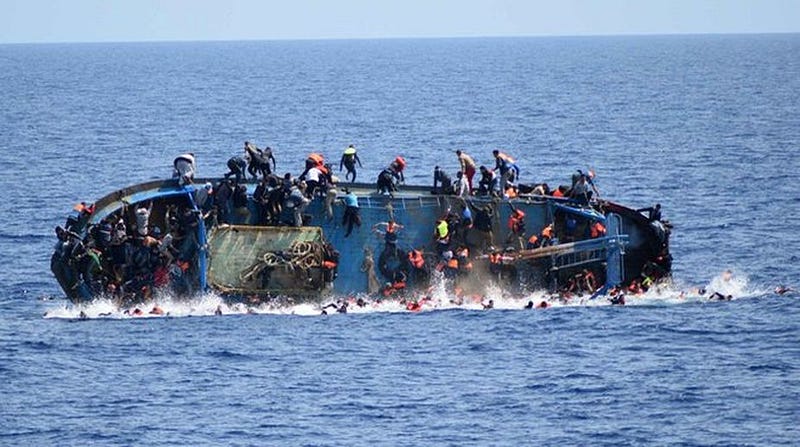
Transnational migration has been frequent since the beginning of human history. In South Asia, people who are economically underprivileged and belong to the deprived segment of society, are motivated to migrate to Middle-east and Southeast Asian regions in search of better livelihood.
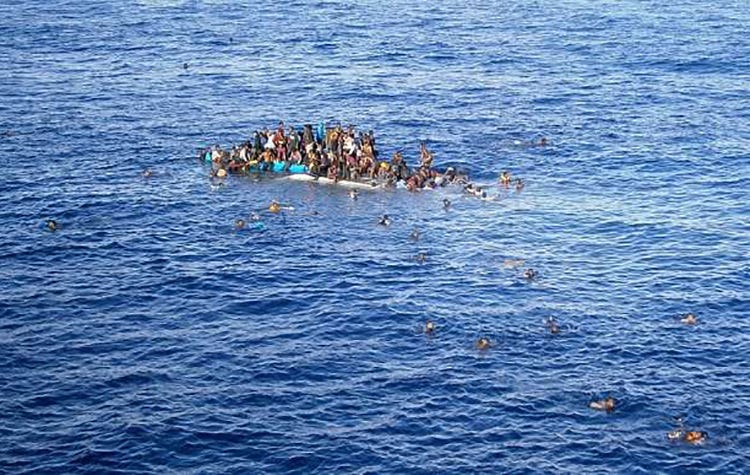
Challenges of Irregular Migration in South Asia
The littoral states of South Asia region are not any exception from irregular maritime migration syndrome. It is an open secret that such economic migration happens either through legal or illegal routes. For common people, who do not have proper immigration documents and are compelled to adopt the illegal route, a sea voyage through the Bay of Bengal is the only option for them in most cases.
The unseaworthy vessels that carry migrants are poorly manned with serious lack of navigational equipment. These vessels are mostly unseaworthy and do not have proper flag state registration. To arrange such illegal migration through the sea and to reach the country of destination, the service of human trafficking networks is essential. Common people get in touch with such human trafficking networks through their friends, families, neighbors and local representatives.
According to a 2013 UNHCR report, approximately 14,000 people crossed the Bay of Bengal in 2012 on smugglers’ vessels. However, it is now evident to all that the Bay of Bengal has turned into a “sea route of misery” for maritime migrants.
Usually, such migrant voyage is operated at night by small vessels. Therefore, it is very difficult for law enforcement agencies to detect and intervene such vessels at sea. Considering all circumstances, the Coast Guard and other Law Enforcement Agencies of Bangladesh deserve respect for bringing such trafficking incidents into concerns of media and society.
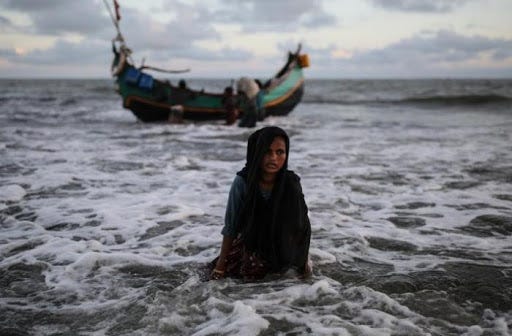
These vessels, carrying illegal migrants, usually sail for Southeast Aisan countries, most often to Malaysia, via Thailand. In South Asia, the passengers of those vessels are popularly known as “fortune seekers.” These unfortunate fortune seekers get aboard tiny vessels to cross the sea for better standards of life. Once the vessel is filled with these economic migrants, it begins its course to Malaysia.
Such a voyage usually takes almost 14 days. However, the reality of such voyage is quite appalling. After reaching some remote islands of Southeast Asia, these migrants are held captive for collecting ransom. Some unfortunates are sold to Thai or Cambodian fishing industry for forced labor. Some migrants are abandoned in the dense jungle who, later on, are rescued by law enforcement agencies of the concerned country. The dream of better livelihood remains “a dream too far” for these economic migrants.
Cooperation is a must
Tackling the soaring rate of illegal migration by the sea is a tremendous challenge for a country like Bangladesh which is located at the north tip of the Bay of Bengal.

A complex network of smugglers are involved at various levels in such illegal maritime migration. For that reason, there is need of regional cooperation to curb such organised crime incidents and to apprehend the perpetrators who acts from behind the scene.
The Southeast Asian countries, which are the final destination of such illegal migration exodus, also need to extend its cooperation. Specific cooperation agreement is required as to issues of “hot pursuit” and “information sharing.” Such cooperation is requisite to drag the human trafficking syndicate into the clutch of justice.
Article 98 (2) of the Law of the Sea Convention stipulates a general obligation of cooperation with other states to promote search and rescue services. The provisions of 1974 Safety of Life at Sea Convention (SOLAS) as well as 1979 Search and Rescue Convention also reiterate the obligation of cooperation. However, these provisions focus merely on “safety on sea” issue to protect human lives.
Regarding maritime migrant smuggling, the IMO Assembly Resolution in Article 773 (18) calls upon its member governments to cooperate to suppress unsafe practices associated with alien smuggling by sea and also to develop agreements and procedures to facilitate such cooperation.
It is the United Nations Convention Against Transnational Organised Crime that enumerates specifically for “close international cooperation” by adopting mutual legal assistance and law enforcement cooperation. The IMO circular 896 of 2001 justifies such cooperation since such mechanism may address the unsafe transnational maritime migration more effectively.

Disclosure
Author’s write up was previously published in the Daily Dhaka Tribune.