Fear, Courage & Accomplishing More
Live Courageously by Transforming Your Fear of the Unknown
I started accomplishing more once I realized my relationship with fear didn’t have to be adversarial.

“Many of our fears are tissue-paper-thin, and a single courageous step would carry us clear through them.”
— Brendan Francis
Like many children, I went through a stage of being afraid of the dark. I wasn’t afraid of what may lurk under the bed; it was the closet that commanded my attention. I can recall lying in bed, eyes riveted on a shadow I hadn’t noticed before.
I lay there for what seemed like hours, staring at the shadowy figure. I was too afraid to know what it was, but also afraid of not knowing. Eventually, I conjured up the courage to rise from my bed. Not knowing what the light would expose, I walked to the far side of the room and turned on the light.
As an adult, I am no longer afraid of the dark. But my experience of navigating the darkness lingers as a vivid memory. Now and then, when facing something new, I experience that feeling from my childhood: the fear of facing the unknown.
As a person who deals with anxiety, I had to learn to manage my relationship with fear. I started accomplishing more once I realized the relationship didn’t have to be adversarial. I learned to acknowledge its presence and use my anxious energy as fuel for discovery. It compels me to pull back the metaphorical curtain (like Toto in the Wizard of Oz) to expose and face whatever is there. I treat it as a familiar companion as I focus on making the unknown known.
Fear of the Unknown Can Keep You Stuck
Learning to manage fear is important because it can hinder our progress in life. In theory, we know facing fear will bridge the gap between the known and unknown, allowing us to conquer it. But in everyday life, facing fear is difficult because it causes discomfort. We prefer the comfort and security of what we know over the discomfort of unknown possibilities. So we avoid doing things outside our comfort zones and continue doing what is familiar.
Fear often raises its head when we face opportunities for personal growth. Because we fear what may lie ahead, we may decide not to follow through on opportunities. Instead of moving toward growth, we stay in familiar, but unfulfilling situations. Those situations can include jobs, places, and relationships.
Fear is a primary reason people forego important opportunities. We decide not to further our education, move to a new city, or start the business we have always envisioned. We don’t accomplish as much as we are capable of because fear overshadows the desire for growth.
When facing new opportunities, we can spend too much time examining the “what-ifs”:
- What if I fail?
- What if I’m not smart enough?
- What if I make the wrong decision?
- What if I can’t make it on my own?
- What if I end up alone?
- What if I run out of money?
- What if — ?
“What-iffing” refers to the tedious process of pondering all the possible negative outcomes, real or imagined. This behavior may feel like active problem-solving, but it is not. It is a non-productive cycle that keeps us stuck in fear. Thinking of catastrophic scenarios simply provides fuel for the fear. Most of the time, we end up talking ourselves out of acting.
Why Am I Afraid?
The primary role of fear is to help us detect and respond to danger. From an evolutionary standpoint, fear is essential for survival. When we detect danger, fear kicks our sympathetic nervous system into gear. It prepares our bodies to either confront or flee from it.
We respond to danger through “fight” (confrontation) or “flight” (running away). The third, less known response is to “freeze,” like an opossum. An example of a human freeze response would be “paralysis by analysis.” This describes the experience of becoming overwhelmed (i.e., paralyzed) with indecision. Often, we end up not making any decision at all.
The nervous system prepares us to survive dangerous situations. But when it is activated by everyday challenges versus real danger, it hinders more than it helps.
Ways to Cultivate Courage for New Experiences
Cultivating courage starts with building confidence in our ability to meet challenges. When we are confident, we are more likely to confront new challenges. When we are less confident and feel overwhelmed, we are more likely to avoid or freeze. Thus, it is important to acknowledge that we have what it takes to meet challenges.
I began shifting my mindset by reminding myself of the past challenges I had overcome. I remembered times when I accomplished goals I previously thought were “too hard.”
I remembered my first time as the lead in a play. I remembered leaving home to start college. I remembered my first day of basic training in the United States Air Force. And I remembered my first time speaking to a large audience. I recalled all these accomplishments, noting that I had accomplished them despite the fear I was experiencing.
We can manage perceived danger by balancing the inner dialogue between the emotional self and the rational self. We can dampen the survival response by telling our emotional selves that challenges are not dangerous. We can also tell ourselves that we can handle the challenges that may come along.
One way to change our inner dialogue is through deliberate positive self-talk. I like to use affirmations. Affirmations are positive statements that can help you challenge and overcome negative thoughts. When you repeat them often and believe in them, you can change your frame of mind and begin to make positive changes.
Some of my favorite affirmations for cultivating courage include:
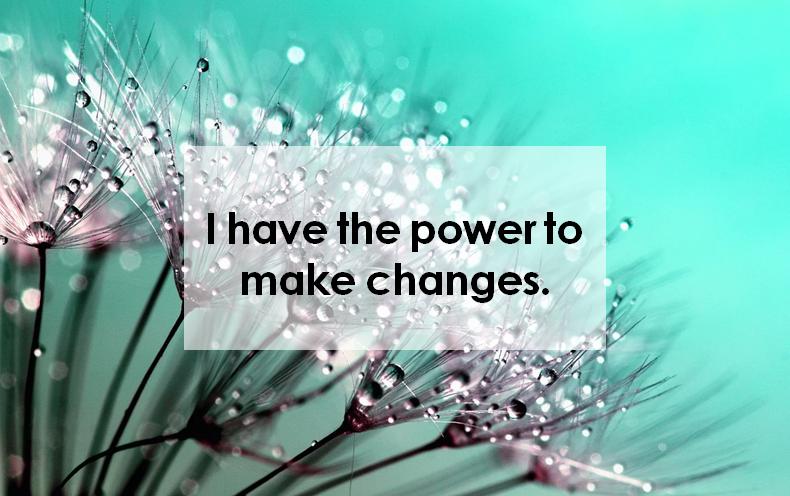
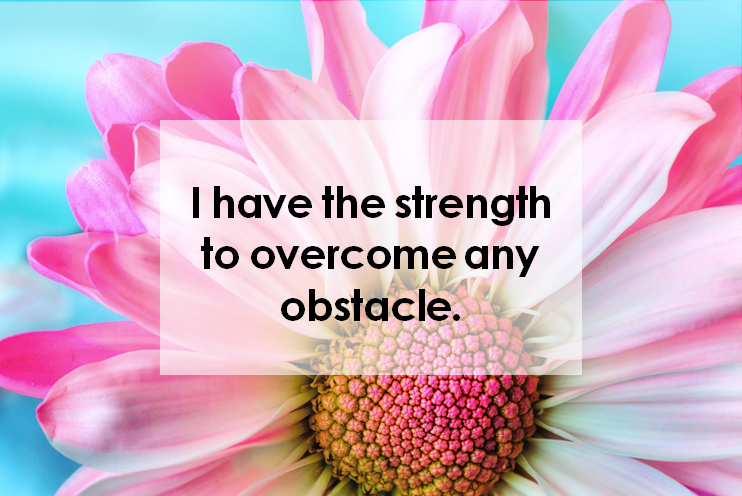
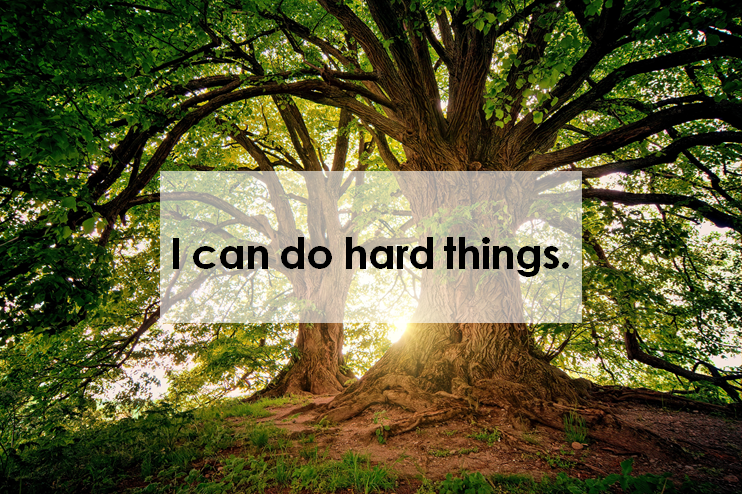

I also use self-talk to challenge “either/or” thinking. I am deliberate about replacing the word “or” with “and.” For example, I can acknowledge I am anxious and still give a speech. I can acknowledge my fear of rejection and still submit my articles for editorial review. I tell myself I can be afraid and still move forward with my plans.
What Happened With the Shadowy Figure?
There is a German proverb that says, “fear makes the wolf bigger than he is.” At some point, my younger self figured this out and made a choice not to surrender to my imagination. I could continue to lie in bed and worry about the shadowy figure. Or, I could take a walk through the darkness and shine a light on the “threat” to make the unknown known.
Once I switched on the light, I found the shadowy figure was my beloved Minnie Mouse umbrella. It appeared much larger, courtesy of the moonlight shining through my window. And it became shadowy and ominous, courtesy of my own thoughts. I heaved a sigh of relief as I closed the closet door. I turned off the light and settled back into bed, somehow knowing I would never again be held captive by shadows of the unknown.
“You were put on this earth to achieve your greatest self, to live out your purpose, and to do it courageously.”
— Steve Maraboli


