avatarJeff Hayward

Free AI web copilot to create summaries, insights and extended knowledge, download it at here

2503

Abstract

m? Why are they running towards them? What is the child holding in their hand?</i></p><p id="cadf">I’ve used this approach for many of the events I’ve covered. Instead of spoon-feeding reality to the viewer, I try to frame it in a way that makes them think more. Without knowing exactly what is happening around the subject, the viewer’s brain can fill in the gaps, connecting with a more personal interpretation.</p><p id="ecc0">Here’s another example of an event I usually attend, modeled after the Hindu <a href="https://www.nationalgeographic.com/travel/article/facts-hindu-holi-festival">festival of Holi</a>. The event is a treat for the eyes, with all of the colourful powder tossed into the air (and each other.) The “literal” version of the event, a group tossing powder into the air, is the feature image of this article.</p><p id="ad7e">I took a risk by dragging my camera into the fray (I recommend you <a href="https://www.gettingstamped.com/how-to-protect-your-camera-during-the-holi-festival-or-a-color-run/#:~:text=Making%20the%20camera%20airtight%20also,Holi%20festival%20or%20color%20run.">use protection</a> around your camera body and lens), but I got some photos that I think are better than the “literal” version. Again, the “non-literal” version often isolates a subject without really explaining what’s happening around them, like this:</p><figure id="ed08"><img src="https://cdn-images-1.readmedium.com/v2/resize:fit:800/1*xCI1YQmm2hAA1zQwqY3MSQ.png"><figcaption>Okay, you can probably tell this was an event of some kind. But what? And why the snake? Image by author</figcaption></figure><h2 id="8175">Document behind the scenes, and between the lines</h2><p id="73d8">There are several other examples I have of “non-literal” interpretations of public events. Take, for example, this snap from an outdoor dance event. These two dancers were hiding in the trees, waiting for the cue to join in.</p><p id="ee46">I thought this image worked on its own, although I did get some good photos of the performances too:</p><figure id="b633"><img src="https://cdn-images-1.readmedium.com/v2/resize:fit:800/1*8hE1tUQoLmsdVRs_suXjXg.png"><figcaption>Image by author</figcaption></figure><p id="6a26">Here’s another sample from a Remembrance Day ceremony. Usually, I shoot photos of the veterans, people laying wreaths at the cenotaph, and the like.</p><p id="8fff">For this photo, I spotted the shadows of the marching military members and decided it was powerful on its own without more c

Options

ontext:</p><figure id="25fd"><img src="https://cdn-images-1.readmedium.com/v2/resize:fit:800/1*pxoJaF7vdpjn-hrd91KTew.png"><figcaption>Image by author</figcaption></figure><p id="4fca">Here’s another example from a comic-con, where hundreds of people were dressed up in cosplay.</p><p id="efce">I saw these three women with gore make-up on the curb, and isolated them from the activity that would make it obvious what was going on:</p><figure id="6746"><img src="https://cdn-images-1.readmedium.com/v2/resize:fit:800/1*sRtE6EO6GZkNAoJV-cPYLg.jpeg"><figcaption>Image by author</figcaption></figure><p id="c3c5">Like, how can they be so happy and calm while <i>covered in blood?</i></p><p id="3210">Anyways, I think you get the idea. By removing much of the context from an image — the parts that explain to the viewer what’s happening —, you can create more powerful images. You give the viewer a cue for their imagination to run wild.</p><p id="71c9">Don’t be afraid to look for what’s happening behind the scenes — for example, these dancers waiting for their chance to perform. This “non-literal” capture of the event is two women conversing in the woods, waiting to join the performance. It might pique your interest, wondering what they’re doing or what they’re talking about.</p><p id="3e2c">Look for happenings that wouldn’t be the first thing the average person would photograph. For example, instead of shooting performers on stage, look for someone’s reaction to them. (I find that the people attending an event are often more interesting to watch than the acts themselves, and you can capture them in more abstract ways.)</p><p id="4362">This “non-literal” event photography can be used just about anywhere to make an image more interesting.</p><h2 id="fdfb">Capture a mix of styles when shooting</h2><figure id="f64e"><img src="https://cdn-images-1.readmedium.com/v2/resize:fit:800/1*jkyYs5mqCxo0r4a05JuuGg.jpeg"><figcaption>Image by author</figcaption></figure><p id="6eb3">As we come into event season — at least here during Canada’s short warm season — I will be pushing my “non-literal” photography further. I try to get a mix of literal and non-literal images from public events, so I can post in different places online that are more suitable for one style or the other.</p><p id="2431">Remember, you don’t necessarily need faces of people (or people at all) in your event images to convey emotion. Let the moment speak for itself, and it will speak to your viewers.</p></article></body>

Literal Vs. Non-Literal Event Photography

How to turn your otherwise boring snaps into finer art
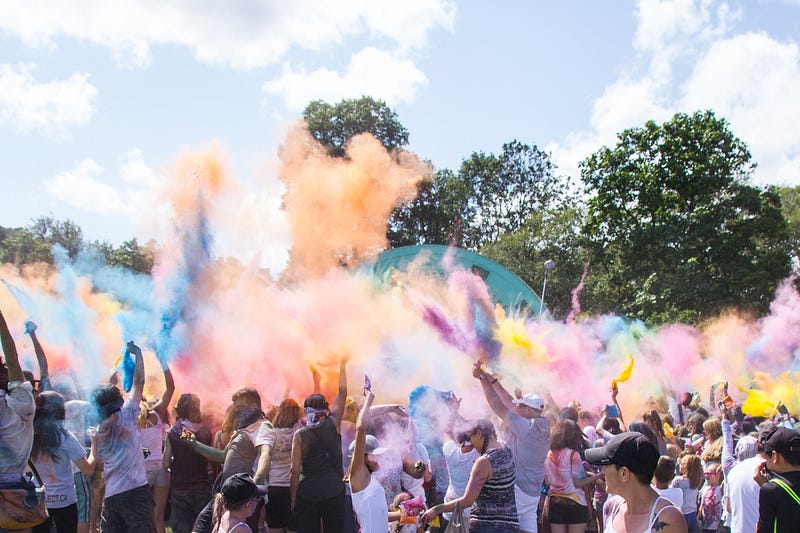
A “literal” event photo taken by author, showing a crowd throwing coloured powder into the air.

Shooting public events is one of the best ways to dip your toes into street photography. With so many people and interactions happening around you, it’s easy to capture the action candidly. But in my opinion, there are two ways to capture the action: literally, and non-literally.

Most of the event photography I see online is pictures of smiling people, as well as selfies with other event participants. This is perfectly fine, if that’s what you want to convey to your audience. But personally, I find this “literal” interpretation of events boring. It’s the equivalent of explaining to someone exactly what happened, which is good if that’s your goal.

As a fine art photographer, I like to show people events how I felt them: the abstract moments, the colours, the mood.

For example, recently, I was at a street festival, and there was a bubble performer for the kids. Now, I did shoot some photos of the kids enjoying the bubbles, basically documenting it like one would for a newspaper. Here’s an example:
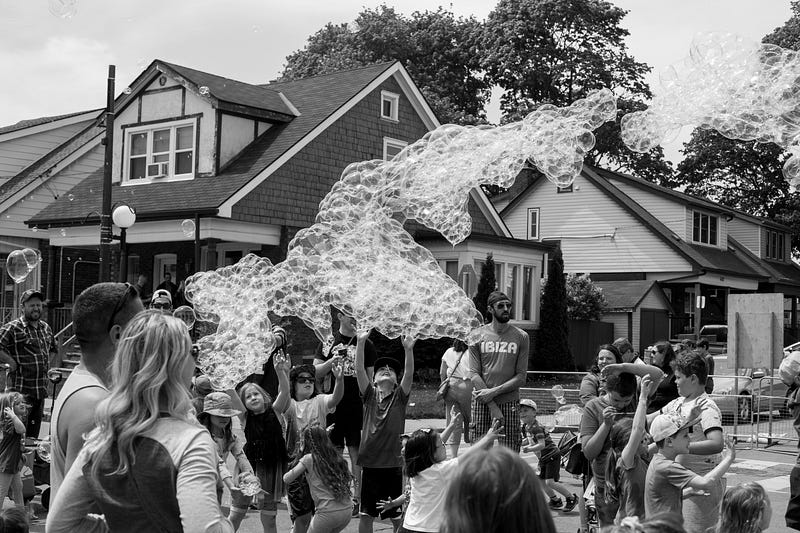
Photo by author

You can easily tell from this image that it was from an outdoor street party of some sort. But then I decided to turn my lens to this:
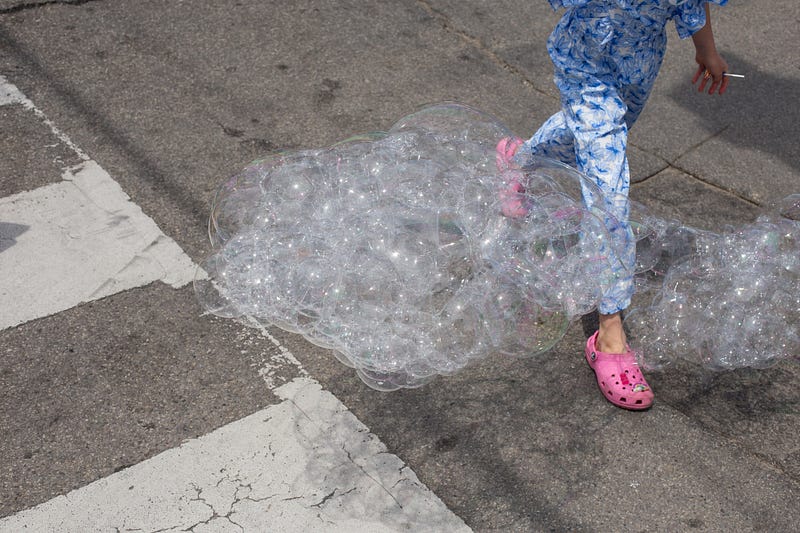
Photo by author

To me, this is more powerful and artistic. Instead of looking at the photo and thinking, “oh, it’s a bunch of kids at a bubble party,” this version removes much of the context. Now, someone viewing this might linger on it longer, figuring out what is happening. There’s some mystery.

The fact you can’t see the faces of the participants asks questions. Where did the bubbles come from? Why are they running towards them? What is the child holding in their hand?

I’ve used this approach for many of the events I’ve covered. Instead of spoon-feeding reality to the viewer, I try to frame it in a way that makes them think more. Without knowing exactly what is happening around the subject, the viewer’s brain can fill in the gaps, connecting with a more personal interpretation.

Here’s another example of an event I usually attend, modeled after the Hindu festival of Holi. The event is a treat for the eyes, with all of the colourful powder tossed into the air (and each other.) The “literal” version of the event, a group tossing powder into the air, is the feature image of this article.

I took a risk by dragging my camera into the fray (I recommend you use protection around your camera body and lens), but I got some photos that I think are better than the “literal” version. Again, the “non-literal” version often isolates a subject without really explaining what’s happening around them, like this:
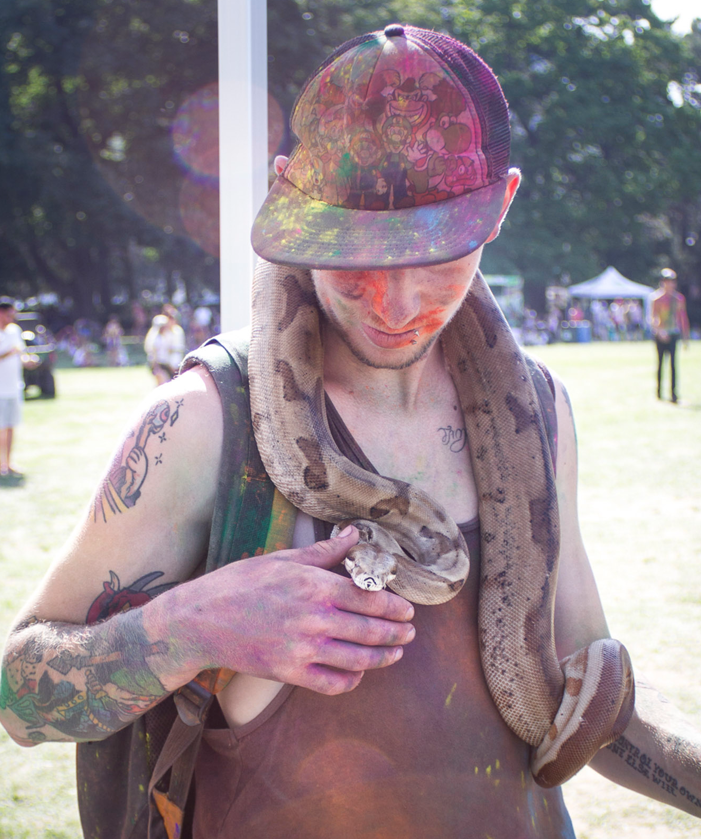
Okay, you can probably tell this was an event of some kind. But what? And why the snake? Image by author

Document behind the scenes, and between the lines

There are several other examples I have of “non-literal” interpretations of public events. Take, for example, this snap from an outdoor dance event. These two dancers were hiding in the trees, waiting for the cue to join in.

I thought this image worked on its own, although I did get some good photos of the performances too:
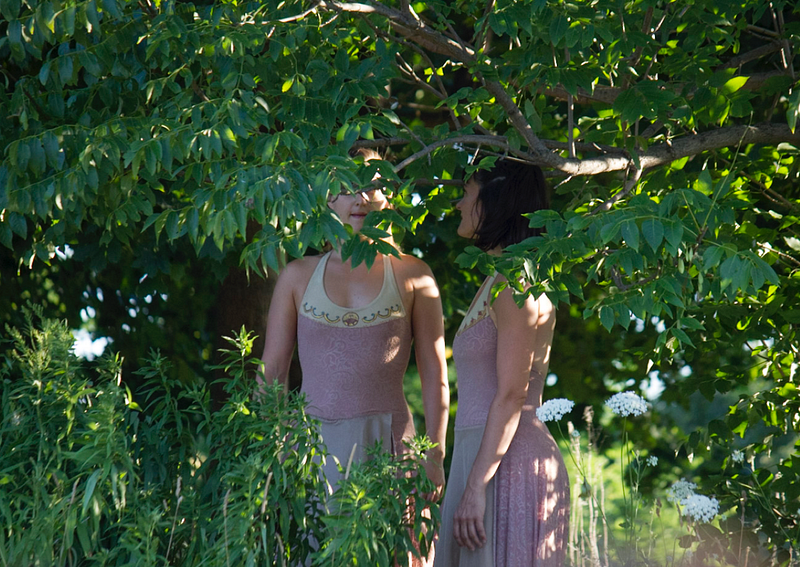
Image by author

Here’s another sample from a Remembrance Day ceremony. Usually, I shoot photos of the veterans, people laying wreaths at the cenotaph, and the like.

For this photo, I spotted the shadows of the marching military members and decided it was powerful on its own without more context:
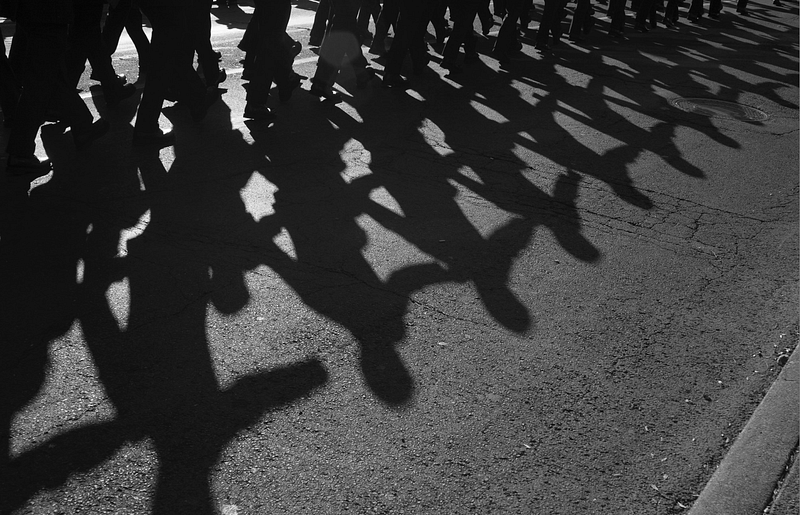
Image by author

Here’s another example from a comic-con, where hundreds of people were dressed up in cosplay.

I saw these three women with gore make-up on the curb, and isolated them from the activity that would make it obvious what was going on:
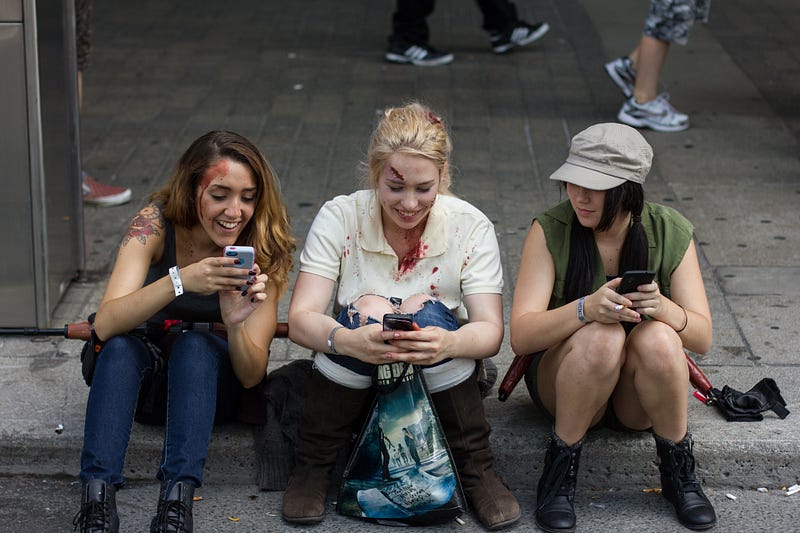
Image by author

Like, how can they be so happy and calm while covered in blood?

Anyways, I think you get the idea. By removing much of the context from an image — the parts that explain to the viewer what’s happening —, you can create more powerful images. You give the viewer a cue for their imagination to run wild.

Don’t be afraid to look for what’s happening behind the scenes — for example, these dancers waiting for their chance to perform. This “non-literal” capture of the event is two women conversing in the woods, waiting to join the performance. It might pique your interest, wondering what they’re doing or what they’re talking about.

Look for happenings that wouldn’t be the first thing the average person would photograph. For example, instead of shooting performers on stage, look for someone’s reaction to them. (I find that the people attending an event are often more interesting to watch than the acts themselves, and you can capture them in more abstract ways.)

This “non-literal” event photography can be used just about anywhere to make an image more interesting.

Capture a mix of styles when shooting
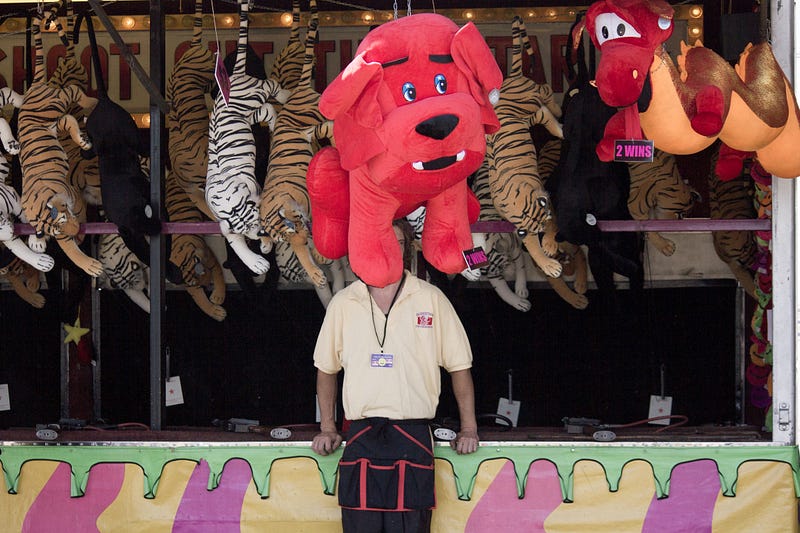
Image by author

As we come into event season — at least here during Canada’s short warm season — I will be pushing my “non-literal” photography further. I try to get a mix of literal and non-literal images from public events, so I can post in different places online that are more suitable for one style or the other.

Remember, you don’t necessarily need faces of people (or people at all) in your event images to convey emotion. Let the moment speak for itself, and it will speak to your viewers.

Photography
Photography Tips
Events
Fine Art
Full Frame
Recommended from ReadMedium