
Lit Up Interviews: Meet Our Team
A Few Words With Toni, Our Managing Editor
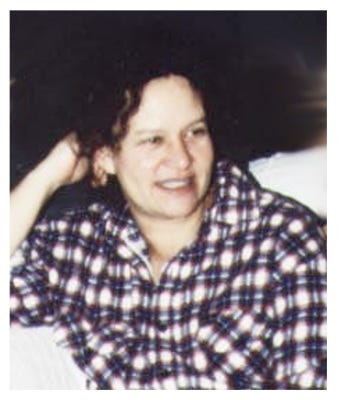

A Maguire is a professional developmental editor, line editor and book coach, as well as Lit Up’s managing editor, playing the modern game of trying to fit too many things into too small a time frame. Writing is as important as breathing. Family more than both. Farm work is never optional.
Either Or (Please highlight or underline your choice)
- Tea or coffee
- Hot or cold
- Movie or book
- Coke or Pepsi
- Toilet paper — over or under
- Morning person or Night owl
- Shower or bath
- City or country
- Social Media or book
- Paperback or ebook
Would you rather (Please highlight or underline your choice)
- Would you rather be in a room full of snakes or a room full of spiders?
- Would you rather have an endless summer or an endless winter?
- Would you rather have constant nagging pain or a constant itch?
- Would you rather only be able to have sex in a room for full of bugs or no sex at all ever? HARD PASS!
- Would you rather always be an hour early or be constantly twenty minutes late?
- Would you rather live in a haunted mansion or live in a un-haunted cottage?
- Would you rather lose the ability to read or lose the ability to speak?
- Would you rather have one real get out of jail free card or a key that opens any door?
- Would you rather go back to age 5 with everything you know now or know now everything your future self will learn?
Under the Spotlight:
- Where were you born?
Melbourne, Australia
2. Who was the most influential person in your life and how?
My father, I think. He believed in, and put to practise, the idea that one could do anything one set one’s mind to.
3. Something vividly you remember from Lit Up
Blood Brothers by E.D. Martin. Lit Up has some extraordinary stories from amazing writers in its archives. This is one of many I remember and go back to, finding the same pleasure in reading.
4. What do you value most and why?
It’s not until you discover all the things you used to take for granted can no longer be taken for granted that the spaciousness of this question becomes apparent. There are far too many things I value and mostly for the same reasons — their irreplaceability, their use-by dates, their passing without fanfare or sometimes even notice.
5. When did you first realize you wanted to be a writer?
Sometime in my teens. I wrote unlikely and long-winded epic fantasies about time travel and warrior princesses.
6. How long does it take you to write a book/story/poem?
Highly dependent. I’ve written a substantial genre novel in under six months, and taken two months to not quite finish a short story. In most cases, the deciding factor is the clarity of my meaning in my mind.
7. What is your work schedule like when you’re writing?
That varies, as well. For some periods in my life, it has been regulated and in big chunks, like going to the office and working on a project 9–10 hours a day. In others, like now, it’s far less routine and relies on the press of the muse in the background. I’d do much better with a definitive routine, I think, but lately that seems to get derailed whenever I attempt it.
8. Where do you get your information or ideas for your books?
The world, listening to people, reading, watching films and sometimes television shows, reading news reports and nonfiction works that suggest backgrounds or plots of interest. Everywhere, really. People inspire and fascinate me.
9. What do you like to do when you’re not writing?
I surprise myself by loving the process of editing, especially the works of writers who have wonderful imaginations and enormous potential in their stories and need only fresh eyes to help polish and refine their visions.
10. What literary pilgrimages have you gone on?
When I travelled…to the South Pacific, the United States, the United Kingdom and Europe, almost every city and location I really wanted to see, walk in, absorb was from books — Fiji and Vanuatu, San Francisco, New Orleans, New York, London, Edinburgh, Paris, Amsterdam, Istanbul…all filled with events in my mind that were as real and vivid as any experienced in real life. I don’t know if that counts as a “literary pilgrimage” — perhaps more as a story pilgrimage.
11. What is the first book that made you cry?
Bambi.
12. Does writing energize or exhaust you?
When it’s going well, it energises. When it’s a struggle, it exhausts. Doesn’t matter, really. They are both necessary to creation.
13. Do you believe in writer’s block?
No.
14. Have you ever gotten a reader’s block?
Yes, of sorts. Not being able to focus on a book, or any book, for periods of time. It happens when I have too much stress in my life, immediate threats, that kind of thing. I can’t take my escape route until I have Plans A-Z for real-world problems.
15. Does a big ego help or hurt writers?
Ego is the wrong word, in my view. It suggests vanity, pride, a lack of self-awareness and too many justifications. But every writer should have sufficient self-confidence to be able to hold to the vision they want to express and sufficient self-knowledge to understand that it will take a lot of work, objectivity and the ability to shut off personal emotions that will make polishing the story nearly impossible.
16. What do you think makes a good story?
That depends, I suppose. There are plenty of ‘good’ stories that do nothing more than entertain effectively, that allow readers to escape their lives, even their times, and travel at will through the future and past and adventure where they couldn’t possibly in real life. Those are good stories, if written with sufficient competence that the reader feels as if they were there. But the great stories, I think, give us more, connections to the past and future, connections to the characters and the universality of human emotion and experience, connections and hope for living.
17. What are common traps for aspiring writers?
I think it’s a mistake to believe that writing is easy (for anyone) or that it doesn’t take — like every other thing in this world — patience, practice, hard work, dedication and an understanding of what one is trying to achieve.
18. What other authors/writers are you friends with, and how do they help you become a better writer?
There are really far too many to list — every writer I’ve gotten to know, here on Medium and on Scribophile, has given me insight and knowledge into things I might never have experienced otherwise, have shown me the view from their lives, have inspired me with their experience and skills and helped to make me more cognisant of the aspects of writing that I fail in.
19. What was an early experience where you learned that language had power?
Reading The Jungle Book by Rudyard Kipling, as a child. The power in the story, the power in the words, rippled through me and filled me with emotion… imagine if you will a child of nine or ten, baring her teeth and howling like a wolf to the night sky! I didn’t articulate it so readily back then but the potential for living more than a single life crystallised in my mind at that time.
20. What does literary success look like to you?
Being able to write of the things that have meaning and resonance for me.
21. How do you select the names of your characters?
Usually, I choose names based on their time and their purposes, the myriad of factors of their lives — ethnicity, culture, location, period, upbringing, history — and hopefully choose something that not too many others have used or that suits the character in my mind’s eye.
22. How do you come up with the titles to your books?
That is less successful much of the time. Sometimes I choose phrases that seem to embody the idea of the story. Sometimes I might choose a phrase from the story that captures the essence of the idea or an aspect of the idea. Sometimes I’ll use famous quotes or parts of them. The title has to distil at least some of what I’m trying to say, in some way. That is often quite annoyingly difficult.
Share something fun or interesting Not sure why I decided on the following, other than everyone should try elderberry wine!
Elderberry Wine
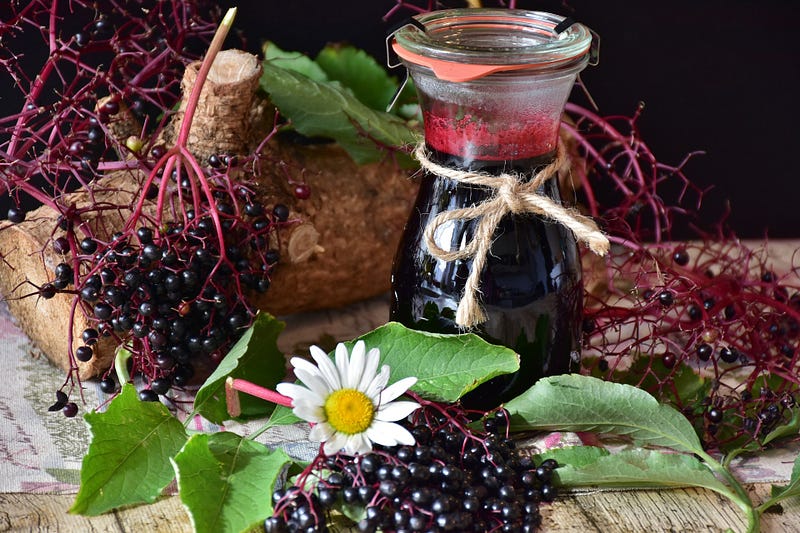
Recipe file created August 31, 2005.
There are two types of Elderberries: Red Stemmed with small berries, and Green Stemmed with large berries. Use them in separate batches and compare the results.
Note that there is no sugar added to Recipe 2.
Ingredients
Recipe 1
4 1/2 cups Elderberries 12 cups water 5 3/4 cups sugar 1 lemon, juice only 3 campden tablet 1 teaspoon pectic enzyme 1 teaspoon yeast nutrients 1 package wine yeast
Recipe 2
4 1/2 cups Elderberries 12 cups water 10 cups raisins 3 campden tablet 1 teaspoon pectic enzyme 1 teaspoon yeast nutrients 1 package wine yeast
Recipe 1
- Wash Berries. Remove stalks. Crush and place in primary fermentor. Dissolve campden tablets in 2 cups hot water. Add to primary fermentor. Stir in lemon juice and pectic enzyme. Leave overnight.
- Add 10 cups water and yeast. Let sit 3 days, stirring daily. Make sure fruit stays submerged.
- On day 4, strain out the fruit. Add sugar and nutrients. Put into secondary fermentor and attach airlock. Finish as for dry wine or sweet wine below.
Recipe 2
- Chop raisins. Put into primary fermentor with 10 cups cold water. Dissolve campden tablets in 2 cups hot water. Add to primary fermentor. Let sit overnight.
- On day 2, add yeast. Stir vigorously each day for 2 weeks.
- On day 15, Wash elderberries and remove stems. Put berries into an oven-proof container (not metal). Put it in oven at 250'F for 15 minutes, or until juice runs. Strain the juice from the skins.
- Strain the raisins from the wine. Add the cooled elderberry juice (should be at least 2 1/4 cups juice).
- Add pectic enzyme. Stir.
- Siphon into secondary fermentor and attach airlock. Finish as for dry wine or sweet wine below.
Finishing
For a dry wine, Rack in three weeks and return to secondary fermentor. Rack again in three months, and every three months until 1 year old. Bottle.
For a sweet wine, rack at three weeks. Add 1/2 cup sugar dissolved in 1 cup wine. Stir gently, and place back into secondary fermentor. Repeat process every six weeks until fermentation does not restart with the addition of sugar. Rack every three months until one year old. Bottle.
Variations
A
Substitute 1/2 pound dried elderberries for the fresh ones. Soak them in hot water 30 minutes before making the wine.
B
Add: 1–2 inch cinnamon stick 1 inch fresh ginger root 1 teaspoon whole cloves 7 cups brown sugar in place of granulated sugar
C
Add: 2 cups chopped plums with the berries.
NOTE:
Recipe 1 is ready to drink in about 3 months, and only continues to improve for about 2 years. Recipe 2 is best if you can refrain from drinking it for a year from the date it was started.