
Lisbon Street Art: the Good, the Bad and the Ugly
And a couple of great ones too
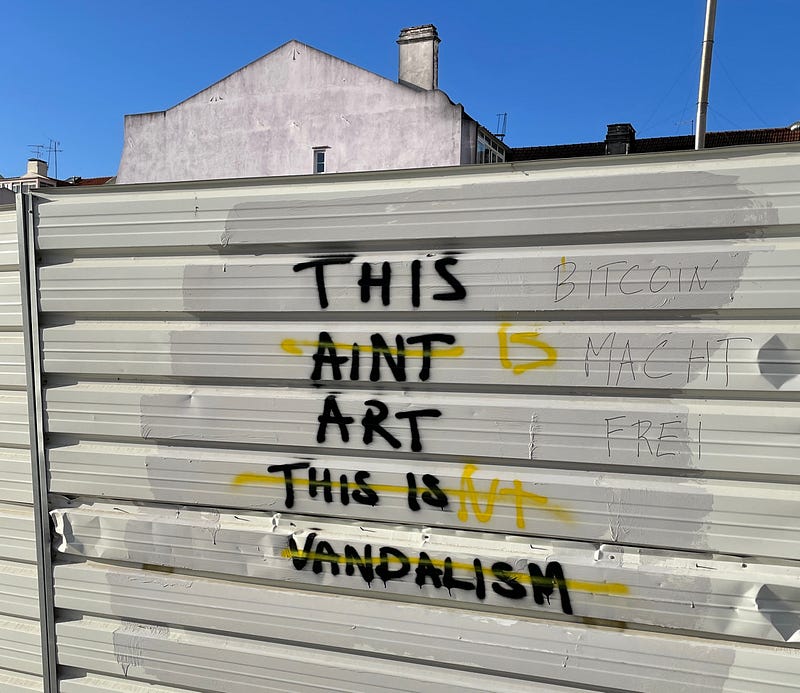
Lisbon is filled with street art, for better or for worse. These are just some random photos that I took while walking around the city for two weeks.
THE GOOD…
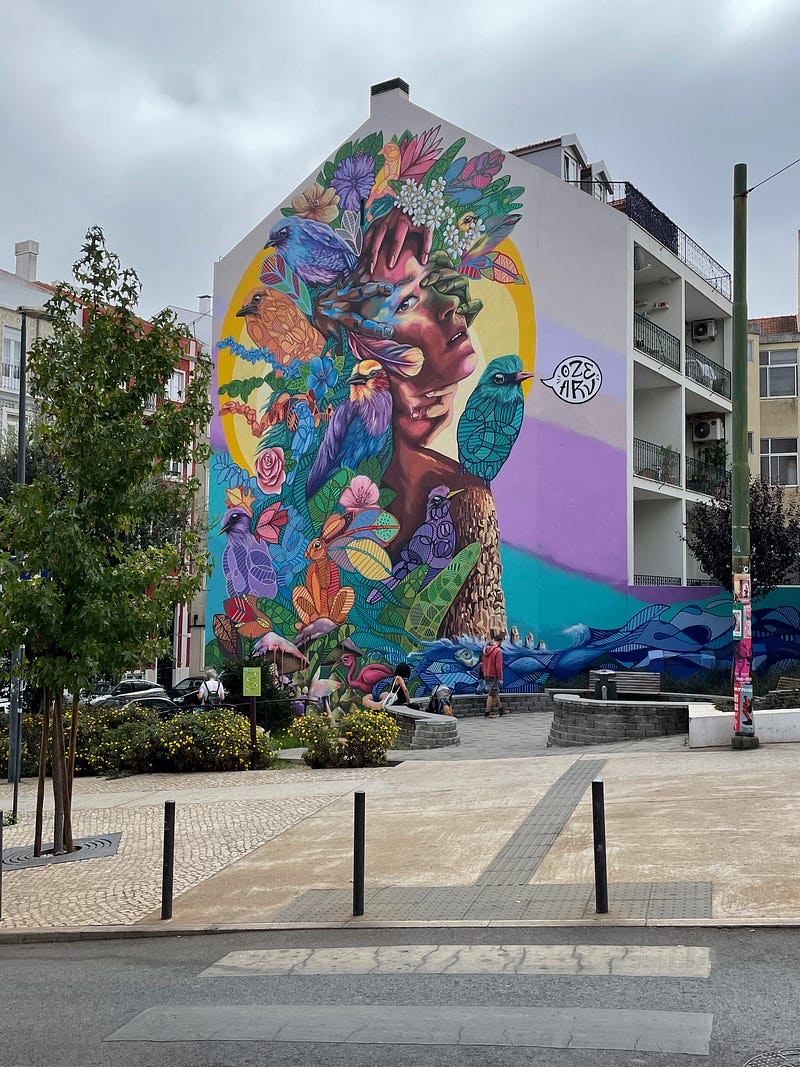
This beautiful mural is called Fado Tropical em Tons de RGB (Tropical Fado in RGB Tones). It’s a strikingly beautiful tribute to Portugal’s traditional Fado music by the artist OzeArv and is one of many beautiful works of street art in the Graça neighborhood where I was staying recently. Take an outdoor table at the cafe across the street and enjoy the view with a coffee and a delicious pastel de nata… an egg custard tart that is a Portuguese classic and an absolute must-do.
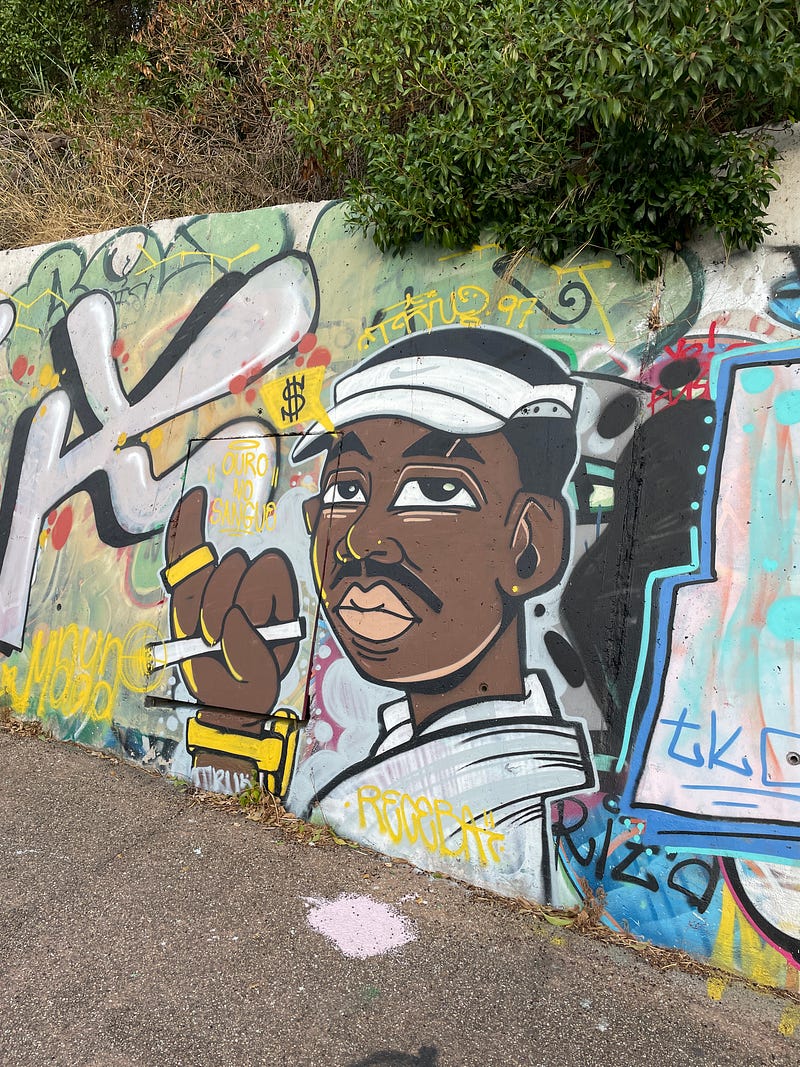
Check out this cool dude that I ran into at the Jardim da Cerca da Graça with his bling bling ring and his “money talks” attitude. Next to his pinkie ring is says Ouro no Sangue… translation… Gold in the Blood! De fato senhor!!
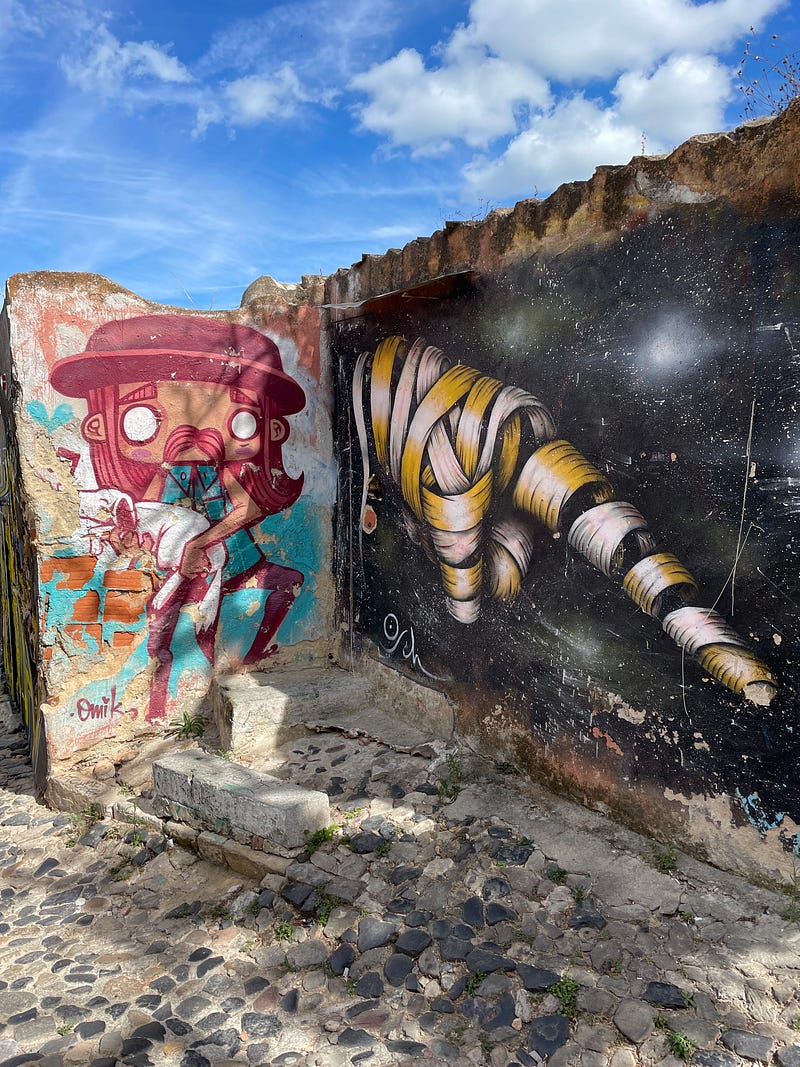
Somewhere near the Miradouro do Recolhimento I looked up from the treachery of the cobblestones and saw these two amigos. On the left we have a funky but stylish old guy with a badass stache. If you scroll in you can see that his shelf life seems to be weathering away one paint chip at a time. And next to him, an invisible anteater, or so it seems.
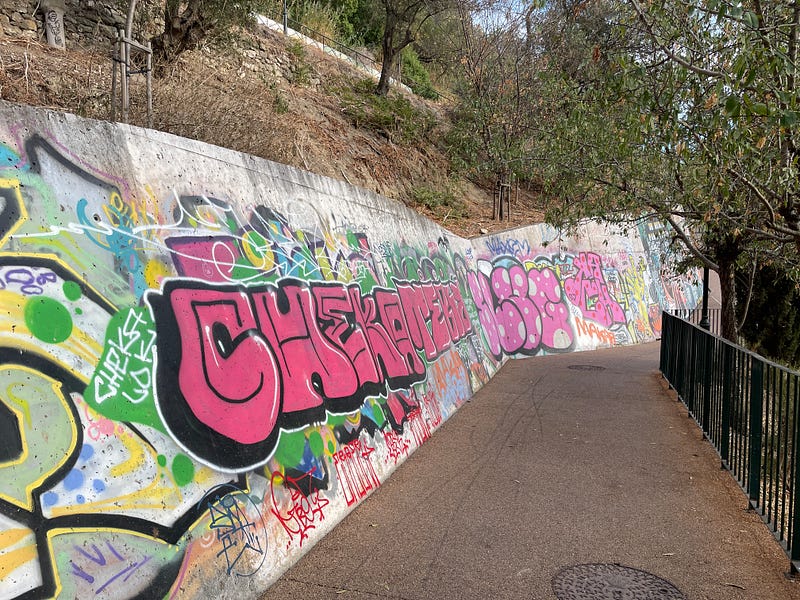
This wall in the isn’t going to win any awards but it looks like a place where graffiti artists have honed their skills over the years. Layers upon layers, and years upon years of practice runs of various quality and styles. Also found in the Jardim da Cerca de Graça.
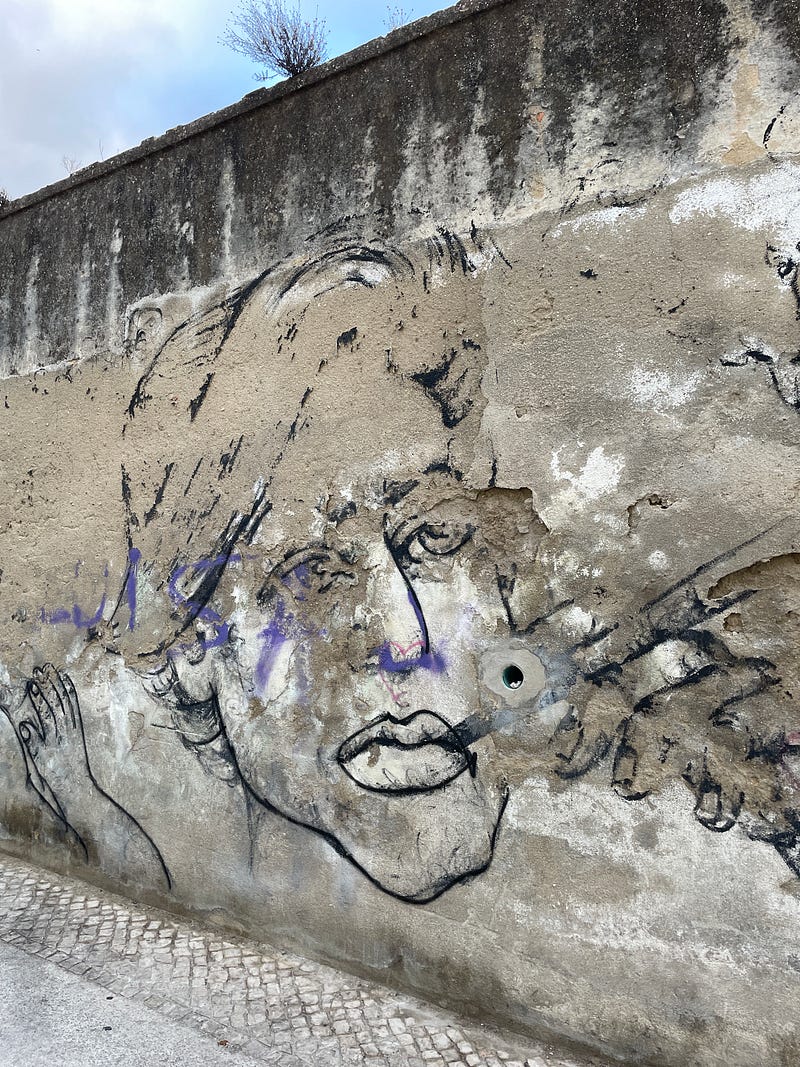
Minimalism on a decaying wall in Graça. I had to step back from this handsome gentleman to take him all in. This piece makes you lean in and lean back because it’s hard to tell how much of him is the artist’s actual work, how much was already on the wall, and how much was added by random taggers after the fact.
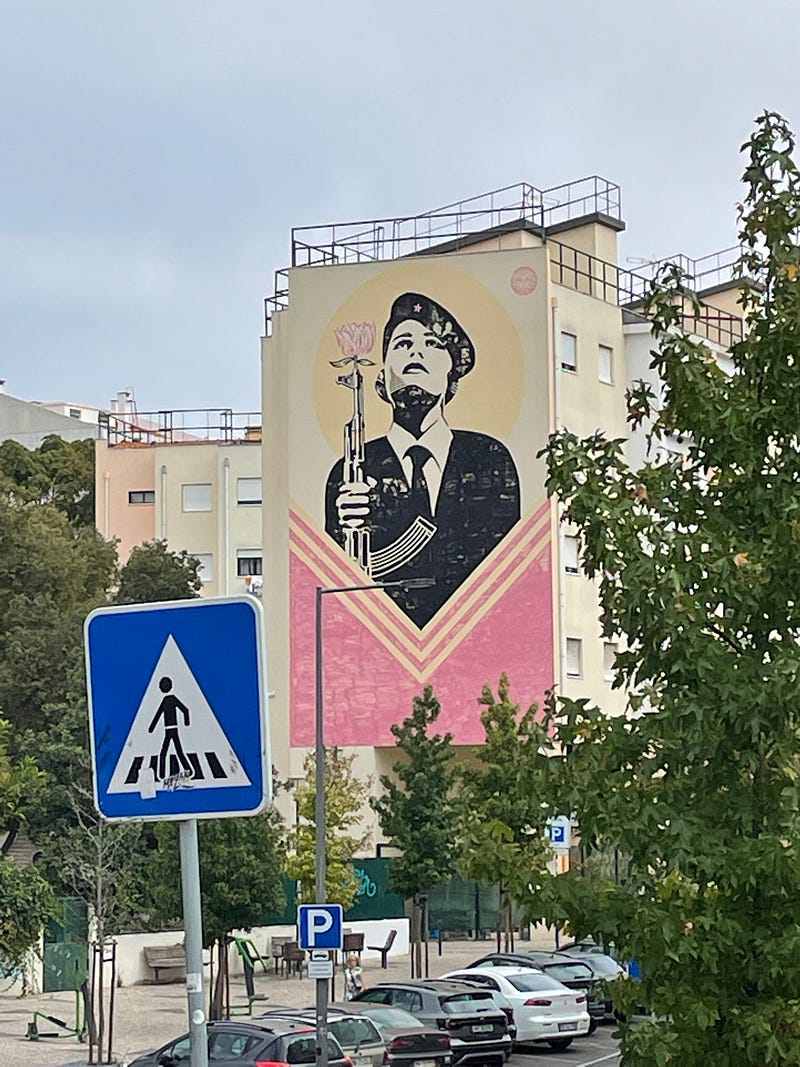
This mural is also in Graça and from an artist whose work you may already know. If you are familiar with the HOPE poster from the 2008 US presidential campaign of Barack Obama (Google it) you might know that Shepard Fairey created that iconic image as well as this one. This mural is a tribute to the 1974 bloodless Carnation Revolution, a coup d’état in Portugal that was a catalyst for democracy in the country after years of dictatorship. The carnation is a nod to the US protestors of the Vietnam War who put flowers into the barrels of the military guns aimed at them as a form of peaceful protest.
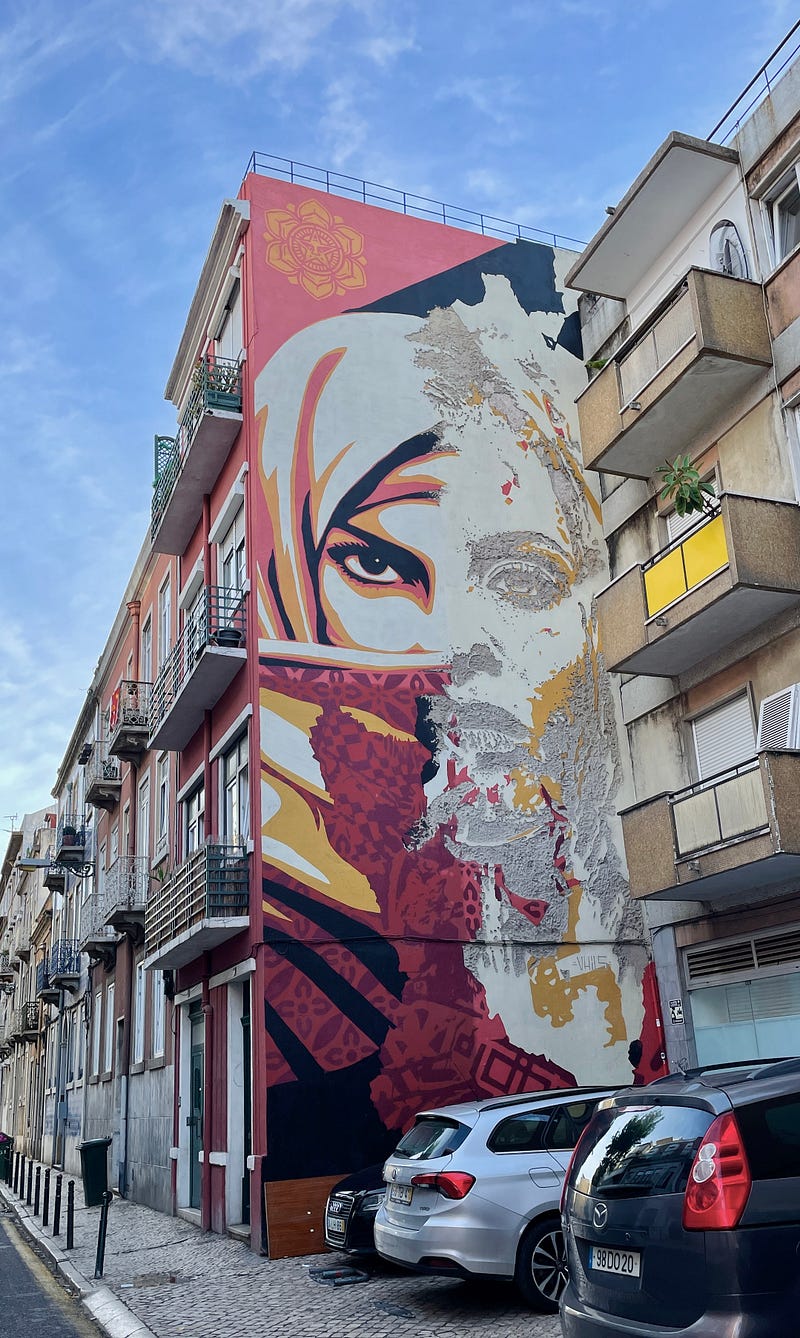
Shepard Fairey is also the mastermind behind the André the Giant guerilla street campaign (Google it) whose stickers I first noticed on the light posts and electrical boxes of San Diego 25+ years ago. Over time André morphed into the more streamlined look of the OBEY campaign (Google it) which dominates the current branding of Mr. Fairey. If your memory needs a nudge on that one enlarge the above image and look into the star in the upper left corner of the mural. The above two murals are both OBEY projects but this particular lady is a collaboration with a famed Lisbon street artist and gallery owner who goes by the name Vhils. Shepard painted the left side of the face and Vhils painted and then chipped away the right side to create a mashup of two women from different cultures. Take a look here to see the evolution of these two murals and more work by these two dynamic street art creators.
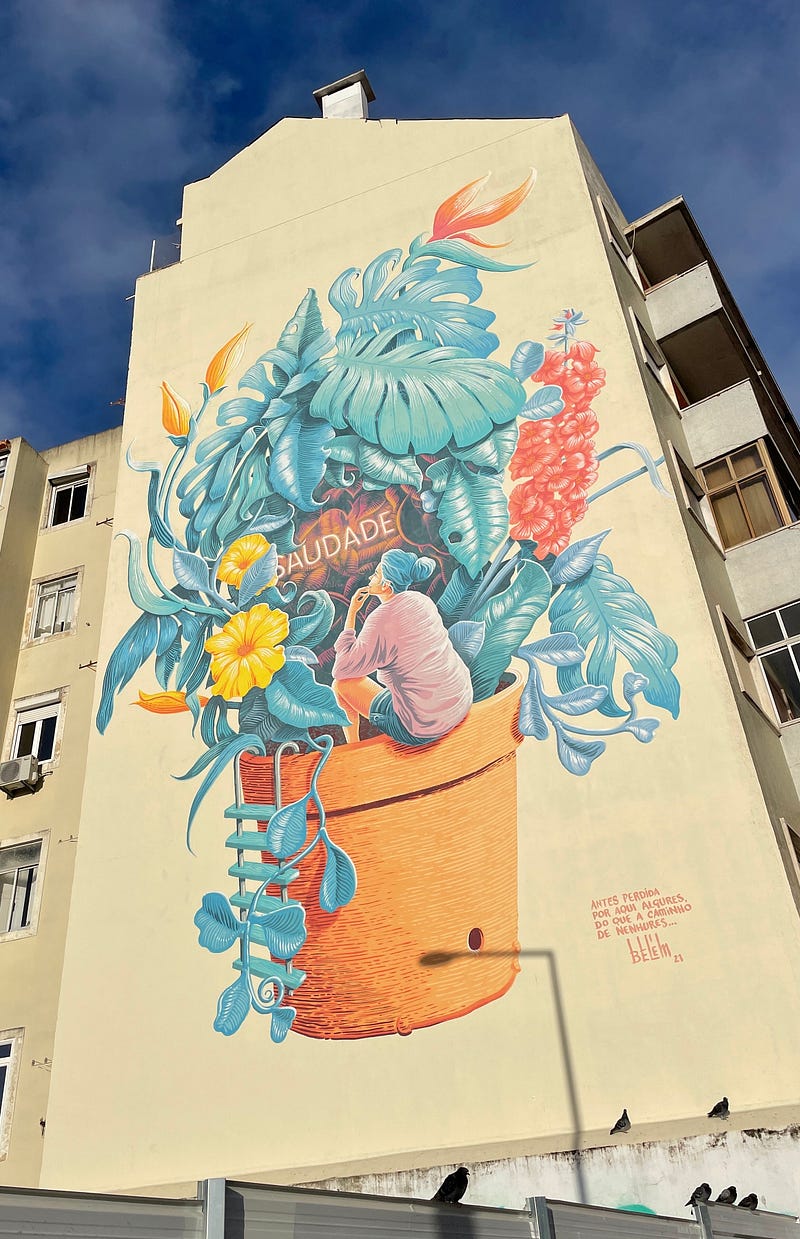
While large in stature this mural has a quietness about it. Perhaps it’s the faded look of the paint, perhaps it’s the tranquil uniformity of the blueness of the plants. Saudade means longing in Portuguese and the quote on the bottom right translates to “Better lost here somewhere, than on the way to nothing”. I’m not sure that I understand all of the symbolism, and the botched Google translation doesn’t help much but it’s yet one more lovely piece of street art in beautiful Graça. The scale and the positioning allow it to be seen from a faraway hill across the city at the Miradouro de São Pedro de Alcântara.
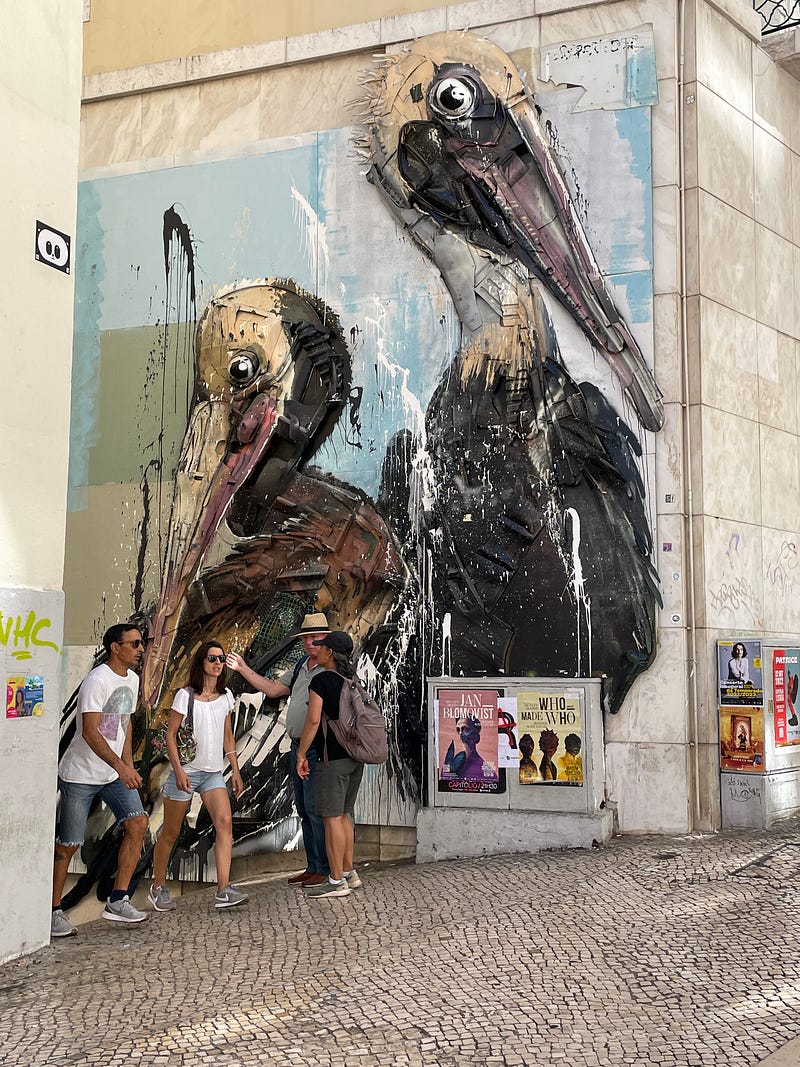
These giant grunged-out 3-D pelicans are made from repurposed garbage. They can be found in the historic center of Lisbon next to the Elevador de Santa Justa if you want to hunt them down. If you scroll in you can see the car parts and random pieces of junk, and even a skateboard helmet or two as eyeballs.
THE BAD…
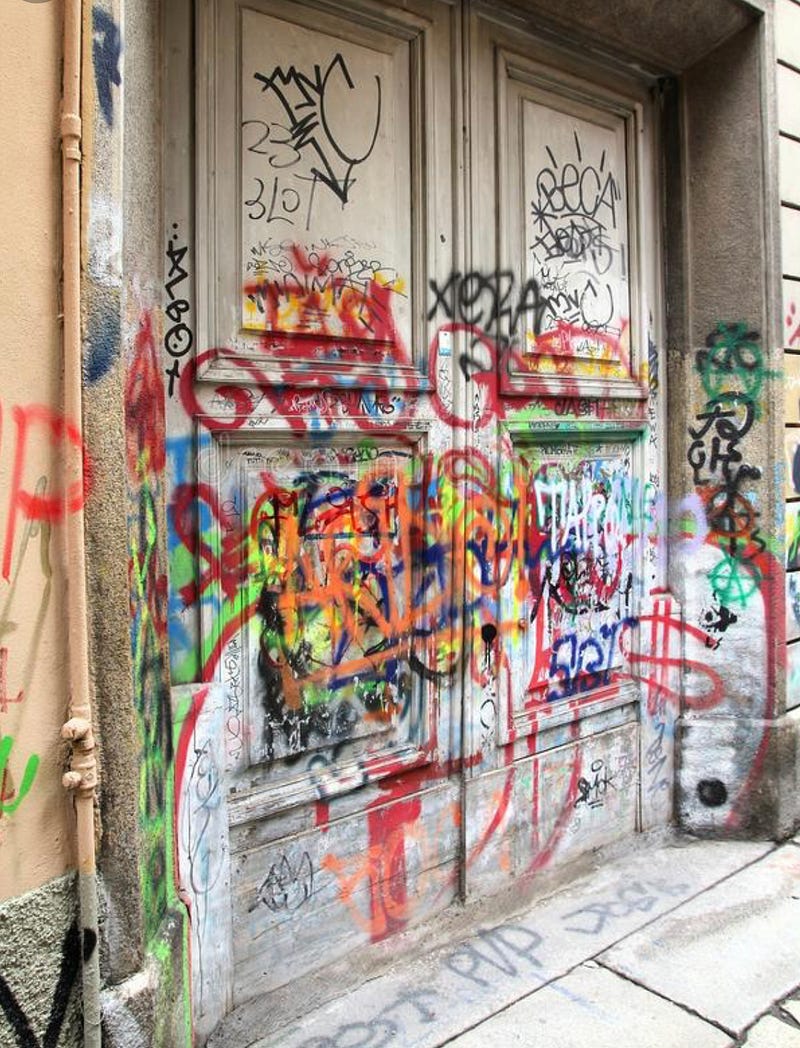
Lisbon is covered in amateur graffiti (AKA vandalism) which has no hope of ever being deemed street art. Unfortunately even beautiful old doors and natural stone are not safe.
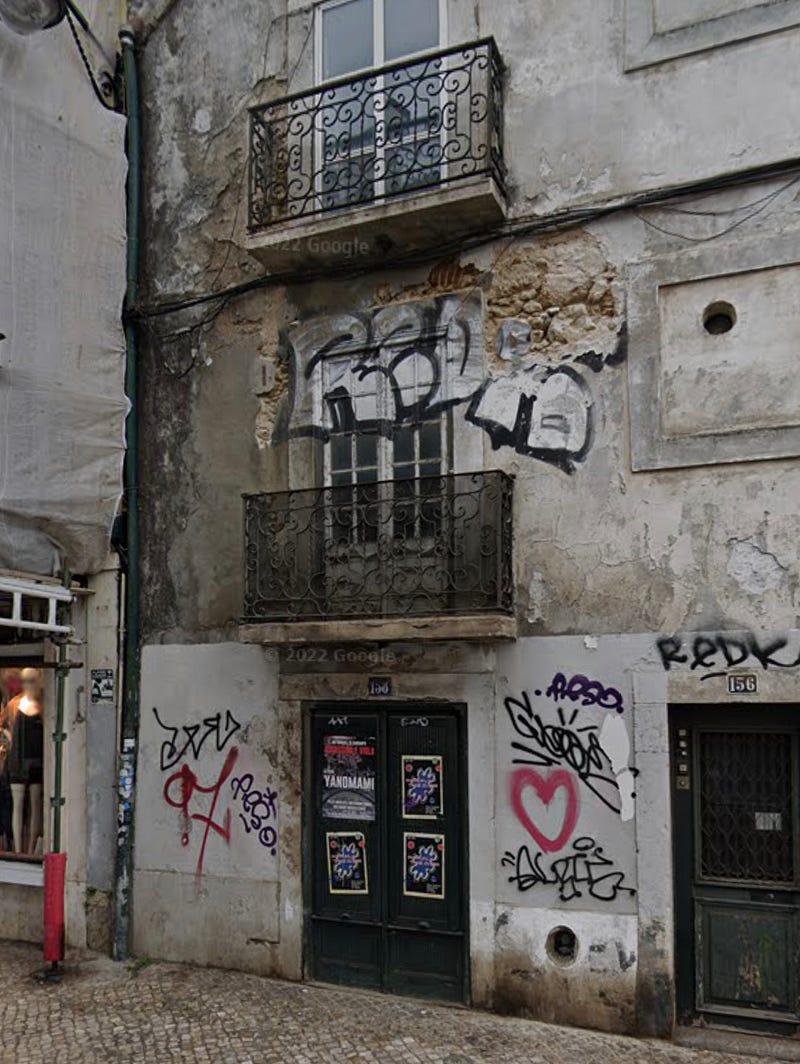
An abandoned building is easy prey, or at least partially abandoned. Note the new windows and perfect railing on the graffiti-free top balcony. I suspect that there is a beautiful apartment hiding inside there above the ruins.
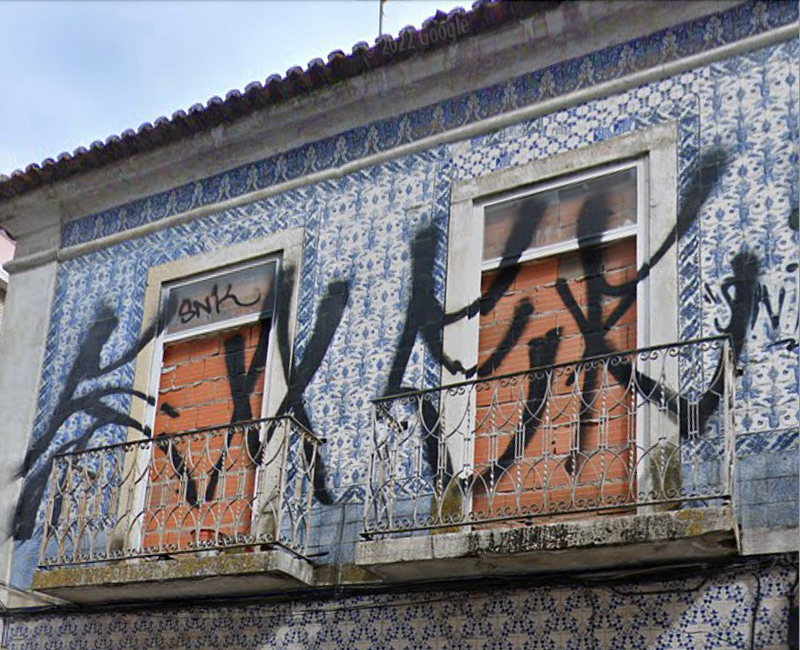
Many houses in Lisbon are clad with traditional Portuguese tiles with delicate and decades-old designs. This graffiti seems especially unfortunate as removing the paint would surely damage the old tiles beyond repair. Fortunately, this artisan craftsmanship is alive and well with new construction carrying the traditional look forward.
AND LASTLY…THE UGLY
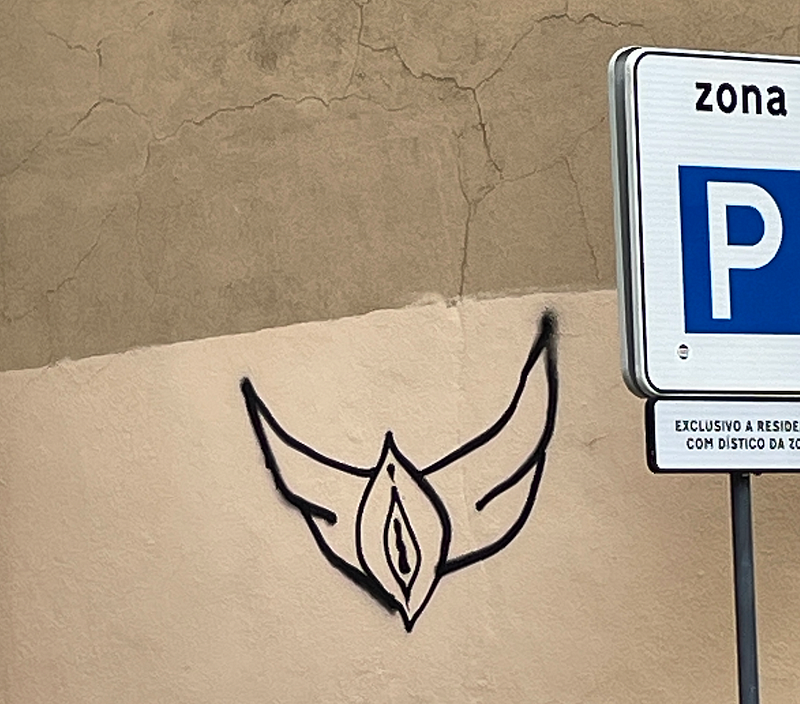
I found this one near the Miradouro da Senhora do Monte in Graça. For obvious reasons I named it The Flying Vag. Artist unknown.


