avatarThe Daily Updater

Free AI web copilot to create summaries, insights and extended knowledge, download it at here

3252

Abstract

to even try to understand your own emotions?</p><p id="144f"><b>The problem with the tired old trope of men as less emotional is that it only works if we ignore all the emotions we associate with maleness, such as anger, competitiveness, lust, rage, ambition, jealousy, and pride. And only if we pretend men aren’t affected by such feelings as insecurity, shame, sadness, fear, grief, pain, anxiety, and guilt.</b></p><p id="a656">What I observed in my professional career was that men do experience those emotions just as much as women do, but they are less aware of them, less willing to examine them, less able to discuss them.</p><p id="5b18"><b>Even feelings every human being should be proud to own, like love, are uncomfortable territory for the hyper-male to verbalize. Does that mean they lack such feelings? No. <i>So why are they so scared to talk about them?</i></b></p><p id="6246" type="7">In what sense is it rational not to try to understand how others feel?</p><h2 id="4850">Big boys don’t cry.</h2><p id="f56e"><b>To most of us, emotionality means tears.</b> Maybe this is where we got the notion of the unemotional man. Women cry, and children cry, but men are tough. They don’t react to feelings.</p><p id="5921">Well, they might react, but not by weeping. They might shout and clench their fists. They might pitch tantrums — punching walls, slamming doors, and breaking things. They might do any of a dozen crazy things, from driving way too fast to picking fights in bars, but as long as they aren’t crying at the same time, their friends won’t call them out for “getting all emotional.”</p><p id="e644">But tears are a <b>healthy</b> response to strong emotion. Tears show vulnerability, invite support, build unity with others, and regulate our neurochemical balance. Tears function as a safety valve, removing stress hormones like cortisol. When those chemicals build up, it sets us up for major health problems, including diabetes, heart disease, and cancer. It also builds up pressure that can lead to desperate behavior.</p><p id="c708"><b><i>Maybe, if we taught our boys to cry, we wouldn’t see so many of our men arrested, addicted, committed, or dead by suicide.</i></b></p><p id="2497" type="7">Tears function as a safety valve, removing stress hormones like cortisol.</p><h2 id="a13e">But what about their hormones? PMS!?!</h2><p id="56ba"><b>Here’s the scoop: we all have hormones.</b> Every body and every brain has the same hormones, just not in the same proportion. And everybody’s hormones have an impact, not just on their moods but on their mental clarity.</p><p id="3e2c">Women’s estrogen levels fluctuate in predictable 28-day cycles. That’s why we see shelf after shelf of books, plus articles in every magazine that’s written for a female readership, about not only PMS and PMDD but also the emotional effects of pregnancy and perimenopause. Estrogen may be the single most-examined substance in the human body. (Or, at least, in the <i>female</i> human body, though many of the neural pathways in men’s brains are also estrogen-dependent.)</p><p id="4017">But even though males are still in the majority among physicians, testosterone has not been given anywhere near as much attention except regarding its

Options

impact on sexual and athletic performance.</p><p id="4887">Men’s testosterone levels surge <b>unpredictably</b>. Like every time they see a pretty woman. Or their team wins a big game. Or they get cut off in traffic. So where is all the research on the impact of those hormone surges on men’s moods and mental clarity? Or, more to the point, why doesn’t <i>that</i> research get more air time in the popular press?</p><p id="81c9"><b>Testosterone-juiced behavior has been described in many ways. Rational was never one of them.</b> But do we teach our sons to watch out for <i>their</i> hormones? Of course not. Instead, we show them how to justify their actions — to <i>rationalize </i>their irrational behavior and, if called out by a woman, accuse her of oversensitivity.</p><p id="bb86" type="7">Testosterone-juiced behavior has been described in many ways. Rational was never one of them.</p><h2 id="b8af">Conclusions</h2><p id="277a">A<b>re men more rational than women? </b>In a word, no. Just the opposite. Neither are they less emotional, just less aware of their emotionality.</p><p id="1b09">Our culture shows girl children lots of ways to handle feelings. It tells boy children just to stuff them. So the women have the tools, the tears, the talking skills. The men just have to wing it. In the dark.</p><p id="6fc1">It isn’t fair to anyone. Not fair to men who have grown up deprived of vital skills and knowledge. Not fair to women who are forced to deal with men who can become irrational at any moment, in response to feelings they have been conditioned to ignore.</p><p id="b67f">It doesn’t have to be that way. We can do a better job preparing all our children to live as emotion-having beings in the company of other emotion-having beings.</p><p id="4b69"><b>But until that happens, we should stop letting men get away with pretending they are somehow blessed with greater rationality than women. Because nothing could be further from the truth.</b></p><p id="cc07">.</p><p id="171c"><b><i>More from Edward Robson, PhD, MFA:</i></b></p><div id="2913" class="link-block"> <a href="https://readmedium.com/the-friend-zone-is-a-lie-f7b904035d3a"> <div> <div> <h2>The Friend Zone is a Lie</h2> <div><h3>There’s a reason you keep getting stuck there.</h3></div> <div><p>medium.com</p></div> </div> <div> <div style="background-image: url(https://miro.readmedium.com/v2/resize:fit:320/0*9tcAn5ESD5gxfeUb)"></div> </div> </div> </a> </div><div id="0d10" class="link-block"> <a href="https://readmedium.com/you-have-the-power-to-cause-pain-ba63dcb1a55e"> <div> <div> <h2>You Have the Power to Cause Pain</h2> <div><h3>The surest way to guarantee you will is to imagine that you can’t.</h3></div> <div><p>medium.com</p></div> </div> <div> <div style="background-image: url(https://miro.readmedium.com/v2/resize:fit:320/1*56yO74vt1MVnhj5I0uIECg.jpeg)"></div> </div> </div> </a> </div></article></body>

Scientific Breakthroughs

Liquid Biopsy Set to Revolutionize Cancer Screening Worldwide
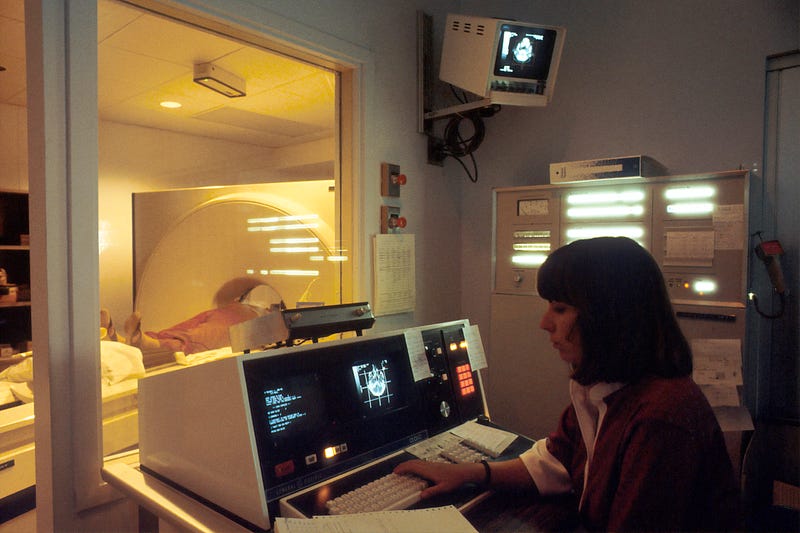
Photo by National Cancer Institute on Unsplash

An exciting new non-invasive cancer testing method called liquid biopsy has demonstrated over 95% accuracy in detecting multiple deadly cancer types extremely early. This innovative technique analyzes blood for circulating tumor DNA to pinpoint cancers often years before symptoms arise. With unrivaled sensitivity and effective large-scale screening capabilities, liquid biopsy represents the future for life-saving early cancer detection.

How Liquid Biopsy Radically Advances Early Diagnosis

Up until now, severe limitations were hampering early cancer identification. Available tests lacked precision screening of the general population. Or they required expensive, sometimes uncomfortable diagnostic procedures assessing only specific organs.
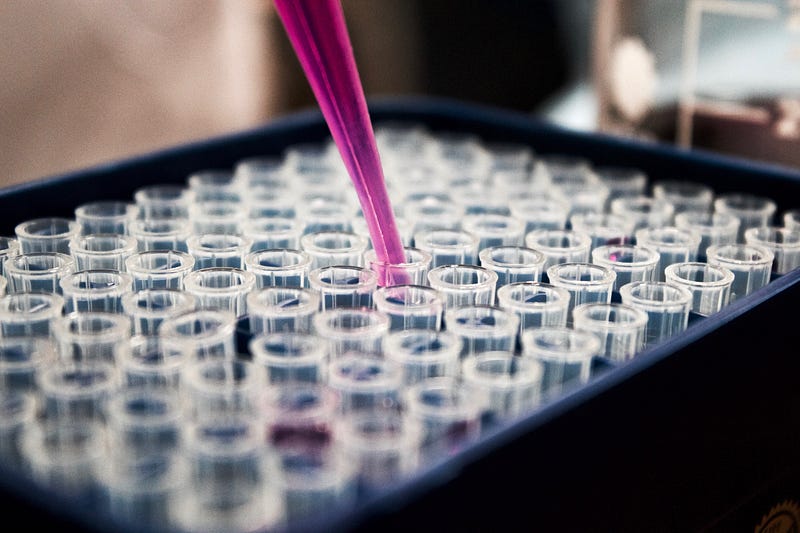
Photo by Louis Reed on Unsplash

Liquid biopsy eliminates both hurdles with a simple blood test detecting over 50 types of cancer mutational DNA. It scans the entire body at a cellular level with unprecedented precision. This enables diagnoses at the absolute earliest, most treatable stages across all organs.

Game-Changing Accuracy Changes Patient Outcomes

Liquid biopsy’s phenomenal cancer detection rates exceed 95% accuracy across a variety of malignancies. Such precision far surpasses existing single cancer screening, especially for symptomatic patients. One 2022 study saw 100% accuracy in diagnosing advanced pancreatic cancer.
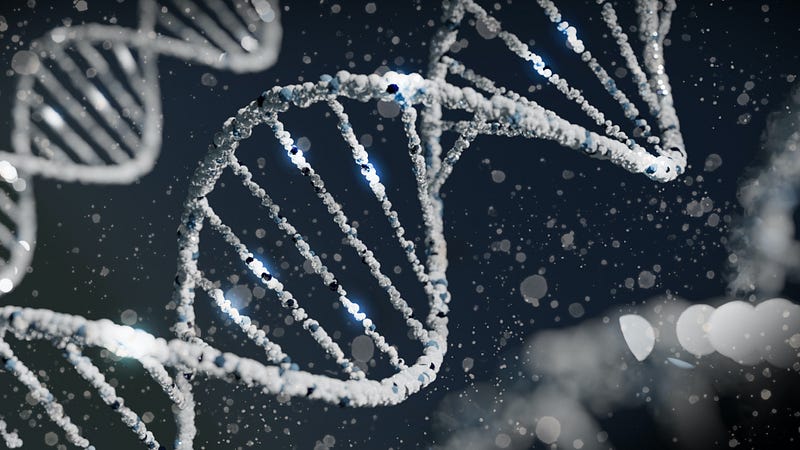
Photo by Sangharsh Lohakare on Unsplash

Another validated 95% precision identifying early-stage colorectal tumors. This level of sensitivity and specificity makes liquid biopsy the benchmark for cancer testing accuracy. It ensures deadly cancers don’t get missed, leading to dramatically higher survival rates.

Mainstream Screening Now Possible for Everyone

Until liquid biopsy, population-wide cancer screening faced steep barriers. Tests were too invasive, insufficiently precise, or prohibitively expensive without insurance coverage. But a basic blood draw liquid biopsy test changes everything.

Photo by National Cancer Institute on Unsplash

It makes highly precise, minimally invasive screening available for all ages. Healthy adults could soon receive recommended annual screening accessing game-changing early diagnostics. This expands life-saving detection rates exponentially compared to only testing symptomatic groups.

Tremendous Potential Saving Millions More Lives

Liquid biopsy unlocks paradigm-shifting potential to combat cancer sooner and more accurately than ever before possible. As clinical validation continues, liquid biopsy seems poised to become the global standard for early detection. Optimistic estimates project saving over a million more lives in the US alone when scaled nationally.

Photo by Viktor Krč on Unsplash

The American Cancer Society among numerous leading medical authorities now enthusiastically endorses liquid biopsy screening based on recent findings. It represents hope that all populations will soon reap the benefits of detecting cancers at the outset.

Sum Up:

With liquid biopsy heralding a seismic shift in advancing early diagnosis, cancer mortality rates may finally move dramatically lower. Superior accuracy and accessibility promise to save potentially millions more through blood-based screening.

Photo by Roman Kraft on Unsplash

This revolutionary testing circumnavigates once-impossible obstacles to pinpoint cancer earlier and gives patients precious extra time finding effective treatments. In liquid biopsy, the future of cancer medicine has already arrived.

“This story is written by M Aslam Waheed. Follow me on LinkedIn, facebook, Youtube, Twitter, and Instagram.”

I hope you’ll find this story “Interesting and Surprising”. Subscribe to my newsletter for such interesting and lovely poems and stories.

You may also like:

Happy Learning.

Science
Cancer
Medicine
Learning
Writing
Recommended from ReadMedium