
Lion – King Of The Apex Predators
Apex predators are vital for healthy ecosystems
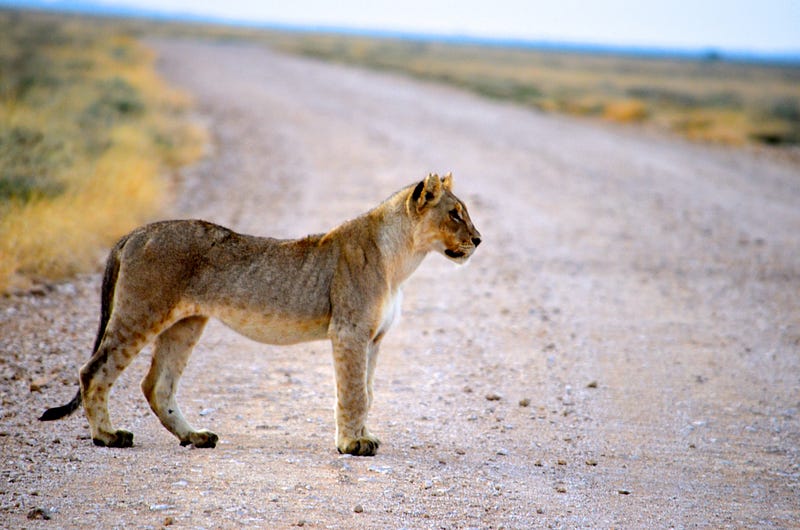
Is there a more iconic Apex Predator than the Lion anywhere on planet Earth? I think not — everyone knows the King of the Jungle!
However, does everyone know the ecological significance of apex predators?
On this point I’m not sure. Take trophy hunters for example, they certainly must not know. Otherwise, why would they be intent on killing such important animals just for sport?
I’ve encountered lions many times in the bush and they are truly magnificent animals — animals that should be cherished.
One particularly lucky encounter stands above the rest as my favourite. Here is an excerpt from a piece I wrote about that very encounter.
The road travelled was all our own, not another soul in sight. Again, movement to the left of the track. LION!
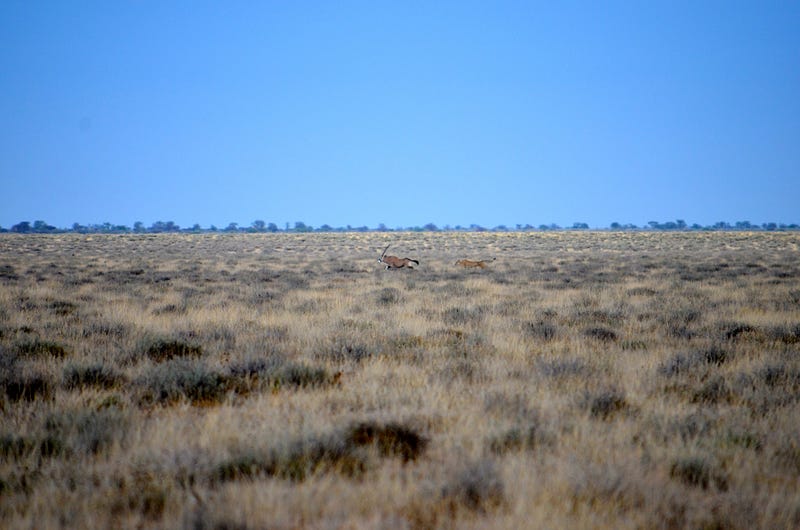
A single lioness sitting on her haunches scanning the ground ahead of her. A lone Oryx too, grazing 150m beyond.
We stopped the vehicle, exchanged excited glances and whispered words. We planned to sit and watch for a while, soak this in for as long as we could.
The Oryx was aware of the lion’s presence but seemed unperturbed. The feline appeared relaxed, content with keeping her distance.
I scanned ahead of us, adjusting my eyes to the changing light. A small movement caught my eye to the right. Another lion — this one in stealth mode — hunting!
I’m not sure if it was intentional but it appeared to be a team play from the lioness pair. One sitting in plain sight keeping the attention of the Oryx while the other stalked. We were captivated and the excitement was building.
The stalking cat stayed low, her body elongated and camouflaged below the tops of the grass. When the Oryx had its head down the lion would take three or four quick steps forward then drop. Smooth and precise.
Completely disappearing when she dropped to the ground, it was like a magician’s vanishing act — amazing.
When she moved, her head was tipped forward and low. Her pronounced shoulder blades, left and right, rose and fell with each step.
We could not quite believe what we were witnessing.
The routine continued as she inched her way ever closer to the unsuspecting Oryx. When she was within about 25 meters of her prey, she crouched low and readied herself.
We could almost feel her coil tight like spring. Every fibre of her being was charged and ready to explode. We waited, our hearts pounding, brimming with excited anticipation.
Suddenly, she burst into action! The Oryx, now alerted, sprung forward running for its life. The lioness got up to speed quickly and closed the gap to the Oryx with apparent ease.
We were witnessing two supreme athletic specimens at top speed. The power was raw, the intent unmistakable. A battle for survival — on both fronts.
One fleeing for its life, the other trying to obtain the necessary fuel to sustain life. A primal example of life and death playing out before our eyes. The harsh reality of life on Earth.
On this day, the Oryx won out. The lioness was unable to maintain the pace for long enough. She would go hungry for now.
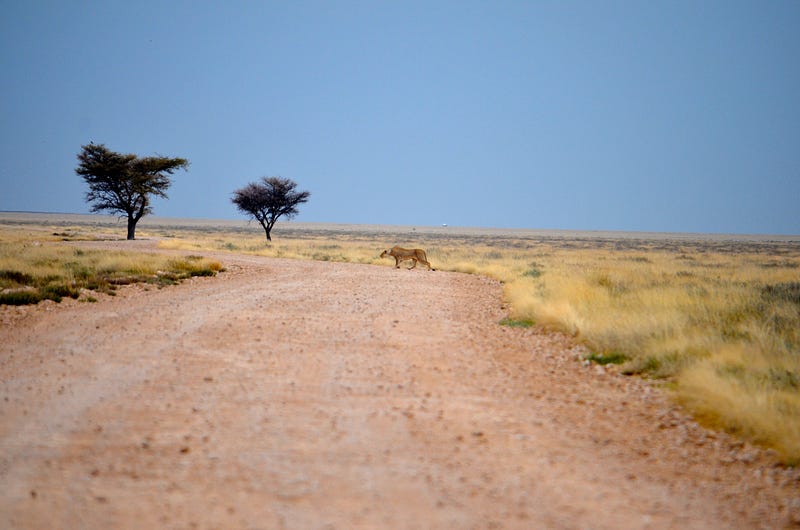
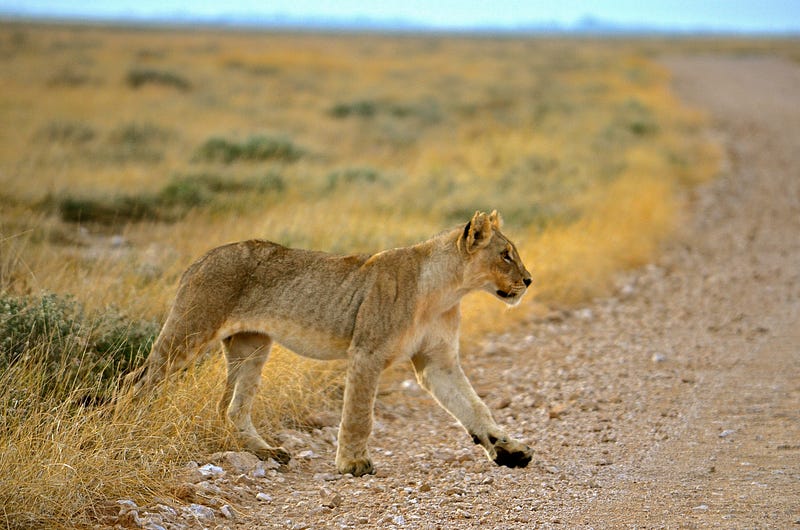
Lions are the one of three big cats found in Africa and are by far the most significant apex predator on the continent. An apex predator is simply the animal at the top of the food chain without any predators of its own.
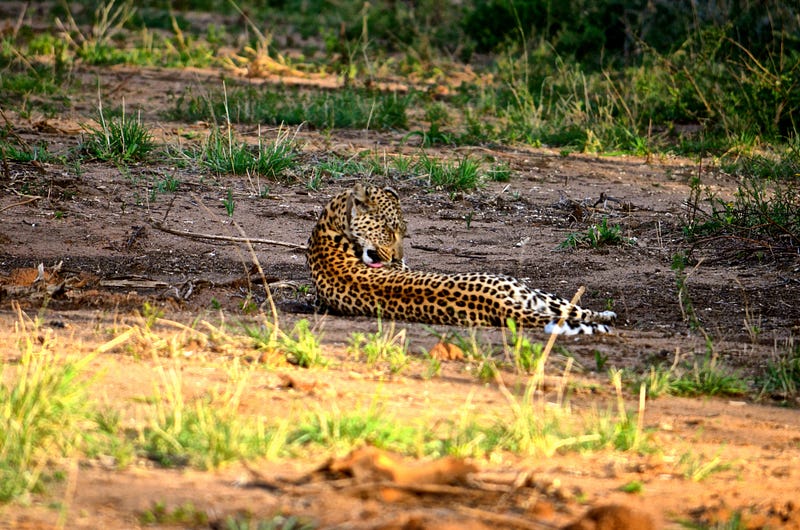
So why are apex predators so important for the health of their ecosystems? To answer that, let me tell you a story about another apex predator that perfectly illustrates their significance.
The Wolves of Yellowstone National Park
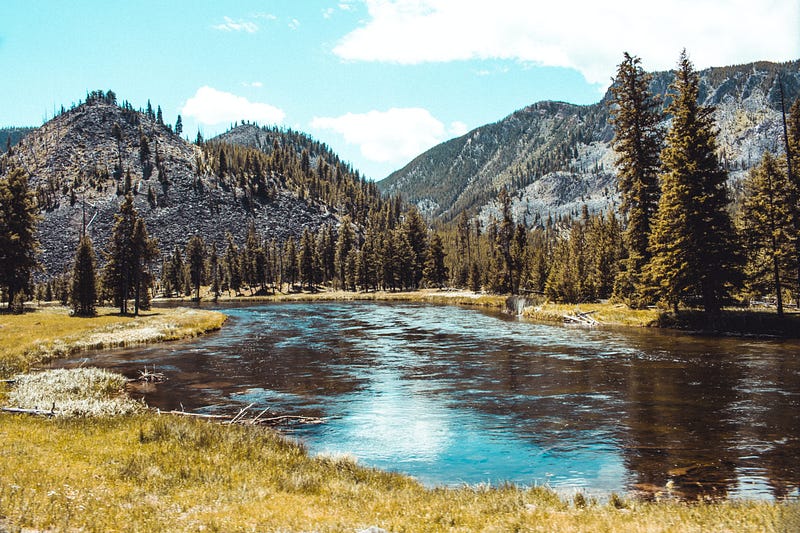
Early in the 20th Century and humans had killed off every last wolf in Yellowstone National Park. This set off a chain reaction that created an ecological disaster.
The absence of wolves meant Elk numbers in the Park exploded. The elk were no longer regulated by their primary predator. This also meant that the elk changed their behaviour patterns.
Without the threat posed by wolves they were free to congregate on the open river banks where the grass was plentiful. The consequences were far reaching and devastating.
The elk ate the majority of the aspen and willow seedlings along the waterways. This being the primary food and building materials for beavers meant that the beavers suffered. As the beavers suffered their numbers declined and with that thier dams disappeared.
Where there had been beaver dams wetland environments had thrived. These wetlands were critical for the survival of many species such as birds, amphibians, fish and insects. When the beaver dams disappeared the wetlands disappeared with them. This caused the many thriving species to suffer.
The other consequence of the elk grazing in great numbers along the rivers and streams was a rapid increase in erosion along the banks. This increased erosion caused the streams and rivers to silt up and the spawning beds for many fish to disappear. The dwindling fish numbers made the bears suffer.
In short the Elk were causing Yellowstone to dry up and with the dry many species began to decline.
No Wolves meant no water and no water meant no life. It was turning into an unmitigated disaster.
Desperate to rectify the situation the authorities finally listened to science. They were persuaded of the link between the decline in Yellowstone’s delicate ecosystem and the absence of wolves. A bold plan was hatched to save it.
In the mid 1990’s 66 wolves were trapped in Canada and reintroduced into Yellowstone. Today there are more than 200 wolf packs thriving in the park.
The reintroduction of wolves began to bring the elk populations back under control. The elk, now hunted by a predator again, shifted their behaviours. The aspen and willow trees recovered and the river banks are again lush, green and shady.
The beaver colonies began to recover too. From just 1 colony to over a dozen. Other animals such as those that scavenge off wolf kills are also thriving again. These include eagles, wolverines and bears.
The dried up wetlands and silted up rivers have recovered. Meaning that many fish, amphibians and birds have their habitats back to full health.
It has been almost three decades now since wolves were reintroduced into Yellowstone. Their reintroduction stands as one of the most prominent examples of the importance of apex predators.
Notwithstanding the success story of Yellowstone, apex predators are under threat the world over. So, now more then ever, it is imperative that we as citizens of the world afford these important animals a greater respect. With greater respect I hope that we will fight for them with greater effect. Our ecosystems depend on it.
Facts About Lions
Lions are very social animals and are the only cat that live in groups, called prides. These groups are generally made up of one male, many females and their young.
The females will remain in the pride their entire life but this is not so for the males. Only the biggest and strongest male will command the pride. When the young male cubs in the pride grow and become stronger the dominant male will push them out when he feels they are becoming a threat to his dominance.
These young males will then live as ‘bachelors’ learning the ways of the bush and how to hunt. When they are strong enough they may return to their pride or to another pride to challenge the dominant male for supremacy.
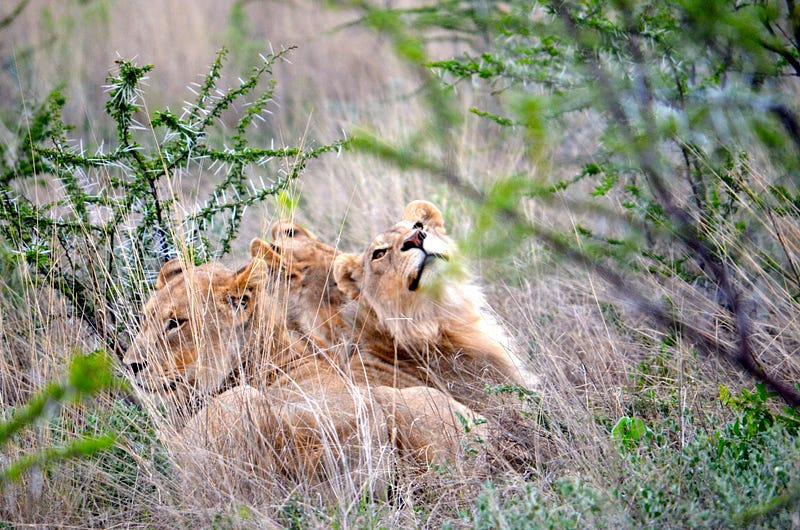
Lions will hunt alone, in pairs or as a family group. When they hunt as a group the male will generally push their quarry toward the waiting females — a highly coordinated operation.
Lion will generally need to drink daily but in time of drought they can survive for many days without water. When times are really dire they have been know to search for tsama melons and gemsbok cucumbers to attain the necessary hydration for survival.
Evolution has created a finely tuned killing machine — a supreme apex predator — and one worthy of the King of the Jungle crown.
I am working toward raising the awareness and visibility of wildlife with stories like these. My theory being that if we keep wildlife visible by sharing their stories then hopefully they will be front of mind. Maybe then humans might consider animals a little more before we make decisions that might affect the natural world.
If you’d like to help keep wildlife front of mind I would love to have you share your wildlife stories in this publication. Please view the submission guidelines here.
Bibliography
- Wikipedia
- mexicanwolves.org
- National Geographic
- When Hippo Was Hairy by Nick Greaves


