
Thema juli: Gunnen
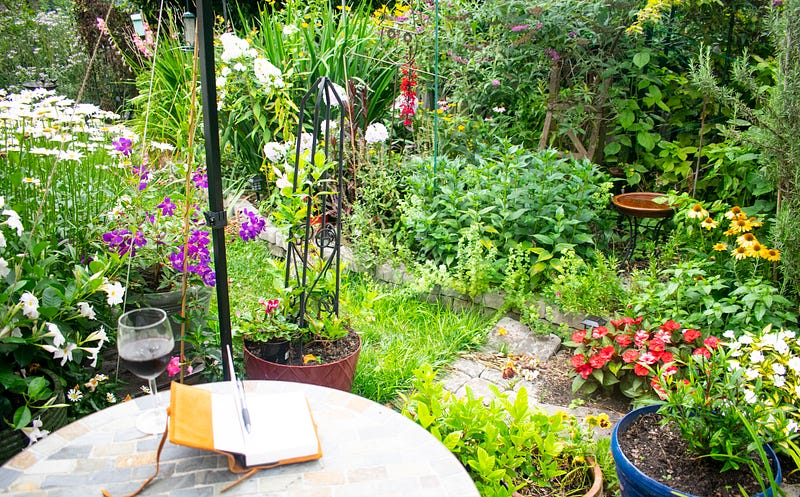
Lines Composed on the North Patio
On Writing Alone at Dusk While the Wife is Away. July 16, 2022
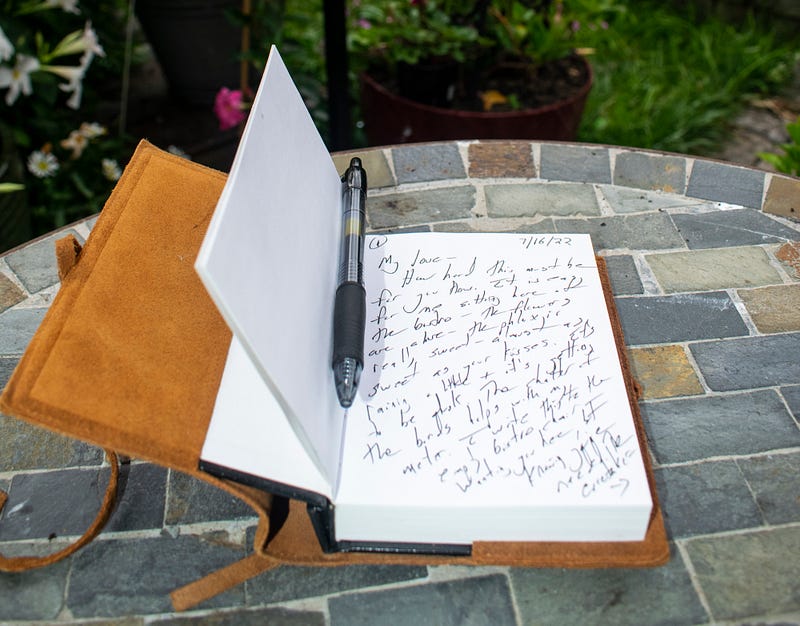
(Gunnen: Dutch: Finding happiness in someone’s happiness because you love them so much).
My love, how heavy this must be for you. It is easy for me, to write this now — The phlox, purple and white, is redolent at night — And the jabber at dusk helps with the meter. I write this to the empty bistro chair — Wanting you here, but knowing you’re needed; The caretaker who tends the demands of all.
The heat of the day has passed, and a slight breeze Comforts me like the calm soul of your voice.
The promise of rain patters like a prayer.
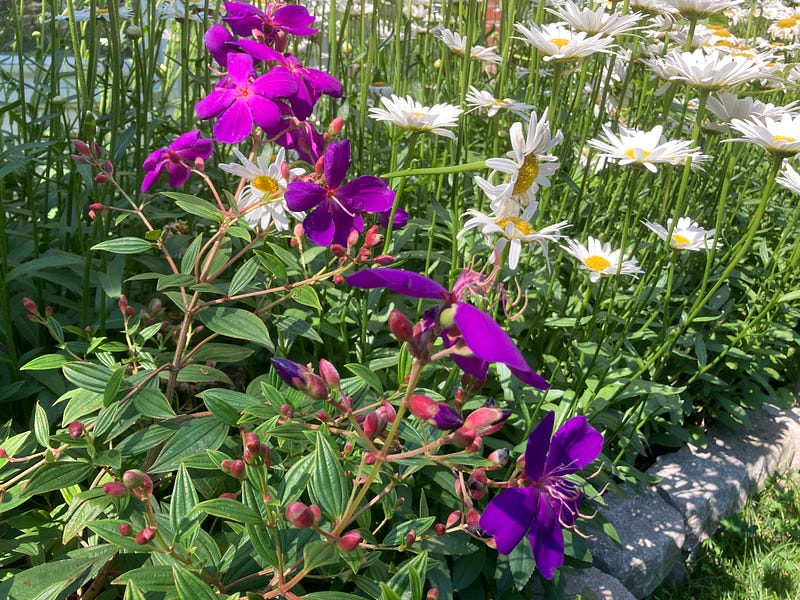
Your presence surrounds me like a field force — (I forget just how protective that feels) It becomes chummy with commandeered strength — As one takes for granted the oxygen — The heart, pumping with just a single start. And these weeds betwixt our cobblestones gray Would bother her, right, I know, for the mess — But for you — flowers, like purple pansies Take root, grow, thrive, in conditions so harsh. The patio, our heaven, reminds you Of bistros old where we used to ramble — Not kids, then, for sure — but, love, still so young.
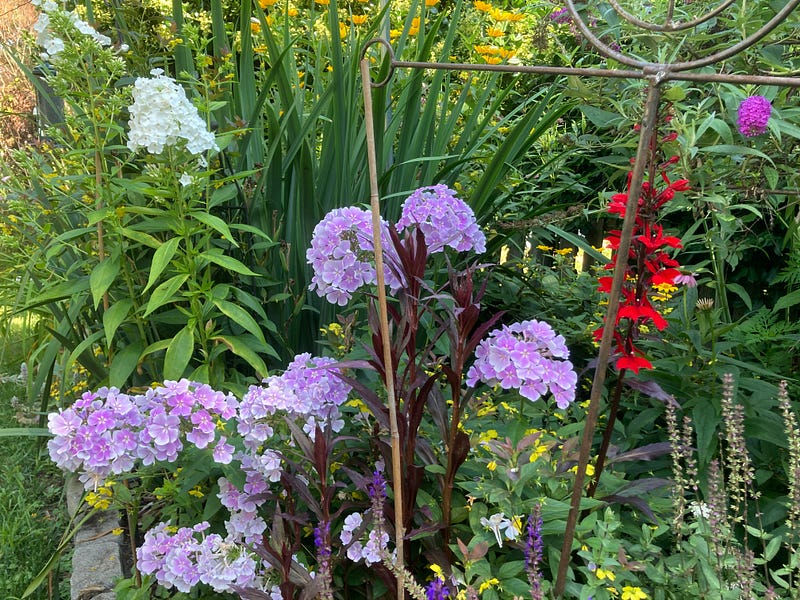
I caught the first sight of a butterfly Alighting on the bush you deem a weed. She was a beauty, black — so elegant — Fragile, ephemeral there on purple — Then fluttering like a tipsy acrobat — Drunk from pollen, but carefully careless. I see you there, love, in that solo flight — The miles — the kilometers of thought — The familiar road which now seems so strange — (As when will we ever go there again?) As dusk settles, I wonder how you are — And how your family is doing there — Once again, the gathering of the clan.
My love, how taxing this must be for you. Every weekend packing away the things — Holding things that haven’t been touched for years, Such things have not changed — nor sun, time tarnished — Those smells are the same, awakening tears In geysers that erupt from lands deserted. And you wonder, why would she keep such things? What meanings secret did each thing contain? What a violation of personal space! To rummage through that quiet privacy! Of drawers never dared open, as if locked! For what conundrums such chambers conceal! Silent answers to riddles never asked — (For who even knows the depths of oneself?) Who has the courage to climb down that rope? With hunches only — memories hazy? Is it much like excavating — this chore? Harder than the mindless chore of dusting That fake plant that no one saw (anyway)?
What is it like, my love, to winnow away — That thing which is kept? That thing which is tossed? And those dusted things now consigned away To St. Jude’s where she volunteered her time In minding heirlooms no longer wanted. What of yours will you want, saved and savored? What of mine? What junk is not junk to me? You have a memory attached to things — Of all things — which opens a storybook — Of tales pleasant, and too dark to tell, tales. Those bygone things, perhaps, can — well, pull down But also open like a ripcord shroud — Keeping your roots shaded, the past, intact.
There is so much I don’t know — stories, too — Even three lifetimes could never reveal All there is to share of the Inner Life — (And the silent Sphinxs silent now in the ground). For one who wants to know, you must truthache — To learn lessons of what never was taught; For you, love — love, expresses, vents forth from you — Nourishing even those who wish to harm you. For you find such love in nurturing love — And the smiles that surround you, like mine, Are formed on faces since you love so much.
Like now, so hard, every weekend — so sudden — The turn of events, out of your control. At this table, I am also with you, Under this canopy, I am also With you in the million things you need to do. Under the same sun, under this same moon — I know/don’t know the battles you have fought To stand valiant and brave (that you don’t know) I admire that warrior woman. In helping the happiness of others, Make sure you find happiness (on your terms) And not get silenced in the choirs of need. Or sidelined. Not even from me — the one who so loves you. (Because that can happen sometimes).
Love, Walter
Read more from Paper Poetry from Walter Bowne:
PS: Editorial Note : Paper poetry conducts themed poetry series every month. This month’s theme is of Dutch origin, Gunnen: If you want to be a part of this, kindly read this.


