
Limitless Spirit: Seeking Meaning Over Definition
In Response to Dancing Elephants Prompt 13/52
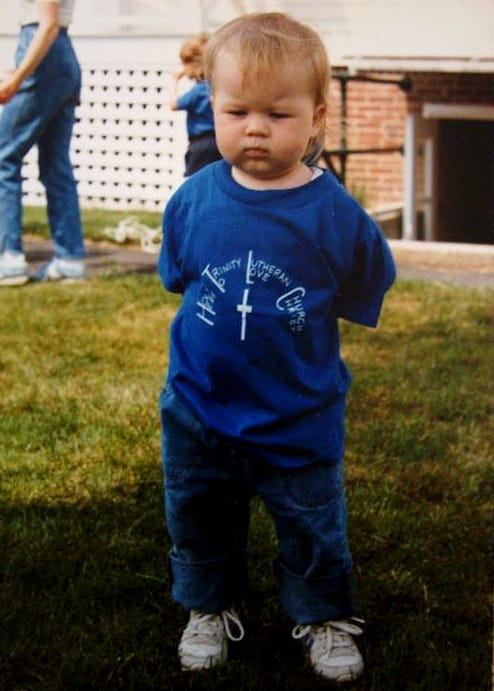
A Christian Childhood
I was raised and confirmed in an ELCA church. It was wonderful. It was Christmas pageants and coffee hours, community and song.
In my early teen years, our church welcomed a new minister — a remarkable woman who will forever be one of the most influential teachers in my life. She lead confirmation lessons and organized the church youth group. We regularly volunteered together in soup kitchens and shelters. In addition to her spiritual ministry, she was also an actual clown (seriously, her clown name is Polka-doodle).
One day, when I was around 15 years old, I asked Pastor Bonnie a question: my boyfriend at the time considered himself Buddhist — could he get into heaven? Her answer was important and representative of much of my church experience.
First, my pastor asserted that she could not dictate how I should interpret scripture. Instead, she encouraged me to read and reflect and connect to God’s word in the way that felt right to me. This, I understand, is not always a common response from a minister.
Next, she offered to share her personal interpretation only if it was helpful and wanted (and yes, I did want to know). She then shared that, particularly because she was married to a Native American man whose spiritual beliefs differed from her own, she believed that the most important thing was that we are all saved through love. Because she loved her husband and she loved God/Christ, her unchecked love would secure his soul, too, in case there was ever a question.
This taught me that loving others, rather than trying to change or correct them, was the most valuable and impactful thing.
That night, and for years after, I prayed on behalf of the animals. I told God that I loved every animal on Earth. I believed that if I loved them, they would all be saved.
On the day of my confirmation service, Pastor Bonnie presented each member of my cohort with certificates that bore our own specialized bible verses. This is what she selected for me:
“A new command I give you: Love one another. As I have loved you, so you must love one another.” — John 13:34, NIV
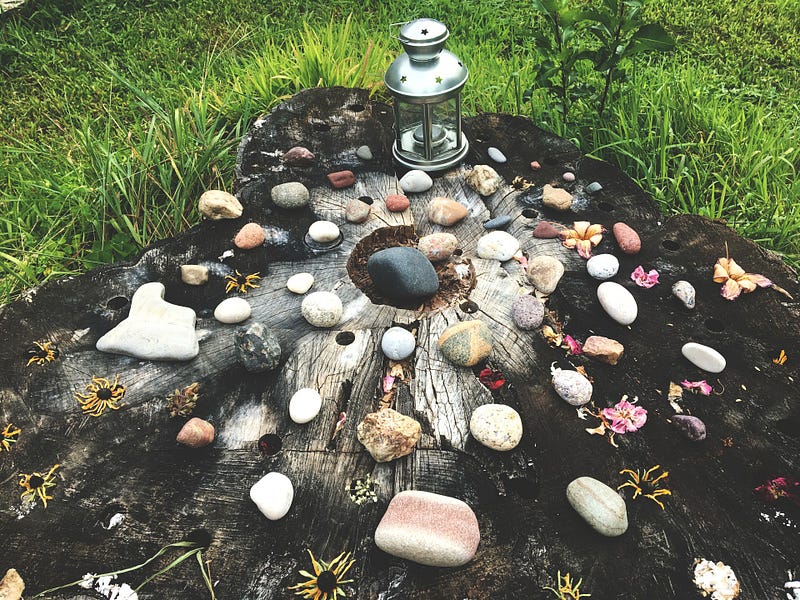
A Druid Adulthood
As an adult, I work with an American Indian man. We work closely together and he is open about his culture, traditions, and beliefs. He once said to me, “Everyone is indigenous to somewhere.” His statement struck me, in conjunction with an essay in Robin Wall Kimmerer’s Braiding Sweetgrass, which I was reading at the time.
Although I am naturalized to the United States — and this land is vitally important to me — my ancestors are from Germany, Ireland, and Sweden. I grew up next door to my Irish-American grandparents, and one of those mail-in DNA kits showed that my paternal heritage is absolutely, completely, unadulterated Irish. My ancestors, then, are indigenous to Ireland.
Several years ago, I received a book about Druidry for Christmas. I had wanted to connect more with the wisdom of my Irish ancestors and I’d read the whole thing. With my coworker’s remarks fresh in mind, I decided to go further and join the Order of Bards, Ovates & Druids. This path has often been a homecoming.
One wonderful and complicated thing about Druidry is that it is spiritual and philosophical, but not religious. There are Christian Druids and even Zen Druids who practice Buddhism alongside their Druidic ways of being. Studying, practicing, and connecting with Druid wisdom can serve as an examination of what spirituality and religion are and how they fit together.
For me, it serves as an invitation to let all of that definition go and, instead, lean into spirit — to fumble at the seams between myself and all things, to know with something other than intellect.
Joy to the World
In my estimation, God and Spirit abide in love, and I love the world. My church is forest and field, but I also love church buildings, temples and domes.
Growing up, my best friend was Catholic and I often attended church with her family on Sunday morning after a sleepover. I was struck by how elaborate Catholic churches could be compared to the austerity of Protestant ones. Despite the clearly established reasons for this, I sought to even the playing field.
For awhile, I made plans to construct grandiose Protestant churches when I got older — lavish buildings filled with candles and gold filigree that would always have their doors open, like the ones in the movies. I drew floor plans on graph paper that my dad brought home from work.
In college, I joined the university’s Christian fellowship and found that most of its members were Baptist, a new religion for me. We went to a church in the city where people sang and praised and swayed and raised their hands. I was admittedly uncomfortable and out of place — too much of an introvert for that.
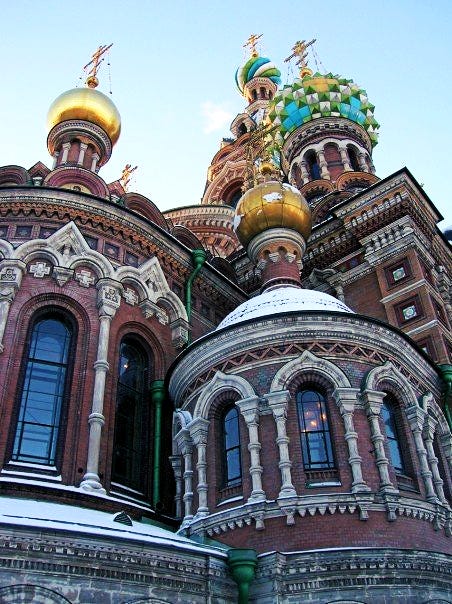
While studying abroad in St. Petersburg in the spring of my junior year, I accompanied my host mother to a Russian Orthodox cathedral on a few occasions, including Easter. We walked arm in arm down old streets that ran parallel to frozen canals, carrying a basket of decorative eggs to have blessed.
The Russian cathedral was full of incense and icons, just as you might imagine if you’ve read much Tolstoy. The parishioners wore real fur coats and warm, colorful shawls, and they bowed and prayed and sang, bowed and prayed and sang.
In that same semester, I also traveled to Bavaria, where I spent two weeks with my mom’s quilting penpal (whom she’d never actually met before). On one occasion, I joined this kind and welcoming woman in her weekly worship at a local Catholic church.
Again, we walked there together (walking seems so much more common in Europe). I was surprised by how plain and small the church seemed compared to the Catholic churches of my home town. I had never studied any German and couldn’t understand the service at all, but I felt lucky to enter yet another place of worship, to observe and participate in such a profound element of culture.
In this way, I have been blessed to witness Spirit in many forms, in many homes and words and ways.
A Spiritual Motherhood
Now I have a son and I want him to carry tradition and ritual in his life, but not to be oppressed by the stringent rules that so often accompany organized religion (of course there are exceptions, as was the case for me). He is fortunate to have peers who hold Christian, Jewish, and Hindu religious beliefs and who graciously share the celebrations and lessons of their cultures.
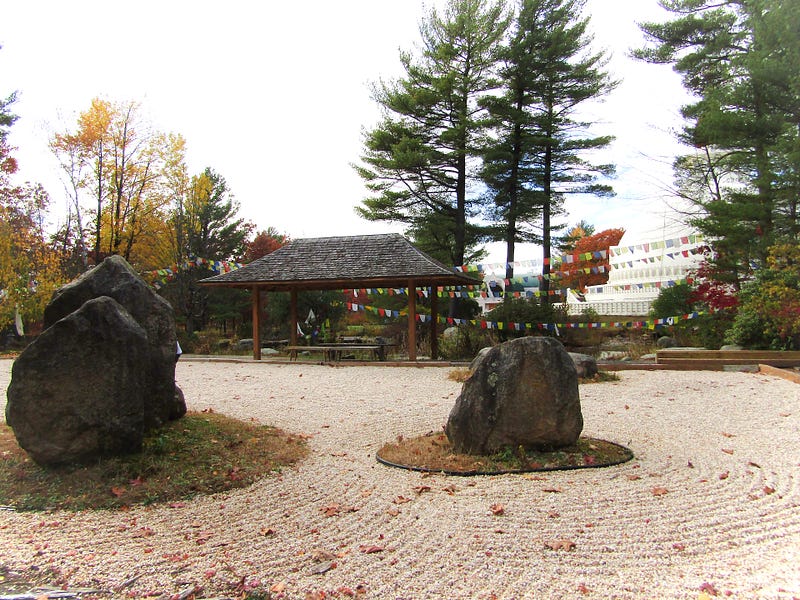
My son has attended our local Protestant church a few times at the holidays, and I’ve shared both Druid and Christian wisdom with him. So far, the place where he feels most at peace and at home is a local Buddhist temple. He believes in reincarnation and longs to come back as a bird or a fish (preferably something that could visit the deepest part of the ocean).
So, I am a confirmed member of the Lutheran church who also walks a Druid path and frequents the grounds of a Buddhist temple. I try to connect in reverence with my ancestors and with the Spirit that surrounds me everywhere, in whatever form it takes. I try not to appropriate or trivialize religions or cultural practices that are not native to me, but to observe, understand, and join whenever I am welcomed.
Spirituality might be complicated, or it might be simple: I think it depends on how you try to understand it. When I use my words and my wits, it can get tricky. When I use my soul and my senses, I know that I am breathing the same air as the birds and the trees, and the people who walk each and every path.
Join Dancing Elephants Prompt 13/52 from Dr. Gabriella Korosi —


