Like a Cavafy Poem (short story)
In death, they came together again, and it was like a Cavafy poem
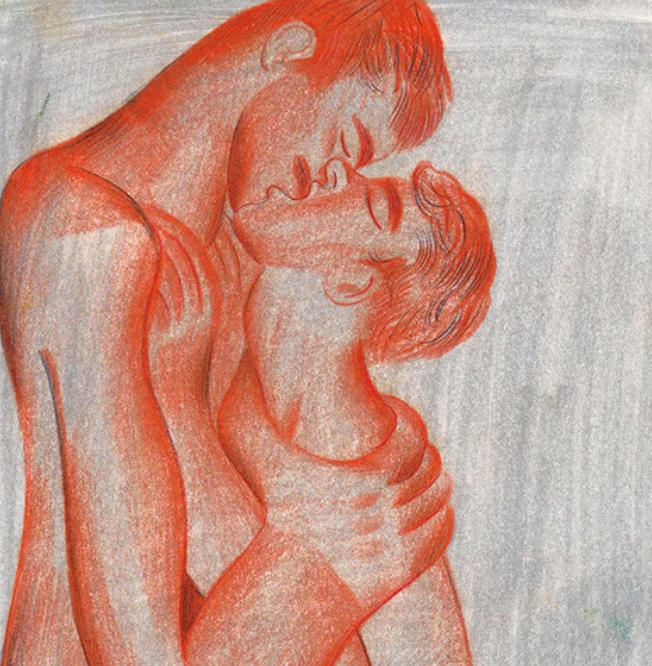
The story that follows is inspired by Greek poet Constantine Cavafy’s poem “Body, Remember,” (1916–8), included at the end. Whereas Cavafy was writing about his male lovers, the love described here is between a man and a woman.
*******************************************************************
Their coming together was like a Cavafy poem. When they lay in each other’s arms, time compressed into space, and space condensed into time. Every anger, every resentment wrapped them more deeply into the folds of each other’s affections, like an old sweater that feels better on the skin than a new shirt even when its rough touch wounds. When they were together, the obstacles that stood in the way of their union suddenly lifted. The walls dividing them came tumbling down.
Lovemaking was a path to creation. Their words became flesh, so that something on this earth — not everything, just the body of language, the crusts of consciousness — would outlive them both.
“I don’t want to die,” she said to him once. They were walking along the canals of Amsterdam as afternoon edged into evening. The sun creased the horizon crimson while cumulus clouds mounted in the sky. “I want to live forever, with you holding my hands.”
He didn’t speak. There was nothing to be said. They were mere creatures inside a Cavafy poem, the one where the body remembers how much it was loved, and how it gave itself to that love, as if there were no turning back, and the only movement was forward, into the abyss. All words could do was freeze their union in time, giving it the appearance of a coherence that it lacked. Their love was too perfect for their fleeting world, too immaculate for language.
Sometimes they spoke to each other eloquently, almost as if in verse. Sometimes they didn’t speak at all. Instead, they traced the outlines of each other’s faces in the palms of their hands. Sometimes they hid naked beneath the sheets, like children hiding from their parents. Sometimes they read together, softly whispering to each other the words that glowed on the page. Every syllable seemed to be about them, in one way or another.
They shared together bright, sharp slices of time, flashes of lightning on the water: kissing for the first time on the Danube, crossing the bridges of the Thames, holding hands while overlooking the Seine. Notre Dame hovered above them, its spires charred.
There was love between them, and there was something else too: a meeting of minds, a merging of intellects, an unveiling of each other’s bodies, an uttering of each other’s words. And that uttering — that savouring of the other’s being — entered into their souls. The intimacy spilled onto the page, binding their togetherness and bridging its absence, causing them to feel with every act of lovemaking that they were giving something back to the universe. They created, alone and together, things that would never have been born had they not crossed paths. Lightning flashed on the water when they stared at it together.
When they were apart, she hardened her heart against him. Not because she did not love him, but because her love existed outside of her control. She could not bear the open wounds that festered within her, the stigmata of her helplessness. She was tormented by his inability to soothe her wounds, to caress her and to heal them with the balm of his affection when she needed him most.
There were times too when he was absent even when he was present, when her words failed to penetrate his soul. Having spent all his life fighting battles in faraway countries, he could not see her battle scars. Her struggles seemed miniscule compared to his. He admired her too much.
Sometimes he treated her like an idol rather than a lover, so it seemed to her. Idolatry is always falsehood, she told him many times, but it made no difference. The loneliness of being alone, she concluded, was easier than the loneliness that overcame her after she sought comfort and kinship from him and failed to find it.
Every time they shared their souls, the stars aligned, cursing them to an eternity of unsaid goodbyes.
“I don’t want to die,” she said again, two years into their relationship.
This time, the words had a meaning different from when she had uttered them by the canal in Amsterdam, even though the words had been the same. She had contracted cancer, and it was spreading within her faster than she cared to know. The doctors told her she had less than a year to live.
Yet still, he could not be with her when she wanted him to, could not decipher her battle scars, could not recognize her as a suffering creature. He loved her too much and in the wrong way, as if she were a character in his favorite book, or an actress in his favorite play. For him, she was a figment — beloved yet forever fictional — of his fecund imagination, the one that gave birth while making love.
In death, they came together again, and it was like a Cavafy poem.