
Lignin
Definitely not the sheets Elton John wanted to be laid on
Today’s New York Times Spelling Bee letters:
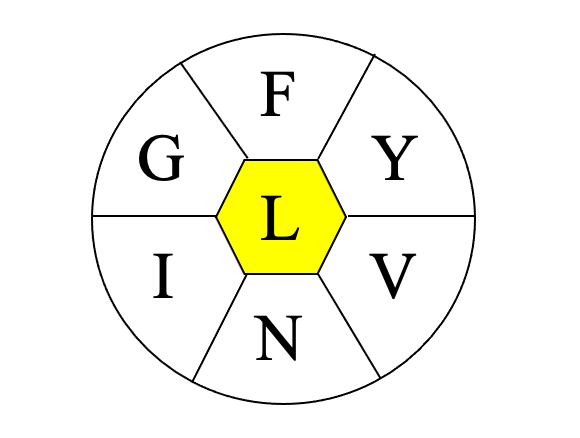
F, G, I, N, V, Y, and center L (all words must include L)
Merriam-Webster says…
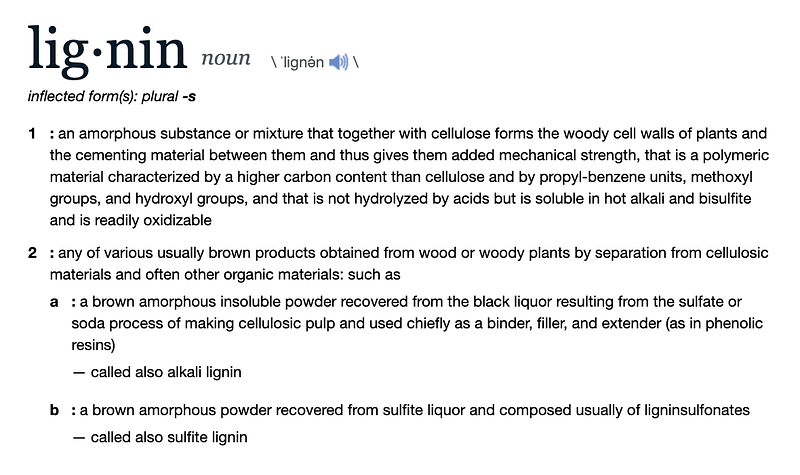
Silly little dictionary! Don’t you know lignin can’t possibly be a word if the New York Times says it ain’t?
For further fascinating facts, check out the Spelling Bee Master.
What’s your favorite dord* from today’s puzzle?
My Two Cents
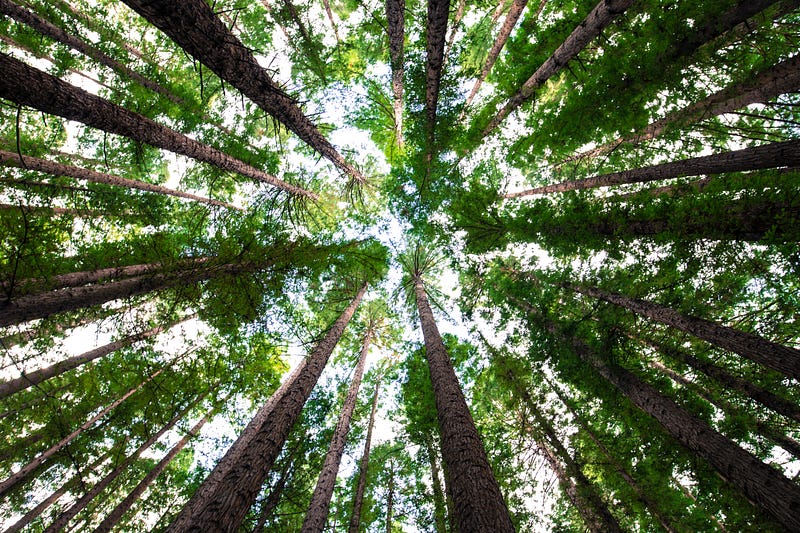
What does Elton John have to do with low-angle shot of trees in a forest? I’m not going to reveal this bit of clickbait until I’ve made my 13 cents today, so please keep scrolling down slowly.
I wanna be wood you everywhere
(Hopefully Fleetwood Mac fans are silently clapping for my not-so-clever pun.)
Do you know what the most common organic matter on the face of the planet is? If you quickly answered lignin because that’s what today’s column is about, congratulations. You are very wrong. The answer is cellulose, that all-important component of the primary cell wall of green plants and many forms of algae.
But lignin comes in a close second, so you’re weren’t off by much.
Lignin was first mentioned by the Swiss botanist A. P. de Candolle in his 1813 book Théorie élémentaire de la botanique; ou, Exposition des principes de la classification naturelle et de l’art de décrire et d’étudier les végétaux, which roughly translates as “I speak science-y French very well and you do not!”
In that 500-page tome, he describes lignin as a fibrous, tasteless material, insoluble in water and alcohol, but soluble in weak alkaline solutions.
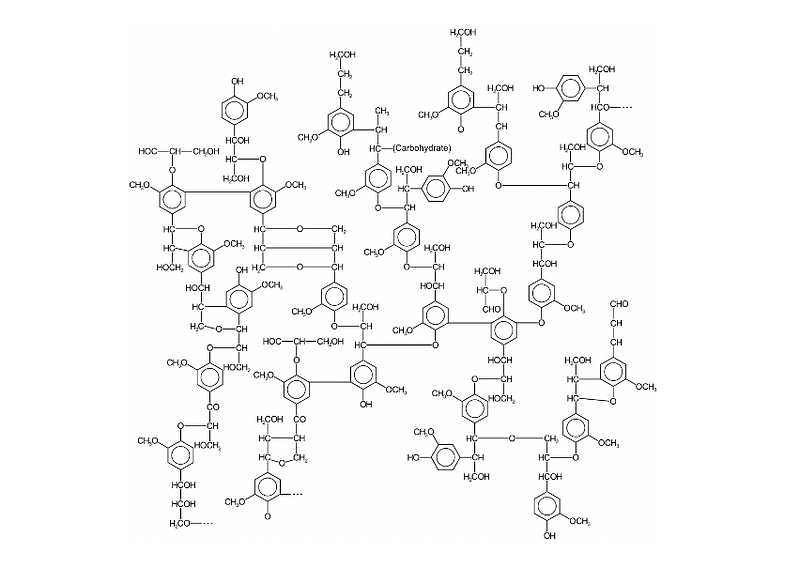
Lignin is easy to understand when you just think about it as a bunch of C-H-Os. Like this:
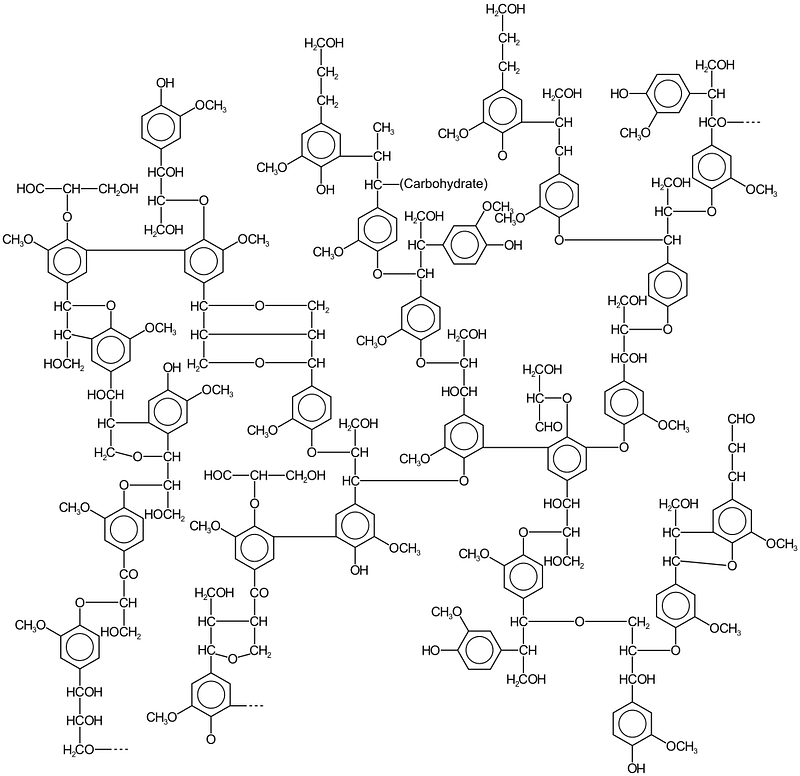
Wasn’t that simple? Only three letters to memorize. If you want something more challenging, here’s the Britannica’s explanation:
Lignin is a phenolic compound (having a — OH group attached to an aromatic ring) and is a mixture of three complex polymeric compounds. The relative amount of each of the three monomers depends on whether the lignin is from gymnosperms, woody angiosperms, or grasses. The lignin adds compressive strength and stiffness to the plant cell wall and is believed to have played a role in the evolution of terrestrial plants by helping them withstand the compressive forces of gravity. Lignin also waterproofs the cell wall, facilitating the upward transport of water in xylem tissues. Finally, lignin has antifungal properties and is often rapidly deposited in response to injury by fungi, protecting the plant body from the diffusion of fungal enzymes and toxins.
Be honest, which do you prefer? I’ll go with the illustration, thank you very much.
When making paper, lignin is extracted from the wood pulp. So what is this lignin stuff used for? I’m glad you asked. Here is a short list:
- As a binder for particleboard and laminated or composite wood products
- As a soil conditioner
- As an adhesive for linoleum.
- As vanillin (synthetic vanilla). Yuck!
Okay, on to things that are a lot more fun…
Some stiff sheets
Was Elton John asking to be rest on wooden planks when he sang “lay me down in sheets of lignin” in Tiny Dancer?
Probably not, and those aren’t the most famous misheard lyrics in that song. That honor belongs to the first line of the chorus: “Hold me closer tiny dancer”. Thanks to the character of Phoebe Buffay on the TV show Friends, many people now think of Tony Danza when they hear the song.
“Tiny Dancer” was released in 1971 as part of Elton John’s fourth album, Madman Across the Water. Curiously, despite being considered by many fans as Elton’s best tune, the song took over thirty years to be certified as gold in the U.S. and over forty years to achieve the same honor in the U.K. This may be due to the song’s “second coming” after it was used in Cameron Crowe’s 2000 film Almost Famous.
In an article for The Indian Express, Anvita Singh describes listening to “Tiny Dancer” as the equivalent of “a hug on a cold night.” Which is for my money one of the best descriptions someone could come up with for any song. In that article, Ms. Singh explains that songwriter and longtime Elton John collaborator Bernie Taupin did not write it about his first wife (although he did dedicate the song to her). Rather, “Tiny Dancer” was inspired by Taupin’s first visit to Los Angeles in 1970, where he found the women to be very very very different from the kind he had seen growing up in England.
These are the actual lyrics of Tiny Dancer’s chorus:
Hold me closer, tiny dancer. Count the headlights on the highway. Lay me down in sheets of linen. You had a busy day today.
And these are the bedsheets I used to think of every time I heard the song:
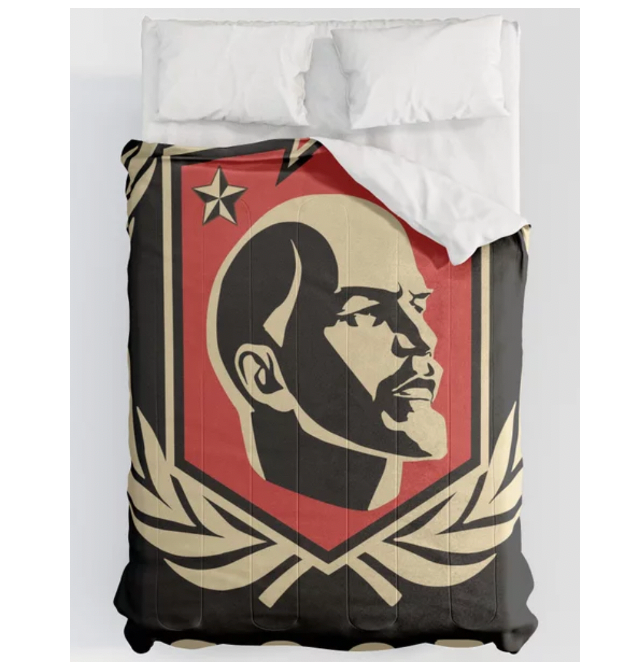
And of course, starting today, this is what will pop into my head when I hear the chorus:
In preparation for the 50th anniversary of Elton John and Bernie Taupin’s songwriting partnership in 2017, the artists teamed up with AKQA, YouTube and Pulse Films in a project called The Cut. The idea was to let contestants submit ideas for three songs that did not have official videos: “Rocket Man”, “Benny and the Jets”, and “Tiny Dancer”. There were also three categories for the videos: animation, choreography, and live action. The latter category corresponded to the “Tiny Dancer” video, which along with the other two made its debut at the Cannes Film Festival five years ago.
A few years after that, Elton John decided to honor Lisa Kudrow by getting together with Ed Sheeran, Courtney Cox, and Brandi Carlisle to record the version of “Tiny Dancer” that Phoebe Buffay would have likely sung at the Central Perk cafe.
Yes, that’s right. Elton John actually sang “Hold me closer, Tony Danza”. And then Lisa Kudrow was kind enough to point out that Phoebe’s lyrics were “Hold me close, young Tony Danza.”
No word on whether Elton plans to re-record the re-recording.
Hopefully today’s article with be seared into your brain, so that next time you hear Elton John’s “Tiny Dancer”, you’ll think about how he wants to be encased in wood. But if the word lignin doesn’t come to mind when the song is played, don’t worry. After all, the editors of the Spelling Bee decided that lignin is a dord*.
You can check out my previous entry on another dord* here:
What the heck is a dord, you ask? Here’s the answer: