
Lifespan: Can we prevent aging?
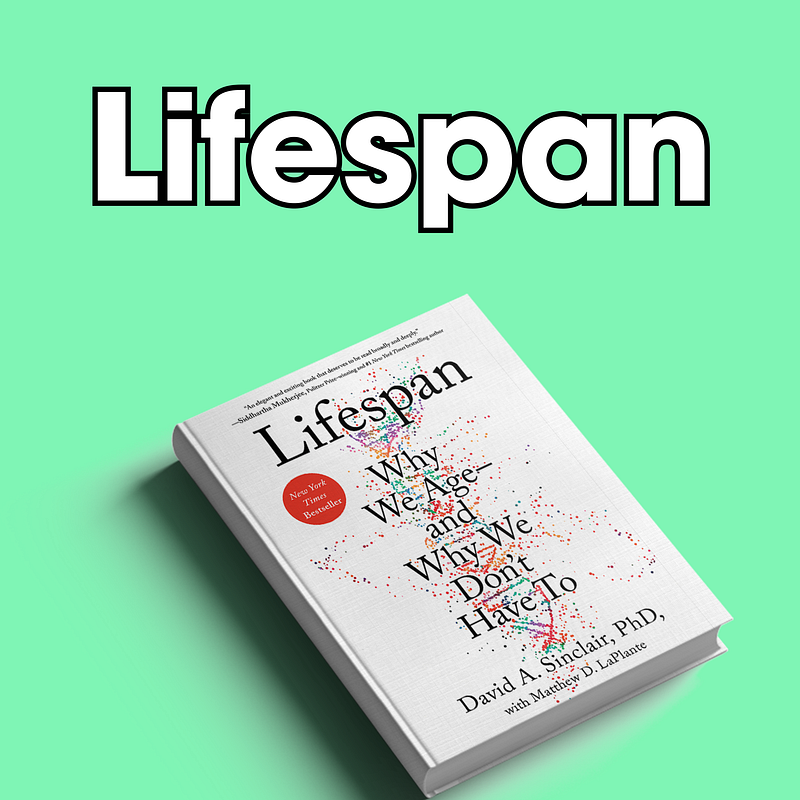
Dr. David Sinclair’s book embraces a future where we all live longer, healthier lives.
’Til death do us part
Most of us, 99.98% of us to be precise, will not make it to 100 years old.
The topic of dying remains taboo in almost every culture because it is an uncomfortable reality for us all.
Death unites us, the only other certainties in life are taxes, and U2 albums on your Apple Music that you can’t delete.
There is an ongoing acceptance that aging is an inevitability, and that we are all destined to decay over time. We run marathons to raise money to cure cancers and heart diseases, yet even the healthiest of us sit back and watch ourselves deteriorate over time.
So, is aging really a disease?
Aging is associated with many health issues: heart disease, Alzheimer’s, Cancer, and diabetes to name a few.
But is aging causation or correlation, if many people younger than 70 years old die of cancer every day?
The answer has been debated since the time of the ancient Greeks.
Last year, the World Health Organisation (WHO) did a U-turn on adding “Old age” to its classification of diseases.
The FDA (Food Drug Administration) said it didn’t recognise aging as a disease, despite authorising a clinical trial that looked like an anti-aging strategy.
It is unlikely that we will reach a global consensus on if aging is a curable disease until after we can cure it. Luckily, there are people such as Dr David Sinclair who are on a mission to do so.
What would it mean if aging was classified as a disease?
Not only would it make logical sense to classify aging as a disease, but it would have some positive second-order effects too.
Challenging the negative long-held beliefs that society has surrounding aging is important. People are often resistant to the idea of life-extension due to their association of old-age with frailty and pain. What happens if we redefine the experience of old age?
Another positive effect would be the funding granted to research labs across the globe to develop new insights into this sector. This would rapidly increase the chances of new studies and drugs being developed within our lifetimes.

Can aging be treated by understanding genes?
Dr. David Sinclair has conducted breakthrough research into “longevity genes”. As the name suggests, these are genes that support the extension of human ‘healthspans’.
He highlights the importance of NAD (nicotinamide adenine dinucleotide) and Sirtuins.
NAD is essential to metabolism and is found in all living cells. In fact, it is critical for all cellular processes including ATP Production, DNA repair, gene expression and immunological functions.
Sirtuins, on the other hand, are a type of protein involved in regulating cellular processes. This includes the aging and death of cells and their resistance to stress.
The loss of NAD and the resulting decline of sirtuin activity, is currently understood to be the primary reason as to why our bodies develop diseases when we are older and not younger.
Argued as one of the most important sirtuins, SIRT6 is credited for widely regulating aging, immunity, and Cancer. (Link to learn more about SIRT6)
Can I improve the healthy longevity of my life without medical intervention?
There will be a future where we have access to over-the-counter solutions that grant us fifty extra healthy years.
In the meantime, there are lifestyle changes you can make today which will greatly reduce the negative effects of aging.
There are stressors that will activate your longevity genes without damaging the cell:
Certain types of explosive exercise, intermittent fasting, low-protein diets, and exposure to hot and cold temperatures are some of his recommendations.
I have been experimenting with some of these myself and can vouch for the benefits of intermittent fasting and exercise (I will likely cover some of these in future articles).

Is it ethical to prevent aging?
If something is a disease, then it would be logical to try and find a cure. In general, the more often a cause of death shows up on a death certificate, the greater the effort from society to cure it.
This explains why dementia, cancer and heart disease are the focal point of numerous charities and funding. Yet aging is technically the underlying cause of all of these.
From my own perspective, I am a huge advocate for understanding and reversing the detrimental health effects caused by aging.
As Dr. Sinclair highlights in his book:
There is a difference between extending life and prolonging vitality. Simply keeping people alive — decades after their lives have become defined by pain, disease, frailty, and immobility — is no virtue.
Prolonged vitality is the goal, a future of more active, productive, healthy, and happy 100+-year-olds will walk the Earth one day.
I would argue that prolonged vitality is a movement as ethical as they come.

To conclude
After reading Lifespan through twice, I am dumbfounded by the future painted by Sinclair.
As a 24-year-old in 2023, I am at the apex of having more opportunity than ever before, and world crises are everywhere. I look to the future with eyes of optimism, and the thought of having (potentially) an additional 30–50 years on this planet is an exciting one.
I urge people to follow Dr Sinclair, and skeptics to read Lifespan for themselves first. To a longer, and healthier future for all.
I have used extracts from Dr Sinclair’s book, Lifespan. The book can be bought using the link below.
Get Lifespan on Amazon: https://tinyurl.com/bdm6sbaw
Follow Dr Sinclair on Twitter: @ davidasinclair


