
Life’s Universal Patterns
How fractals are the building blocks of systems from the galaxy to society.
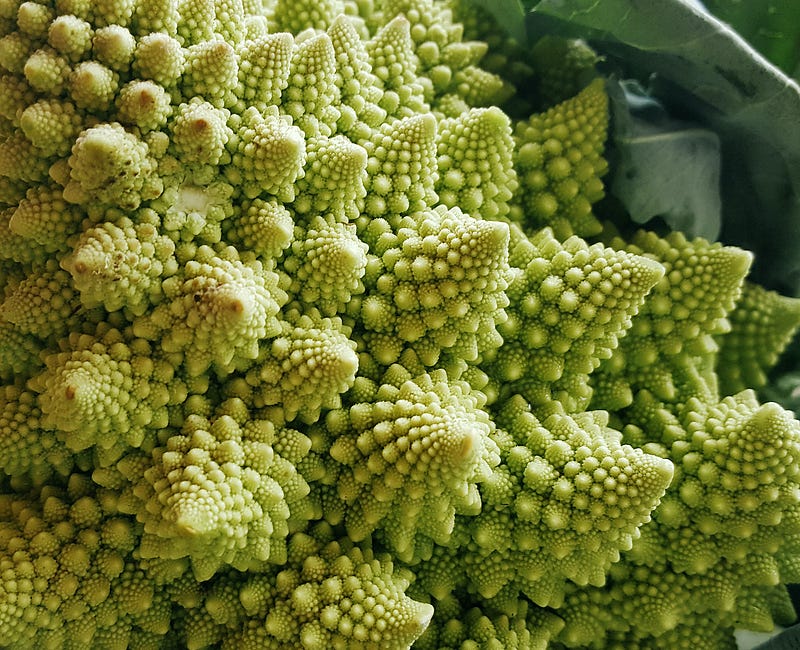
Fractals are relationship structures in nature that form the basis for the development of complex systems. Whether seeking to understand an anthill, a corporation or a human mind, understanding the fractals which compose them is a useful first step.
But first, what is a fractal anyway?
Fractals 101
A fractal is a system with similar properties at all scales. This characteristic is called self-similarity. In the physical world, this means that if you look at a fractal at high magnification, it will have the same structure it has at low magnification. Trees and their leaves are excellent examples of fractals in nature:
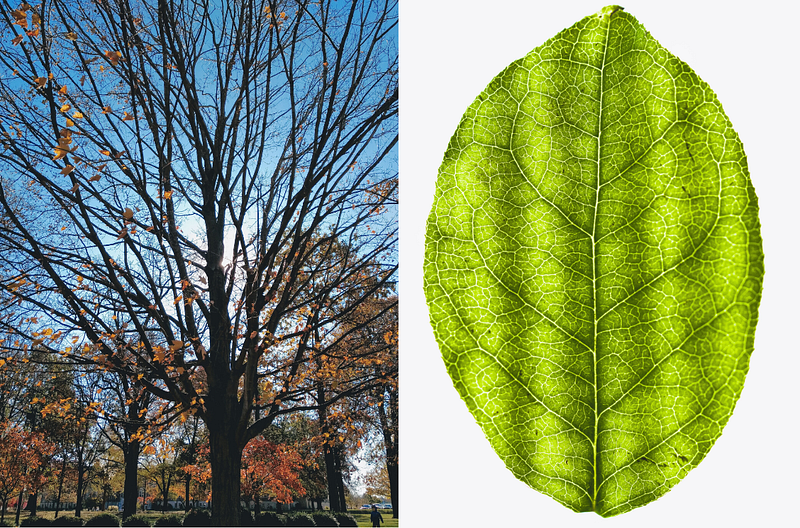
Notice how the branching structure of the tree as a whole is mirrored in the branching structure of the veins in the leaf. If we were to zoom in and look at one branch of the tree or one branch of the veins, they too would look similar.
A fractal is a system with similar properties at all scales.
The reason fractal structures are able to attain this consistency and beauty is that they are built from simple rules.
Basic Fractal Rules
Fractals display self-similarity because they are built from simple rules which do not change as the system grows larger. In the case of the tree, this rule is something like the following: grow a tube for a certain relative distance and then create a new tube branching off from it. The same rule is propagated to the new tube, and the fractal is born. Other fractals use different rules to create their structures.
Fractals display self-similarity because they are built from simple rules which do not change as the system grows larger.
Fractals as the Building Blocks of Systems
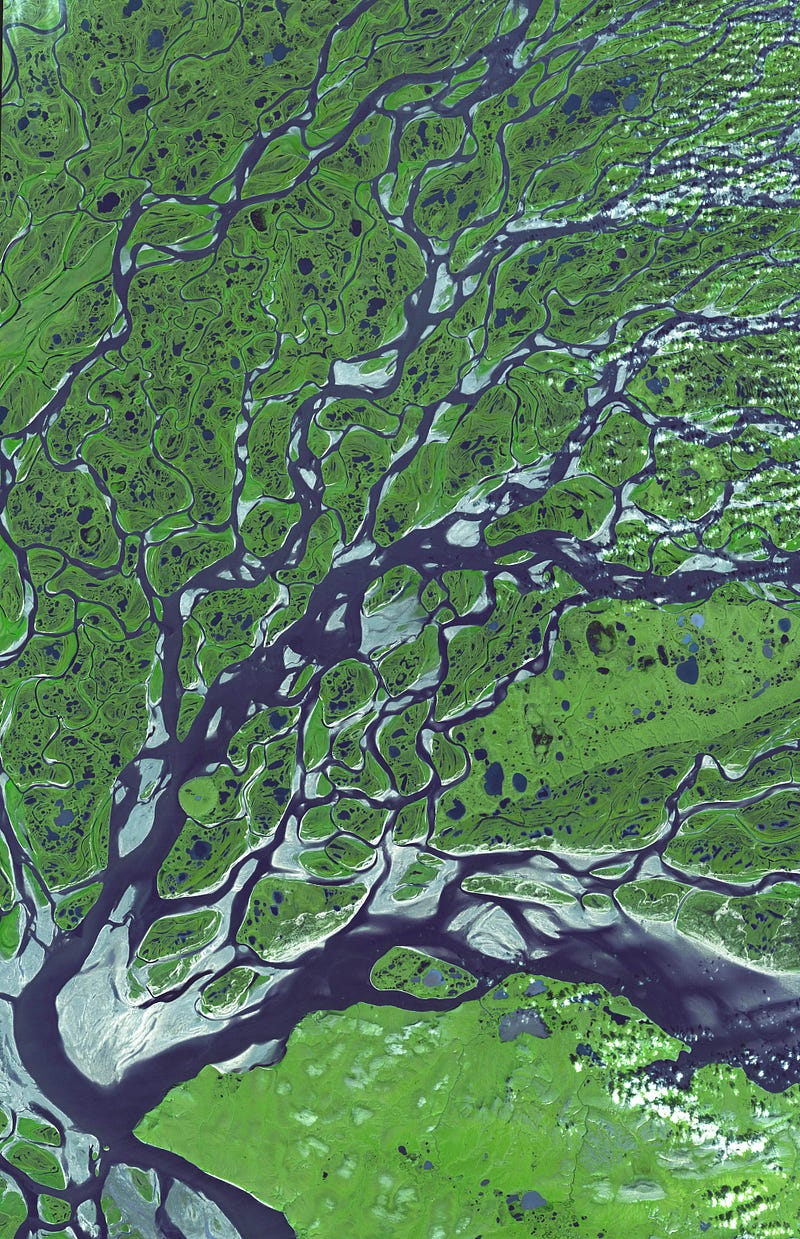
Fractals appear throughout nature because the universe itself has similar rules at all scales over time. The galaxy, with its star clusters, solar systems, planetary systems and ring systems is built from fractals. The human body, with its branched appendages and organs is built from fractals. The watersheds of the Earth, with springs, streams, and rivers are built from fractals. In each case, the systems are fractal in nature because their small components follow the same rules as their large components.
It turns out that the universe is governed by a few simple rules at all scales. These are the rules of thermodynamics, which describe how changes in energy and entropy govern the behavior of systems. Without getting too into the details of the physics (which are explained in the quick article linked above), suffice it to say that as a result of these universal rules, there are four archetypal fractal patterns from which most systems in nature are constructed.
The Four Classes of Fractals
There are four classes of fractals which are the most common in nature. They are found everywhere, from the planet’s surface itself to the microscopic structures within your bones. Next, we will learn about each of their structures, the rules they follow, and the functions they fulfill.
Fractal One: The Hierarchy
The hierarchical fractal is the branching fractal of the tree and leaf.

The hierarchy is designed to efficiently transport energy and materials in two directions — up and down. To do so, the hierarchical structure maximizes its surface area along an energy-collecting boundary and minimizes the distance traveled from the boundary to the interior. This allows hierarchical systems to reliably transport value (like solar energy) from the edges of the system to the top or center.
The hierarchy is designed to efficiently transport energy and materials in two directions — up and down.
The tree is a double-hierarchy with two energy-collecting boundaries: the roots and the leaves. Each is designed to maximize its exposure to the energy available at the boundary — water/nutrients at the root boundary and sunlight at the leaf boundary. The collected energy is transported in the direction of the other boundary.
The hierarchical structure is a relatively low-entropy fractal because the growth of new nodes is limited to the energy-collecting boundary. This is a strong limitation on the number of locations a new element in the system can be placed. Continuing with our tree example, a new branch in a tree will only grow from the tips of existing branches. You don’t generally see new branches or new leaves growing out of the side of the trunk.
As a result of its low-entropy configuration, a strict hierarchy is highly vulnerable to disturbances that occur “upstream” from the boundary — if the trunk of the tree is cut, the entire tree will die because there are no locations available for new growth to occur.
As a result of its low-entropy configuration, a strict hierarchy is highly vulnerable to disturbances that occur “upstream” from the boundary.

(Of course, anyone who has cut down a cherry tree knows that a damaged trunk is not necessarily a death sentence since new suckers can sprout from the bottom. This is because trees are not strict hierarchies. Indeed, strict examples of any fractals are rare in nature. These archetypes are the building blocks, pure examples of which are uncommon as a result of their intrinsic vulnerabilities.)
Other natural systems based on the hierarchical fractal include watersheds, respiratory systems and corporations.
Fractal Two: The Web

A web fractal is a system configuration whereby any element can be connected to any other element. Elements in webs therefore achieve greater equality in their access to energy. For these reasons, the web fractal is in many ways the opposite of the hierarchical fractal. Webs excel where hierarchies struggle and are vulnerable where hierarchies are strong.
A web fractal is a system configuration whereby any element can be connected to any other element. Elements in webs can therefore achieve greater equality in their access to energy.
The democratic, distributed nature of the web is characteristic of systems such as the internet. It is no accident that the internet was once commonly referred to as “the worldwide web.”
The web fractal builds new nodes at the location of an energy source. Any node can produce a new node and any node can connect to any other node. Energy flows through the web through diffusion in the direction of decreased concentration.
The human brain is another prime example of a system built primarily as a web fractal.
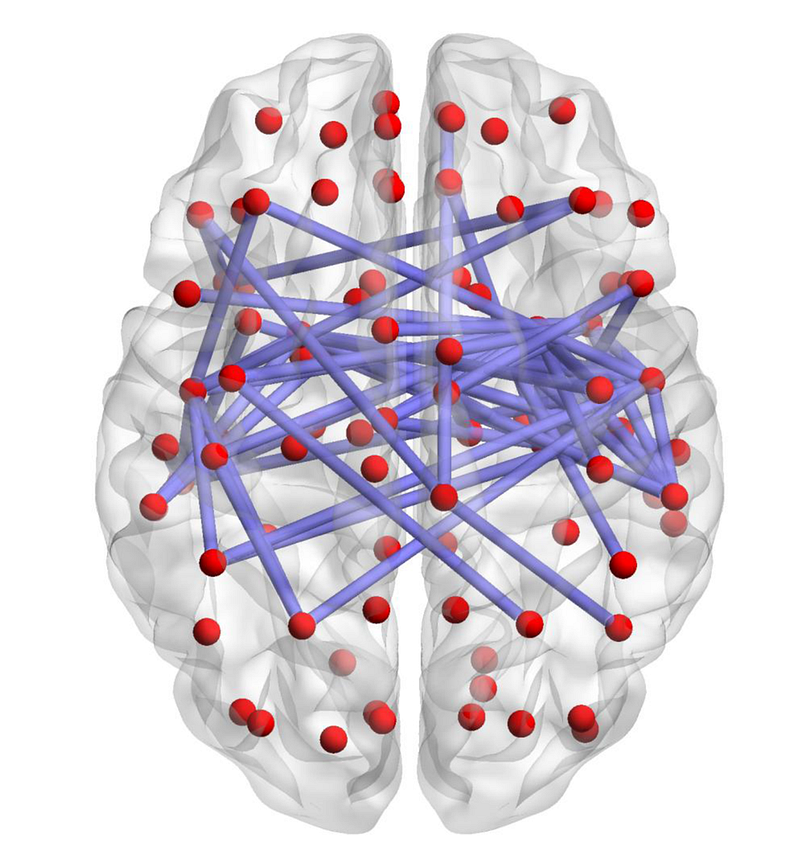
The web fractal lacks a clear energy-collecting boundary. Energy can be collected from anywhere and distributed to anywhere within the network. As a result, the web has much smaller energy gradients than the hierarchy. Power is not bottlenecked within the web as it is within the hierarchy.
The distributed growth pattern of the web makes it a high-entropy structure. In other words, growth of the web is unconstrained and there are many redundant pathways within the web. This makes the web more resilient to disturbance than the hierarchy. There are no points within the web the removal of which would be fatal to the system as a whole.
Growth of the web is unconstrained and there are many redundant pathways within the web. This makes the web more resilient to disturbance than the hierarchy.
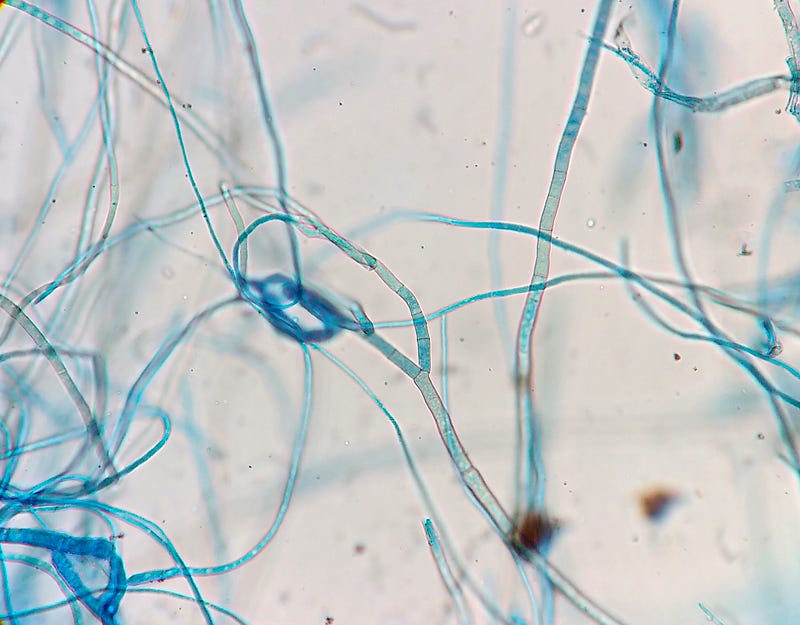
The primary weakness of the web is its inefficiency. Since there are so many pathways available within the web, it is unclear which path is the best to transfer energy from one side to another. Since no node has authority over any other node’s behavior, it is not possible to implement changes in one part of the web and have them propagate quickly to the rest of the web.
Examples of web structures commonly found in nature include spiderwebs, fungal networks, and many activist organizations.
Fractal Three: The Crystal
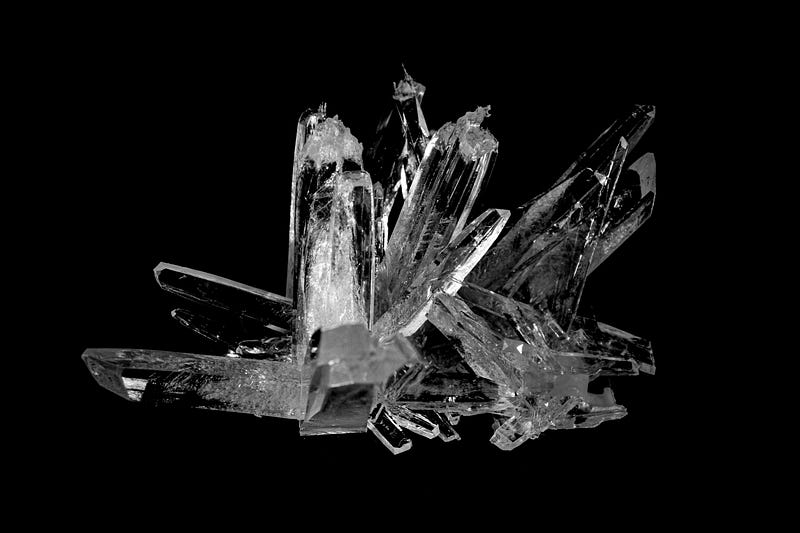
A simple crystal is a set of elements arranged at equal distance and angle from one another. Crystals are unique amongst the first three fractals in that knowledge of the location of a single element and the heuristic of the structure is sufficient to extrapolate the location of each other element within the crystal.
A simple crystal is a set of elements arranged at equal distance and angle from one another.
The crystal has the lowest energy and entropy of the four fractals examined here. This makes them highly stable and predictable structures. These qualities lend their use in materials for optical, informational, and structural purposes. It can easily be said that crystals underpin the foundations of the modern world, with fiberoptic cables, glass, and metal serving as prime examples of crystals found nearly everywhere there are people.
Unlike our first two fractals, the hierarchy and the web, which process energy, crystals are generally formed from elements releasing energy to the surroundings. Once formed, crystals are relatively unaffected by inputs of energy. If light shines through a fiberoptic cable, for example, it can be relatively sure that light of the same intensity and frequency will emerge from the other side. The inert nature of crystals is what gives me confidence that these words will show up on your computer screen unadulterated.
Once formed, crystals are relatively unaffected by inputs of energy. Their inert nature is what gives me confidence that these words will show up on your computer screen unadulterated.
As with our other fractals, the strength of the crystal is also its weakness. Crystals are difficult to change once established. If their design fails to meet the desired purpose, you need an entirely new crystal.
Fractal Four: The Spiral

The spiral is the fourth and final fractal on our list. Spirals are lines that follow a curved path around a center point. They are found when examining the growth and movement patterns of systems. Spirals have two terminal elements — one at the outer edge, spiraling out from the center, and one at the inner edge, spiraling in toward the center.
Spirals are lines that follow a curved path around a center point. They are found when examining the growth and movement patterns of systems.
Like the hierarchy, the spiral is efficient in transporting energy in two directions- inward or outward. This efficient energy transfer can be seen in systems such as whirlpools. The spiral is also a low-entropy configuration, with the growth of new elements only possible in two places.
The shell of a snail is a ubiquitous spiral in nature. The effectiveness of the spiral as a shell is due to the fact the shell is able to grow with the snail inside. The advantage of spirals is their ability to continue growing sustainably without diminishing the quality of the structure. This is contrasted with the hierarchy and the web, whose vulnerabilities are exacerbated as they grow.
The spiral also teaches us to grow our systems sustainably by building from what we already have. With each turn of the spiral, the system grows larger in proportion to its previous size. Each passing turn allows the spiral to expand further than before. This sustainable growth is demonstrated by the Fibonacci sequence, a common heuristic in nature for the growth of spirals.
The spiral teaches us to grow our systems sustainably by building from what we already have. With each turn of the spiral, the system grows larger in proportion to its previous size.
The Fibonacci sequence is a number series in which the next number is equal to the sum of the previous two numbers:
1, 1, 2, 3, 5, 8, 13, 21 . . .
A system growing from the Fibonacci sequence can grow sustainably because each new step is proportional to the previous steps.
A final strength of the spiral archetype is its repetition. Every revolution of the spiral brings the terminal element to a point in line with previous terminal points and the center of the spiral. Thus, as the spiral grows, we create an ever-widening view of the center. This is embodied in the cyclic passage of time. Each solstice, each anniversary, gives us a unique yet familiar view of our past and future.
Creative Combinations
Each fractal pattern can be found in its archetypal form in nature. However, the great strength of learning the archetypes comes in designing systems with all of them working together. In this way, we are able to combine their strengths and reduce their weaknesses to create regenerative, long-lived systems.
The human nervous system is a prime example of the combination of three of our fractal patterns: the hierarchy, the web and the crystal.
The Three Fractals of the Nervous System
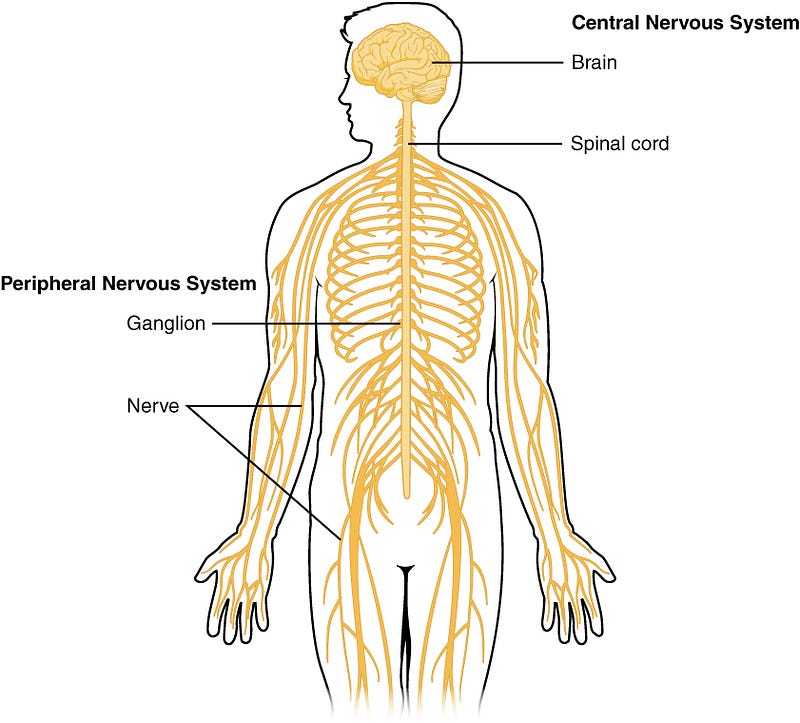
The crystal element is the unchanging, consistent, and reliable character of the nervous system. It originates in our DNA, the blueprint from which the entire system is constructed.
The hierarchy of our nervous system is consists of the brain and brain stem as command centers with our peripheral nervous system branching out from our spinal column, splitting repeatedly until reaching the nerve endings on our skin. This confers the great benefit of central processing — the many sensory inputs from our body’s nerves are collected at the top of the hierarchy, which then can make an informed decision about how to react. On the other hand, damage to the top of the hierarchy in the form of mental illness, head injury, or spinal column severance creates dire consequences for all systems downstream.
To offset this weakness, the top of the hierarchy, the brain, is itself a web fractal. The greatest strength of the web, its democracy, offsets the greatest weakness of the hierarchy, its bottleneck of control.
A Further Case Study: Social Transformation
Let us now imagine that we are attempting to create social transformation through organization. We wish to design an organization to be long-lived, effective, and sustainable. Such an effort can be accomplished through layering and combining the four fractal structures.
This example is based upon the model of the Permaculture Action Network.
From the spiral pattern, we learn that our organization will prosper through growth based upon previous success. Therefore, instead of attempting to launch the organization nationwide from the outset, we instead begin by focusing on a local chapter in our own neighborhood. In this way, kinks in the system can be worked out at a small scale, social infrastructure can be built, and organic momentum can be achieved.
From the spiral pattern, we learn that our organization will prosper through growth based upon previous success.
As the organization grows, we lean on a set of core values and activities to guide our action. This allows us to easily convey our mission and purpose to outsiders as well as make the onboarding process for new members consistent and straightforward. This set of values and core activities is the crystal essence of our organization.
This set of values and core activities is the crystal essence of our organization.
We wish for our organization to be able to easily adapt to changing conditions, whether this comes from outside pressures such as a crisis or from establishing a chapter in a location with different cultural norms. In addition, we want to be careful to avoid concentrating power in the hands of a few individuals so our organization may benefit from diverse perspectives and avoid collapse if key members leave. Therefore, we design chapters to be democratically organized. In this manner we have integrated the web structure into its design.
Finally, we want to ensure that a system of checks and balances is in place so that local chapters do not stray too far from established best practices and core activities. For this reason, we create guidance councils that oversee the operations of local chapters and distribute organization-wide resources to chapters most in need. As the organization grows, councils are set up at the city, regional, national, and global levels. This nested lends the inherent strengths of the hierarchy to our organization. Meanwhile, the weaknesses of the hierarchy are offset by the democratic nature of the councils and local chapters.
As the organization grows, councils are set up at the city, regional, national, and global levels. This nested lends the inherent strengths of the hierarchy to our organization.
Conclusion
We can easily see physical examples of these fractals, as well as their combinations, all around us. Our challenge as living systems designers is to apply these patterns to our psychological and social systems. In so doing, we can heal our collective traumas and create the peaceful, abundant, and just world we seek.


