
Life Without God: My Journey from Casual Christian to Quiet Agnostic
I haven’t been religious for over 20 years, and I feel happier that way.
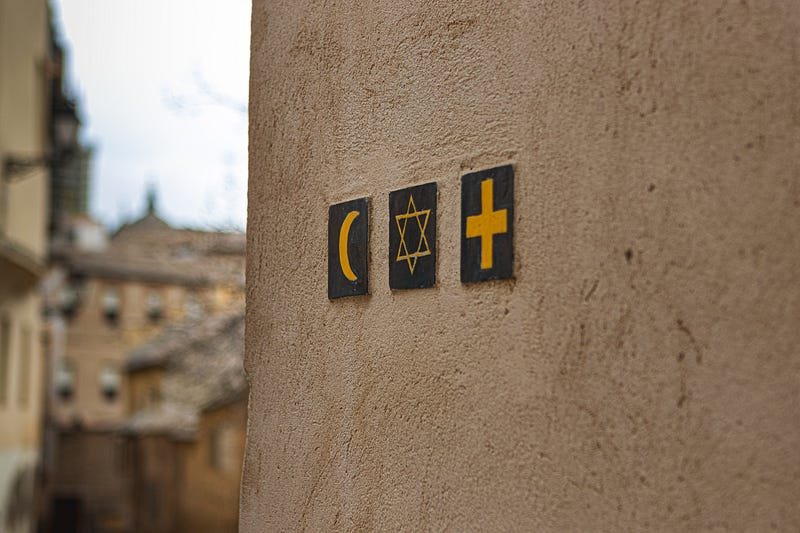
As the title of this article suggests, I’m agnostic. I try to not bring it up too much, as it makes certain people uncomfortable. Not that making people uncomfortable stops certain other people, but I’m not going to be That Guy™.
I’ve written about atheism and agnosticism before, and I walked through the events that led here, but I wanted to write a bit more about it. My journey has been a strange one, and I’m going to walk you through that bit of my personal history today. It started, like so many things in my life have, when I was 12.
My parents were both Catholic, but they didn’t force anything on me. We read bible stories periodically, sure, but they didn’t make me go to church and they insisted that I was allowed to choose my own spiritual path in life.
Then, when my bipolar symptoms manifested in middle school, I didn’t know what to do. When you’re 12, you don’t have the most logical stream of thought, and when bipolar is ravaging your brain, it’s even worse. As such, my thoughts on the issue went as follows:
I am having a terrible time and am suffering greatly.
Why would god let me suffer like this?
No kind and loving god would let me suffer like this.
There is obviously no god.
I am an atheist.
So, in middle school, I became an atheist. I did some light reading on the subject — after all, the internet was starting to become a thing at that point in my life, so I had access to that kind of thing. It made all sorts of sense to pre-teen me, so I embraced it wholly.
Apparently, that was not acceptable to my “choose your own spiritual path” parents. To them, choosing my own path must include some sort of religion and did not include atheism. At one point, during a heated argument with them, I yelled “I’m an atheist!” to which my father responded, “no you’re not!” That has stuck with me for more than 20 years.
I continued to consider myself an atheist throughout high school. Getting transferred to a school for kids with mental illness and substance abuse problems (as we called it, the school for fucked-up kids) also introduced me to a variety of other viewpoints.
My old high school was an upper-middle-class school full of good, upright kids and a handful of freaks, nerds, and cast-outs that I called my friends. This school was nothing but freaks, nerds, and cast-outs. It was an education in more ways than one. To top it all off, the internet was growing rapidly, so there was more information on different religions and viewpoints, which I ate up like a spiritual glutton.
As such, I entered college with a whole bunch of different ideas floating around in my head. I was introduced to Aleister Crowley by a friend who would become a big influence in my life. He taught me about the premise of Will and the notion of “Do as thou wilt is the whole of the law.” As an 18-year-old who had so often had no control over my life, this appealed to me.
It was also around that point where I decided that, if I was going to commit to an “alternative” spiritual viewpoint, part of that would be regular introspection and evaluation. How can I truly know what I believe if I don’t regularly question and challenge it? The logic seemed reasonable, and I wondered why more people didn’t take that approach.
Throughout my college years, I regularly considered, re-evaluated, and changed my spirituality. I cycled through phases of satanism, paganism (well, paganism-lite, as I didn’t really do anything with it aside from look into it a bit), and variants of Buddhism. Eventually, I wound up settling on agnosticism as the most reasonable approach.
Agnosticism is sort of a big shrug at the supernatural. There are many approaches to it, but mine, in general, is along the lines of “I don’t have adequate evidence of what may or may not exist in the world, so I choose to take no position.”
That’s not to say I don’t have some spiritual leanings. There seem to be things in the world that science cannot yet explain, and things like luck seem to be, in many cases that I’ve experienced, hereditary. I also tend to believe that, when it comes to religion and spirituality, you get out what you put in.
If daily prayer and twice-a-week church feeds your soul, cool. If a daily tarot draw helps you get through your day, go for it. If you draw spiritual fulfillment from meditation, good on you. I don’t particularly care what path you follow, as long as you follow two basic rules: do no harm (or as little harm as possible in the modern world), and don’t push your religion on me.
Honestly, that’s the biggest problem I have with Christianity: the premise that to be a good Christian, you must convert the non-believers. I don’t want to be converted, thank you very much, I just want to be left alone. I don’t particularly care to debate you about it either.
That’s not to say I won’t return politeness. I had a pair of Mormons knock on my door a few years ago, and I politely engaged them in conversation. I made it very clear that I was agnostic and was very unlikely to join their religion, but was happy to listen to their pitch. They did their thing, I nodded along, and when they were done, I told them I wasn’t planning on joining their church, thanked them for their time, and sent them on their way.
As far as I’m concerned, it costs $0 to be polite and return politeness in kind. I’m not the type to pick fights with people over religion, and if you try with me, I probably just won’t engage.
So, I’m happy with my choice of religion, and I’m happy that I have friends who share my approach. I rather enjoy the premise of three agnostics driving around on Christmas delivering cookies and candy to first responders, and it makes me happy to be a part of it.
I leave you with a story that floats around my social media occasionally: the purpose of the atheist.
A religious leader tells his disciples that all people in the world have a purpose under god. A pupil asks what purpose the atheist has. The leader responds that the atheist demonstrates ultimate humility. Atheists do good deeds and charity work not because they are commanded to by god or a holy book, but solely because it is the right thing to do. They have no higher purpose and no spiritual guidance telling them to do good, but they do good anyway.
Honestly, I take this approach to life, whether in my day job, my articles here, or just my general day-to-day goings-on. I don’t feel that I need a holy book or deity to tell me to do good. I simply do good because it is good. It makes me happy, it makes other people happy, it improves the lives of those around me, and it just generally makes the world a little better.
I encourage you to do the same. Go do good in the world. It doesn’t matter how or why — just do it. And don’t let yourself get caught up in the religious part of it — do it for no other reason than it’s the right thing to do.
Anyway, I haven’t done my usual introspection in a while, so I’m going to go think about my spiritual choices for a bit. Who knows, maybe I’ll change my viewpoint again? You never know.
If you liked this, please subscribe to my publication, Thing a Day. I publish something every day on a variety of topics, so you never know what you’re going to see!
Here are some other things I’ve written:


