
Life Strategy: Three Canvases for Personal Life Reflection
A gift for the life reflection season

The rest of 2022 is for life reflection. Here is a gift for you. If you want to reflect on the past 12 months and discover some ideas for your life development in 2023, see the following three canvases:
- Life Discovery Canvas
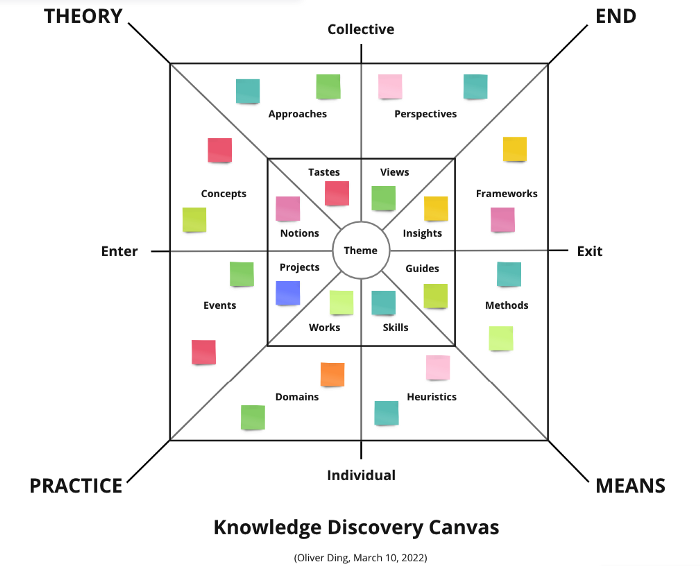
- Knowledge Discovery Canvas
- City Discovery Canvas
Life, Knowledge, and City. These three themes are primary themes for your life development.
Life Discovery Canvas
The Life Discovery Canvas is based on the Life-as-Project approach which was developed with the following seven basic principles:
- Being by Doing
- Engagement as Method
- End as Means
- Discovery as Development
- Performance as Experiment
- Curativity as Creativity
- Moving between Thematic Spaces
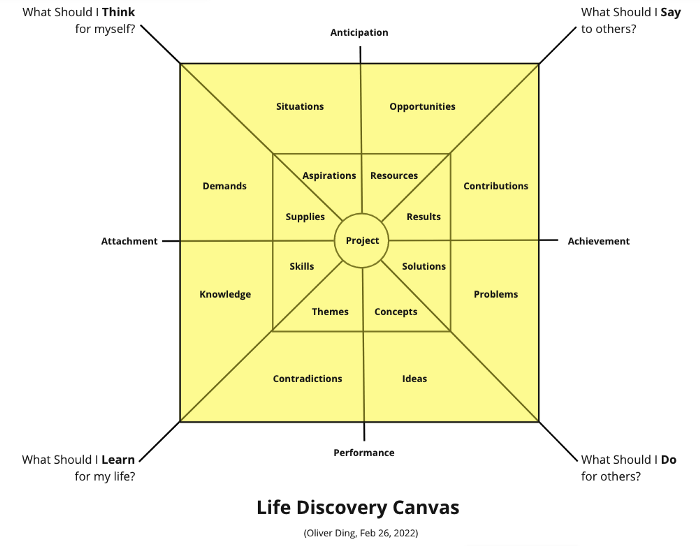
You can find more details in the following links:
- The Life Discovery Canvas (v1.0) — Part 1: Theoretical Background
- The Life Discovery Canvas (v1.0) — Part 2: Spatial Structure
- The Life Discovery Canvas (v1.0) — Part 3A: Concepts (THINK and LEARN)
- The Life Discovery Canvas (v1.0) — Part 3B: Concepts (SAY and DO)
- The Life Discovery Canvas (v1.0) — Part 4: Inspirations
You can also find a self-guided Life Discovery Board (v2) on Milanote.
Knowledge Discovery Canvas
The Knowledge Discovery Canvas was developed as a tool for Developing Tacit Knowledge.
My strategy to study Developing Tacit Knowledge is very simple. I focus on the long-term development of a theme. If we use Andy Blunden’s term, then the long-term development of a theme is the germ-cell of Slow Cognition.
A thematic space refers to a person’s ideas, activities, and practices around one particular theme. A theme can be an established theory such as “Activity Theory”; or a normal concept such as “Platform”, “Life”, etc; and an idea in the middle, such as “design thinking”, “UX”, etc.
The term Tacit Knowledge was coined by Michael Polanyi in his 1958 book Personal Knowledge, a book about the philosophy of science. Many scholars and researchers claim that skills, ideas, and experiences are part of tacit knowledge. I focus on the dynamics of Tacit Knowledge. I return to Polanyi’s initial notion of “an active comprehension of the things known” and use it as a starting point for the dynamics of tacit knowledge. Moreover, I consider Developing Tacit Knowledge an activity of objective—subjective knowledge curation.
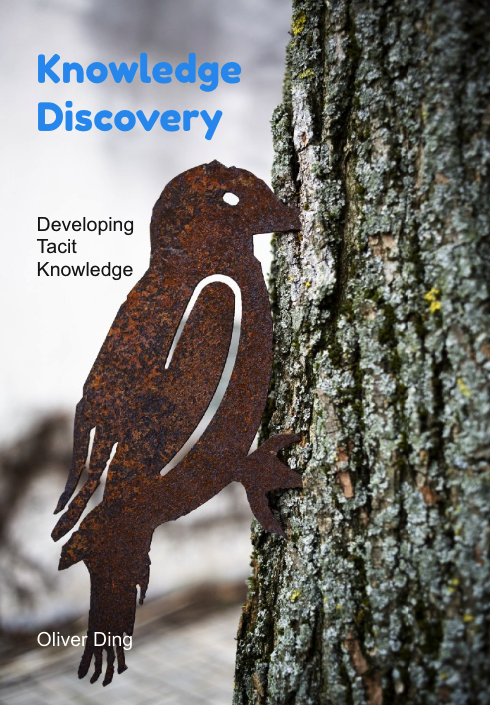
I also wrote a book for this canvas. You can find more details in Knowledge Discovery (Book).
City Discovery Canvas
How to discover development opportunities in a city?
You need a canvas!
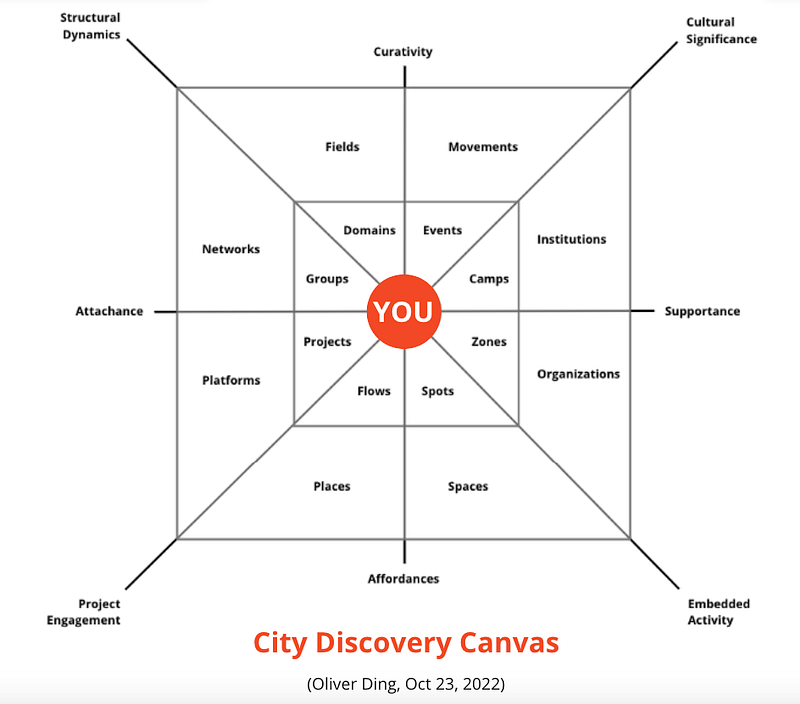
The attached canvas is an application of Optimal Context Canvas which is inspired by the Ecological Practice approach.
Now you can use the Optimal Context Canvas from the perspective of “City as Developmental Platform”.
The core idea behind the City Discovery Canvas is the following two types of social contexts:
- Proximal social contexts
- Pervasive social contexts
The Inner Space of the canvas refers to eight types of Proximal Contexts. The Outer Space of the canvas refers to eight types of Pervasive Contexts that are abstract social-cultural systems or larger scales of proximal contexts.
Moreover, you can explore a related framework: the Curated Mind. See the diagram below.
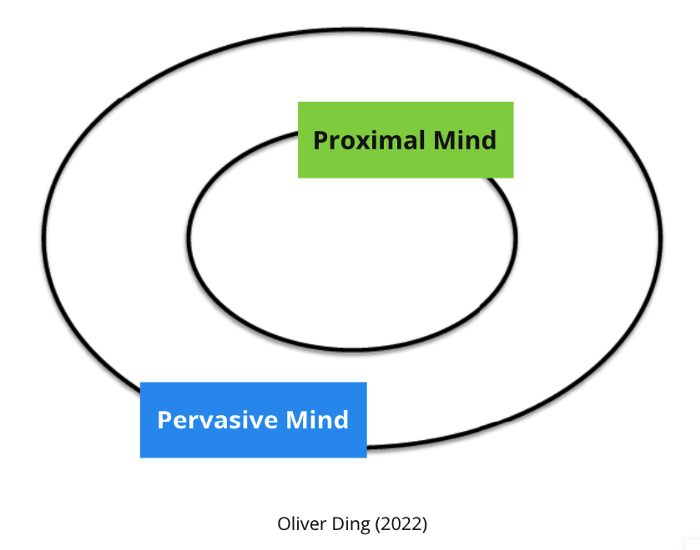
While Proximal Mind corresponds to Proximal Contexts, Pervasive Mind corresponds to Pervasive Mind.
- Proximal Contexts (Proximal Mind)
- Pervasive Contexts (Pervasive Mind)
These two parts form a whole system which is called Curated Mind.
You can find more details in The Curated Mind Toolkit (v1.0).

The creative life is a long journey of exploration and collaboration.
I wish you a wonderful new season for life reflection and anticipation!
Thank you very much!