
Life May Be Tough, but It’s Always Optimistic
No matter what, life surges forward with determination
I often think about family law in the wild. For instance, in owl families, the firstborn is the priority, the one that gets the most food and attention. Some of it is just by virtue of the fact that it’s the biggest and strongest — but nature also instilled in the owl parents the biological imperative to prioritize that first baby.
Then the second, if it survives. Then the third, if it survives. And so on.
However brutal it might seem, there’s a logic to it. A certain efficiency, even. Someone has to survive to maintain the species. So they favor each baby according to birth order. And it works.
It can seem harsh from a human perspective. In our world, the survival of every child is supposed to be equally important. If things were tight one month, we wouldn’t give the majority of food to the eldest child and hope the second child can make it through until the next paycheck, the next grocery trip. We’d split the food. We’d find a way.
As humans, we’ve challenged the laws of nature. We’ve decided that we are entitled to have as many children as we want — and that we’re entitled to their survival.
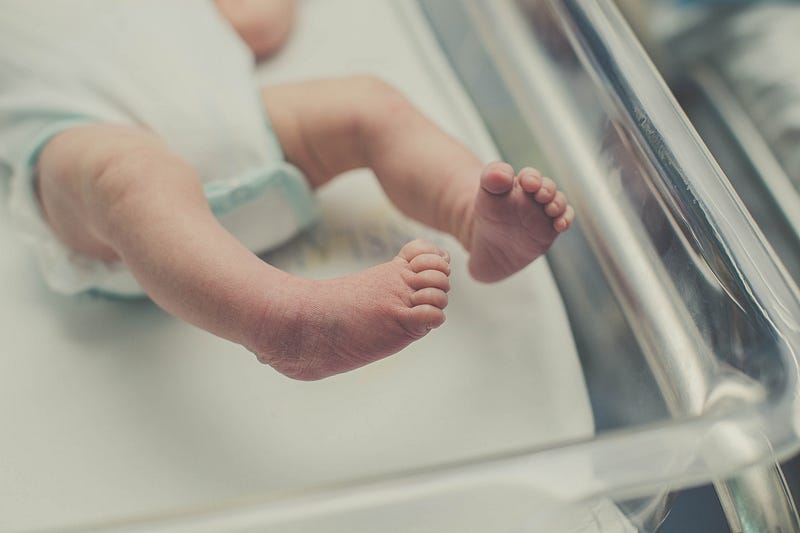
In the wild world — the world humans keep attempting to shake off like a coat that was pinching us around the shoulders — infants are incredibly vulnerable. There’s no guarantee they will survive, no matter what their species. That’s the agreement — that life, ever optimistic, will keep producing these tiny, vulnerable creatures and flinging them into the unknown, and maybe it will live, or maybe it won’t.
Until this modern age, every parent of every species understood this to be true. A baby is not a promise. It’s an offering of hope. A clawing desire for life.
And then humans changed the rules.
Owls don’t have this luxury. They don’t expect the world to give them what was never promised. They don’t believe themselves entitled to the enduring survival of their children, their grandchildren.
They lay their eggs each winter and give their firstborn their all. And then they give to their second born. And so on. And if all goes well, at least one will survive.
It is very scary to think about a child’s mortality. I know because it’s on my mind a lot, lately.
I have always worried — sometimes obsessively — about my nieces and nephews. I worry about them being at school in a town where hundreds of people own semiautomatic rifles and hoards of other firearms. I worry about them being approached in a parking lot. I worry about them getting hit by cars when they’re riding their bikes.
When Alex was born last year with multiple heart defects, I hit a whole new level of worrying.
To be blunt: His existence is a miracle. His doctors have concluded that some of his defects were his heart’s response to try to correct the problems caused by the initial defects, but they can’t figure out why he’s functioning so well with the issues he has. They expected to have to perform open heart surgery on him the day of his birth — and for him to have gone 11 months without surgery yet is astounding.
But it has been a hard winter for him. He became terribly ill after Halloween with a severe cold. Then a month later, he came down with parainfluenza.
Any illness, as you can imagine, that affects the respiratory system is extraordinarily dangerous for a person with cardiac issues. Alex’s oxygen levels are already lower than they should be — struggling for breath through congestion and exhaustion is very difficult on his body.
Once we hit February, we hoped it was over. He’d made it six weeks without an illness and was regularly receiving booster shots to prevent him from contracting the one thing his doctors were most worried about: RSV.
And then, early this week, after an emergency visit to the doctor, he was given the dreaded diagnosis.
This is worse than any illness I have seen him suffer. It’s worse than any other illness I’ve seen any of the kids suffer. As I write this, he is so weak, he can barely move. His face is flushed. His breath is thready and fast. He cries constantly, miserable and uncomfortable.
I’ve been spending a lot of time holding him lately, to help out my sister who is barely hanging on by her fingernails. She has five other kids, after all, and while getting them to and from school and keeping the house functioning, she has to take Alex to the doctor every day for monitoring, in case he needs to be admitted to the hospital — a very real possibility.
It is heart-wrenching to watch him suffer like this, when he has already been through so much in his short life because of his heart problems.
In the back of my mind, I sometimes think of owl families and their survival strategies. Alex is Baby #6. If he was an owl, his chances of survival would be pretty slim.
Though I find myself often frustrated with the way we humans bend those laws of nature when it’s convenient for us…I can’t help but be okay with that in this case. In fact, I’m downright grateful that we insist on the survival of our young. Because I honestly don’t think I can live in a world without Alex.
And when it comes right down to it, let’s face it — we aren’t going to win in a battle with Mother Nature, anyways. We can insist all we want, but in truth, we have no control over any of it.
Right after Christmas, when Alex went in for a procedure to collect data on his heart function, my sister and her husband stayed at the local Ronald McDonald House. While in the common room, she read the notes on the wall and after three of them, she had to return to her room where she broke down crying.
The notes on the wall said things like, “Please don’t let my little sister die. I love her so much,” and “I’d give anything to save my daughter. It’s not fair to have to say goodbye to her.”
We can pretend all we want, but nature gets to decide. Awful things happen. Children get sick and, god forbid, sometimes die. The cells that make us sometimes don’t develop normally and leave babies with deformities, defects, health issues.
Life will be as generous and as ruthless to our babies as it is to a nestful of owlets.
So what do we hold on to in the fact of such a bleak truth?
We hold on to the fact that life is tenacious. Life is determined. Life does not give up easily.
It gives an owl more babies, even if the previous year’s offspring did not survive. And it finds a way to carry on, just as with Alex’s heart, developing creative ways to circumvent the dysfunction created by his defects.
Alex’s heart is a beautiful metaphor for life. It didn’t roll over and give up. It adapted. It found a new path. It’s constantly responding to his problems by saying, “Yeah. I can work with this.”
Maybe there is hope for us yet — owls and humans, alike.
© Yael Wolfe 2020