
Life Lessons from Fiction: Their Impact on My Technological Journey
Exploring Technology: How Fiction has Shaped My Tech Career
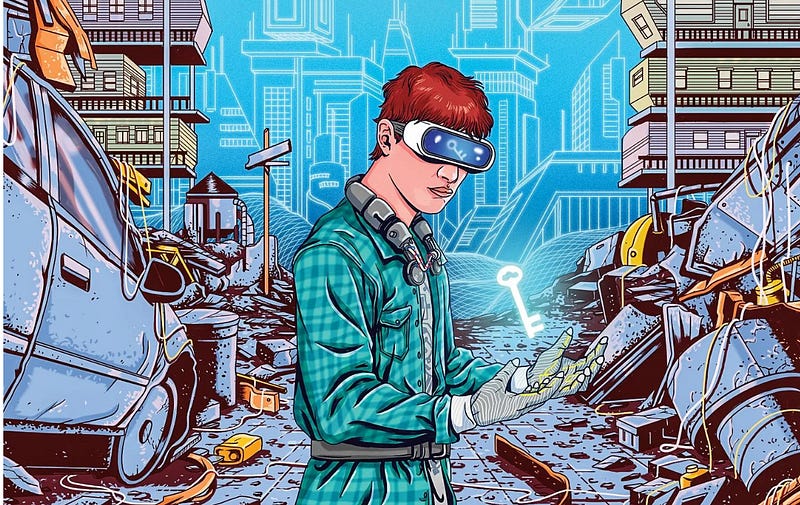
Imagine for a moment, curling up with your favorite novel or turning on the latest episode of that gripping series you follow. These are more than just moments of relaxation and entertainment; you’re subconsciously learning from the characters, the plot turns, the problems presented, and the solutions found. In the same vein, let’s discover how the sphere of technology also gains meaningful insights from the world of fiction.
“Storytelling is the most powerful way to put ideas into the world today.” — Robert McKee
This concept is not as far-fetched as you may think. Fiction, with its limitless scope, serves as a constant source of inspiration and learning. It beholds solutions to problems, fuels creativity, brings about paradigm shifts, and even propels technological advances. These seemingly impossible ideas, scenarios, and gadgets depicted in the realm of fiction often later materialize in our real world of technology.
In this article, we will delve into the intricacies of how we learn from fictional narratives and how the field of technology has integrated these learnings for unprecedented growth and development. So, buckle up and join us on this whimsical ride from fantasy to reality.
Imagine, if you will, a world where the extraordinary is commonplace and boundaries are infinitely elastic — the world of fictional stories. In these realms of endless possibilities, we often stumble upon valuable insights and innovative concepts. You see, fiction can provide a fertile training ground for real-life problem solving, especially when it comes to quick-paced arenas such as technology.

Much like a sponge, the technological sector absorbs these nuggets of wisdom and packages them as game-changing innovations. But how exactly does this happen? Well, let’s break it down.
Consider the case of Star Trek, a cult classic that introduced the concept of a ‘universal translator’. Skip ahead a few decades and voila, this idea has been embodied in our real-world language translation apps.
Moreover, the notion of virtual worlds and augmented reality, once delved into by sci-fi dystopias, have now been realized with technologies such as VR headsets and AR-enabled apps.
What’s even more fascinating is how the lessons from fictional narratives spur growth on a personal level, nurturing a mindset of innovation and disruptive thinking among technology enthusiasts and professionals. A perfect example of this can be found in the book ‘Ready Player One’. The story has inspired an array of tech enthusiasts to explore the frontiers of Virtual Reality, not just as a form of immersive entertainment, but as a transformative platform for social interaction, education, and other aspects of daily life.

Thus, it’s clear that fiction does more than just entertain. It ignites ideas, stokes creativity, and ultimately shapes our technological landscape in ways we’ve often only dreamt about. So, next time you dive into a gripping fictional story, remember you might just be riding the wave of the future!
Engaging with fiction, you unknowingly open up your mind to explore possibilities beyond the ordinary. Every cyborg, every AI entity, each space exploration detailed in the annals of science fiction suddenly changes your perspective on technology’s potential and its repercussions on society.
Fictional narratives allow you to push beyond the boundaries of the known, instigating you to question, explore, and innovate. This is the reason behind an interesting phenomenon: a significant number of successful tech leaders avidly read fiction. By flexing our imaginative muscles, we’re able to visualize the implementation of future-forward tech in our real-world scenario. This transformation from reading a tech-dystopian novel to heading a disruptive tech startup is truly remarkable.
Engaging with stories of technologies not yet seen only continually transforms the field. It reshapes our understanding, broadens our thinking and challenges us to venture into novel areas. Fiction, as it turns out, is more than a portal to imaginary worlds but a mirror showing potential realities.
So, next time you pick up a piece of fiction, remember: you’re not just indulging in a pastime. You’re shaping your ability to visualise, problem-solve, and inspire change within the world of technology. The future moves at the speed of imagination. Thanks to these narratives, we are keeping pace.
- Studies have shown that reading fiction can increase levels of creativity and abstract thinking, two essential traits in technological innovation.
- Fictional narratives often propose scenarios and technologies that challenge current limitations. This can serve as a prompt to tech aficionados to explore these possibilities in reality.
- Well-known tech innovators like Elon Musk and Steve Jobs have admitted to drawing inspiration from science fiction tales. For instance, the concept of a personal assistant like Apple’s Siri was first seen in sci-fi narratives.
- Futuristic fiction can offer a more comprehensive view of the socio-technical systems of tomorrow, helping technologists ponder ethical and societal impacts of their creations.
- Fiction helps to cultivate empathy by allowing us to step into the shoes of characters. This can be beneficial in user-centric tech design, as understanding various perspectives helps create more universally accessible technology.
- Reading, especially fiction, is proven to reduce stress, which is vitally important in a field like technology where burnout rates are high.
To sum up, immersing ourselves in the dynamic worlds of fiction is not limited to leisure or escapism. It directly contributes to holistic personal development and fuels technological innovation. From sparking creativity to broadening perspectives and enhancing empathy, lessons gathered from fictional narratives cultivate a mindset that’s conducive to breakthroughs in technology. Moreover, they offer a unique lens to critically evaluate the societal implications of potential technological advancements. Lastly, the stress-relieving aspect of reading fosters a healthy work-life balance, a crucial element for longevity in any demanding field like technology. In essence, we can confidently state that fiction — far from being a mere form of entertainment — acts as a subtle yet influential mentor in our technological quests.
If you feel like this read hit home and it’s worth a coffee for this writer, :) You can buy me a coffee here. I’m forever grateful for your support. Cheers.