
Life is Too Short to Continue Wearing Uncomfortable Clothes
From wired bras, too-tight jeans and denim skirts — why do we continue wearing clothes that don’t make us happy?
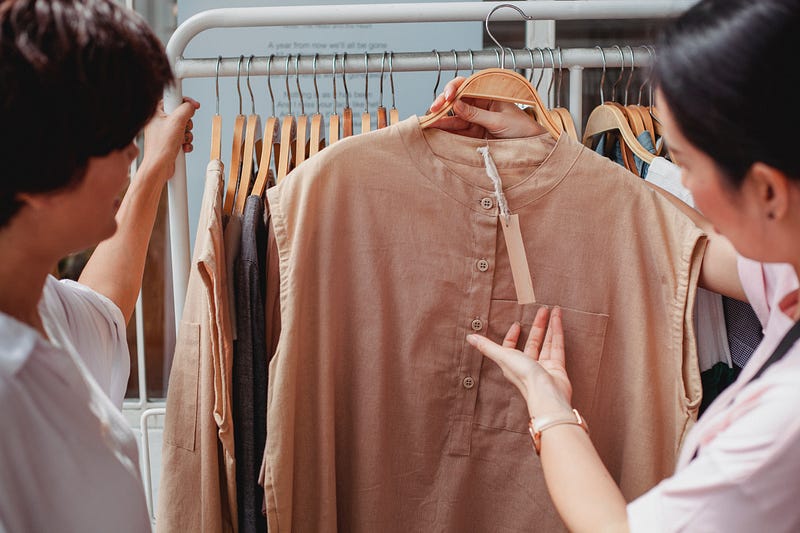
We’ve all seen the jokes about going on a work call where we pair pyjamas on the bottom, with a picture-perfect blouse on the top. It’s become somewhat of a pandemic cliche to be living in sweatpants, non-wired bras, and baggy t-shirts.
This got me thinking — why do we bother wearing tight, possibly uncomfortable clothes in the first place?
By all means, if you feel more comfortable in tight-fitting, slender hugging clothes, then feel free to ignore this completely. But for everyone who is dreading going back to normal life and squeezing into skin-tight, slinky, skinny jeans — I’ve got your back — I don’t want to go back to them either.
Why should we?
Who Are we Wearing these ‘Flattering’ Clothes For?
I remember being curled up on the sofa on a weekday evening, watching Gok’s Fashion Fix with my mum as a teenager. The show's premise was to transform women who felt ‘frumpy’ into glamorous, figure hugged works of art.
I liked the show then. Firstly, it showed women of all body types and growing up watching it, I guess you could say that was a positive influence on me. Secondly, it tried to convey the idea there is fashion out there for everybody.
But the whole premise of the show now feels a bit uneasy. Something about having to transform women into glamourous works of art, all under the premise of satisfying the ‘male gaze’ doesn’t strike a chord anymore. In fact, I find the idea quite problematic.
Go into any high street or luxury fashion store and the majority of mannequins, which are used to display clothes on, are of the same shaped women. That’s problematic in itself.
But usually, the expectation is to have an hourglass figure and use our clothes to accentuate that. But for who? Who decided that?
The mannequin was first introduced in Paris by Professor Lavigne (a man, of course) in 1835. After that, they then appeared in stores throughout Britain and the United States. Whilst we are definitely on track to be more size-inclusive, and shops are doing more to accommodate this, it begs a fundamental question. When we dress, why are we expected to seal the approval of somebody else in the process?
Last summer, the news picked up that many women were buying this particular dress from Zara. It was a flowy, Polkadot dress — perfect for the summer and feeling cool and free. Evidently, many were worn as it was named one of Zara’s most popular pieces of the year. But of course, it attracted negativity too.
The New York Post had this headline: “Summer’s hottest Zara dress is a $70 sack” which is just the opposite of what the style was trying to achieve. It is the perfect dress for all body types, and that’s why it was such a hit. But still, the expectation of wearing something flattering for women — is always in the background.
It's your prerogative — so ditch the uncomfortable clothes if you want to
As I said before, if you like wearing figure-hugging clothes, this article isn’t for you. I’m not trying to shame anyone who does — but I’m trying to draw attention to the outdated expectation that women should emphasise their shape and body at all costs, which was what Gok Wan was trying to do with his television show.
The only person we should dress for is ourselves. We should wear clothes that make us excited and feel more ourselves. If that’s tight clothes, then so be it. But if its clothes with a baggier fit, possibly deemed as “unflattering” by others, we should also wear those too.
I’m particularly thinking about this now because I’m currently sat in am amazing pair of brightly coloured trousers that I adore, but are what some would think as “unflattering.” After all, they don’t empathise my “good” parts. I know that’s what Gok Wan would say.
But I’ve spent nearly an entire year wearing leggings, sweatpants, baggy trousers, and love every minute. I’ve become in love with the brand Lucy & Yak, who stress comfort over everything — and they are so right.
Making a Case For Prioritizing Comfort Over “Flattering”
Frankly, I don’t care what others may view as flattering or not flattering on my body. It’s my body. I’ve been all different weights over the years, I’ve been considerably slimmer than I am now, and larger. But I have never been 100% happy with my body and I probably never will be — regardless of weight.
But one thing is for sure — when I ditch the expectations to dress in a certain way — and embrace the clothes and styles that make me happy and comfortable, I feel a heck of a lot better about my body.
Tight jeans, vest tops with no breathing room, swimming costumes, tight shorts that show my bum cheeks when I bend over, bodycon dresses, stringy underwear — you name it — they all make me feel uncomfortable. And when I’m uncomfortable — my overall confidence dips. Wearing what is “flattering” for my body type (I’m an hourglass) would involve wearing all those types of clothes. But I can’t be bothered.
I can’t be bothered because it doesn’t make me happy. I’m far more comfortable and confident in cool, brightly coloured trousers, or in dungarees that hold me in or a floaty skirt that looks beautiful in the wind. I wear these clothes for me and to impress nobody but myself.
Life is too short not to feel confident in our own skin
I’m a believer in wearing what makes you feel confident. If it’s figure-hugging clothes — go for it. But we shouldn't shame women for wearing clothes on the baggier side or do not necessarily pair well with their body shape. I’m so over it.
I spent most of my teenage years agonizing over my body and what I saw in the mirror. I’m not particularly happy with what I have now — but I’m learning to accept myself for what I am.
What I do know is this — I feel far more confident and care-free in clothes that don’t squeeze me in all the wrong places or try to fit me into a box. Frankly, life is too short to feel uncomfortable.
The fashion market is changing, and we are now leaning towards acceptance of all body types — which is the way forward. But we also need to let go of this expectation we place on women that everything they wear has to be “flattering” for their body type. As fundamentally, it comes from what another person’s opinion (or the “voyeur”) thinks looks good on our bodies.
If we feel good, comfortable and confident, that is what really matters.
My goal is to wear clothes that make me feel comfortable and confident coming out of the pandemic. That may well be a tight dress on one day (although I highly doubt it) or a baggy top and leggings the next, but that’s my choice to make, nobody else's.
“If it’s not comfy, why you wearing it?” — Lucy & Yak


