
Life Is So Terrible and Beautiful at the Same Time
How do you hold it all in your heart?

There’s an elderly gentleman who works at the local pharmacy store.
He’s bent over and moves slowly. His hair is uncombed and a dull vacancy lurks in his eyes. He’s always there so he must need the money.
His sadness is contagious.
I try to say something kind or friendly to encourage him. Sometimes he perks up momentarily, offering a half smile and faint twinkle in his eye. But then the light goes out again.
Yesterday I was in the park with my dogs.
I came across a woman I have not seen in almost a year. She was with her two small dogs. She was different. Her hair was entirely gray. Her eyes were tired.
There was an aura of melancholy about her.
In the past, she was always with her energetic husband, laughing and walking their dogs regularly in the park. I enquired about him. She looked down for a moment and then told me he was diagnosed with ALS.
“I have to put him to bed before I take the dogs for a walk. Because he falls at home. He needs a walker now. I’m looking into hospice,” she said.
I mentioned that my wife is a hospice nurse, who could answer any questions. We exchanged phone numbers, and I asked her to say hello to her husband for me.
And then she meandered down the pathway like a defeated prisoner of life’s hardships and sorrows.
I wanted to hug her, and tell her she’d be alright. But I don’t know her that well.
Social boundaries trumped my compassionate instinct.
There are enough sad endings in real life
It was an exquisite day in the park.
Sunny with a slight breeze. The birds were singing. My dogs collapsed on the grass to roll on their backs. Their lives are oblivious to the complexities of human existence. They live in the moment.
If only I could do that.
We strolled along and came across a memorial plaque on the ground beside a tree. I was struck by how young the men on the plaque were.
Curious, I looked them up on my smartphone.
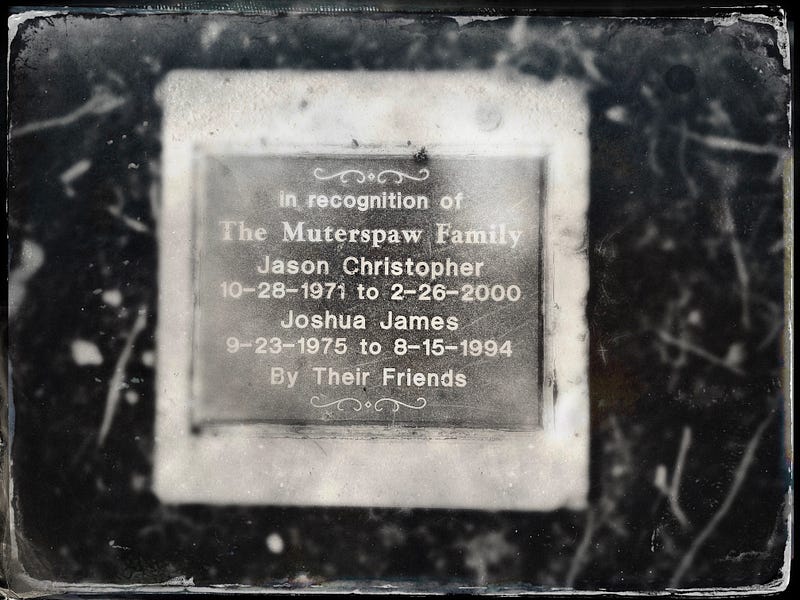
They were brothers. The younger one died from a rare form of cancer, and the elder brother was killed in a rollover vehicle accident.
I thought of the many accidents and death scenes I responded to during my law enforcement career. The suicides and murders and sad endings.
“I’m a hopeful romantic who adores novels with happy endings, because there are enough sad endings in real life”.—Tammara Webber
I tried to get my mind off such things and scanned my smartphone, noticing a missed call. It was from a good friend who recently had a kidney removed due to cancer.
I called him back.
We spoke about his recovery, his bad back, and his grandson’s upcoming university graduation. We also spoke about a mutual friend whose girlfriend committed suicide a year ago in his house.
It was a tragedy.
Many years prior, this same friend lost his young wife to brain cancer. He became a single father to two children.
Life has thrown him many curveballs, but he manages to soldier on. He refuses to give up.
Old grey-haired waitresses in cafes at night
I stopped by the store on my way home from the park.
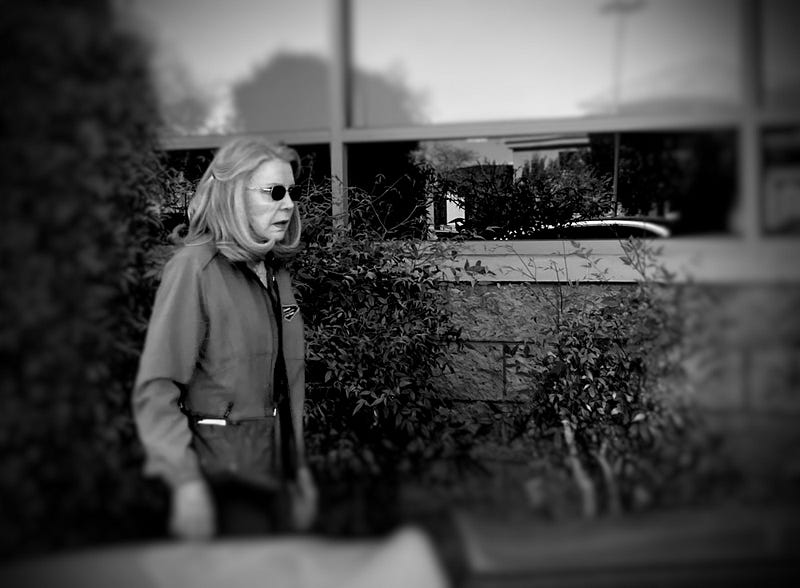
A woman was sitting on a bench all by herself. She stared off into space for the longest time. I wondered what consumed her thoughts. Then she got up, slipped on her sunglasses, and strolled past my truck.
She seemed like a wandering zombie.
I thought of the late writer and poet Charles Bukowski, who lived much of his life on the periphery of society. In flop houses with fellow drunks and prostitutes and wounded, haunted souls.
Bukowski had no illusions about the vicissitudes of life, and his poems spare no punches in capturing the lost hope and darkness felt by those on the margins of society.
When I think of the old man with a vacant stare working in the local pharmacy, I think of Bukowski’s poem “Dreamlessly.”
When I think of the woman in the park with her little dogs and terminally ill husband at home, I think of Bukowski’s poem “Dreamlessly.”
When I encounter people like the woman on the bench, alone and staring off into space, I think of Bukowski’s poem “Dreamlessly.”
Here are the opening stanzas of the poem:
Old grey-haired waitresses
In cafes at night
Have given it up,
And as i walk down sidewalks of light
And look into windows of nursing homes
I can see that it is no longer with them.
I see people sitting on park benches
And i can see by the way they sit and look
That it is gone.
I see people driving cars
And I see by the way
They drive their cars
That they neither love nor are loved –
Nor do they consider sex.
It is all forgotten
Like an old movie.
The entire, stunning poem is about people who have given up. People wore down by the slings and arrows of life, with its repetition, mundaneness, and perceived meaninglessness.
The following video contains the entire poem, read with great effect by Tom O’Bedlam, and paired with Max Richter’s meditative music, “On the Nature of Daylight.”
It’s worth a listen:
How do we avoid it?
How do we insulate ourselves against the many wounds, disappointments, shattered dreams, and dark moments of the soul?
How do we navigate old age, when friends begin to die and our bodies betray us and we feel a sense of creeping irrelevancy?
What is the antidote for despair?
Life is so terrible and beautiful at the same time
We will all eventually suffer destruction, yet some people stare it down. Thus, they achieve a kind of nobility.
Think of the people in life who find meaning in their suffering. Who refuse to give into the darkness and spy the silver lining in those dark clouds.
The ones who say things like, “Yes, he’s dying of cancer, but his illness has brought us closer and he’s forgiven his son and now they’re finally talking again,” or “It was hard but I took care of her until the end, with love and patience and dignity. And now I’m going to honor her by volunteering in the church, and helping folks at the soup kitchen,” or “The doctor says I’ve got maybe a year, so I wrote down a list. I’m going to paint in Italy, and I’ve got several important letters to write. Carpe diem.”
The antidote for despair is to stare it down and get on with it.
The reality is that happiness is fleeting and suffering demands meaning. Also, most good things start small. You don’t need to do something heroic to revive the purpose and meaning in your life.
Love your family and friends. Lean on literature and the humanities, which allow you to “walk through the souls of others” and recognize that you’re not alone.
Embrace your hobbies and passions. Spend time in the garden, or walking your dog in the park. Call on friends in need, or volunteer to help the elderly, homeless, or abandoned animals in a shelter. There is meaning in service.
When we help others, we help ourselves.
The writer Mary Pipher published a lovely essay in the New York Times titled, “How I Build a Good Day When I’m Full of Despair at the World.”
Here’s an excerpt:
“Last night I sat on my porch and watched a storm in the southeastern sky. Bolt after bolt of cloud-to-cloud lightning illuminated the towering thunderheads. An owl flew over en route to his favorite pine tree. Frogs croaked. Dogs barked in the distance. As I watched this scene, I thought: Life is so terrible and beautiful at the same time. Do I have the capacity to hold it all in my heart?”
How about you? Do you have the capacity to hold it all in your heart?
The charming gardeners who make our souls blossom
My wife and I sold our home and moved recently.
She was diagnosed with breast cancer two years ago but thankfully it was caught early and successfully treated. The entire experience opened our eyes to what matters most.
Thus, we decided to downsize.
We sold our large home with a pool and guest house for a smaller home. The savings in pool maintenance and landscaping costs allow us to travel and have more experiences.
Last night was our first night in the new house.
We sat together and gazed at the view of the mountains and glorious sunset. We both felt a deep sense of gratitude.
“Let us be grateful to the people who make us happy; they are the charming gardeners who make our souls blossom.”—Marcel Proust
Gratitude is another weapon you have to defeat despair. Gratitude for each other, our health, friends, passions, and the little things in life like a good cup of coffee or a purring cat on your lap.

Whenever thoughts of despair creep into my mind, I remember all I have to be thankful for.
Romping forever
The dogs and I returned to the park today.
I find these outings restorative. The fresh air, sun, birds, grass, and kids laughing in the park all lift my spirits.
Around the corner, my dogs found another plaque.

Leave it to my dogs to find something uplifting and positive, even in a memorial plaque. They both sniffed it and then looked at me, as if to say, “Read this, and then give us a biscuit when we get home.”
I read the plaque:
“In Loving Memory of Chas
A Fabulous Border Collie.
Romping Forever!”
Chas may be long gone, but apparently, he was “fabulous” and is now “romping forever” in some celestial dog park. His life and playful nature inspired his family to leave this loving plaque with its positive message.
“Romping forever.” I like that phrase.
It seems like good advice, too. Whenever you see a dog running through the grass with ears flopping, tongue bouncing, and what looks like a big smile on the muzzle, you know the dog is happy.
Life is so terrible and beautiful at the same time. May we learn how to hold it all in our hearts.
May we all continue romping forever across the landscape of our lives.
(Originally published here)
Before you go
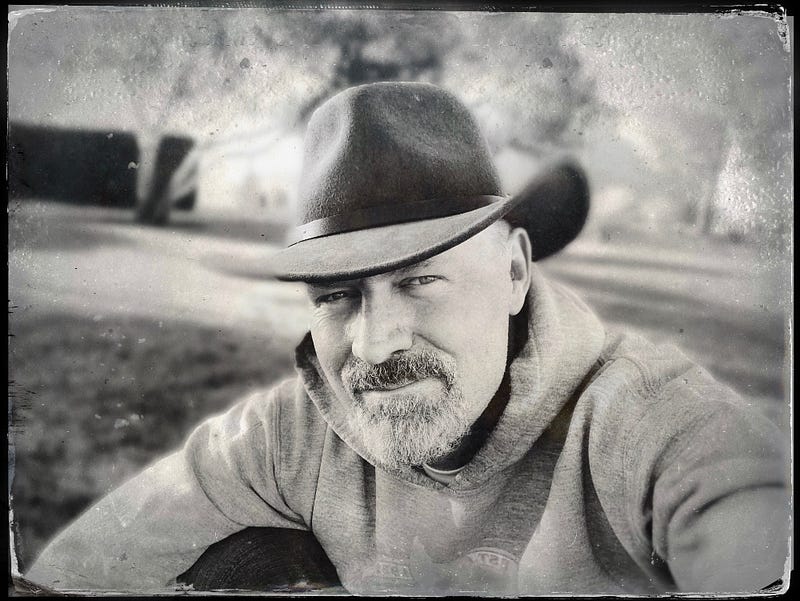
I’m John P. Weiss. I write elegant stories and essays about life. If you enjoyed this piece, check out my free weekend newsletter, The Saturday Letters.


