
Life in Rural America: No Milk or Eggs
Is it weird nobody’s talking about food shortages?
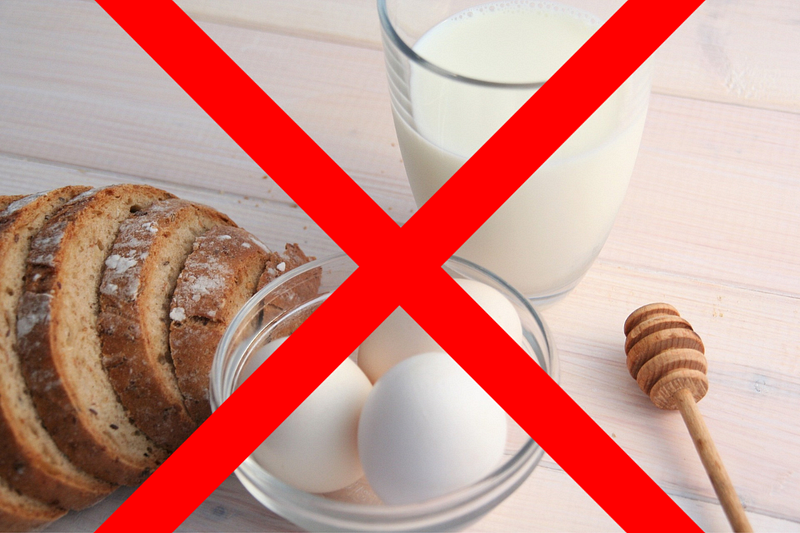
Browsing my town’s food store the other day, I crowed out loud when I spotted a few cartons of eggs and milk. I’d been trying for two weeks for eggs and had gone without milk for a week. The store was out of butter, though, and the shelf that usually groans under boxes of dry pasta was almost empty. I wanted ziti or penne, but thin spaghetti was my only choice. I grabbed two boxes out of about 10 remaining, fighting the urge to buy all of them, wanting to leave a few for my neighbors.
Cartons of orange juice? Liquid gold!
I went straight home and made a big meal of country biscuits and gravy, which I’d been craving but didn’t have the ingredients for. I poured a very small glass of orange juice to go with it, not knowing when I’d be able to buy more.
This is a true story, not dystopian fiction
I live in rural western Michigan; the shopping trip I just described went down this week. It’s a typical trip to the grocery store for my neighbors and me, and it has been for several months as scarcities grow gradually worse rather than better.
What’s weird is that almost nobody is talking about it. Googling “food shortages in rural American” yields plenty of hits, but the articles are mostly about food insecurity owing to poverty. While poverty is absolutely a problem in my rural community, and while it certainly contributes to food insecurity, supply chain issues keeping our shelves bare are a big worry for just about everyone around here, no matter their economic status. People with limited incomes are worse off, but more on that in a minute.
A recent article in AgriPulse reveals that pandemic-related supply-chain problems are hitting farmers and the agricultural sector hard. The Associated Press report that supply-chain shortages are boosting inflation, alluding to but not directly mentioning staple-food shortages in rural areas. CNN reports that the “supply chain crunch” is leaving the neediest Americans without enough to eat.
The U.S. Department of Agriculture says everything is fine
According to the latest information release from the USDA, supply-chain problems exist but are not limiting access to food. Here’s a quote from their web site:
There are currently no nationwide shortages of food, although in some cases the inventory of certain foods at your grocery store might be temporarily low before stores can restock. Food production and manufacturing are widely dispersed throughout the U.S. and there are currently no wide-spread disruptions reported in the supply chain.
USDA and the Food and Drug Administration are closely monitoring the food supply chain for any shortages in collaboration with industry and our federal and state partners. We are in regular contact with food manufacturers and grocery stores.
Maybe the above statement is essentially true if you live in a city or near enough to one to do your routine food shopping. But at least for my rural Michigan neighbors and me, stocks of milk, eggs, butter, cheese, and pasta aren’t just low; they are often unavailable for days at a time. I find myself remembering my grandmother’s stories about short food supplies during World War II.
Like her, my neighbors and I have gotten in the habit of knowing when the “cold truck” will arrive at our local grocery stores, and we try to plan our shopping around that schedule. I’m almost 60, and I can’t remember ever thinking about that kind of logistics detail before, let alone planning my shopping around it.
Often, though, the truck shows up empty of essentials like eggs. So we go home disappointed and wait for the next truck several days later. “What can you do?” says the cashier through pursed lips. “It is what it is. I hear the Amish farm down the road has eggs.”
They do, at $4.00 a dozen. They don’t sell milk, though. It’s illegal for farmers to retail dairy to the public, unless you buy a share in a cow. (Yes, that’s a thing. And it’s very expensive.)
Food scarcities are hitting low-income and disabled people the hardest
I can afford to buy super-expensive eggs from the Amish, and I could probably swing a share in a cow if I had to. A lot of my neighbors can’t. I could afford an hour’s round-trip drive to the nearest city where supplies are more assured if not guaranteed, but a lot of my neighbors can’t. Gasoline is also super-expensive these days, and for people earning minimum wage or less, filling the tank takes a crippling bite out of the budget.
The thing is, my mobility is limited due to a chronic illness, and a trip into town with a long painful walk around a super store is more than I can face on many days. Besides, the results aren’t assured. I drove into a nearby town a couple weeks ago to look for basics, and while I did score some milk, they were out of chicken, except for breaded strips and nuggets in the freezer case. I didn’t want them, but I bought them anyway.
For those of you asking why I don’t use Door Dash, Instacart, or Amazon’s grocery delivery, those aren’t available in most of rural America. Neither is Uber, by the way, an unsurprising fact that nevertheless surprises my friends who live in cities.
My grim-faced cashier shared some tips with me the other day. She almost-whispered information about which stores have what in stock. Go “there” for meat, try “there” for eggs, drive over to the next town for milk because they seem to have a more reliable source.
It’s like food shopping has become a treasure hunt, and only those with the money for gas, and bodies strong enough for the hunt, are likely to come out on top.
Nobody is starving, but basic food availability is a problem
Let me hasten to add that my neighbors and I have enough to eat. We can find plenty of bread, rice, dry beans, ground beef, etc. Packaged chips and sweets overflow from shelves, junk-food supplies seemingly unhindered by whatever is causing shortages of healthier foods.
I never imagined I’d live in a world where I couldn’t find eggs or milk for days at a time. I don’t know how mothers with small children are coping — probably as poorly as disabled people and people with limited incomes.
Not finding any news stories about what all my neighbors acknowledge is a serious concern makes me feel like a frog in a pot coming slowly to boil. It’s great that we’re coping, that we’re stoic rural Americans used to not complaining, but we would like the rest of you to know that it kind of sucks we can’t have a full glass of orange juice with breakfast most of the time.
We’re getting by, and we know things could be much worse, but we’re starting to wonder if they’re ever going to get better. I could have written much of this article in September, and now that Christmas is already here, we haven’t seen any positive change.
Speaking of Christmas, I’m carefully hanging on to certain essentials to make sure I can cook a nice holiday meal. I bought canned cranberries a few weeks ago, and I’m glad I did as shelves are empty of them now.
Once again, I’m reminded of my grandmother’s shortage stories. I never thought I’d connect with them so personally, but here we are. For all I know, here we stay for the time being. I know you city mice can’t do anything about it, but us country mice would sure like you to know what’s going on out here.
My writing is always free to readers who follow my links from Twitter and Facebook, but if you’d like to browse more, click to join Medium and help support my work. To get an email whenever I publish a new story, Click Here.
James Finn is a former Air Force intelligence analyst, long-time LGBTQ activist, an alumnus of Queer Nation and Act Up NY, a frequent columnist for the LA Blade, a contributor to other LGBTQ news outlets, and an “agented” but unpublished novelist. Send questions, comments, and story ideas to [email protected].