
CULTURE
Life in France in English
Language and the dream of a new life abroad
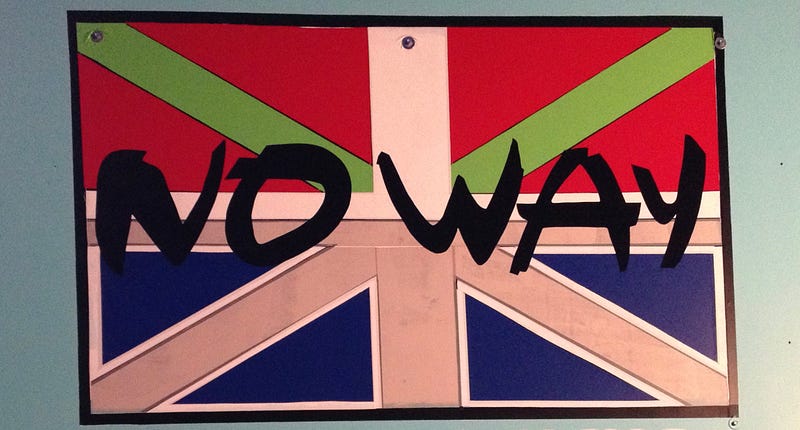
According to British TV, we Brits are obsessed with escaping to another country. We can watch endless reruns of property shows such as A Place in the Sun, following the brave people seeking a new life elsewhere. Destinations are global, although certain hotspots crop up constantly — the Spanish Costas and so-called “Dordogneshire”.
But the TV shows often ignore the practicalities of real life. The focus is on showing properties that “tick all the boxes” in places where “your money goes further”. But what about language?
When asked, the prospective buyers always state they intend to integrate with the locals and learn the language. How does this work in practice?
Many people have been inspired by Peter Mayle’s A Year in Provence. It’s reassuring to read he arrived with “an almost total lack of comprehension”, but by the autumn he’d progressed to an ability to make complicated phone calls.
A few years ago, I researched British people who’d moved to an area of the French Pyrenees known as the Ariège. There were popular forums for the English-speaking incomers, and clearly some people were coming out to live in France with little knowledge of French.
It’s easy to underestimate the importance of language when caught up with the excitement of a spacious, affordable house with a wonderful view. Especially when the property magazines and television programmes focus on getting the most for your money and ticking those boxes.
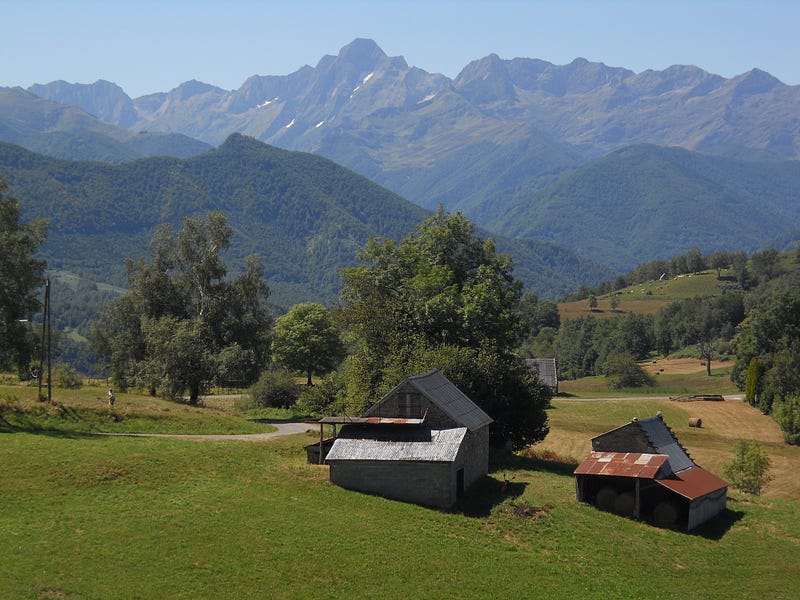
Of the people I interviewed, some got by with working for the British community; others found employment as “the English speaker” in the estate agencies or ran their own accommodation, muddling through in the event of having French customers.
One of the latter was Ray. Ray was scathing of people who came to France on holiday and decided to make it a permanent move. “They come out with rose-tinted glasses, in holiday mode, and then when real life hits them in the face, it isn’t easy.”
But Ray was also flippant about the necessity to learn French, saying “real life gets in the way”. As if being able to communicate in the local language is something fanciful, an add-on for people with nothing else to do.
I found that the Britons happiest with their communication skills were those who hadn’t progressed beyond a basic level. They were realistic, aiming for what was achievable. John, who’d retired to south-west France with his wife, described learning French on a need-to-know basis, and was happy with that. “I learn what I need for DIY and gardening. Like that’s what they call a saw, that’s what they call a lawnmower,” he said.
And if the French didn’t understand his accent, it was their own fault! One time, a Toulouse shopkeeper didn’t understand when he wanted to buy pain au raisins. Nothing to do with his pronunciation; John placed the blame firmly on the shopkeeper’s intelligence. “We’d have got more sense out of that wall,” he said, gesturing across his courtyard.

Many of the ex-pats I met spoke a high level of French, but if anything, they were the ones who seemed disappointed. I interviewed Susan, who talked about having unrealistic expectations. “After doing all that hard work in England, I thought in a couple of years I’d be totally fluent. But five years on it’s just not flowing out.”
For Susan, it was never just about getting by, but about becoming the person she wanted to be — the ideal self.
And then there was Gerald, who spoke the kind of French learned through formal education. “I speak it like a book, like a Voltaire,” he said. Gerald and his wife spoke sufficient French to hold dinner parties, join clubs and choirs, as well as stand in the local election. But it wasn’t enough.
“I’m English in culture. Things that you grow up with, all that body of culture that we call English is accessible to us. But the French one isn’t, and that’s what we miss out on,” he said. “The culture’s alien, I haven’t grown up with it.”
Even so, Gerald relished the ability to have a foot in both camps. “There’s always this thing about an Englishman abroad. You have a kind of freedom, what the Germans call narrenfreiheit; it means the jester’s freedom to mock the king. I’ve got this freedom as a foreigner, I don’t have to obey the conventions. The French forgive me because I don’t know any better,” he said.
For the Brits in France, the ease of having a helpful English-speaking community around must make it tempting to rely on one’s compatriots. And British shops, selling British branded goods, offer just that.
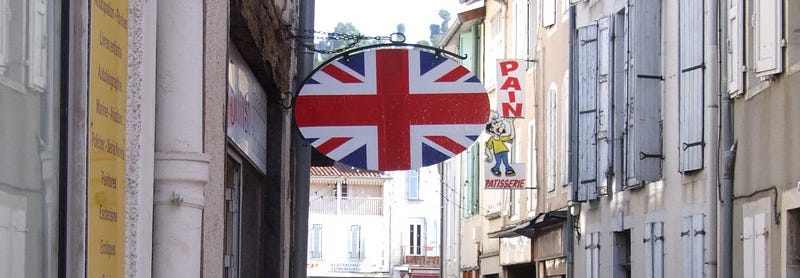
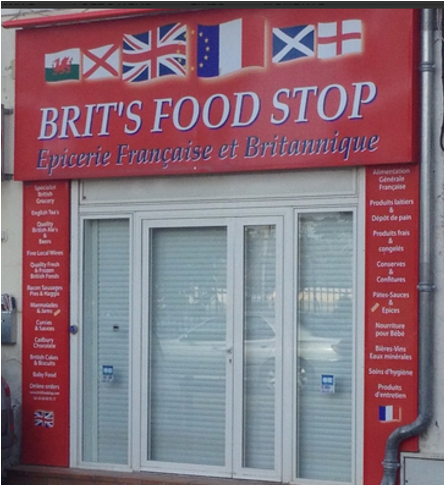
Hardly any of the English incomers I spoke with admitted to using the British shops. Some saw it as something “other” people did, a sign of not being integrated. Others were more honest about it, admitting it was hard to give up things they’d grown up with.
Admittedly, it’s hard to understand why anyone would want to buy British jam or sliced white bread in France. But other things are more difficult to replace with an alternative. What’s more, when I was in the shops, they both got their fair share of French customers who came in to buy English tea.
I spotted a non-linguistic advertisement of Englishness on a building plot in a quiet Pyrenean valley. Next to building foundations sat two deckchairs with a St George’s flag on one side and “England” written on the other. I stopped to talk to the couple building the house and they were full of enthusiasm for moving to this part of France. They said they’d shunned English hotspots such as Dordogneshire and had made an effort to learn French before they came out.
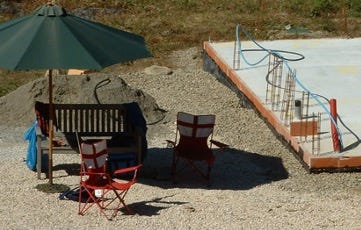
A year later, the house was complete, with a cast iron English name plate: River Cottage. But the couple were preparing to sell up. They “missed English culture”. Perhaps that English house name symbolised what they missed: the familiarity and ease of English.
Anxiety was a common theme with the females I spoke with. They had a tendency to imagine themselves as ridiculous when seen through the eyes of the French locals. Gail, for example, said “Oh God, are they thinking stupid English woman?”
Elaine, whose French was basic, tried to make sure that the French didn’t dismiss her as “just that silly English woman who’s an immigrant. And why’s she here? She can’t even speak our language.”

Even Rosie, a French speaker, sensed the negative gaze of the locals. “As soon as anyone slightly doesn’t like me because I’m a foreigner or something, then I start stammering and stuttering all over the place.”
If I had to give one enduring point from my observation of the British incomers in the Ariège, it was how they assumed a duty to do things properly. If their French wasn’t good, it was important to show that they’d tried. Everyone made a point of saying this, showing the extent of the social pressure — to be seen as making an effort. To be the “right” kind of English person in France.
Thank you for reading! If you’re interested to read more about moving to the Ariege, see:


