
Life In A Bathrobe — How I Was Diagnosed With Burnout Syndrome And How I Plan To Recover
“A true story,” I keep reminding myself again and again in disbelief.
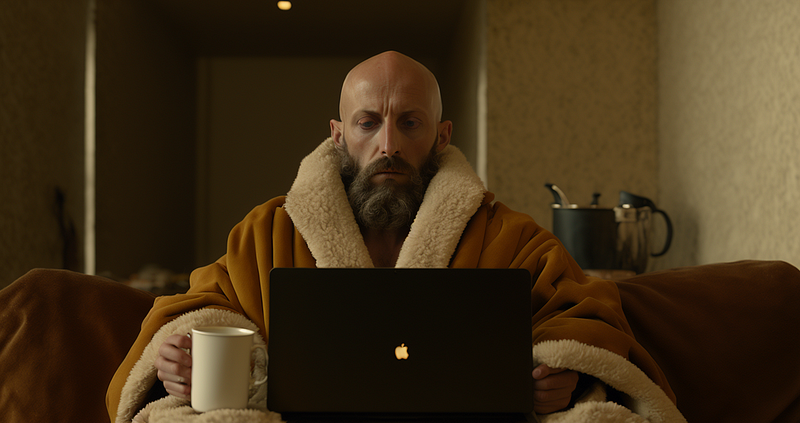
They say: Burnout syndrome gradually creeps into your life, unnoticed.
In hindsight, I have to admit that I probably could have noticed it coming on. But like many men, I knew none of the symptoms that this condition brings, and I kept myself in complete ignorance until that final crescendo at the climax of an ongoing manic work cycle.
There it was, the moment I had to realize that something was seriously wrong: TADA! A triumphant final chord in a symphony of work rage, messed up sleep cycles and suppressed anxiety.
From one day to the next, I could do nothing. Nothing at all.
And I didn’t even know what was going on.
Life In A Bathrobe
Here we are, a week after that final chord, and I’m sitting at my laptop in a bathrobe, looking like a strangely lactose-intolerant version of The Big Lebowski, but in a comparably serious situation. Unlike the original, my problem has nothing to do with a carpet — yet.
Since about 48 hours I can type again. Before that, I lay around in bed for days. Tired. Headache. Pain. I saw absolutely no reason to get up. Everything felt like a pointless endeavor, doomed to failure. As if all your options were to start a war in Iraq.
Now I can write for 20 minutes before the headaches or anxiety come back. It’s crazy because I never thought burnout syndrome would play a role in my life. Why should it? I’m not a stressed-out manager and I thought I was a pretty calm person. Just a freelancer hustling along with his writing jobs…
In hindsight, I was just very good at avoiding my fears and self-doubt by throwing myself into more and more work and more and more projects. Manic periods of work that got longer and longer, and I didn’t even realize it. But now I have to admit to myself that this thing called “burnout syndrome” is actually a thing in my life. And it’s crucial that I realize this because I worked in the entertainment and creative industries for a long time and saw people fall back into old habits again after they hit rock bottom. Back to drugs to cope with their fears and worries. Back to manic workload.
Well, I can see how I myself was one of them for years, and that this behavior was actually the start of a cadence that led to that final BANG that got me into the bathrobe.
I decided I don’t want to break anymore. I want to fix this.
I accept life in a bathrobe and take it from here.
A Plan To Recover
Writing about my condition helps me to stay mindful, and mindfulness seems to play a crucial role in this self-imposed burden of the mind. I hope that by writing about how I got to the point where I was affected by burnout syndrome and how I plan to recover from it, I can follow through with my plan and maybe even help others to help themselves.
Professional Help
What has helped me a lot is to take it seriously. I went to a doctor, well, to be honest, I listened to my girlfriend who made me go see a doctor. First thing I was told there: men do not take their mental health seriously enough. Point taken. I have been referred to a psychologist and will go there.
Move
The first thing I do in the morning, before the anxiety or loss of motivation kicks in, even before the first cup of coffee: I run. The fact that the rollercoaster of anxious thoughts has to stop when you want to run for 30 minutes is fantastic. Free your mind and your ass will follow, said George Clinton, I would argue it’s the other way around though: Free your ass, get it out there, and your mind becomes free as well.
Caffeine Consumption
A rather harsh and radical rule I did set for myself: “Coffee is a limited resource now!” Only four cups a day are allowed. Four cups! That’s a big change compared to what I’m used to. I mean, measuring by cups? That’s new. However, keeping it below a single pot should really help with sleeping.
Talk
I speak openly about my condition. I no longer hide behind platitudes. I accept how I feel and I share it. Just this morning I received a call asking me to accept another writing job. I explained my situation and that I will decline for now but would be happy to hear from them again in a week. It not only feels good to be honest with myself and others but it also leads to unexpected help and understanding.
Rest
I also started to accept phases in which my mind or my body just doesn’t want to function. Then I lie down. I accept living in a bathrobe, starting to binge Netflix, and going to bed as soon as I feel sleepy. The last couple of days I binged a lot. I slept a lot. It feels like the snooze button has become a lifestyle for me, but so be it. I am ready to take one baby step at a time. Let’s see how this goes. My body says, no more writing today. So, see you around.


