avatarChris Compton - @twainingwheels

Free AI web copilot to create summaries, insights and extended knowledge, download it at here

2869

Abstract

us that sleep benefits us in many ways. From a stronger metabolism to better heart health, sleep is a natural remedy for many human ailments.</p><p id="b9da">Anyone unable to sleep can attest to the increased difficulty “living tired” imposes on our lives.</p><h1 id="c8b5">How a Lack of Sleep Affects the Learning Process</h1><p id="ecf7">Have you ever reviewed the notes you took during class and known immediately that you had fallen asleep during that particular session?</p><p id="aeac">The hurried scribble, already hard to decipher, becomes more cryptic and eventually trails off as if the singer had lost her voice, leaving a line that ironically resembles the tire marks left by a car that caused an accident after the driver drifted off.</p><p id="4209">Learning, at its core, is the formation of new connections in the brain. Learning requires focus, understanding, and repetition. Learning complicated material is difficult for most people under the best of circumstances. Teaching a sleep-deprived person is like teaching a moose to fly. Your upside potential is limited.</p><figure id="7830"><img src="https://cdn-images-1.readmedium.com/v2/resize:fit:800/1*[email protected]"><figcaption>A light load — Image by Author</figcaption></figure><h1 id="9390">The Nuts and Bolts of Sleep and Learning</h1><p id="cc29">I have a chair in the corner of my bedroom that collects clothes. Workout shorts, tee shirts, socks, boxers, jeans, jackets; they all pile up on the chair. Eventually, the chair is stacked so high with clothing that I am forced to deal with the issue. Imagine the luxury of having someone tiptoe into my bedroom at night and put away my clothes, freeing the chair up completely to store more articles the next day.</p><p id="f03e"><a href="https://www.med.upenn.edu/csi/the-impact-of-sleep-on-learning-and-memory.html">Kelly Cappello, writing for Perelman School of Medicine, </a>explains that our brain stores new information in the hippocampus. We can keep piling new facts and memories into our brains until we fill up the hippocampus, at which point our ability to learn is stymied. The chair in the corner of our brain is overloaded.</p><p id="1462">In order to make room for more new bits of information, the brain must move the data in the hippocampus to areas of the brain that are more appropriate for long-term storage. Studies at the University of Berkeley indicate that the brain makes this adjustment automatically during stage 3 sleep. Sleep empties the chair and puts all the clothes in their proper place, freeing up short-term memory for the next day’s learning.</p><h1 id="da4d">Practicing in Your Sleep?</h1><p id="66ee">Imagine that you are learning a new skill. Maybe you recently read this article and decided to dust off your Spanish books.</p><div id="fb5c" class="link-block"> <a href="https://

Options

readmedium.com/life-from-different-perspectives-987a3c5e6cbd"> <div> <div> <h2>Life From Different Perspectives</h2> <div><h3>Part 4 of 20: Learning a new language keeps your brain young</h3></div> <div><p>medium.com</p></div> </div> <div> <div style="background-image: url(https://miro.readmedium.com/v2/resize:fit:320/1*08wv4bXx3lOBVMhXoSKpPg.jpeg)"></div> </div> </div> </a> </div><p id="e57f">Wouldn’t it be nice if you could learn while you sleep?</p><p id="a673"><a href="https://news.harvard.edu/gazette/story/2022/06/scientists-find-link-between-sleep-and-learning-new-tasks/">Massachusetts General Hospital neurologist Daniel Rubin</a> has done studies that indicate sleep learning is more than just a dream. Experiments conducted at MGH monitored the brains of rats trying to learn to solve a complex maze and noted the neural paths that were excited by the process.</p><p id="dcb0">The same brains were then monitored while the rats slept. The exact same neurons fired in the same order, indicating that the rat was practicing the maze in its sleep!</p><figure id="c573"><img src="https://cdn-images-1.readmedium.com/v2/resize:fit:800/1*ruqqQKJjLpTD1FuywYrAjw.jpeg"><figcaption><a href="https://en.wikipedia.org/wiki/Simon_(game)">Milton Bradley’s Simon — Image from Wikipedia</a></figcaption></figure><h1 id="e75a">Sleep Is Not Just for Rats!</h1><p id="8774">Continuing studies utilizing human subjects have yielded promising results as well. One experiment involved a quadriplegic male volunteer. He was directed to repeat patterns in his mind based on input provided — remember the game, Simon, from the eighties?</p><p id="9ec7">Signals in his brain showed neuron paths in a state of excitement as he progressed in the game.</p><p id="7a26">Continued monitoring of his brain as he slept indicated the same paths firing repeatedly as he practiced the patterns in his sleep.</p><h1 id="9260">Take-Aways from This Article</h1><ul><li>You can only learn so many things before your short-term hippocampus memory fills up and needs to be emptied</li><li>Your body automatically moves your new experiences in the form of memories, along with facts you have learned, into the appropriate storage areas of your brain during sleep</li><li>Your brain needs downtime in order to accomplish some necessary housekeeping. Sleep provides that downtime.</li><li>You should consider moving some of your learning and memory-related tasks to the portion of your day immediately before sleep so that your brain can reinforce the learning process</li></ul><p id="aa81">Chris Compton</p><p id="fd92"><a href="http://www.twainingwheels.com">www.twainingwheels.com</a></p><p id="3225">03–25–2024</p></article></body>

Chris Compton — @twainingwheels | Kingsley Asuamah

Life From Different Perspectives: Burning the Candle at Both Ends?

Part 8 of 20: Getting Enough Sleep is Crucial for Learning and Memory

This article is part of a series of articles written from the perspectives of two very different minds.

My name is Chris Compton. I am a 59-year-old American living in Atlanta, GA. I am writing about the 20 self-improvement facts in this article:

The article’s author, Kingsley Asuamah, is a 36-year-old Nigerian living in Ireland. He is writing about the same topics.

You can follow along and see how two strangers, separated by age, geography, and circumstance, view the world and the opportunity to develop as human beings.

Eating and sleeping are the only activities that should be allowed to interrupt a man’s enjoyment of his cigar.

Mark Twain

I can hear it, but I’m not sure what it is or where it’s coming from. Gentle buzzing tones on repeat. Bee-de-dah-dah, Bee-de-dah-dah, Bee-de-dah-dah. Make it stop.

After a few cycles, I crack open one heavy eyelid and assess the situation. Daylight is peeking around the edges of the blinds, and the noise is definitely coming from my iPhone. It’s my alarm. The new day is upon me.

The Power of Sleep

You’ve been there, right? You’ve been roused from pleasant slumber by an alarm of your own making at a time of your own choosing and regretted all of the above?

Sleep is often undervalued in life, particularly by people who categorize themselves as driven. To these hard-charging overachievers, sleep is a thief in the night, sneaking into their lives to steal productivity and impede potential accomplishment.

Doctors disagree. Doctors tell us that sleep benefits us in many ways. From a stronger metabolism to better heart health, sleep is a natural remedy for many human ailments.

Anyone unable to sleep can attest to the increased difficulty “living tired” imposes on our lives.

How a Lack of Sleep Affects the Learning Process

Have you ever reviewed the notes you took during class and known immediately that you had fallen asleep during that particular session?

The hurried scribble, already hard to decipher, becomes more cryptic and eventually trails off as if the singer had lost her voice, leaving a line that ironically resembles the tire marks left by a car that caused an accident after the driver drifted off.

Learning, at its core, is the formation of new connections in the brain. Learning requires focus, understanding, and repetition. Learning complicated material is difficult for most people under the best of circumstances. Teaching a sleep-deprived person is like teaching a moose to fly. Your upside potential is limited.
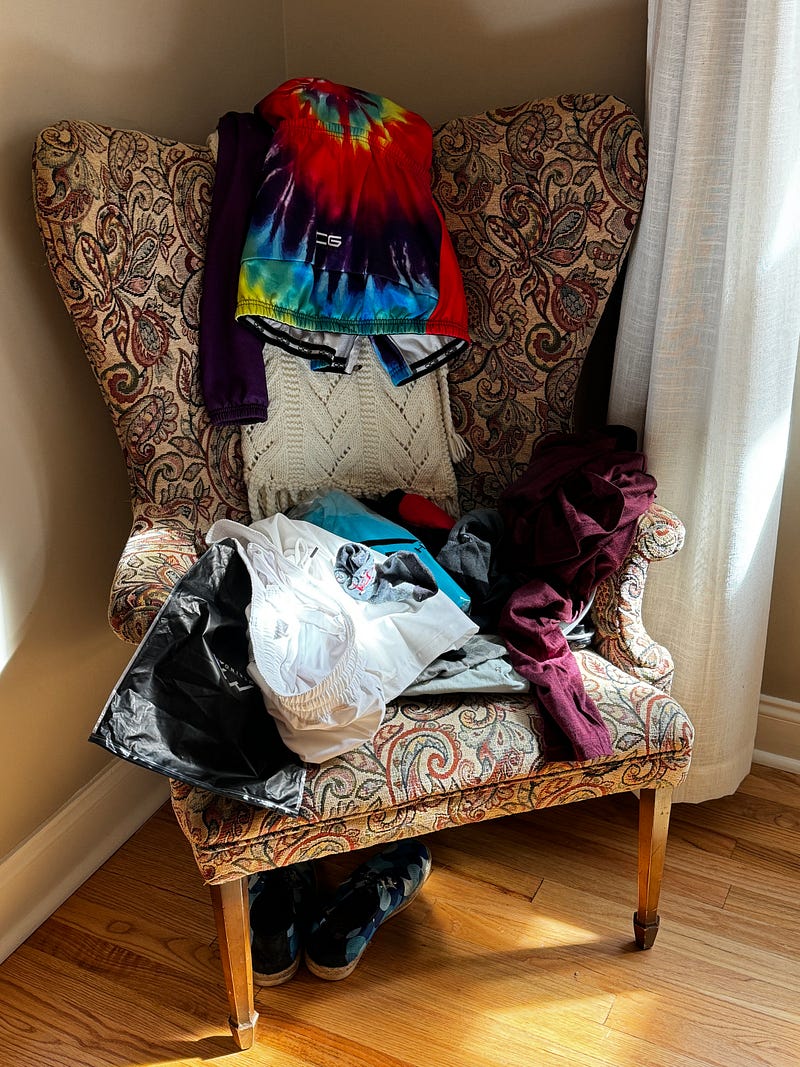
A light load — Image by Author

The Nuts and Bolts of Sleep and Learning

I have a chair in the corner of my bedroom that collects clothes. Workout shorts, tee shirts, socks, boxers, jeans, jackets; they all pile up on the chair. Eventually, the chair is stacked so high with clothing that I am forced to deal with the issue. Imagine the luxury of having someone tiptoe into my bedroom at night and put away my clothes, freeing the chair up completely to store more articles the next day.

Kelly Cappello, writing for Perelman School of Medicine, explains that our brain stores new information in the hippocampus. We can keep piling new facts and memories into our brains until we fill up the hippocampus, at which point our ability to learn is stymied. The chair in the corner of our brain is overloaded.

In order to make room for more new bits of information, the brain must move the data in the hippocampus to areas of the brain that are more appropriate for long-term storage. Studies at the University of Berkeley indicate that the brain makes this adjustment automatically during stage 3 sleep. Sleep empties the chair and puts all the clothes in their proper place, freeing up short-term memory for the next day’s learning.

Practicing in Your Sleep?

Imagine that you are learning a new skill. Maybe you recently read this article and decided to dust off your Spanish books.

Wouldn’t it be nice if you could learn while you sleep?

Massachusetts General Hospital neurologist Daniel Rubin has done studies that indicate sleep learning is more than just a dream. Experiments conducted at MGH monitored the brains of rats trying to learn to solve a complex maze and noted the neural paths that were excited by the process.

The same brains were then monitored while the rats slept. The exact same neurons fired in the same order, indicating that the rat was practicing the maze in its sleep!
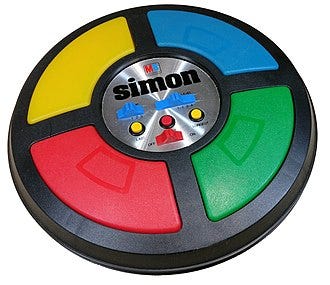
Milton Bradley’s Simon — Image from Wikipedia

Sleep Is Not Just for Rats!

Continuing studies utilizing human subjects have yielded promising results as well. One experiment involved a quadriplegic male volunteer. He was directed to repeat patterns in his mind based on input provided — remember the game, Simon, from the eighties?

Signals in his brain showed neuron paths in a state of excitement as he progressed in the game.

Continued monitoring of his brain as he slept indicated the same paths firing repeatedly as he practiced the patterns in his sleep.

Take-Aways from This Article

  • You can only learn so many things before your short-term hippocampus memory fills up and needs to be emptied
  • Your body automatically moves your new experiences in the form of memories, along with facts you have learned, into the appropriate storage areas of your brain during sleep
  • Your brain needs downtime in order to accomplish some necessary housekeeping. Sleep provides that downtime.
  • You should consider moving some of your learning and memory-related tasks to the portion of your day immediately before sleep so that your brain can reinforce the learning process

Chris Compton

www.twainingwheels.com

03–25–2024

Self Improvement
Psychology
Sleep
Neuroscience
Memories
Recommended from ReadMedium