
Life Experience Creates the Best Content for Writing. Not a Title.
A killer headline is important but is nothing without the life experience to go with it.
I took the above from a Tim Denning piece from 2019. I copied and pasted it onto a blank page and stared at it for a really long time. It resonated with me so much that I had to use it for the title of this piece.
It was true then, and it’s true now.
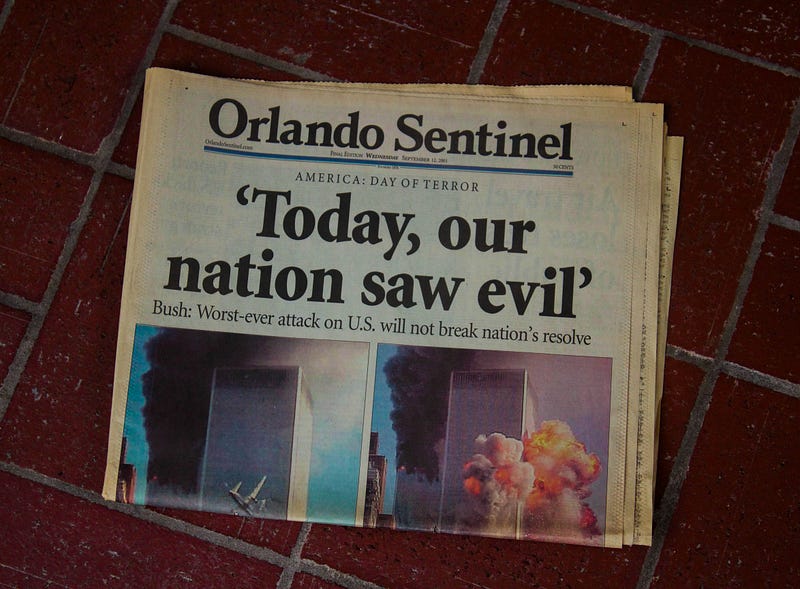
If there’s one thing my (relatively short) time as a writer has taught me, it’s this: a good headline is important — necessary even — but if the content isn’t engaging it doesn’t matter how good the title is, your readers will switch off.
There has to be something in it for a reader to stay with you.
I’m no top medium writer (yet) and my writing doesn’t get a ton of views, but when I write, I write from what I’ve experienced and what I know. If you looked at all my writing on here you’d see I’ve tried to use as much of my own experience as possible. Whether it’s working for a startup, what I’ve learned from training in Brazillian Jiu-Jitsu or what film I saw last night, I’ve tried to frame each of these stories in a way that is authentic to me and which includes takeaways for my readers.
In other words, my writing is dictated by the experiences I’ve accumulated and what readers can learn from them — not by a pithy headline.
But here’s the kicker: it’s the pithy headline that gets readers to go anywhere near your work. A weak headline will ruin any chances you have of getting someone to read what you have to say no matter how brilliant it is.
And according to this piece, 8 out of 10 people will read a headline but only 2 out of 10 will click through. Ouch.
You could spend hours coming up with a headline (which I’ve done) and it still might not lead to your work being seen. Again, ouch.
So what do you do?
Do what I do: focus less on the headline(more on this later), and more on the insights your experiences can provide the reader.
Why?
Your reader is the main character in your writing.
Write With the Reader in Mind
What if you began your writing by asking yourself what your reader can take away from the personal experience you’ve chosen to share?
When you write with the reader in mind, and their wants and needs, your personal experience will resonate more. Many writers swear by writing the title of a piece first and then getting down to its nitty-gritty after. This is a fine method and will definitely give you legs when you start writing, but what if you began your writing by asking yourself what your reader can take away from the personal experience you’ve chosen to share?
If all you do is talk about yourself and with nothing for the reader, you’re doing them a disservice — and your writing. Flipping the script on your writing and trying it this way is a great way to give your story context AND give your reader something too. Suddenly, you’re not just talking about yourself, you’re talking about the person on the other end.
One of the issues I had with starting with a headline first and then the main story was that I’d sometimes get off-topic. If you promise the reader something in your headline e.g. 5 Ways to Write Better Headlines but write a story that isn’t wholly relevant to the headline, then you’ve lost the reader for good.
There’s no one way of doing things, which is especially true of your writing but I think experimenting with your process can lead to different results.
Addressing the Headline in the Room
Great, so you’ve spent time writing a piece with your reader in mind (your personal story PLUS something actionable for the reader) but what do you do about that big fat white space where your headline should go? I’m going to let you in on a little secret.
It’s all in the data.
It’s worth repeating, only 2 out of 10 people will click through to your story so you need to do as much as you can to increase engagement. Luckily for you, there’s lots of data to back up what I’m about to tell you. You can go into a deeper dive here, here, here, and here but I’ve picked some of the best stuff so you don’t have to.
#1 Use ‘power’ and ‘emotion’ Words in Your Headlines
Your headlines will be more compelling if they contain a combination of power and emotion words. Some words are so powerful they evoke a certain reaction from the person reading them. They also trigger curiosity which can lead to your work being shared more.
Here are some to get you started.
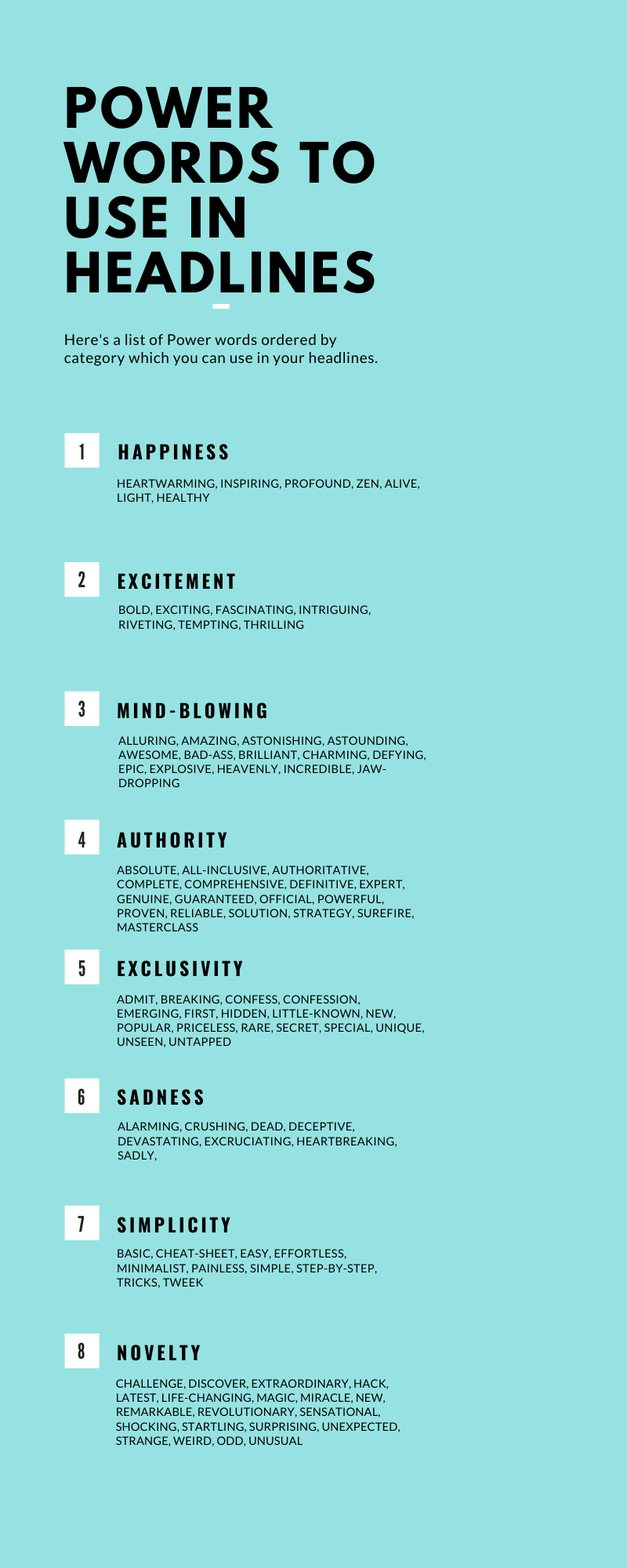
An example headline using some power and emotion words could look like this: 5 Easy Ways to Conquer Your Fear of Writing Headlines.
#2 Headlines That Are Lists, Have a Question or ‘how to’ in Them Get Better Engagement Than Other Headlines
‘How tos’ and questions in your headline do way better than other types of headlines. Oh, and people love lists.
For example, the number ‘10’ in a headline engages more and gets shared more than any other number in a headline. After number 10, it’s the number ‘5’ that is the most engaging. Integrating a specific number (I’d stick to ‘10’, ‘5’, ‘15’, and ‘7’) in your headline entices people to read more about your story. It also makes your story easy to scan which your reader will appreciate and tells them immediately what they’re going to get from it. Simple and effective. Need an example? Check out the one above.
A headline with ‘how to’ in it is a great way to pique your reader’s interest with a show of help. They offer a solution to a problem a reader has and your story is (hopefully) going to fix that problem. How’s this for an enticing headline: How to Write Better Headlines Using Medium’s Search Function? Problem and solution.
Using questions to resonate with your audience is a great way to build a connection with them. Maybe your reader has pondered a similar question before and wants a different take on it? Questions open up a debate and are a great way to get people curious about what you have to say. How about this headline reframed as a question to help invoke curiosity: Why Is Headline Writing So Difficult to Master?
#3 Use a Headline Analyser Tool
This may be the most helpful tool in your writing arsenal and should be saved in your bookmarks. You can use any one of the analysers here, here, here, and here (which are free) to assess how ‘good’ your headline is. Anything that is 70 or above is in the green zone so try and aim for this score or higher. Your use of power and emotion words (see #1) can bump up your score, but your score could come down if you use too many. Be creative with your wordplay and you’ll consistently hit those high scores.
A word of note with these tools.
Headline writing isn’t an exact science. You could have a great headline that scores below 70 and it could still go onto being read by lots of people, or a high scoring headline that gets low traction. An analyser is just a tool. You still need to come up with the words and it won’t substitute what should be your priority, to write a well-written piece that gives the reader something to takeaway.
#4 Use a Formula to Create Your Headlines
Using a formula to help you create a headline can be handy if you’ve written a listicle and you want a headline that captures what you’re saying succinctly. They can be adapted for ‘how to’ pieces as well headlines with questions but you might find them difficult to adapt to if the piece you’re writing relies on feeling and emotion rather than hard truths.
Here’s one you can try out:
keyword + colon + number + headline with solution
Put into practice it could look like this: Writing Headlines: 5 Ways to Help You Engage With Readers
Using an analyser above, this headline scores a cool ‘91’, and it’s not difficult to see why. It uses a semicolon (they’ve been shown to increase engagement), it’s a listicle (#2), it uses a power word (#1), it’s not too long and gets to the point without too many confusing words or phrases.
Practice re-writing some of your own headlines using this formula to see if you can come up with a different take on your story.
#5 Use the Rule of Third Third
A great tip I’ve picked up over the course of my writing is the rule of third third. In his book Think Better, author Tim Hurson argues to go for quantity. The more headline ideas you have, the more chances you have of finding one that works for you. According to Hurson, all your ideas can be grouped into the following:
The first third: These ideas are the ones that suck the most (my words not Tim’s). They won’t be innovative ideas or anything revolutionary, they’ll be based on what you already know and to be honest, they’ll be mediocre at best.
The second third: These ideas suck a little less but aren’t unique enough to whatever it is you’re trying to accomplish. These ideas are still influenced by prior knowledge and experience, so keep pushing forward.
The third third: By the time you get to this phase you’ve run out of all the ideas that suck and are left with ideas that represent your best chance of coming up with something unique. When you reach this point you’ve forced yourself to produce ideas that are outside the box. They’re innovative, different and, the most original.
If you’ve already written a piece and struggling with a headline, why not try coming up with 30 headlines to see if the rule of third third works? Work past the initial headlines (1–10) because they’re the ones that suck the most. Headlines 11–20 will start to show promise but don’t stop there. In headlines 20–30 you should find that gem you’ve been looking for.
Give it a try and see what works.
Conclusion
Look closer and you’ll see the headline of this piece doesn’t follow a lot of the tips mentioned. I didn’t go for a semicolon (semicolons are good), nor is it a listicle, and I don’t pose a question for the reader to think about. I easily could have, but I chose not to.
Why?
Stories are more than a headline. What a story conveys — what a reader can learn from it — is greater to me than becoming a viral sensation or ranking higher on search pages.
I won’t deny that working on your headlines is an important skill to master, and you should practice this, but the meat and bones of your writing career are based on how well you can tell a story not how well a headline tells your story.
With focused practice you can get better at writing headlines and even use tools to help you with the task, but if you don’t have a story that comes from your personal experience, which doesn’t give the reader a bit of who you are, can you really expect a headline to give you your best content?
I’ll let you ponder on that.
Now that you’re armed with a bit more information, which way works best for you. Writing your headline first or the story?
As always hit me up in the comments to share your thoughts.