
Life As a Project Management Exercise
On a journey of betterment
When I read a certain prompt about “What can be a journey of wellness/betterment?”, the first thing that crossed my mind was my shopfloor experience circa April 2019, where I spearheaded a dozen kaizen projects. That got me thinking, and the result is the article as the title suggests. And boy, did I go down that rabbit hole!
Rather than going technical, I will take a few aspects of life and draw parallels to how project management (PM) does it in style.
First off, what is project management?
According to the Project Management Institute,
Project management is the practice of using knowledge, skills, tools, and techniques to complete a series of tasks to deliver value and achieve a desired outcome.
This is a very self-contained definition, and the rest of the subject involves learning said “knowledge, skills, tools, and techniques” and framing the right mindset and questions about “tasks, value, and outcomes”. PM is a subject that focuses on a lot of traits like leadership, communication, and, wait for it, management. It also has a lot of cool terminologies, some of which I have taken the liberty to apply in this article.
Life is a series of projects.
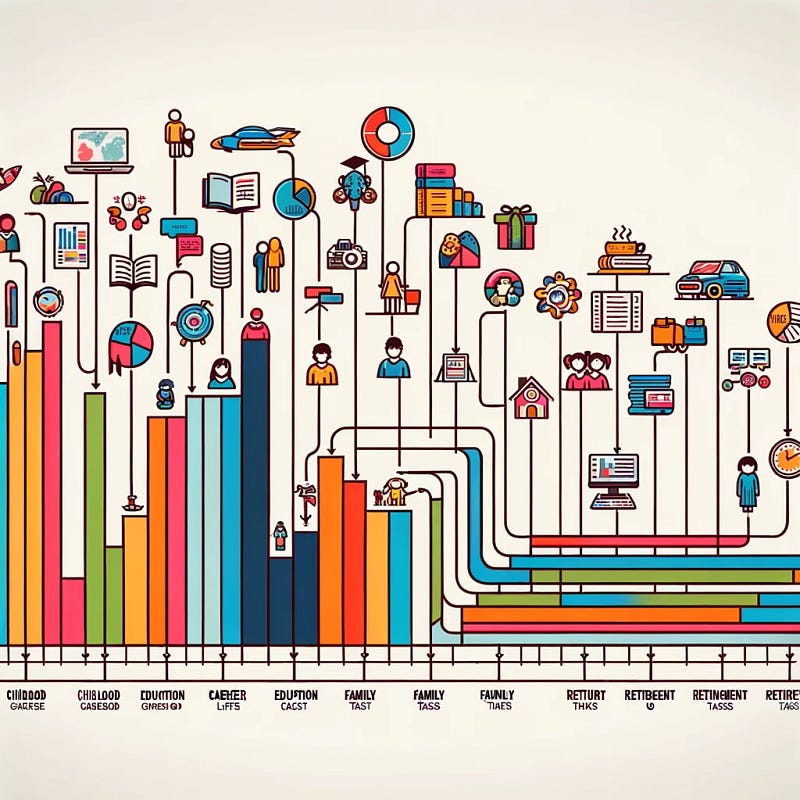
The first aspect of any PM exercise is, well, the project itself. And how do we define a project?
PMI defines that as “a series of structured tasks, activities, and deliverables that are carefully executed to achieve a desired outcome”. Here, the direct analogy to our lives is evident. Be it a career, relationships, travel and leisure, hobbies, passions, or just about anything — They all fall under this definition at some level or the other.
And just like any professional project, these too, can always be improved and made better.
- They need to be defined properly.
- They need setting boundaries, or, “scope”.
- They need action plans.
- They need goals (and yes, I am including the purchase of matching dresses)
- They can usually be divided into sub-tasks.
The biggest difference is perhaps our penchant for taking our personal goals too emotionally. PM has no incentives for that — and for a good reason. The emotional drive is good, but the rest, consistency, and progress, need actual discipline.
Daily life through a PM lens.

Let me start with a claim.
You are already doing project management in your life, to some extent.
Think I am wrong?
Consider the following scenarios:
- You plan a week-long trip to your favorite destination. You plan it down to the last hour and suddenly realize that your plan is too tight. You then remake the plan with adequate breaks.
- Same trip idea, you start with the maximalist idea that you need to visit as many places as possible. During your vacation, you want to spend more time in one place, say, a mountain trail. You now re-check the plan to see which place you can skip.
- You make a monthly budget and realize you need to choose between buying a new gaming console and buying some furniture.
- You are notified you spent 90% of your credit card allowance, so you now need to keep track of your expenses. You learn the lesson that tracking expenses should begin from the first of the month, rather than later. You implement this lesson from next month.
- You spend 100% of the credit card and then loan something from your friends, but you take this bet knowing fully well that you are going to repay them within the deadline (No, I am not alluding to gambling here)
- You have a book you need to read. You dedicate a half hour every day to that.
Now consider the following PM terms: Prioritization. Scheduling. Risk management. Planning. Redefining objectives. Optimization. Course correction.
Do you see how these terms are more or less what your strategies may be in the scenarios I mentioned above?
Still think we are not doing PM in our daily lives?
On a side note, I do have a personal anecdote here. I took up this Coursera course on data analytics, and the first two modules were literally about things I took for granted, like formatting data, making it look nicer, and making graphic images and pivot tables — Things I would anyways be doing in a spreadsheet, but now, I know that they are parts of an exercise called data analysis. That is a tiny sentence in our minds, but, in Neil Armstrong’s style, is a big shift in our ideas. Suddenly, I can relate to a field I previously considered very esoteric and had a high entry threshold. And I can also follow the course that much easier.
The same applies here too. Looking at life through the lens of a project manager is both interesting and challenging. It may sound bizarre to some when we use terms like “stakeholder management” to describe a group activity, but it is exactly that. Treating an activity as such an exercise would throw up surprising insights about the others in the group, or should I say, stakeholders.
Mandatory fancy terms — Kaizen and Kanban.
I’m not on the “Ikigai” bandwagon.
But I have my favorite Japanese words as well.
Ever come across visuals like this?
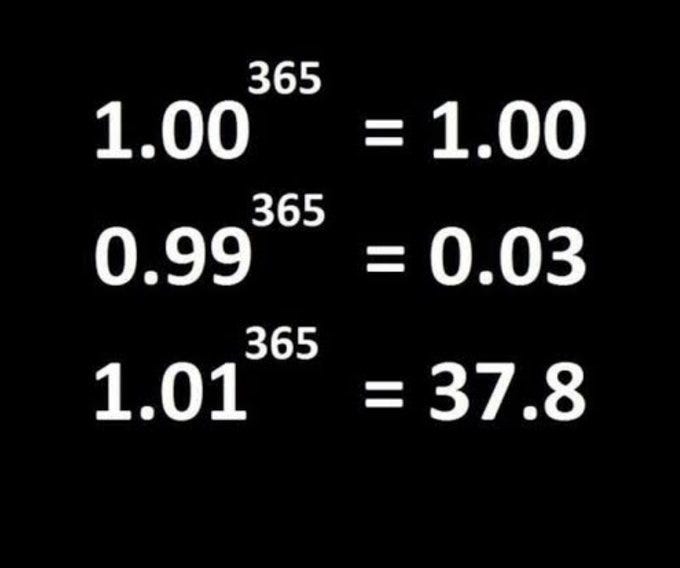
The story of this so-called 1% theory is one of consistent, small-scale improvements. This is exactly what Kaizen represents. Going back to my introduction remarks about such projects, these are clearly defined goals, and they are specifically smaller.
Say, for example, you jogged 2 kilometers today. Your next target can be something like 3 kilometers within the month, or 10 kilometers within the quarter. The difference is, that 3 is a much closer number, and 1 month is a much closer deadline. Therefore, it is likely that you considered your present capabilities and envisaged a path of growth. But does that mean the 10 is unrealistic? Maybe, maybe not. But the subject here is one of small improvements, tangible and therefore, in all likelihood, attainable.
That is the spirit of Kaizen.
Now to the other fancy term.
Sample this image:
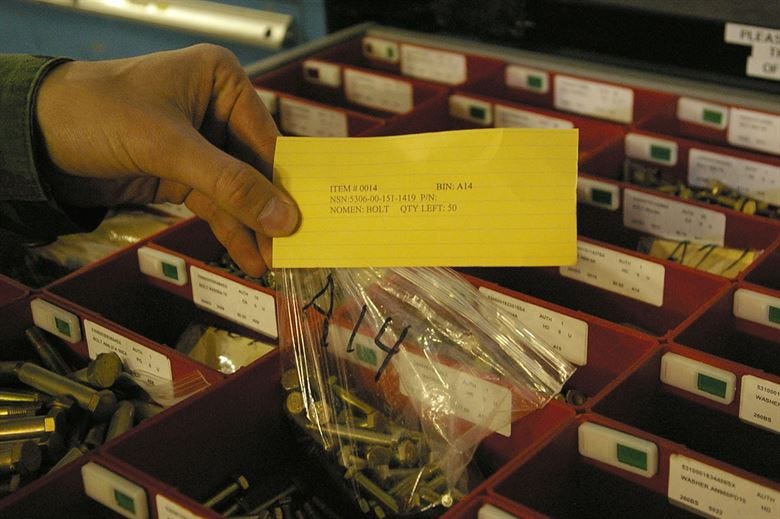
What do you see here?
It’s a “Kanban card” with some details — The most relevant details. The idea of Kanban, first brought into the standard by Toyota, is a visual representation of details, pathways, and processes. Today, Kanban has evolved into so much more, but the essence is the same.
That calendar on your wall that marks your exam dates and vacation dates? Those lines you draw on a board every time you do something? That task list in your Post-it? Everything can be a personal iteration of Kanban. It requires a bit of introspection and assessment of what is “important”, “relevant” and “urgent”. Having these visual aids will be of great assistance. The one time I did it with great success was when I had to prepare for my GRE and TOEFL exams when I printed out a calendar and marked targets for dates. I then marked them as complete/not and had a line drawn to the new target date because I failed one milestone. A reminder that tasks get piled up the more we miss out on deadlines.
As I said, the internet sure loves Ikigai, but Kaizen and Kanban are far more relevant, both philosophically and practically. Time we imbibe those.
Stakeholder management is the new relationship.
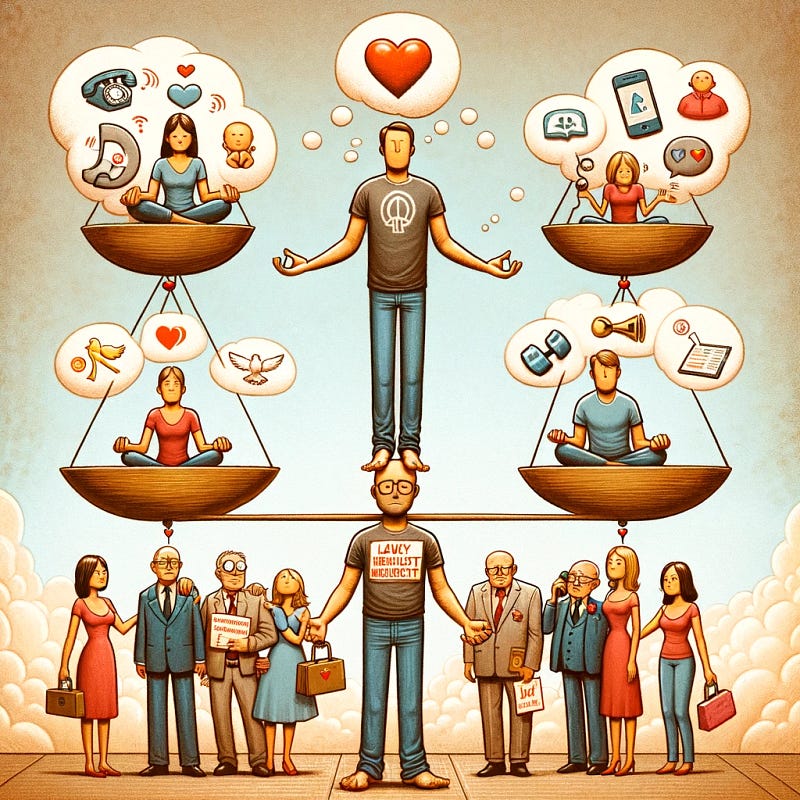
I mentioned somewhere above that people can consider this “bizarre” but bear with me. I’ll make my claim worth the time.
Stakeholder management involves a lot of aspects like prioritizing, communication, balancing and managing expectations, and conflict resolution — Just to name a few.
Continuing with the spirit of what we discussed in the ‘Life through PM Lens’ section, the same idea applies here too. We have been doing some of these in our relationships already, be it with friends, family, society, or even our inner self. But reframing our activities as stakeholder management allows a primary shift in focus — We can now appreciate that they also have a stake in our lives and that they invest time and energy in us, which has to be respected.
We now move on to identifying their expectations, our expectations from them, and setting things straight about what is feasible or not, thus making the relationship clearly defined. Relatively less scope for drama, I would prefer it that way. And then there’s communication. George Bernard Shaw observes,
“The single biggest problem in communication is the illusion that it has taken place”
Stakeholder management emphasizes a LOT on consistent and complete communication, so we don’t end up giving mixed signals or leading assumptions.
My favorite aspect of stakeholder management is perhaps conflict resolution. I’ve had my fair share of bitter disagreements with friends, and I can imagine everyone has a similar story. Conflict resolution focuses on defusing the situation and steering the conversation towards a progressive side of finding a solution and moving forward. In other words, less drama, more action. But that doesn’t mean accountability is forgotten either. We will assign blame, just after we sort the mess at hand.
Add words like ‘transparency’, and ‘integrity’ and I hope I made my case for why we should treat relationships like a project manager would his stakeholders.
Wrapping things up…
I can understand people giving out platitudes and “motivational” pep talks about living life the way we want to, and whatnot, but I believe that these people are mistaking the ‘why’ of life with the ‘how’. The ‘how’ should be one of methodology and not ideology, discipline, and not of decadence, and that is when the ‘why’ and ‘what’ can be pursued.
And one of the better ways to do that is to break down life as a project management exercise.
What do you think?