
Life and Death are Close Neighbors.
A pregnant mother learns of her husband’s death.
It is ridiculous to think of him dead, never to return to a home smelling of pastry, of furniture polish, and freshly laundered clothes.
The officer speaks quietly, an accompanying priest standing at his side. They tell of her husband’s courage, having paid the ultimate price for freedom and how the nation owes him a debt of thanks.
Sickness gorges into her mouth. The need to live disembarks her heart as she sinks into steadying arms.
For the next two months she lay in a hospital room, receiving full time maternity care. Not a day passes without family at her bedside. The priest comes each morning, till she can no longer face him or believe in his voice.
Who will tend the brambles overgrowing the garden, strangling the daffodils pushing through the foam of winter? What about the loss of his affection, a future without him, and the strength of his love?
Her body has served as accommodation for seven months, a secure world of love and hope and future. Suddenly and without warning this same place is one of turmoil, sickness, and grief.
With only a blanket of vernix and the instinctive need to survive, life teeters, fighting through stomach cramps, grasping hold of an unborn’s destiny — to live and breath in another world.
She leans back, sweating profusely, not caring to breathe as instructed.
She does not want this child. She does not want to live. She has lost the will-power to survive her body. She is not thinking about life, about future. In her heart the shining song of sorrow, of grief, will not fade.
The uterus continues to cause discomfort, ligaments have loosened and the pelvis begins to relax.
It is time. Pain relief is shunned. The midwife alerts the team of a possible emergency caesarean section. She does not want to push, she wants to die. No pain can possibly match the needlepoint of grief.
The midwife knows, want it or not, this baby is going to fight for its destiny. There is nothing a mother, even one sick with grief, can do to prevent this miracle happening. It is the incarnate delight of all things that abide.
The pain comes like madness. Then gone. Her body absorbs it without dying. She simply cannot face the terror of yielding to childbirth alone, and when the storm fills her stomach she remembers only the sound of their first summer, the fecundity of living inside love’s spirit, and then the pain subsides to weariness.
But pain, this ancient pain, with all its genuflection survives grief, cares nothing for the ghastly gaiety of death. In one surge of immense, yet unseen splendor, a child asks to be born. It is carried through a canal on the banner of fearful ecstasy. Legs shake, features contort like grotesque sculptures of pain, sinews strain, urine, blood, and feces congeal on the sheets till it looks like a scene of slaughter.
In the turmoil, a boy is born between her legs. Energy drains into a well of sleepy satisfaction and contentment. It is him, a very special little boy, lying there between her trembling thighs, and the room is suddenly overwhelmed with happiness.
She holds him, his slippery little body, tight, tight to her chest. His smell is sweet vanilla.
Her eyes, tired and heavy, adore the moment of her son. The child is removed, cleaned, wrapped and given back to her.
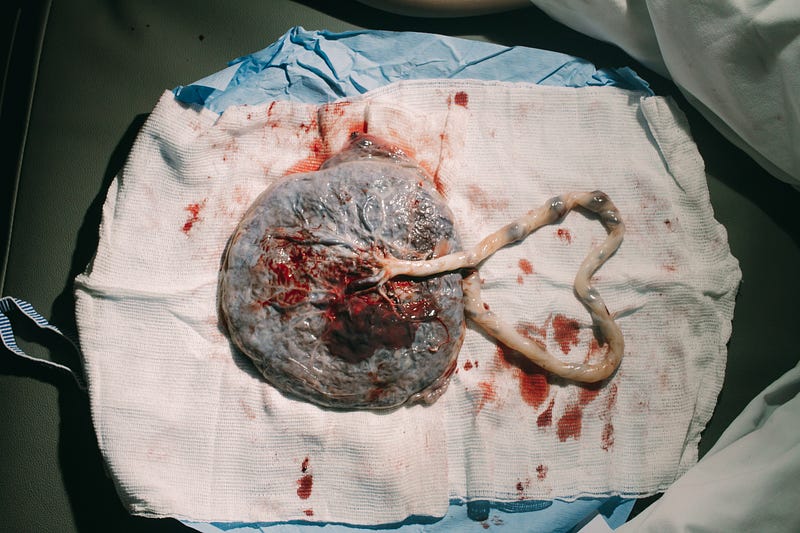
But there is concern. The placenta is still fast in her uterus. The midwife tugs on the cord gently, over and over again. She presses her fist down on the abdomen in a last gasp effort to pressure its removal.
The bleeding is excessive… mother can feel the blood sieving out between her legs. Moved by sudden pain, her flailing arm strikes the mid-wife as the pressure violates what she can stand.
The placenta has to be removed if she is not to bleed to death.
Finally, hopelessly, she breaks down, tears running down her face, mucus running into her mouth, all her bodily functions running unchecked. It is the final degradation.
The child is now not the concern.
Though numb, exhaustion, confusion, fear strikes at her again; the fear of never waking up to be with her son.
She cries her heartbreak. “My boy…” and then, in a moment of descending calm, she asks the midwife to be sure that someone protect her son, keep him from evil, loves him always.
A moment, when facing one’s mortality.
Everything is possible this very moment.
It is the Spirit of Via Dolorosa.