
FAANG
Life After Google
A Review of George Gilder’s Book on The Fall of Big Data and the Rise of the Blockchain Economy
In 2017, I founded The Cryptocurrency Alliance Super PAC. One of the many unexpected perks that come with creating a political organization is the opportunity to meet with major players in the associated industries. In my case, this was cryptocurrency, blockchain, and technology futurists. More specifically I frequently get sent various books, articles, and whitepapers to read before their release.
I typically don’t write reviews for books, unless I truly think they are of critical importance, and the book’s content are being glossed over and can add to a productive dialogue. George Gilder’s recently released book, Life After Google: The Fall of Big Data and the Rise of the Blockchain Economy, is one of those truly exceptional books. That said, the book discusses in passing many complex subjects and is littered with terms (metaverse, thermodynamic entropy, protein-fold geometries), which may require some previous knowledge or additional reading. To the author’s credit, there is a glossary briefly covering some of the general theories and topics discussed.
George Gilder is an American investor, writer, economist, and co-founder of the Discovery Institute, a non-profit think tank based in Seattle. His 1981 international bestseller Wealth and Poverty advanced a practical and moral case for supply-side economics and capitalism during the early months of the Reagan administration and made him Ronald Reagan’s most quoted living author.
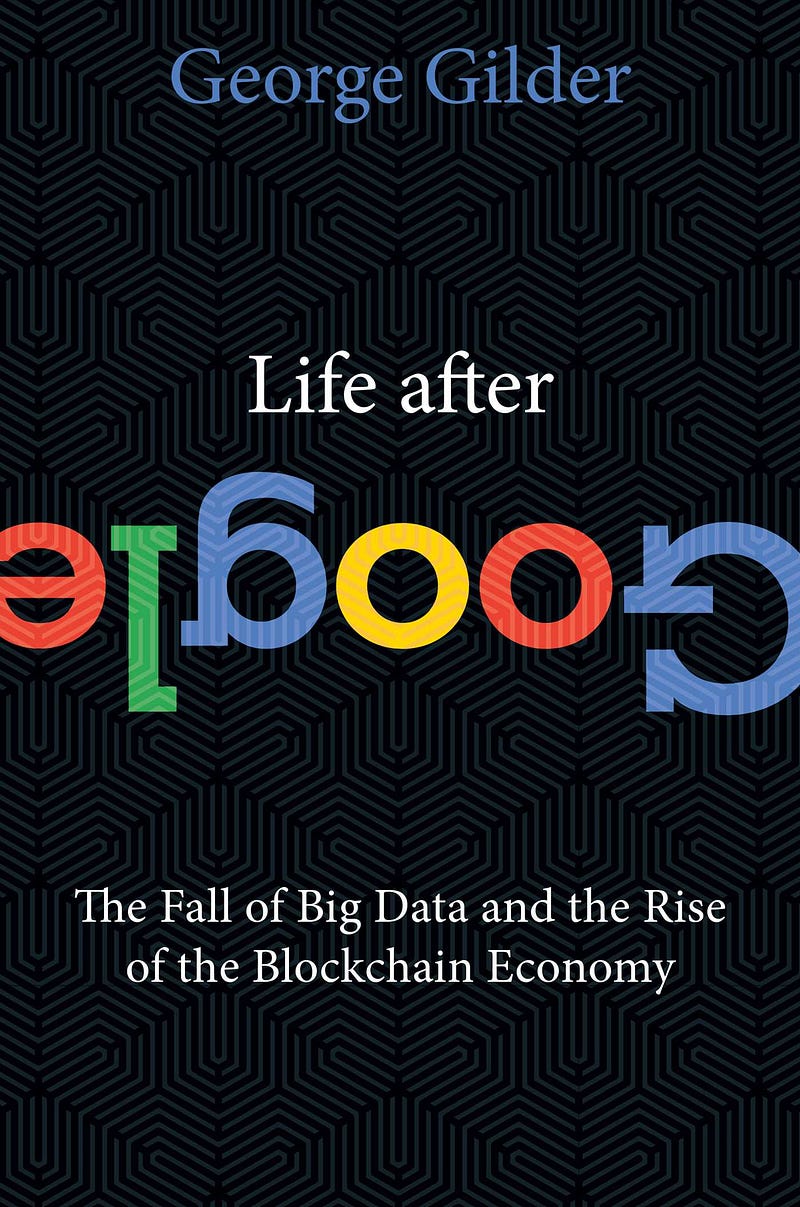
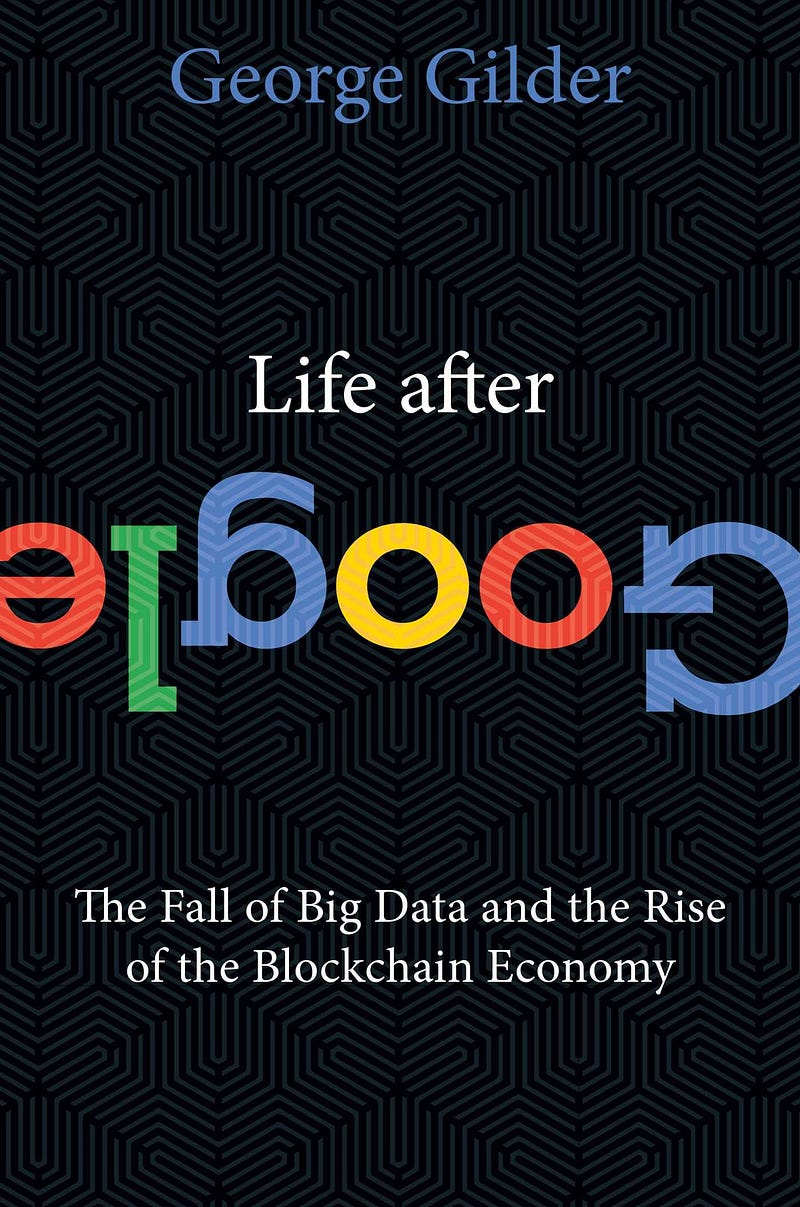
Life After Google: The Fall of Big Data and the Rise of the Blockchain Economy chronicles Silicon Valley’s “nervous breakdown” as the aggregate and advertise model of Google creates an internet full of excessive ads and personal privacy violations, that is ultimately unsustainable.
The book offers the solution of the cryptocosm, the new digital architecture of blockchain and its derivatives. While he suggests that many of the blockchain ventures will ultimately fail, Gilder posits that the surviving companies and the cryptosystem will ultimately shift the next generation of the Web from closed silos of captured data to open supercomputers on which blockchain can provided an immutable database on which to build structures of trust. Once this data is planted on the global blockchain, it will no longer be necessary to create physical enclosures to organize a vast parallel computer.
The “Google Age” has resulted in many of technological shortcomings facing modern society: porous internet security, unmoored money, regulatory overreach, network concentration, and diminishing returns of big data. Gilder suggest that all of these problems derive from the hypertrophy of trusted third parties that need to be collapsed into simpler systems, controlled by individual agents closer to the actual point of service.
Life After Google provides an interesting viewpoint that runs counter to the mainstream narrative that a few Silicon Valley giants, such as Google, will forever remain masters of centralized data and that due to advances in AI, the new digital world may not need humans anymore and we will incrementally live unemployed forever. Gilder’s argument is more or less the opposite — he believes AI is ultimately a signal of an industrial regime at the end of its rope. The issues associated with business strategy, intellectual property, privacy, and security cannot be solved within the current computer and network architecture.
While I personally think we are not as close to the end of the “Age of Google” (and am not even sure this will necessarily happen at all in the immediate future) it is nearly impossible to anticipate future trends in technology, especially when the future of humanity, social order, and the global financial system are at stake.
Thanks for reading this article! Leave a comment below if you have any questions, and if you want to learn more about blogging, content marketing, or subscription newsletter strategy, be sure to sign up for the Blogging Guide Newsletter!
If you liked this article, here are some other articles you may enjoy:

Casey Botticello is an internet entrepreneur and the founder of Blogging Guide, an online community of writers with an award-winning newsletter. He is also the creator of the popular Medium Writing Course and the Substack Newsletter Course.
Casey previously worked at several tech startups, a lobbying & strategic communications firm, and has created several businesses of his own. He is a graduate of The University of Pennsylvania, where he received his B.A. in Urban Studies.
You can connect with him on LinkedIn, Twitter, Facebook, follow his Medium publications, Digital Marketing Lab and Medium Blogging Guide, or reach out to him directly on his personal website.


