
Letting Go of the Sacred Thread — Untying the knots
Or should I say “melting” the gold
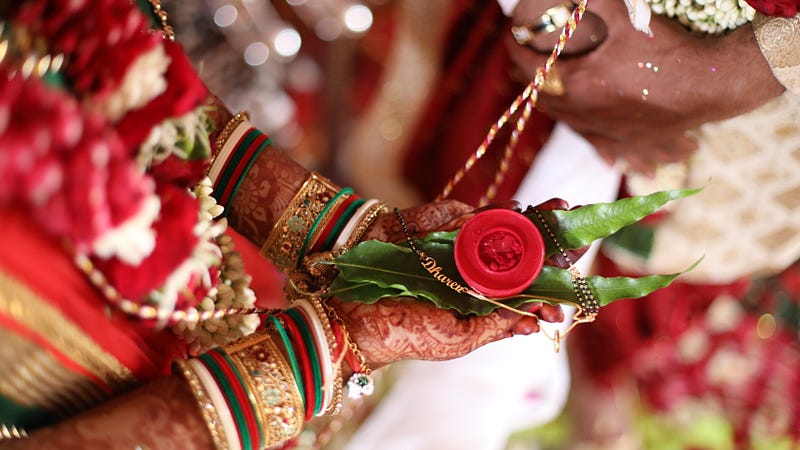
The “tying of the knot” solidifies a union between two people in a Hindu wedding. Perhaps, that’s where the phrase has its origin.
As part of the Hindu wedding ceremony, akin to exchanging vows and rings, the groom ties a sacred thread around the bride’s neck while a priest chants Sanskrit slokas (verses) from the scriptures.
The Mangalsutra
The mangalsutra translates literally to mean “sacred thread” and is a white thread dipped in turmeric, possibly for its antibiotic properties. The thread typically has pendants and motifs inserted in it and the pendants vary based on the community and region of India.
The groom ties the thread with three knots. The first knot called manasa promises the groom’s commitment to unify two people in holy matrimony as a couple. The second knot, vaacha, signifies the merging of the two families. The third knot, karmena, is tied with assistance from the groom’s sister to further assure the care and protection of the bride in her new home.
In the modern day, the yellow thread was soon replaced with a gold chain for longevity, carrying the pendants and motifs. The chain is usually 16–34" long such that the pendant and motifs fall on the woman’s anahata (heart) chakra which is also the fourth center for the flow of spiritual energy.
My thread
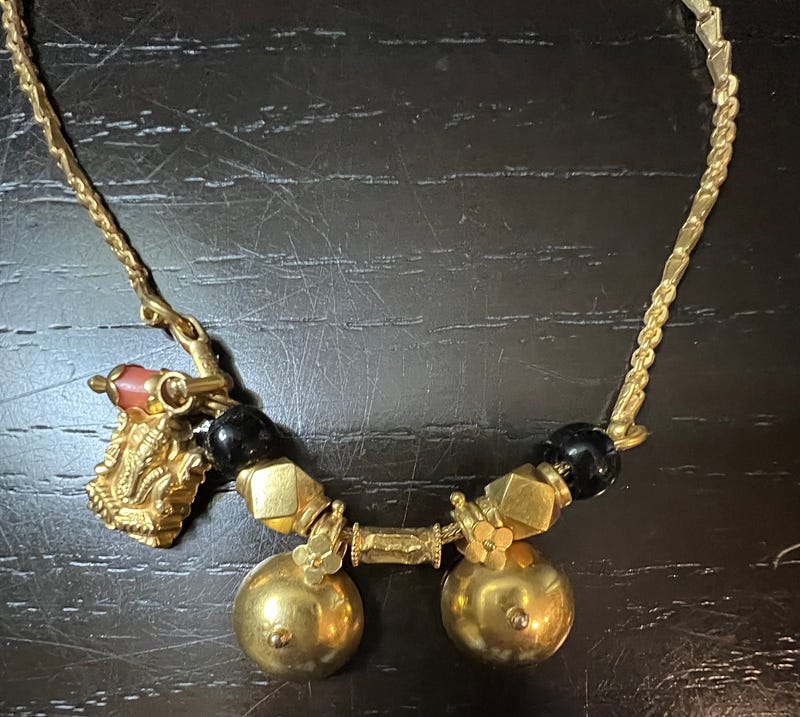
In my community, the pendants are two gold balls or bottus. One from the bride’s family and the second one from the groom’s side. In my opinion, they look like boobies and I think they probably signify woman power or a goddess of sorts, but take it with a grain of salt as I may have just made that shit up.
I wore my mangalsutra “religiously” for three years since my wedding day after I had the thread replaced with a gold chain. I even inserted a pendant of Lord Ganesha which I wore as a teenager into the chain. I gave it a lot of importance and significance throughout my marriage.
Once I had children, the long chain came in the way of breastfeeding and was a bit of a nuisance so I replaced it with a shortened version of a chain with black beads which I wore for the longest time in my marriage. This was in addition to a diamond-studded band that I bought for myself to keep up with the Western symbolism of being married.
Toward the last couple of years of my marriage, I removed both the chain and my rings. I couldn’t carry on with the symbolic facade anymore. It felt more like a noose than a chain that was supposed to symbolize safety and protection.
Melting the gold
On my trip to India after my divorce, I took the jewelry along. I didn’t want to hold on to my gold boobies anymore. I needed closure, especially after all the importance I had placed on this piece of jewelry.
This is as symbolic as it can get.
I exchanged the gold for another piece of jewelry that I will wear every day. I watched as the goldsmith melted the gold until the boobies turned into a small blip of a gold ball.
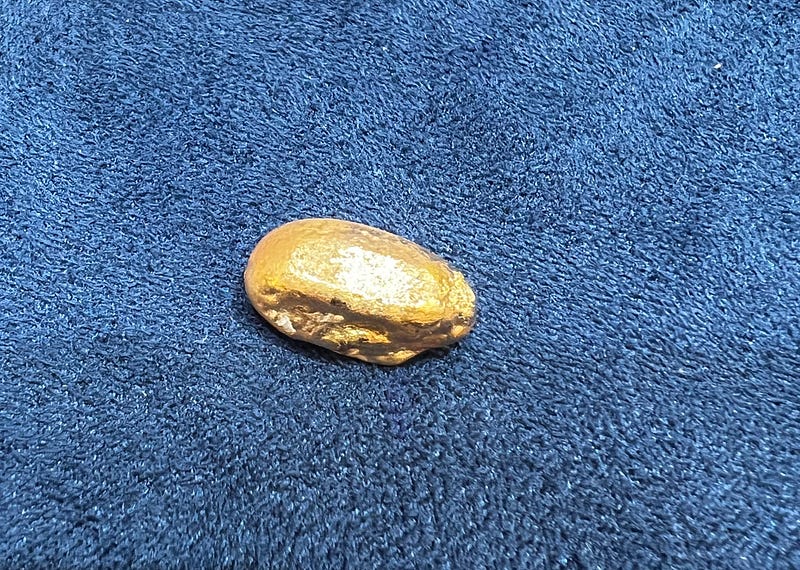
I allowed the dam to overflow when I was struck by another episode of grief and sadness. It was like a day of mourning. I needed to feel that release.
I felt like a snake shedding its skin, but I realize these experiences are important to close this chapter of my life and move on. As I type this post, I can’t help but admire my new tennis bracelet which will now become a symbol of my freedom and growth!
End Chapter — Over and Out!
I liked Dr T J Jordan’s take on how a divorce can be a sign of growth.
And I particularly liked this positive and uplifting article on how relationships can be better post-divorce by Dr. Samantha Rodman Whiten (Dr. Psych Mom)
Did you like what you read? I’d love to read your thoughts in the comments section.


