
Letting Go of the Elephant
Nestled in the back of a white Ambassador — the softly rounded car which used to typify travel in India — my husband and I breathed a sigh of relief for the soft breeze drifting in through the half-opened windows. Bound for the architectural marvels of Halebid and Belur, twelfth-century Hoysala Dynasty temples in Karnataka, we now found our driver pulling over into a dusty parking lot.
“You must stop here,” he pronounced, waving with a flourish towards a seemingly endless set of steps jig-jagging up a very steep hill.
“What’s up there?” we asked. We hadn’t seen anything in the guidebooks about this place, and we were anxious to get to our destination.
“Shravanabelagola,” he answered, as if we should know.
“But what is it?”
“Shravanabelagola,” he repeated. “You go.”
So, looking at each other, we shrugged and nodded and climbed out of the car and into the heat of midday in South India. Squinting our eyes, we peered towards the top, but could not see where the steps led.
But, India is all about embracing the unexpected.
So, we soon found ourselves climbing barefoot (shoes had to be left below since it was a holy site) up smooth-as-glass stone steps, polished by the soles of pilgrims who had traveled here for who-knows-how long. We had no idea what we would find after we surfaced from the throngs of Indian visitors also climbing up and up.
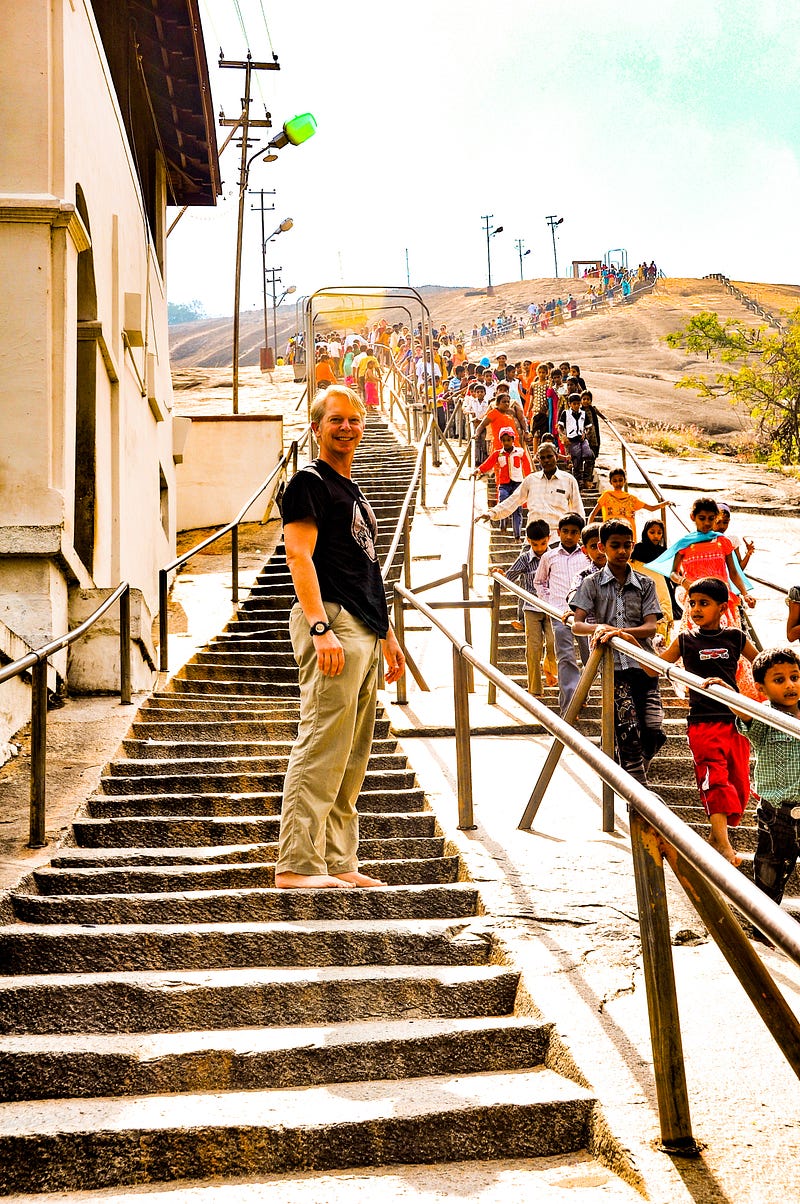
Sweat trickled down my back, and I tugged on the neck of my salwar kameez (tunic). I wished I had brought water with me. But, we pressed on.
And, about halfway up the set of what turned out to be six-hundred and sixty steps, a massage visage appeared against a splash of blue sky.
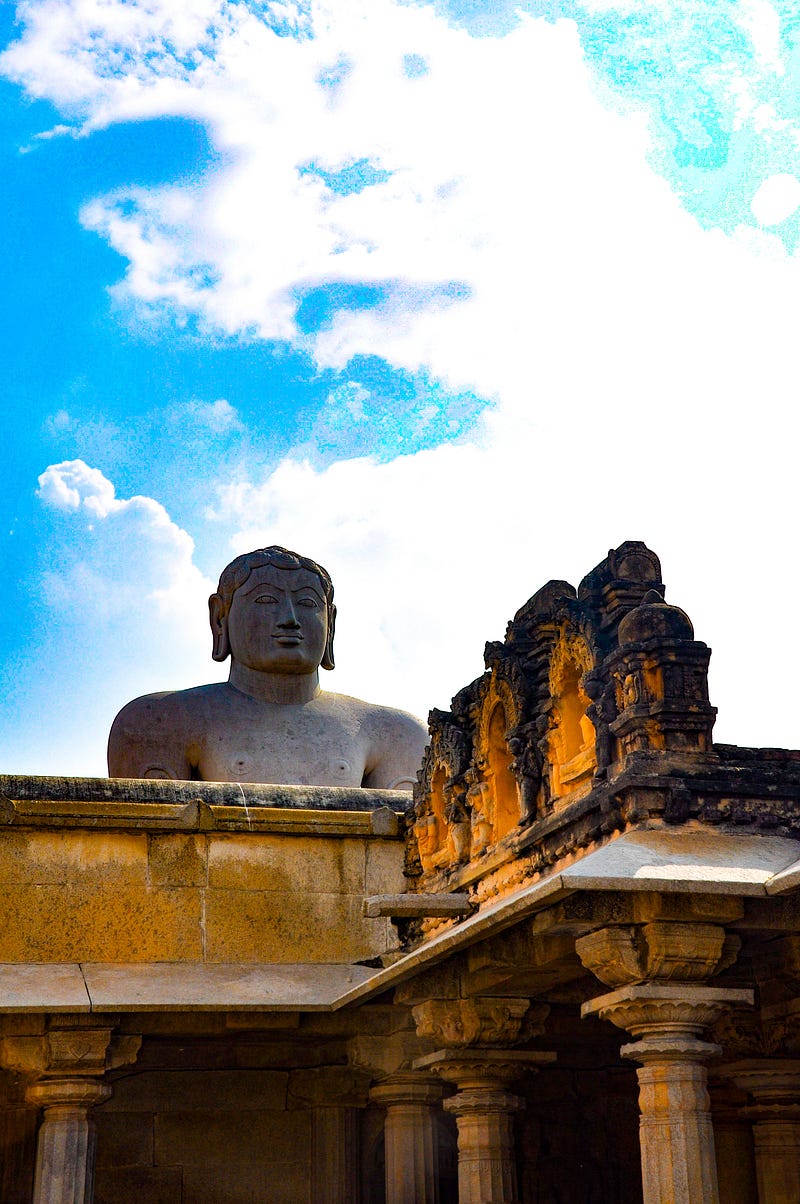
Hewn out of grayish stone, a broad-shouldered, long-eared, tranquil-faced man dwarfed everything beneath it. As we ascended, we saw that the figure was draped with carvings of vines twining up its arms and legs.
Was it Buddha, we wondered?
But, it was not.
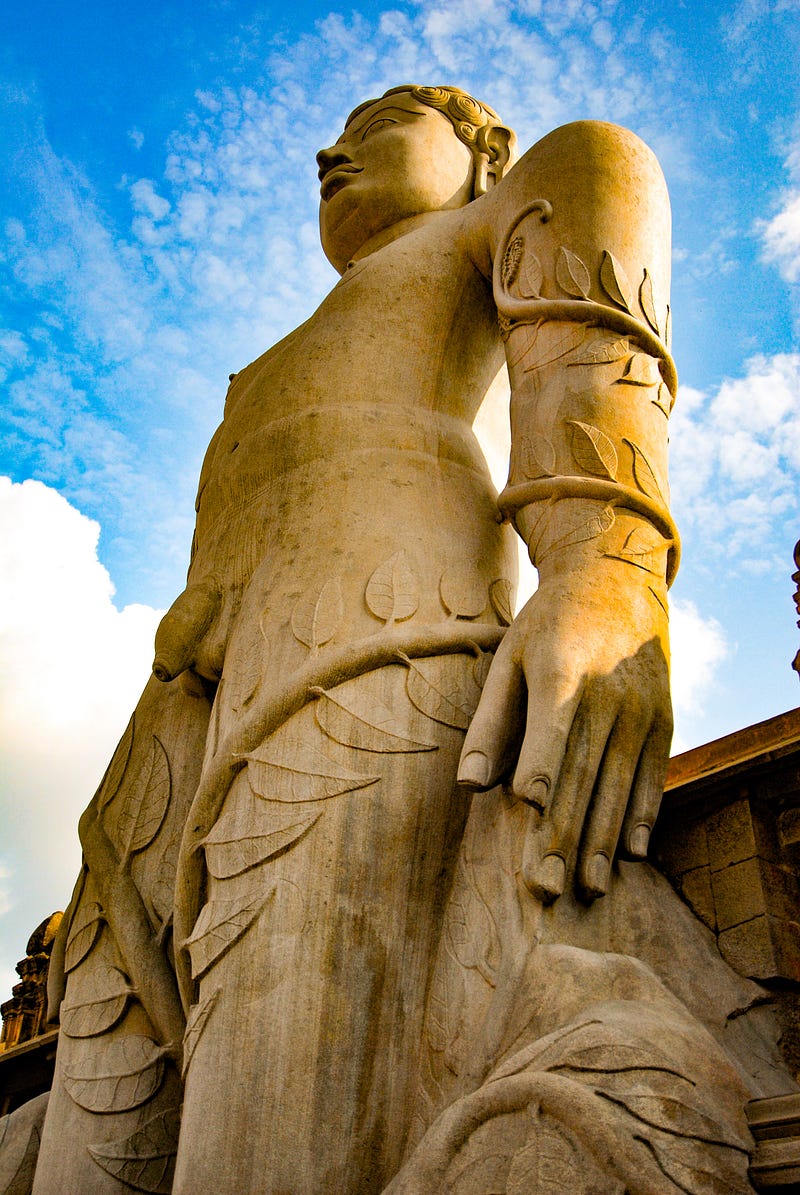
We were peering at the fifty-eight-foot tall, eighty-ton statue of Lord Gommateshwara, otherwise known as Bahubali,considered to be the tallest monolithic stone statue in the world.
Constructed in 981 A.D., the statue appears almost timeless. And the message it stands for, is, indeed, a message for humanity throughout the ages.
The figure represents King Bahubali. Deeply troubled over a bloody battle with his brother, he decided to give up his kingdom to become an ascetic and to live a life of contemplation. But he was held back from reaching the ultimate stages of meditation because his ego would not allow him to bow down to his ninety-eight younger brothers, who had already taken vows.
He continued his practice of meditation, heedless of the vines climbing his limbs and the ants biting him, but just could not reach that pinnacle stage.
Finally, he was graced by a visit from his sisters, who advised him to “get down from the elephant.”
Realizing that the “elephant” was his own ego and his strong attachment to it, he allowed himself to let go, and was instantly enlightened and blessed with the knowledge of the Truth.
He represents victory over the earthly desires which hold us back from spiritual ascent.
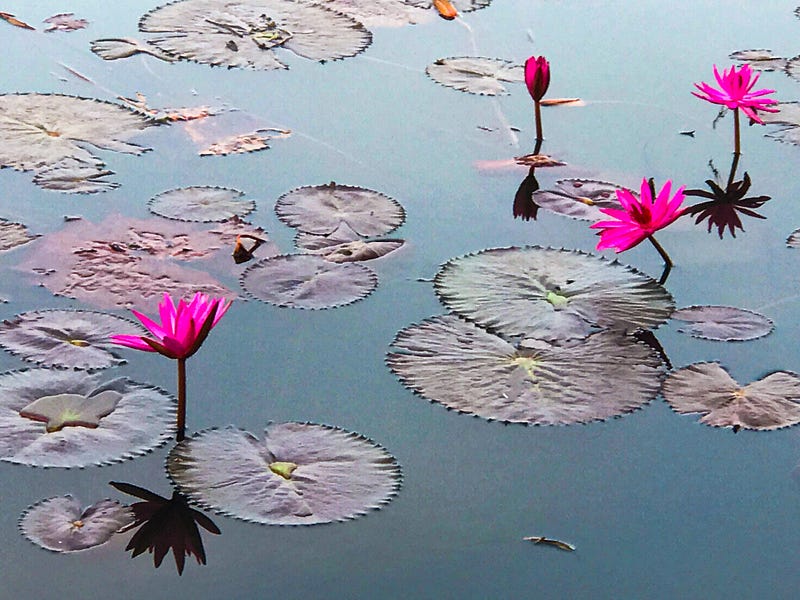
The anthill behind him signifies his eternal penance. The lotus blooming beneath his feet stands for the way we should live in the world, floating above the “muddy waters” of attachments and desires.
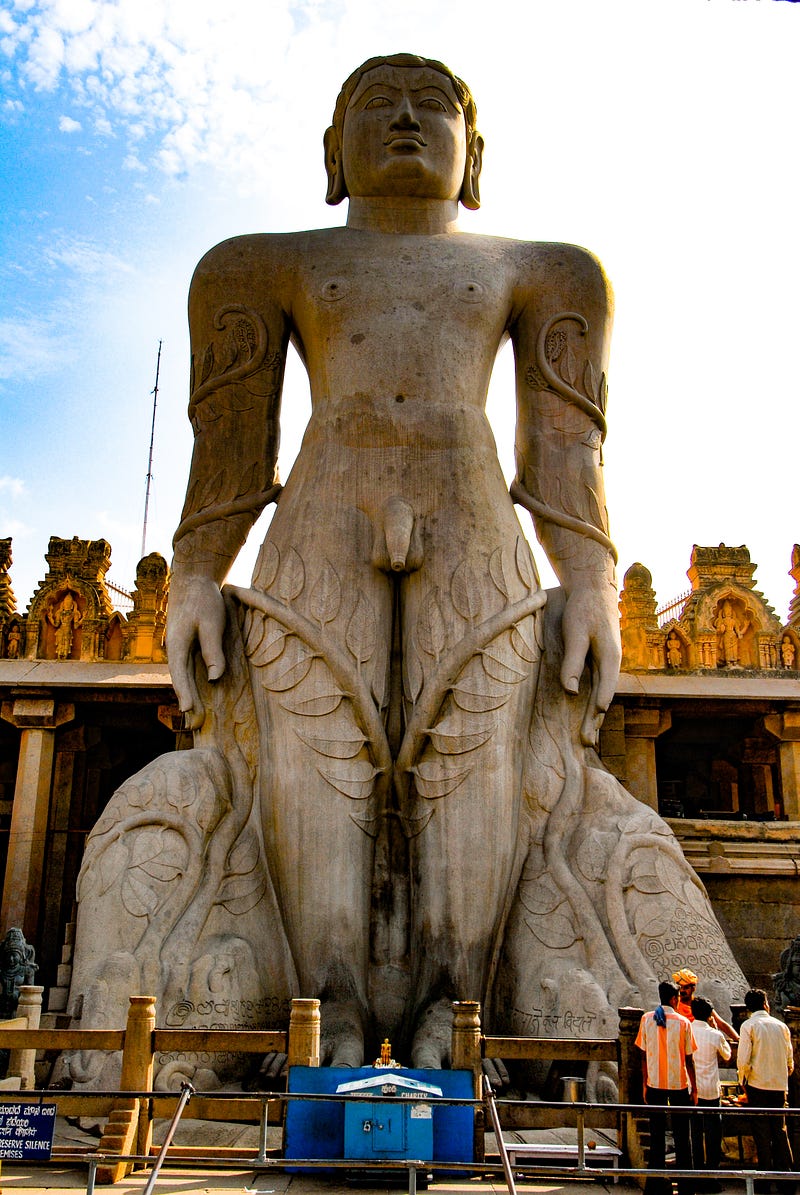
Jostling amongst the crowds also eager to get a better glimpse, we stepped into the square, open-air Jain temple built around the statue. We took our turn in line to be blessed by the saffron-robed monk ensconced at Bahubali’s feet. He pressed wet red kumkumapowder on our foreheads, and we moved on, unable to look away from the enormous figure looming over us.
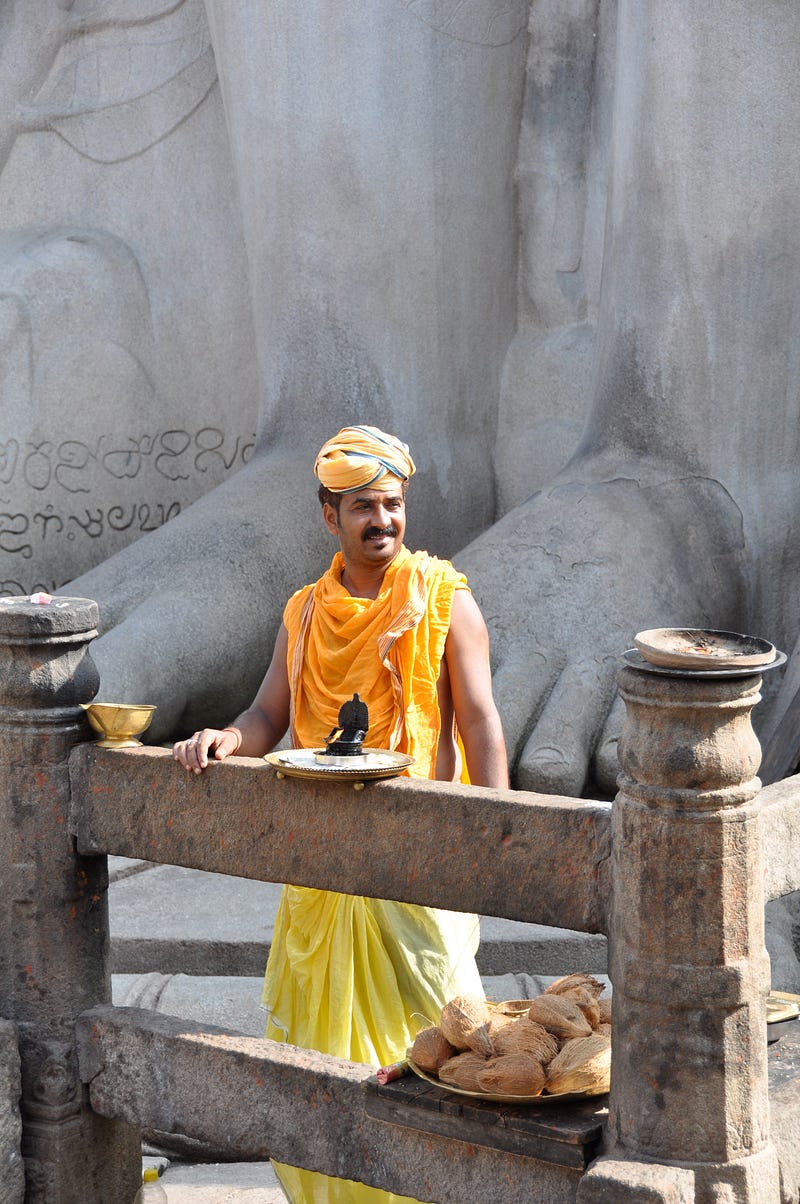
Every twelve years, the Mahamasthakabhisheka, or head-anointing ceremony, is held here at Shravanabelagola. One thousand and eight ceremonial pots of water, ghee, milk, turmeric, sandalwood paste and flowers are poured over Bahubali in a ritual offering for the peace and prosperity of mankind.
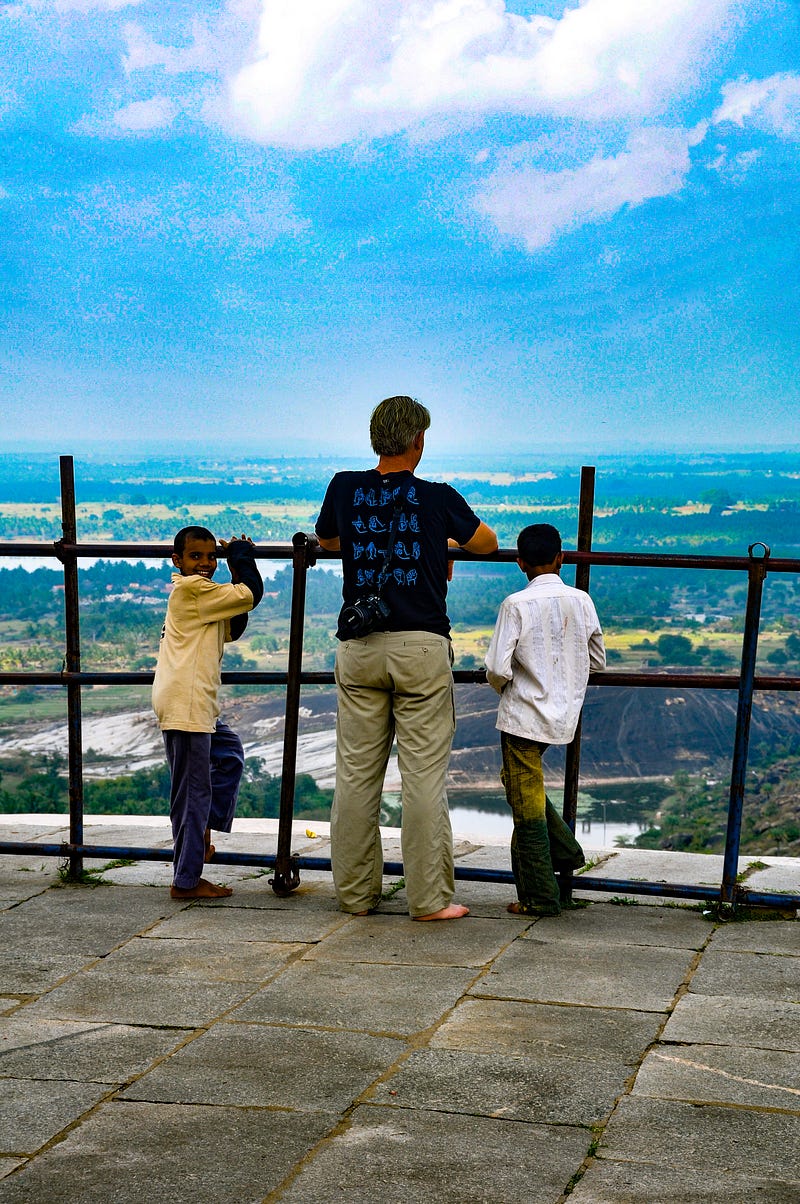
Clusters of school-children on holiday crowded in on us, all wanting to shake our hands and ask us what country we were from. The heady fragrance of incense hovered in the waves of heat dancing around us. The children followed us while we investigated the square Odegal Basti temple, carved with “graffiti” of the ages written in Kannada, Sanskrit, Tamil and other languages, behind the monolith.
And, as we turned to descend, we looked across the village, noting the cool green “great pool,” a centuries-old water tank which was, and still is, the center of life here, in rural India. Around its edges, women slap wet clothing against the rocks and then lay it out to dry. Dressed in dhotis (cloth “sarong-like” wraps) and saris, people of all ages take a dip.
We imagined the enormous war between the two brothers, one on each side of the valley, and the turbulence it must have caused for the villagers. And, we thought about the sense of peacefulness which pervades this place now.
Perhaps the best part of the day, though, was the fresh coconut water, opened on the spot with a machete at the bottom of the stairs. The cool juice is drunken with a paper straw, and then the coconut vender splits it in two so that you can reach in with your fingers to pull out the tender, pearly-white, subtly-sweet, insides.
India is a land of detours and unexpected delights blossoming over the “muddy waters.” And this day reminded us that when traveling through India, as in when we travel through our own lives, we need to remember to be unattached to what we think our destinations should be.
It is only then that we are able to fully experience where and who we truly are.
Thank you for reading. If you enjoyed this story, you might also like:
Story and photos ©Erika Burkhalter. All rights reserved.