
Letting Go of Should
If you freely give your trust to others, why not trust yourself first?
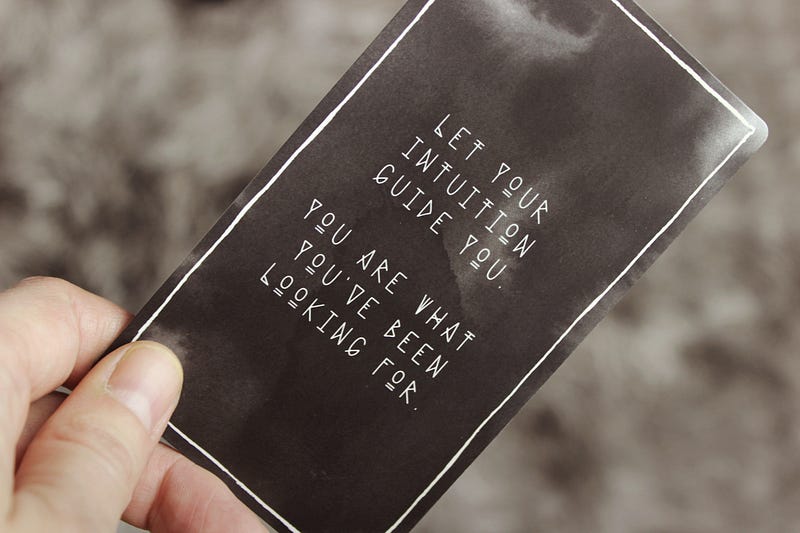
When we feel weighted down by the enormity of the way you should be doing things, or tasks you should be completing, it can lead to a couple of things…
For me it leads to procrastinating in such a way that my to-do list just gets longer. Yesterday was one of those days. With my head overfilled, I couldn’t concentrate on a single thing with any real enthusiasm or focus.
Task 1: Write an article. Time allowance = 60 minutes.
I wrote my article in 20 minutes, I was on it! However, the next step took a while longer… checking formatting, finding the image, adding a quote & triple checking everything. After finishing these extra tasks, the doubt set in.
I began to question myself — about everything… Should I post this much? Is it too much or not enough? Let me just check what others do… (add another 10 / 15 minutes)
I notice somebody has responded to an earlier article, so I go to respond to them — ‘How many claps should I give?’ ‘Is 50 excessive for a response?’ Let me just check what others do… (add another 20 minutes as that rabbit hole weaved its way around a 20-acre field…)
I spot an article talking about how they got 100’s of followers in a few days. Off my thoughts go again… ‘Is my writing terrible?’ ‘Is that why I’ve not gained many followers?’ ‘Who do I think I am doing this?!’
In total that one article that is listed as a 2-minute read, that took me only 20 minutes to write meant that I spent over 2 hours on Medium.
“The moment you doubt whether you can fly, you cease forever to be able to do it.” J.M. Barrie. Peter Pan
An old pattern at play…
When I was training to be a counsellor we took part in weekly role-play skills sessions, where we worked in triads as either counsellor, client or observer.
I remember being so focused on getting it ‘right’, not wanting to cause harm (which is of course a good thing), that I found it difficult to be present with the person in front of me.
I was totally focused on making sure that my body language was okay, wondering whether I should be jumping in or challenging at this point? or questioning myself: ‘Am I talking too much or not enough?’…
Because of this, I often didn’t feel connected with my practice client.
I was stiff & I didn’t feel like me, I felt incongruent & the natural, intuitive me became lost behind this long list of should’s.
Professionally qualified counsellors in the UK are required to have monthly supervision which enables us to discuss our work with an experienced counsellor. This is an invaluable resource due to the nature of our work, as we are unable to share our work with others.
During one of my early sessions with him, he challenged my thinking around my need to get it ‘right’. He pointed out that yes, the need to work safely & ethically is vital, but connecting with our client is the most important.
If I am in my own head running through a checklist of the things I should be doing — how am I going to be able to listen to them & be with them in the moment?
This completely changed my whole experience, I stopped being nervous during these skills practice sessions & that’s when I truly learned the skill of counselling.
Trust yourself
We learn & grow by giving things a go. By taking a chance & finding the courage to show up. Wanting to do things well is great, but don’t let the fear of making a wrong decision or by not getting it perfect stop you.
Key Message: Stay true to yourself. Learn to trust in your ability & to believe that what you’re doing is enough. We don’t need things to be perfect, or to always get it ‘right’.
Thanks for reading, Lynsey.