
How to be Happier?
The art of intentional thinking

Our world is in our minds.
And, we have the power to make it either a beautiful place or a miserable place.
When we are having a rough day, it’s important to remember that, some things are going to make us sad or upset, but how long we dwell on them and how much we let them get to us depends, many times, on us.
Whatever we talk to ourselves about, becomes our narrative.
The thoughts that bring us down grow like snowballs. The longer we roll them in misery the bigger they get. Eventually, they become like a tsunami. Every time we scrape their parts, we rake them up and dig deeper into them it becomes harder and harder to get out of the whirlpool. In our increasing pain, we forget that the tsunami does not exist for everyone, just that it is in our mind, our self created reality.
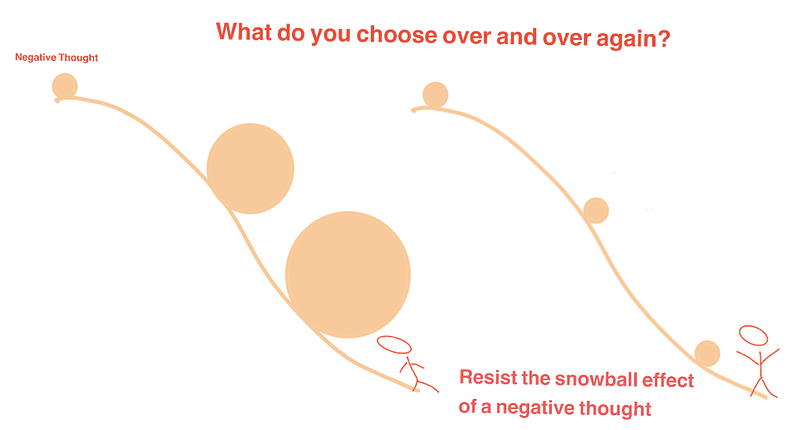
It starts to hurt even more than the initial jab of pain. This leads to a second, more important consequence.
Our problems become our focus and the solutions become side issues.
When I keep reminding myself of my problems my mind becomes filled with a “poor me” syndrome. These clouds color my vision, and it is almost like driving with glasses covered in dirt: everything I see is through the unclean lens.
At this point, we are guilty of impaired driving.
One way of moving forward is to change the lens we are using to look at the road ahead. Imagine at this point if we got brand new glasses?
One may choose to dwell on a disagreement forever, allow it to fester, and make it one’s long term battle.
or
One may choose to let it go and not to get so deeply affected by every part of that unpleasant interaction. It is almost like proactively choosing to ignore it or minimize it in your mind.
How to make your mind a happy place?
- Label your thought and observe its trajectory: Dissociate yourself from your own thought and pretend to be an observer of it. Create an imaginary box in your mind that has only two sections: Uplifting versus Pulling Down. Categorize your thought and label it to put into the correct section. Analyze your thought. What is the mass and what is the velocity of this thought? In what direction is it traveling? How often does it go in this specific direction? Have you tried to change its path? Or minimize its size? Dwell on it if it is a positive thought but more importantly, throw it out if it causes stress and brings you down. Check which section of your box gets filled faster. Try to empty out the negative section as fast as you can.
- Disrupt and replace negative thoughts with uplifting ones: Once you have categorized a thought as negative, and you decide that you do not want to keep it in your mind box, find a comparable positive thought to replace it or distract yourself with an unrelated activity. For instance, if you are frustrated at work, think of your side hustle, and become more positive. Or if you had an argument with your sibling, think of a beautiful relationship that you have with a friend. If you feel that you can’t get a negative thought out of your mind, disrupt that thought process by distracting yourself with an unrelated fun activity. If you had a disagreement that is bringing you down, instead of putting it on “repeat” in your mind, take a break and watch a show that you like or go for a walk or read a book or call a friend.
- Focus on being more empathetic: Is it possible that whoever caused the turmoil in your mind has their own struggles? Maybe they were trying to mask their weakness? This strategy is usually very helpful for me because it reminds me to look at the issue from the other person’s shoes. Increase your empathy towards your own self. Even if you are upset about a mistake that you made, let it go. Don’t be too hard on yourself. We are not perfectly programmed robots, instead, we are spontaneous creatures and unpredictability makes our lives more fun and meaningful. Mistakes make us grow.
- Don’t let everything (and everyone) be important: Evaluate who and what matters. Every little incident does not matter. Don’t make it worse for yourself by thinking about what will people (everyone?) think of me. Luckily for most of us, no one has time to think about us. Most of the people who love you will never focus on your mistakes (or if they do, they’ll only do so to help you grow!) and the rest do not matter.

- Focus on the solution (future), not the problem (past): The most important way of moving forward is to start asking what can I do now instead of thinking why did this happen to me.
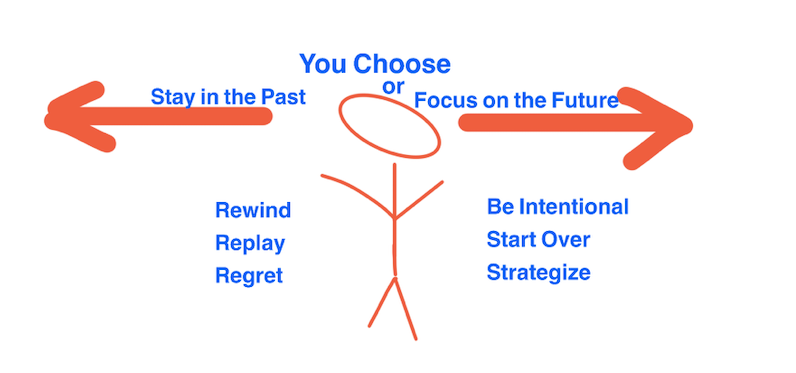
- Increase self-awareness through reflection: After some time has elapsed and when you are not so raw about the incident, think what you could have done to change the sequence of events? Maybe something in the conversation was a trigger for you, could you have actively identified and ignored it? Could you have been nicer? More patient? Less sensitive?
- Talk to someone: Depression and anxiety are real issues that are critical for our society to acknowledge. While I hope the above tips help on the days when you’re feeling low, it is really important to seek help and talk to others if you feel depressed. Know that things will get better, and people want to help.
Working with middle school kids over the years I saw two diametrically opposite types of attitudes. Some kids even when they were down and out would strive to put on a smile and start over with a positive attitude while others even when they were at the top of their game and had a minor setback would be down and out.
Happiness dwells in the soul.
It is for you to look at the immense possibilities,
and
lean towards creating a riot of hope in your mind!
If you liked this article, please subscribe to occasional thoughts @ mindkyte.com
Originally published at https://www.mindkyte.com on September 9, 2020.