avatarAamir Kamal 🚀

Free AI web copilot to create summaries, insights and extended knowledge, download it at here

2946

Abstract

rom you when you make money by getting more paying subscribers.</i></b></p><p id="8bc2">In contrast, letterdrop has different plans for creators with email subscriber lists. If you already have more than 1,000+ email subscribers, you have to pay $49 per month.</p><p id="d84f">The winner is <i>Substack.</i></p><h2 id="0ec3">2. The difference between Substack Vs. Leterdrop in terms of Transaction fee:</h2><p id="20f1">Substack charges you 10% of every transaction that happens between you and the reader. These are service charges, and this is where they make money. In the case of Letterdrop, they charge 5% of the transaction fee even if you are paying them monthly.</p><p id="13f3">If we compare <a href="https://readmedium.com/letterdrop-vs-ghost-a-comparison-between-the-two-very-similar-writing-platforms-fc2f0f692d7a">Letterdrop with Ghost</a>, Ghost charges you a one-time fee, and you go with 100% of the subscription money. Still, letterdrop, even though they provide very similar services as Ghost, charges you a monthly fee plus 5% transaction charges.</p><p id="da51">The Winner: <i>Substack.</i></p><h2 id="5c44">3. The monetization on both platforms:</h2><p id="9efb">Letterdrop has a built-in feature for running sponsorship on your newsletter. They let you run sponsorship and measure everything, and they also allow you to introduce a paid newsletter and help you find clients for writing the articles. These are great features, and currently, no platform has built-in features as Letterdrop has.</p><p id="adbe">In the case of Substack, monetization opportunities are limited. Of course, you still can run sponsorship, or potential clients could find your work and might approach you, but Letterdrop has leverage over Substack in this case.</p><p id="03ce">The winner: <i>Letterdrop</i>.</p><h2 id="fe5b">4. The freedom to design your newsletter:</h2><p id="13df">On Substack, you can add categories, list a story in a category, and make a list of stories featured in your newsletter and change the color in the story's background. But, unfortunately, you can’t give a brand new look to your newsletter on Substack.</p><p id="4717">In contrast, Letterdrop has more templates that could give a different look to your newsletter or publication. You can also add categories with good UI to your newsletter to sort your newsletter.</p><h2 id="43bd">5. The Case for SEO:</h2><p id="e104">Search engine optimization of both the platform is excellent. Keeping that Substack introduces this buzzword for the subscription-based newsletter platforms, they get a lot of press, and great press means more authority backlinks.</p><p id="b1d6">We can conclude just by keeping the whole site under consideration. Your content and SEO strategy play an essential role in getting your rank higher in Google search.</p><figure id="5d94"><img src="https://cdn-images-1.readmedium.com/v2/resize:fit:800/1*ek29BRaN_JUnD8CzgyBJ0w.png"><figcaption>T

Options

he search performance of my substack newsletter in last seven days / Screenshot by the author</figcaption></figure><p id="b4ad">I got over 122 visitors from the search engine in the last seven days. My newsletter is hosted on Substack, and I write a lot of search-optimized content. It is a sub-domain, so SEOwise, not a great thing, but still, if you write content that is more search optimized, you could get ranked even on the platform with almost no SEO tools for you.</p><p id="cf21">The playing ground is even with a custom domain, and the platform has no relationship with getting ranked.</p><p id="a20b">So, this was a detailed guide to understand the difference between letterdrop Vs. Substack.</p><p id="c456"><b>You can also read:</b></p><ul><li>Paid newsletter creating platforms: Start a newsletter and introduce a paid publication with these platforms</li></ul><div id="9d5b" class="link-block"> <a href="https://readmedium.com/paid-newsletter-platforms-start-a-paid-newsletter-and-monetize-with-these-5-platforms-630384ed1e09"> <div> <div> <h2>Paid Newsletter Platforms: Start a Paid Newsletter And Monetize With These 5 Platforms</h2> <div><h3>undefined</h3></div> <div><p>undefined</p></div> </div> <div> <div style="background-image: url(https://miro.readmedium.com/v2/resize:fit:320/1*wO19WSvLCGEdcPcpXqXYAw.jpeg)"></div> </div> </div> </a> </div><ul><li>Substack writing: How to make money writing on Substack publication</li></ul><div id="98ff" class="link-block"> <a href="https://readmedium.com/substack-writing-how-to-make-money-writing-on-substack-1e7254197857"> <div> <div> <h2>Substack Writing: How To Make Money Writing On Substack</h2> <div><h3>An article that goes through the whole process of starting writing on Substack and how you could make money through…</h3></div> <div><p>medium.com</p></div> </div> <div> <div style="background-image: url(https://miro.readmedium.com/v2/resize:fit:320/1*q5bi7d4FI_fiVqwgo4ekYg.png)"></div> </div> </div> </a> </div><h1 id="de20">The key takeaways:</h1><ul><li>Both the platforms help you create a subscription-based newsletter. In addition, they both use Stripe as a payment method and to manage subscribers.</li><li>Letterdrop has a built-in feature for managing the sponsorship. For example, someone can place an order to promote their business on your newsletter, and letterdrop give you more information that helps you measure the success or failure of the campaign.</li><li>There is no cap on number of email subscribers in Substack but letterdrop have a cap of 1,000 subscribers on Hobbyiest plan.</li></ul></article></body>

Letterdrop Vs Substack: A Comparison Between The Two Newsletter Platforms

Pros and cons of creating a newsletter on Letterdrop Vs. Substack
Substack Vs. Letterdrop: A Comparison between the two writing and newsletter creating platforms. / Picture created by the author on Canva

A newsletter is a new hot word in the town. Everyone wants to make a newsletter, and email subscribers are treated as gold now. Now, there are tons of platforms where you could create a newsletter; Substack, letterdrop, Ghost, Bulletin, Revue, Medium, and more to come. Facebook just recently launched their own newsletter creating platform called Bulletin.

Every platform is new and provides a different writing experience. Still, one common thing between all these platforms is that they allow you to introduce a subscription-based business opportunity. This is what a media business is. You produce the best content, and your readers support you by giving you a monthly fixed fee. Substack is still on top of the many services they provide.

What are Substack and Letterdrop?

Substack is a free newsletter creating tool. You can create a newsletter for free, and there are no subscription plans or anything for you. Your newsletter standout by the content and not by how much money you are paying to the company. Substack charges you 10% of every transaction that happens between you and the reader.

Letterdrop is a subscription-based platform where you can either start free or cross a threshold of several subscribers and want more features, and you have to update your plan. The free tier allows you to have 1,000 subscribers on your list, and the hobbyist tier will enable you to get more features with the same number of subscribers. Finally, the side-hustle tier provides you a cap of 3,000 subscribers and more features. You can check out this article: What is letterdrop?

The Difference between Substack Vs. Letterdrop:

Let go deep-drive into understanding the difference between Substack and Letterdrop as a platform for creators and those who want to use it to make more money.

1. The difference in terms of cap on the number of subscribers:

Substack is free, and anyone can have thousands of subscribers. There are no different plans for getting more features and no restrictions. So you might have hundreds of thousands of email subscribers and can still use Substack without paying anything. Substack makes money from you when you make money by getting more paying subscribers.

In contrast, letterdrop has different plans for creators with email subscriber lists. If you already have more than 1,000+ email subscribers, you have to pay $49 per month.

The winner is Substack.

2. The difference between Substack Vs. Leterdrop in terms of Transaction fee:

Substack charges you 10% of every transaction that happens between you and the reader. These are service charges, and this is where they make money. In the case of Letterdrop, they charge 5% of the transaction fee even if you are paying them monthly.

If we compare Letterdrop with Ghost, Ghost charges you a one-time fee, and you go with 100% of the subscription money. Still, letterdrop, even though they provide very similar services as Ghost, charges you a monthly fee plus 5% transaction charges.

The Winner: Substack.

3. The monetization on both platforms:

Letterdrop has a built-in feature for running sponsorship on your newsletter. They let you run sponsorship and measure everything, and they also allow you to introduce a paid newsletter and help you find clients for writing the articles. These are great features, and currently, no platform has built-in features as Letterdrop has.

In the case of Substack, monetization opportunities are limited. Of course, you still can run sponsorship, or potential clients could find your work and might approach you, but Letterdrop has leverage over Substack in this case.

The winner: Letterdrop.

4. The freedom to design your newsletter:

On Substack, you can add categories, list a story in a category, and make a list of stories featured in your newsletter and change the color in the story's background. But, unfortunately, you can’t give a brand new look to your newsletter on Substack.

In contrast, Letterdrop has more templates that could give a different look to your newsletter or publication. You can also add categories with good UI to your newsletter to sort your newsletter.

5. The Case for SEO:

Search engine optimization of both the platform is excellent. Keeping that Substack introduces this buzzword for the subscription-based newsletter platforms, they get a lot of press, and great press means more authority backlinks.

We can conclude just by keeping the whole site under consideration. Your content and SEO strategy play an essential role in getting your rank higher in Google search.
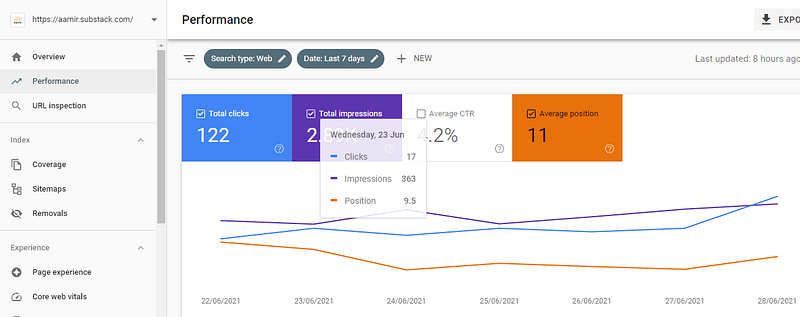
The search performance of my substack newsletter in last seven days / Screenshot by the author

I got over 122 visitors from the search engine in the last seven days. My newsletter is hosted on Substack, and I write a lot of search-optimized content. It is a sub-domain, so SEOwise, not a great thing, but still, if you write content that is more search optimized, you could get ranked even on the platform with almost no SEO tools for you.

The playing ground is even with a custom domain, and the platform has no relationship with getting ranked.

So, this was a detailed guide to understand the difference between letterdrop Vs. Substack.

You can also read:

  • Paid newsletter creating platforms: Start a newsletter and introduce a paid publication with these platforms
  • Substack writing: How to make money writing on Substack publication

The key takeaways:

  • Both the platforms help you create a subscription-based newsletter. In addition, they both use Stripe as a payment method and to manage subscribers.
  • Letterdrop has a built-in feature for managing the sponsorship. For example, someone can place an order to promote their business on your newsletter, and letterdrop give you more information that helps you measure the success or failure of the campaign.
  • There is no cap on number of email subscribers in Substack but letterdrop have a cap of 1,000 subscribers on Hobbyiest plan.
Blogging
Newsletter
Substack
Letterdrop
Writing
Recommended from ReadMedium