
Let’s Talk About Neuroplasticity
Real Success Stories Give New Life To ‘A Mind Of Its Own’
From early foetal development to birth itself, it becomes evident that certain features or characteristics may be tied to us for life. These characteristics can manifest in the form of congenital conditions, genetically inherited diseases, and even behavioural tendencies.
Whilst most are born without complications, others might be born missing an organ or two, or perhaps with an extra organ entirely. Regardless, we accept these changes as our ‘conditions of life’ and move onwards with our lives.
But what if I told you that one of our most fundamental organs isn’t as fixed or immutable as we believed it to be?
What if you found out that your brain could change itself?
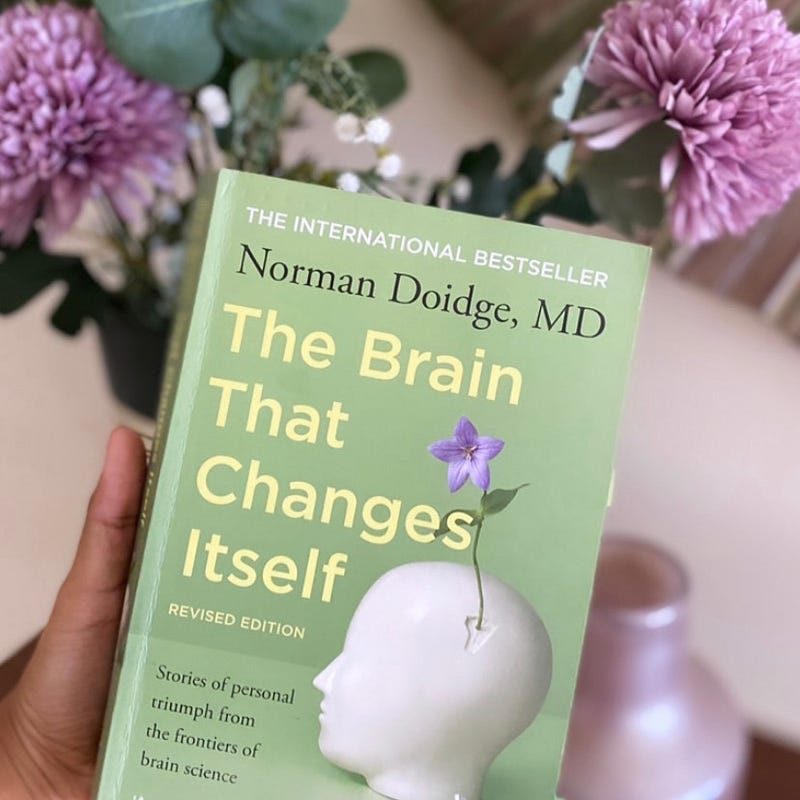
Norman Doidge, psychiatrist and author of the international bestseller ‘The Brain That Changes Itself’ did just that. He embarked on a national journey to answer such questions, and in this process, met real people whose lives were drastically changed by the brain’s plasticity, or neuroplasticity.
Neuroplasticity refers to the “capacity of neural networks in the brain to change their connections and behaviours in response to new information, sensory stimulation, development, damage, or dysfunction”.
It’s an exciting concept. For so long, we’ve been taught that our organs are what they are and their only changes appear to be degenerative. However, the idea of having an ever-changing brain also makes sense in a weird way. The human brain is the all-powerful control centre of the body, and with great power comes responsibility. In this case, the responsibility is to adapt itself to change.
Dubbed ‘the neuroplastic revolution’, previously unheard of discoveries relating to this malleable, plastic property of the human brain came to light in the late sixties and early seventies. Arguably, these discoveries formed the foundation for the present-day understanding of neuroplasticity and are credited with changing lives.
Cheryl Schiltz is one such example. In 1997, at 39 years of age, Cheryl acquired a post-operative infection, which was treated with excessive amounts of the antibiotic gentamicin. Whilst the antibiotic had been known to occasionally cause hearing loss and ear-ringing due to disruption of inner ear structures, it's inexpensive and useful nature exceeded such concerns.
Schiltz was utterly unaware of the devastating effect of gentamicin until much later, when the damage was done (or so she thought). Randomly one day, she realised that she was unable to stand upright without falling over. Upon diagnostic testing, doctor’s concluded that Cheryl had little to no vestibular function remaining.
Vestibular function, for those who are unfamiliar, is responsible for maintaining balance, spatial orientation, and everything concerned with inner ear structures. A role of such importance requires a large amount of brainpower, as evident with the mental fatigue and internal struggles faced by Cheryl. With 95 to 100% of her vestibular function lost, Doidge refers to Cheryl’s case as a “hopeless one by any conventional standard”.
However, extraordinary American neuroscientist Paul Bach-y-Rita, thought otherwise. He had Schiltz wear a prototype accelerometer hat on her head and place an electrode strip on her tongue, with the intention to stand-in for her vestibular apparatus and “send balance signals to her brain from her tongue”.

It’s unfathomable. It sounds crazy and out-of-this-world.
But it worked.
After one minute of wearing the hat, Cheryl was able to stand and walk with ease for a residual twenty seconds upon removing the hat. After two minutes, the residual effect lasted for forty seconds. And most surprisingly, after twenty minutes, the residual effect lasted for one hour.
So how was Cheryl able to regain this function?
Essentially, numerous neuronal pathways constitute the brain and form a highly connected network. If a specific pathway became blocked, an older pathway would come to the rescue and be used to bypass the blockage. Furthermore, as the older pathways were used repeatedly, these ‘secondary’ pathways became strengthened and increased in efficacy.
And Cheryl is living proof. For the next year, she focused on building up the residual effect by donning the accelerometer on more frequent occasions. Over time, the residual effect developed from multiple hours, into days, and then months. Presently, she no longer requires the device in order to have vestibular function in her body.
A truly remarkable recovery.

Another inspiring story begins with a woman born with half a brain.
Doctors believe that a blockage of Michelle Mack’s left carotid artery, responsible for blood supply for the left hemisphere, is the cause of the absent hemisphere, preventing its formation.
With 95% of her cerebral cortex missing, it’s amazing to see how Michelle has overcome this setback. Historically, the left hemisphere has been associated with memory, selective attention and positive emotions, whilst the right is linked to pitch perception, arousal and negative emotions.
In Michelle’s case, her right hemisphere has grown up without its twin and has taken on the role of both hemispheres. Essentially, her brain has ‘reorganized’ itself to undertake the fundamental left hemisphere functions whilst also carrying out its normal right hemisphere functions.
Interestingly, Doidge recalls how normally, “each hemisphere helps refine the development of the other”, via transmitting electrical signals which share their respective activities, allowing for coordinated function. Without her left hemisphere, Michelle’s right has evolved as an independent entity and has enabled her to have a part-time job, read, speak, pray and love.
“Her life is a demonstration that the whole is more than the sum of its parts and that half a brain does not make for half a mind”.
In sharing Doidge’s stories, I hope to convey the wonder, amazement and hope I feel after reading ‘The Brain That Changes Itself’. In a world where diagnoses can feel like a life-sentence, Doidge reminds readers that there is so much left unknown and undiscovered about the human body.


