
Let’s Stop Using The Word Retirement
I want a flexible life

It’s time to abandon traditional notions of retirement.
We should stop using the word entirely.
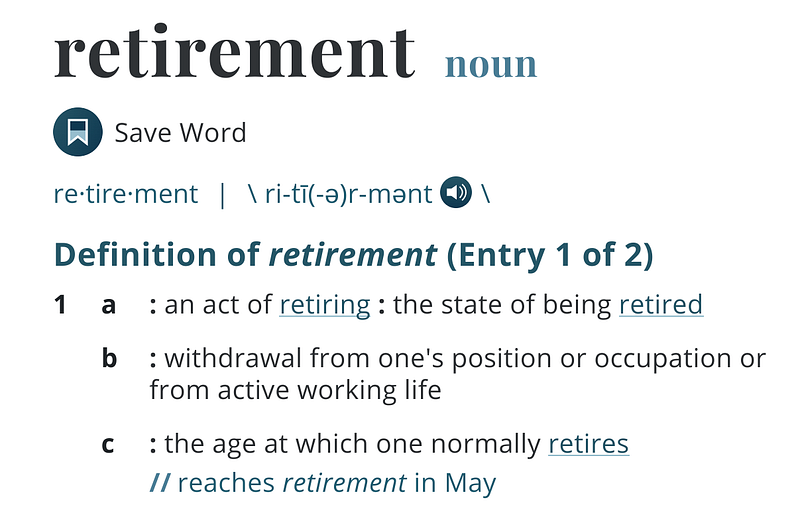
My thoughts continue to evolve on the subject, but that’s a super lame definition. It simply doesn’t work anymore for a growing number of people.
Because most of us, particularly Gen X and millennials, will not retire the way our parents did.
Recently, I articulated a non-linear retirement. I’m not sure that’s even appropriate. Because I don’t view life as work. And I don’t envision a neat and tidy, post-work life.
A Flexible Life
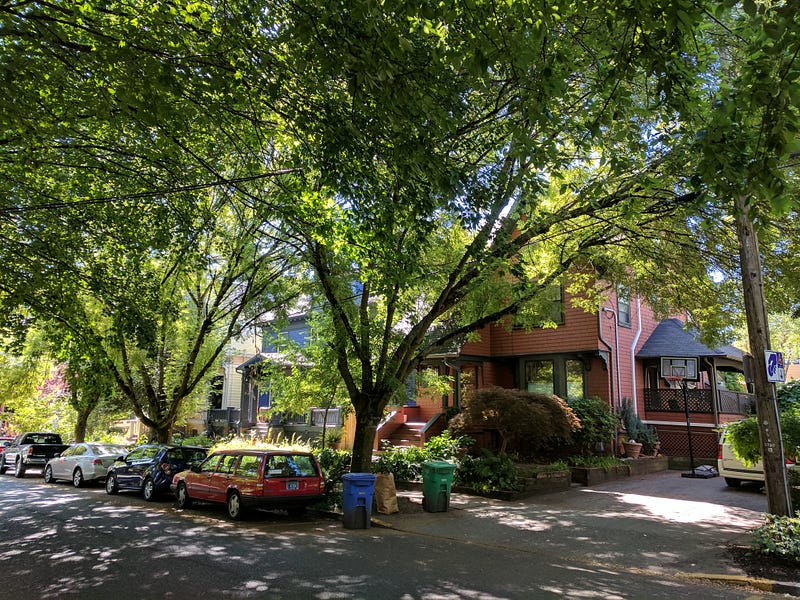
I’m moving to Portland next year.
I’m doing it because Los Angeles no longer suits my lifestyle.
I define a central component of lifestyle as what constitutes your day-to-day on most days.
For me, it’s wake up early, do push-ups, eat, and get out of the house. Then I take a long walk and find a place to work (a coffee shop or, more so now, a park or nice patch of grass under a shade tree). On some days, I put that in reverse, work then walk. From there, it’s dinner, maybe a social activity (not quite as many these days), then maybe more work and maybe another walk. Push-ups and a shower before bed. Repeat.
I want to do this without a car. I can’t in Los Angeles. I will be able to in Portland.
Given that my work is physically easy, I don’t view my life as the working life.
I see it as the retired life already.
I realize I’m lucky — privileged — to be able to conceptualize and operationalize my life this way. However, I think an increasing number of people, namely younger people, live this way. With freelancing and remote work on the rise, I’m confident this trend will intensify.
I want a flexible life. I want a simple life.
I also want the ability to voluntarily blow up my day-to-day from time to time. To take a vacation. To hop on a plane and visit my daughter at college (she’ll likely be doing that some place next year). To blow off an entire day and take a really, really long walk. To do whatever comes to mind for as long as I want to do it.
I want to be in a position to “retire” (as in, not work as much or at all) multiple times throughout my life. Work really hard for a week. Line up a bunch of articles for my own projects and clients. Then take a month off to do whatever. Scenarios like that. That’s not work. That’s not retirement. That’s my life.
Or at least the life I want and am pretty close — knock on wood — to having.
I don’t want to do it this way because I don’t like work. I expect and want — fingers crossed — work to be part of my life forever. But sometimes it’s easier and better to not focus on two big things at once.
If Not Retirement Investing, What?
After making sure we can satisfy our living expenses, personal finance experts and related others tell us we need an emergency fund. While I don’t disagree with this, the most important fund of all might be the temporary retirement fund. Money set aside for the express purpose of retiring (I need to find a new word) temporarily (so, what’s a word for living life, but just not working as much or at all for short period of time? sabbatical? let’s keep thinking).
Having this fund makes absolutely logical and critical sense because we should not use our living expense or emergency funds to pay for temporary retirement. That would defeat the purpose of having living expense and emergency funds. We would have to continue to replenish them. That’s stressful and too much paperwork. These funds exist so we can live and have additional money at the ready if we’re low on the cash we need to live for some unforeseen reason.
The ultimate investing-related goal remains the same. To have enough money — however you decide to accumulate it —for complete and total flexibility in your life. That’s financial freedom, I guess.
The non-negotiable components to getting there are:
- as low a cost of living as possible.
- the three funds fully stocked — living expenses, emergency, temporary retirement (until we find a new word).
- an investment portfolio that generates enough cash flow to support your flexible lifestyle.
I choose to be a dividend growth investor to one day satisfy that third point. That is, I buy stocks that pay stable and, preferably, growing dividends. I invest as much as I can into them on a regular basis, reinvesting the dividends along the way.
If I’m lucky enough to always have some work income flowing, I can let the investments ride. Ideally, you never have to touch them. But it’s nice to know they’re there if you need them.
That’s my definition of being wealthy.
And it allows an already flexible lifestyle to become even more flexible.
It’s the financial equivalent of stretching or doing yoga.
This article is for informational purposes only. It should not be considered Financial or Legal Advice. Not all information will be accurate. Consult a financial professional before making any major financial decisions.