
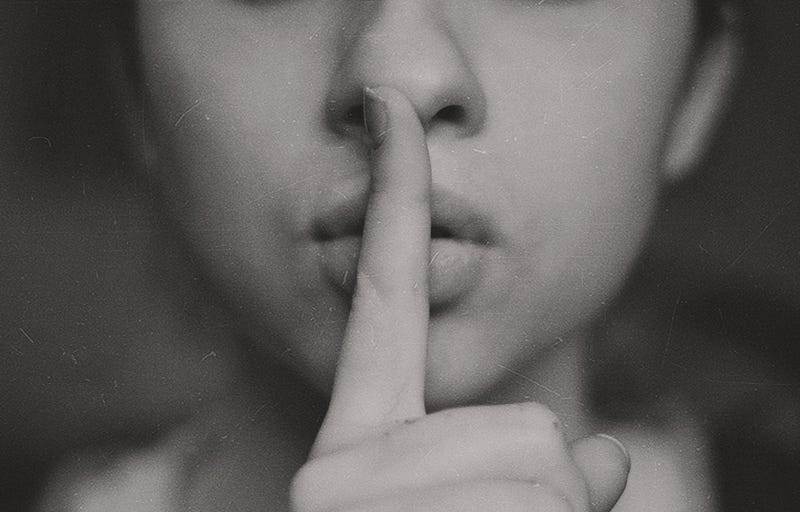
Let’s Hear It For the Keepers of Secrets
Not every painful reveal is an act of courage
I know things about some people in my life that would rival Greek tragedies. I’ve witnessed, if not crimes, some seriously unethical behavior. Things done to me; told to me. If I put some episodes into screenplays, I’d have box office winners. I know, because I see similar stories told on Netflix and HBO.
I’m a good enough writer. For pure shock value, I could make money off the secrets I carry. I bet some of you could, too, you who are the keepers of secrets.
In our #Metoo era, I have my stories. Are they things done to me or things told to me? That’s my business. I have a diary a friend gave to me for safekeeping. “Read it if you wish, but hide it until I ask for it back.”
Twenty years later it’s still stuck on a top shelf of my closet. No one knows of the shocking revelations in it except the writer and me. And I’m not talking. But if I did, oh the stories I could tell.
Of course, that would be snitching. Telling on people who have nothing to do with my actual life. Still, carrying the secrets of people I know sometimes weighs me down.
Sometimes, I wish I didn’t know what I know.
A therapist once told me that every family has a keeper of the secrets. In my family that seemed to be me. I saw things for myself, and other people came to me with their own tales they wished to keep hidden. I’m not sure why others felt they could entrust their stories to me, but I’ve never broken that trust.
Some folks believe in getting everything out in the open, and they take it upon themselves to shine a light on other’s perfidy. They do this in the name of honesty so that evildoers don’t go unpunished.
They pride themselves on telling the truth. Let the chips fall where they may and all that. I’ve been called a coward for my closed-mouth policy, but I’ve seen the damage such honesty can do.
I recall back when I started a new job many years ago. I don’t think I had turned thirty yet. I was in a new city and eager to make friends. A very popular co-worker introduced me around, and through her I scored invites to many parties.
One Saturday morning a guy I met through this network knocked on my door with donuts and coffee. Though he was married, it was all above board, but he had a difficult story to tell me.
His wife landed in the psych ward, he said, after a suicide attempt. Our mutual friend had told her about an affair he’d revealed to her in confidence, and she’d decided to out him to his wife.
All in the name of honesty. He’d come to warn me about my treacherous new friend.
So I learned that some shoulders can’t bear the weight of the conflicts of others. We must choose our confessors wisely. But I already knew that. I’d had secrets of my own blasted out on metaphorical airwaves for public consumption. They, too, had caused unnecessary harm. I also carried secrets I could never reveal to anyone. The type of secret often made public in the #Metoo era.
I commented to a friend when the awful #Metoo revelations began appearing that every woman I knew had a story to tell. I knew though, that I would never tell mine, at least not in public. For one thing, it paled compared to the suffering other victims had endured. Also, it occurred so long ago that time and a lot of therapy put it in perspective for me. I didn’t need a public forum for healing.
In looking back, I think the severest wound I suffered was the warning to don’t tell. I’m not sure I would have anyway, I had too much shame. As I matured, though, it became clear to me that it was my secret to bear.
Revealing the assault might have caused worse harm in my family. If I’d been believed back in the early ’40s, with no mechanisms for caring for victim or perpetrator, my family would probably have done themselves harm in their attempt to avenge the act.
Or, they might not have believed me. That would have damaged me more.
Or the neighbor would have taken revenge on me, and I’d have been a pariah to my friends. Who knows? At this late stage, I’m at peace with what life dished out, and the way my young, innocent self dealt with it.
As I grew older, my trove of secrets grew. Events in my family and among friends occurred with again, the admonition: “Don’t tell.” If not in words, somehow the message had become clear: What happens at home stays at home. Best friends don’t tell.
I think about all this as I read confessionals or watch no holds barred interviews where people name the creepy uncle or abusive dad or absent mother. No doubt some perps need outing if only to keep them from harming others with their abusive or criminal behavior.
In addition to the satisfaction of shining a light on a bad person or the catharsis of revealing hidden pain that has held them back, the power of storytelling as a balm to mental health is a recognized gift of writing. The victimized reader can benefit from reading a similar traumatic experience.
So why don’t we all spill our secrets? What’s holding us back? First of all, outing bad people comes with risks. Aside from the possible personal embarrassment, we might suffer retaliation. Whistleblowers in the workplace can lose their jobs; whistleblowers in families, on social media, or among friends risk having their beloveds ostracize them rather than understand their point of view. If you’ve never had an important relationship extinguished, then you don’t understand the power of banishment, possibly the most painful punishment ever devised.
So revealing secrets takes courage, and not everyone is ready or willing to do that, at least not on someone else’s timeline. We’ll hear of suspected victims of a public figure to speak out. But asking another to open up is not our call. A victim or witness to bad behavior may have reasons for zipping their lips.
If lurid details of someone’s past came out, it’s satisfying to think they might finally be called to answer for hurtful actions or devious behavior.
But what about collateral damage? What if revealing secrets would harm innocent people?
Do the ends justify the means? Not every bad action is a crime that needs a spotlight.
I recall seeing two married people at a party in a compromising position. I assumed they were married to each other. When I found myself talking to the wife of the husband snuggling with his lover in the other room, I realized I had a secret I didn’t ask for. I could have told her what I’d seen or given her an excuse to go into the other room and see what a creep she was married to. That would have been honest.
But I saw the damage that would do to innocent spouses, children, and careers. As uncomfortable as it was, I put on a fake smile for the deceived wife knowing she was married to a cheat. I had to keep their secret because, as dirty as it made me feel, it was their business to work out, her bargain to make with him if she chose to.
And what about the tincture of time that can work on a guilty conscience and add a portion of needed maturity when you chose to be complicit in keeping a secret?
Who knows the torments a miscreant can subject themselves to as they consider an ill-conceived act committed in haste? A vow to do better and the pain of recrimination can change the course of a life if the scab is left to heal on its own.
But imagine the damage defensiveness can do if a spotlight is turned on a sin prematurely and the bad actor has to justify himself instead of spend time reflecting and changing direction..
What’s the purpose of publicly shaming the sinner when self-flagellation is not only more painful but can eventually bring enlightenment? We don’t curse unripe fruit for being sour, but let time sweeten it on the vine.
Sometimes it’s wise to judge a friend at the end of his life when he’s learned from his mistakes. If we can aid in the process by turning away from human frailties instead of broadcasting them far and wide, is not that a better course than a public tribunal?
A weighty pact is made when we ask someone to shield our wrongdoing from public scrutiny.
If we accept that responsibility, we can pay a price. We cut ourselves off from the comfort of sharing a difficult moment, we cannot ask anyone to help us with that burden. By saying, I won’t tell, we’re committed to carrying it alone.
Do not read victim shaming into this essay because none is intended. I applaud the courage it takes to tell stories that reveal trauma and injustice. To those who should come forward, who would find healing in telling their sad tales, I wish them courage.
But for every public disclosure, many more readers remain silent. I acknowledge those who know more than they wish about the lives of others, or perhaps need privacy about events they’ve witnessed or endured. For reasons of their own, they choose to weigh down their already complicated lives with the added burden of silence.
Keeping necessary secrets can be as difficult as revealing them. Life is not a cut and dried proposition. Every story has many layers. For that reason I also applaud the keeper of secrets.
Here are more of my articles about life, love, and the complexities of being human.
If you’d like to read more of my stories and tips for success on Medium, click here sign up for my newsletter. I’ll make sure you don’t miss a word. Thank you for reading.


