
Let’s Be Honest About Reading the “Classics”
Not everybody likes them

“No Joy in Mudville!”
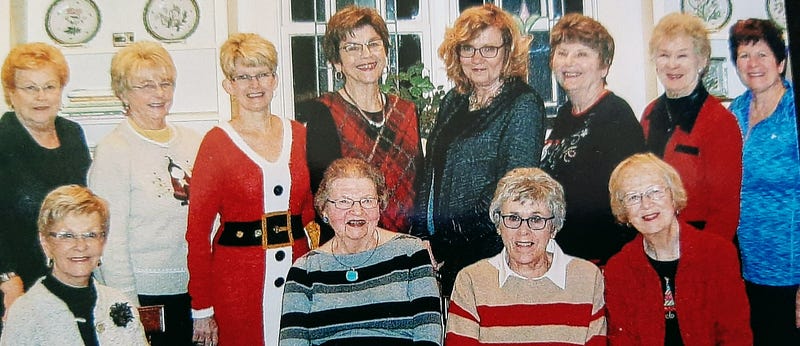
The Monday Night Book Club of Danville, Illinois has been meeting for decades. Fourteen educated, articulate older women, many of them former teachers, along with other professionals like a pharmacist, an HR director, and an artist. We meet in a home, or sometimes the local Red Lobster, and we have home-made desserts after stimulating talk. I look forward to the meetings, as do the other women, not just for a bit of socializing, but for thoughtful discussion and insight on that month’s book.
But 2019 was different. This year, we decided to read only the “classics,” chosen from PBS’ list of 100 Great American Reads. Our thinking was that we would add a depth of sophistication to our book club’s reading list, usually focused on contemporary fiction.
If you gave us a grade solely on our enjoyment of the experiment, we would receive an F. Our group did NOT enjoy reading the classics. Some of us enjoyed a selection or two throughout the year, but as a whole, the experiment failed.
That’s not to say we didn’t learn something or that we didn’t feel satisfaction at finally reading something that we’d heard of for years and could now cross off our lists. Maybe it was just because we were reading nothing other than classics, and every work brought with it the idea that we needed to fully absorb it, but we often felt overwhelmed. To say we ENJOYED the experience of reading classics for a whole year would be to stretch the truth like taffy pulled into the thinnest thread.
What defines a book as a classic anyway?
According to Richard Smith, author of The “I Ching”: A Biography, a classic has four defining elements:
* First, the work must focus on matters of great importance, identifying fundamental human problems and providing some sort of guidance for dealing with them.
* Second, it must address these fundamental issues in ‘beautiful, moving, and memorable ways,’ with ‘stimulating and inviting images.’
* Third, it must be complex, nuanced, comprehensive, and profound, requiring careful and repeated study in order to yield its deepest secrets and greatest wisdom.
* One might add that precisely because of these characteristics, a classic has great staying power across both time and space.
Another prominent definition of “classic” literature comes from Italo Calvino, an Italian journalist. In 1991, he wrote a book called Why Read the Classics, 1991. In that book, he listed fourteen definitions. My favorite three are encapsulated below. synopsized below:
- The classics are unforgettable.
- A classic provides a sense of discovery on the first reading and on every subsequent re-reading.
- ‘Your’ classic is a book to which you cannot remain indifferent, and which causes you to see yourself in relation or in opposition to it.
Why should we read the classics?
Oh, the list is long.
To increase your vocabulary. To learn history and culture. To understand literary allusions and references used every day. To enhance your social skills and ethical stances. To gain knowledge. To improve linguistic skills. To absorb stories about universal human experiences. To feel compassion, tolerance, empathy, revulsion, fear, or sadness.
Because we want to.
Why shouldn’t we read the classics?
Because we’ve been assigned to. Because we think we should love them.
Maybe if each person in the group had chosen to dive into a classic of her own accord, our experience would have been better. Instead, it was a sure-fire way to make us resent the task and pull enjoyment from the story. As if reading a “great” book is a forced death march through the land of literature. (Okay. Joseph Conrad’s “Heart of Darkness” WAS, but you know what I mean.)
If the truth be told, we couldn’t wait for the end of the year to return to our contemporary fiction picks in 2020. Our year of enrichment turned out to be a year of difficult, sometimes torturous reads, more like being force-fed than tasting a rare and wonderful literary treat.
Some grumbling. A tapering off of morale. A bit of bewilderment. A definite lack of joy.
Apparently, one person’s “great” read is another person’s “miserable” book.

Great American Reads list
PBS’ List of Great American Reads was compiled by the votes of 7200 Americans. The nominees had to be a fictional novel written in English.
Each member of our club picked ten reads from the list of 100, and then we voted and picked the top vote-getters to read in 2019:
- February 2019: Outlander, by Diana Gabaldon
- March 2019: The Lion, The Witch, & the Wardrobe, by C.S. Lewis
- April 2019: The Handmaid’s Tale, by Margaret Atwood
- May 2019: Lonesome Dove, by Larry McMurty
- June 2019: Heart of Darkness, by Joseph Conrad
- July 2019: To Kill a Mockingbird, by Harper Lee
- August 2019: Pride and Prejudice, by Jane Austen
- September 2019: The Sun Also Rises, by Ernest Hemingway
- October 2019: The Pillars of the Earth, by Ken Follett
- November 2019: The Clan of the Cave Bear, by Jean Auel
How could we go wrong reading what had been voted on by a large segment of the population as “great reads?”
Let me count the ways.
What was said about those “Great American Reads”
“I have absolutely no idea why some of those books were on this list.”
“I wouldn’t give you two cents for Lonesome Dove.”
“Outlander was just pornography.”
“Those books were long. I don’t like to be dominated by the author. I like free-will.”
“I hate Hemingway’ and his staccato, bullet-like words about the ugliness of life.”
“We should have studied more about the books before we chose them.”
And the division was on. The surprise at other people’s misguided tastes. The frustration at reading a long work you didn’t like….(Outlander, Pillars of the Earth, and Clan of the Cave Bear all topped eight hundred pages.) Bewilderment at how the book we just read could be considered a “classic.”
We struggled through Heart of Darkness. I read it in graduate school and for decades afterward had pondered the central question: Do all men have hearts of darkness? Would we all go mad and power-hungry if given the chance? It may be the hardest piece of writing you’ll ever see in less than a hundred pages, but it fits the criterion of being “unforgettable.” Most of the group was proud that they could say they had actually read it and understood the basic premise, spoken through the languorous, twisting speech of Marlowe.
But did we enjoy reading it? Were we enthusiastic or excited about it? Did we have fun? An unabashed “NO!”
Lessons learned
- Reading is an individualized sport. Tastes are eclectic, and no two people ever hold the same opinion. Each person reads for her own reason, and those reasons affect the ultimate response to the book.
- We agreed on two things throughout the entire experience: First, that To Kill a Mockingbird was our favorite read of this ill-fated year. We were no different than the readers in the PBS poll who concurred that Harper Lee’s novel is America’s #1 Great Read. Second, Heart of Darkness was the shortest, but most difficult read of the year.
- We also remembered that the classics are meaningful, rather than “fun.” Back to The Heart of Darkness again where Conrad’s Kurtz goes berserk in the depth of the African jungle, making us wonder at the pressure of isolation and the lure of power. Handmaid’s Tale and 1984 were no bundle of laughs either, painting bleak pictures of a future that parallels modern life.
- We found that length matters. Some of us like shorter works and feel like authors belabor their points when they go over a certain page limit. (Outlander, Pillars of the Earth, and Clan of the Cave Bear were all works of over 800 pages.)
- We discovered that one woman’s idea of romance is another woman’s idea of smut. While some of us appreciated Diana Gabaldon’s Outlander series and marveled at the intricacy of characters and history — not to mention the appeal of Jamie Frasier — some of us could never buy into the time travel scenario, and at least one of us thought the sex scenes were downright pornographic.
- We debated on whether genre is a condition of a classic. Several were totally unconvinced that Lonesome Dove was worthy of being on the Great Read list, giving the impression that the Western genre was sub-par.
On to 2020
Next year we go back to popular, contemporary fiction with the following list:
January: Ordinary Grace by William Krueger February: A Gentleman from Moscow by Amor Towles March: Snake Woman of Little Egypt by Robert Hellenga April: Where the Crawdads Sing by Delia Owens May: Lost Roses by Martha Hall Kelly June: The Awakening by Kate Chopin July: The Silent Patient by Alex Michaelides August: Beneath the Scarlet Sky by Mark Sullivan September: A Woman of No Importance by Sonia Purnell October: Overstory by Richard Powers November: This Tender Land by William Krueger
This year, our democratic voting system selected two books by William Krueger, Ordinary Grace and This Tender Land, to start and end the year. We chose a Pulitzer Prize-winner in Robert Powers’ Overstory, and a quasi-classic, not on the PBS list, but an enduring work all the same, in Kate Chopin’s The Awakening.
We’ll see how it goes.
Maybe this year, we’ll have more free-wheeling fun without the emphasis on the classics.
Melissa Gouty loves book clubs and differing opinions about written works. She believes a “great read” doesn’t have to be happy but one that will stick with you through the years, weaving tendrils of thoughts and wisps of words into the fiber of your being. If you love books, sign up for Melissa Gouty’s Literature Lust bi-weekly newsletter.


