
Let The Games Begin!
Selfish genes, testosterone, and tournament species
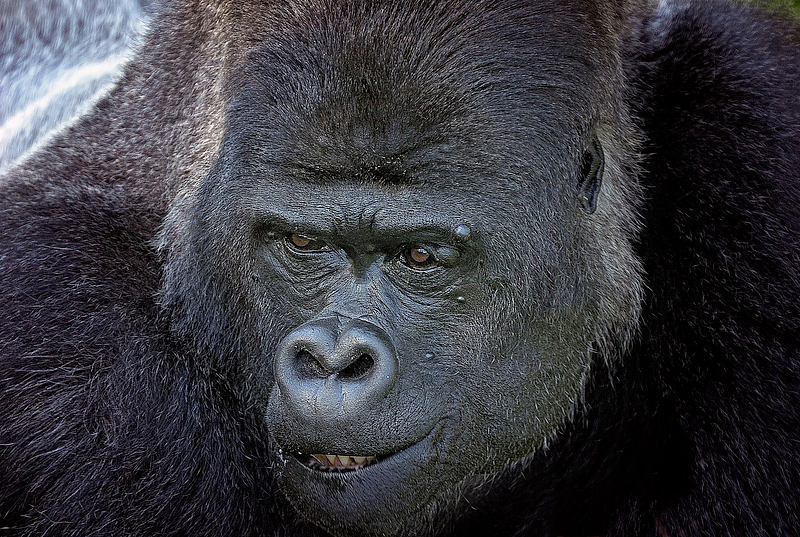
Pop quiz.
- What percentage of countries are run by dictators?
- How many of those dictators are male?
Answers: 1) 29% (57 of 193 countries). 2) All.
Given the tragic suffering broadly inflicted by violent aggressors like political dictators, what’s the motivation?
It would be simplistic to ascribe a single cause to any human behavior, but we can look into contributing factors. Let’s start with genes.
Mom genes and Dad genes
Remember Mendel diagrams in high school Biology? Gregor Mendel, the father of modern genetics, illustrated how heritability works.
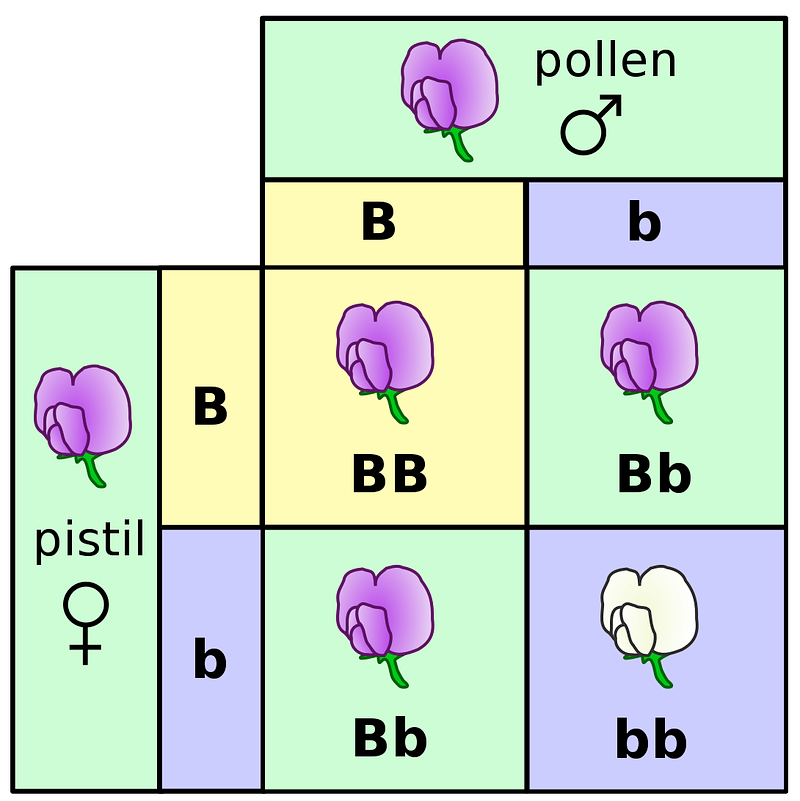
B is a dominant gene; b is recessive. Only the combination bb yields a white flower. The presence of B always yields purple.
Notice that the gender of the contributing parent doesn’t matter. In other words, while the diagram depicts pollen and pistil, gender isn’t a factor in the genetic outcome. Most of us were taught that gender isn’t relevant in heritability.
Except it is. Genomic imprinting is a twist on genetics. Whether genes are expressed depends on whether they are inherited from the mother or the father. Of the 20,500 genes in the human genome, 228 are imprinted. Other mammals and some flowering plants also have imprinted genes. In mammals, imprinted genes usually control embryonic development.
This is odd. Why would 1% of human genes be imprinted? Why would the gender of the parent from whom inheritance occurred affect embryonic growth?
While there are multiple hypotheses, a popular and intriguing one is called the parental conflict hypothesis or kinship theory of genomic imprinting.
What is natural selection? In a nutshell, genes that propagate. For a male who impregnates a female, that embryo is crucial. For males, a gene that causes the mother to expend maximum energy on the embryo makes evolutionary sense. Your embryo matters. Fred’s doesn’t.
Not so for females. That embryo is possibly one of many that will bear Mom’s genes. For Mom, distributing energy investment evenly across embryos which develop serially across one’s fertility lifetime is a better play.
Tournament and pair-bonded species
What makes imprinting even more interesting is that biologists correlate it to the sexual organization of a species. Across species, there are many patterns of sexual behavior. Two particularly prominent patterns are:
- Sexually dimorphic tournament species — A single dominant male aggressively enforces exclusive sexual rights to a harem of females. (This is called polygyny. There are instances of a single female having a harem of males — polyandry — but it’s less common.) Sex happens when the male wants it, whether females are willing or not. All parenting is done by the mother. Other males are generally celibate and do not live in a social group, certainly not one with females. The dominant male maintains his position for however long he can fend off rivals. Eventually, a challenger will kill or chase him off, and the cycle continues. Imprinted genes that control embryonic development are a logical innovation for tournament species.
- In pair-bonded species, there are no dominant males. Mating is consensual. Males and females seek partners who show signs of competent caregiving. Parenting is shared. Imprinted genes controlling embryonic development are akin to “tits on a bull.” Useless.
In species with tournament structures, males ensure genetic continuity through aggression. They kill or chase away rivals and they may force reluctant females to have sex. The qualifier dimorphic means males and females sharply differ physically. Males possess increased size and strength, larger and sharper canines, etc.
Males also attract females through characteristically male features. An obvious example is the male mandrill’s striking proboscis.
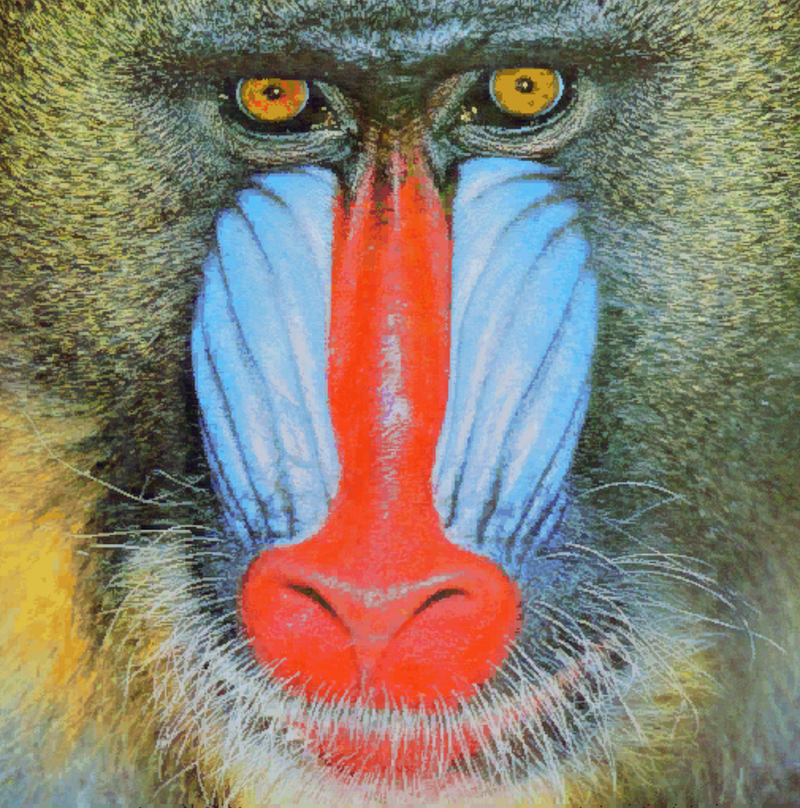
In species with paired mates, there is no biological incentive for males to look different than females, because females don’t prioritize size, strength, or “maleness” when they choose mates. They are more interested in males who will be good providers and will share the energy investment of parenting. For this reason, in paired mate species, males and females look similar.
Consider gibbons, which are monogamous apes, and mandrills, which are a tournament species. Females mandrills weigh half of what males weigh, Siamangs are the only type of gibbon with a meaningful difference between male and female body weight, and female siamangs still weigh 88% as much as a male.
What about humans?
We are betwixt and between. Humans have some imprinted genes, but percentage-wise, fewer than a typical tournament species.
What about morphology? Human males are on average taller and heavier than females, though not rigorously so and certainly not by a 2x factor. Outside of genitalia, other features that distinguish males from females are more facial hair, an Adam’s apple, and larger canines.
Most cultures adopt norms that further distinguish males from females in dress and appearance, but there are of course many exceptions.
If you live in the mainstream of Western society, you may believe that humans are a purely pair-bonded species. Not so. While pair bonding is common, it’s not ubiquitous. Consider this photo of a village chief with his wives taken in the Republic of Guyana at the beginning of the 20th century.
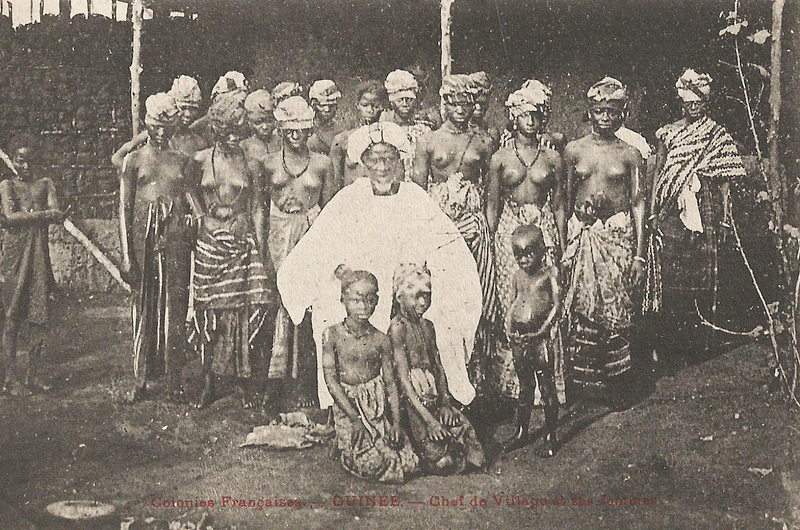
That photo depicts a tournament culture. The dominant male may not defend his position through combat, but he has achieved a position of enormous power. For every chief, the alpha male, there might be two dozen beta males lacking mates.
Surprisingly, throughout most of human history, monogamy was the exception. As psychologist Christopher Ryan put it when writing for CNN:
“A non-possessive, gregarious sexuality was the human norm until the rise of agriculture and private property just 10,000 years ago, about 5 percent of anatomically modern humans’ existence on Earth.”
That description matches neither the paired nor tournament models. It’s similar to what bonobos practice.
Even today, monogamy may be an ideal, but we fall short of it in practice. According to biological anthropologist Agustin Fuentes:
“Humans are rarely sexually monogamous over their lifetimes. Rather we can form multiple sexual pair bonds of differing durations over the course of our lives, which may or may not also be social pair bonds.”
The point here isn’t to stick human sexuality into a bounded cubby hole. Rather, it’s to observe that we follow varying patterns, perhaps because our genes allow for that.
Legacy of the tournament species genome
While human sexual norms vary across time, cultures, and individuals, and males who follow the tournament paradigm might appear to be an atavistic exception, it’s worth considering how much the male tournament species genome affects us today.
In the 21st century, humans are typically not a tournament species, at least as biologists define it. That said, we share ancestry with primates — like gorillas and chimpanzees — that have one dominant male per social group, or multiple males with a strict dominance hierarchy. Dominant males may not kill off challengers to defend women they treat like property. That doesn’t mean the genes that support tournament species behavior are dead and gone. Tournament species behavior is simply adapted to modern circumstances.
Consider Andrew Tate, the former kickboxer charged with rape, human trafficking, and forming an organized crime group to sexually exploit women. Here’s a short list of Tate’s public activity and statements beyond those charges.
- Removed from the British reality show Big Brother for creating a video showing him hitting a woman with a belt, and for a rape charge.
- Tweeted that sexual assault victims bear partial responsibility for being assaulted.
- Stated, “I am absolutely sexist and I’m absolutely a misogynist.”
- Stated women “belong in the home”, they “can’t drive”, and that they are “given to the man and belong to the man”, that men prefer dating 18- and 19-year-olds because they are “likely to have had sex with fewer men”, and that women who do not stay at home are “hoes”.
- According to the Guardian in February 2023, Tate is popular among British teenage boys; parents and schoolteachers believe those boys are attracted to the misogyny and aggression Tate peddles.
Tate’s persona is a textbook example of how humans have adapted tournament species behavior to life in the 21st century. There is no single root cause of any human behavior, but it seems plausible that natural selection has contributed heavily to the Andrew Tates of our world.
Popular culture is rife with ruthless, aggressive men who pursue wealth, power, and domination of people they regard as weak, stupid, and inferior: Logan Roy of Succession, Bobby Axelrod of Billions, Frank Underwood of House of Cards, and Gordon Gekko of Wall Street.
But who needs fiction in a world with leaders like Vladimir Putin, Jair Bolsonaro, Viktor Orbán, Kim Jong-un, Nicolás Maduro, and of course Donald Trump, all of whom — with some DNA modifications — could easily be a silverback gorilla beating his chest, bullying and dominating every member of his troop and all potential rivals?
Biology and male aggression
The distinguishing characteristic of a tournament species is male aggression.
What are the biological mechanics of aggression? Let’s look at testosterone.
Testosterone is a steroid hormone, derived from cholesterol. It’s present in both genders. In males, testosterone is produced primarily by the testes, while the adrenal glands produce a much smaller amount.
Like other hormones, testosterone circulates through the body via the bloodstream.
What does testosterone do in males?
In humans, testosterone plays a key role in the development of male reproductive tissues such as testes and prostate, as well as promoting secondary sexual characteristics such as increased muscle and bone mass, and the growth of body hair. — Wikipedia
It’s also linked to aggression and associated tournament species behaviors.
[Testosterone] is associated with increased aggression, sex drive, the inclination to impress partners and other courting behaviors. — Wikipedia
Testosterone is not linked to aggression in females.
Additionally, adequate levels of testerone are essential to healthy functioning in both genders.
Read the fine print
Studies link testosterone to aggression in men. The choice of verb is significant.
Testosterone doesn’t cause aggression in human males. It’s a factor.
That matters.
There are 4.04 billion males in the world today — 50.25% of the population. For every Andrew Tate, Gordon Gekko, Harvey Weinstein, or Vladimir Putin, there are millions of of men who manage to regulate their behavior and maintain civility in the presence of testosterone.
People have urges. They have fantasies. Urges and fantasies are neither good nor bad. They just are.
People make choices. Choices may be good or bad.
Good choices require awareness and self-control.
That’s what’s run amok in those 57 dictators. In Harvey Weinstein. In Donald Trump. Not testosterone. A staggering lack of awareness and self-control.
One cannot expect a silverback gorilla to be sufficiently conscious to avoid being a slave to hormones. Men can. Most do. The exceptions are typically unprincipled psychopaths like Donald Trump, and we all need to do a much better job of stripping them of power.


