
Let Me Tell You About My Compost
Yes, you can make compost on a 7th-floor apartment patio
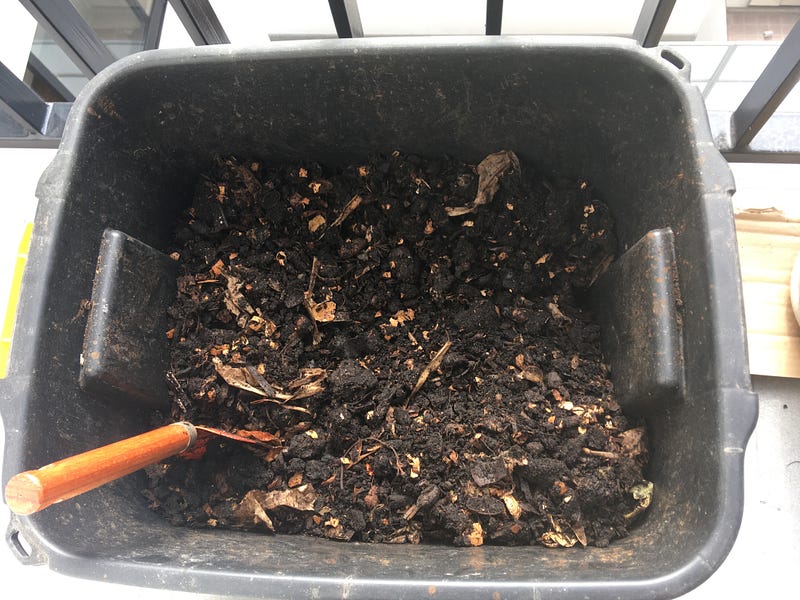
Composting is one of my favorite things.
From 2020–2022, I was quite nomadic, spending a few months at a time in different countries, never setting up long-term residence. While I love going from place to place, I don’t love putting my food waste and coffee grounds in a garbage can. So, when I moved into my current long-term apartment, I was thrilled to finally be able to practice daily composting again.
For me, composting is primarily about reducing the amount of material that I send to a landfill. Producing a finished product that I can give away or use for houseplants is a secondary benefit.
Composting is much easier when you have a yard, but it’s entirely possible in an apartment, especially if you have an outdoor patio.
We bought a plastic bin and got started. Here’s how it looked after two weeks:
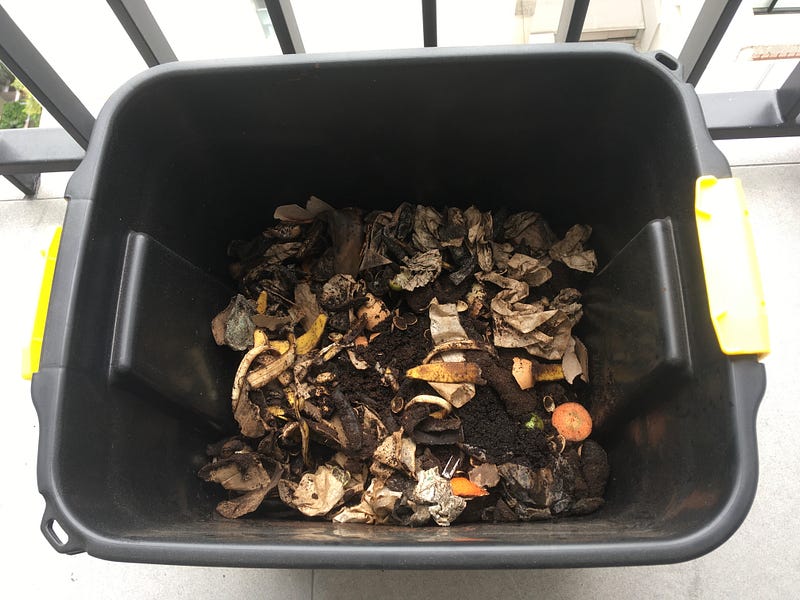
Successful composting in a small container and a tight space is easy if you follow these guidelines:
- Keep the container uncovered most or all of the time.
- Use a small garden tool to thoroughly stir the pile at least a few times per week.
- Add a bit of water if (and only if) the pile becomes very dry.
- Add only plant-based materials — no meat scraps, no dairy. Egg shells are the one exception to this rule.
- Break down materials into small pieces before adding them to the pile (e.g., tear a banana peel into several strips)
Our pile consists of fruit and veggie scraps, coffee grounds, coffee filters, and an occasional toilet paper tube.
We’ve added an enormous amount of material. Every day we dump new waste in there. However, the container never fills up. The miracle of composting is the incredible volume reduction that takes place.
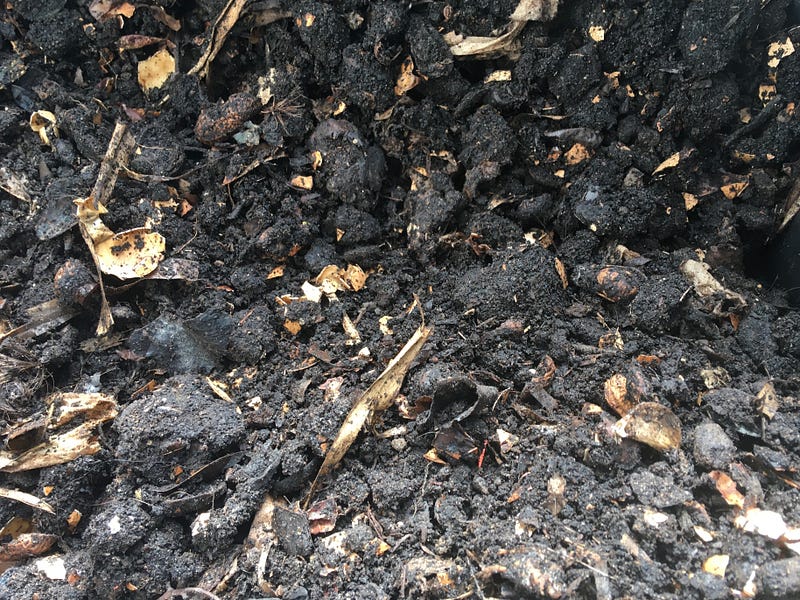
After six months, our bin contains plenty of mature, usable material.
Take a look:
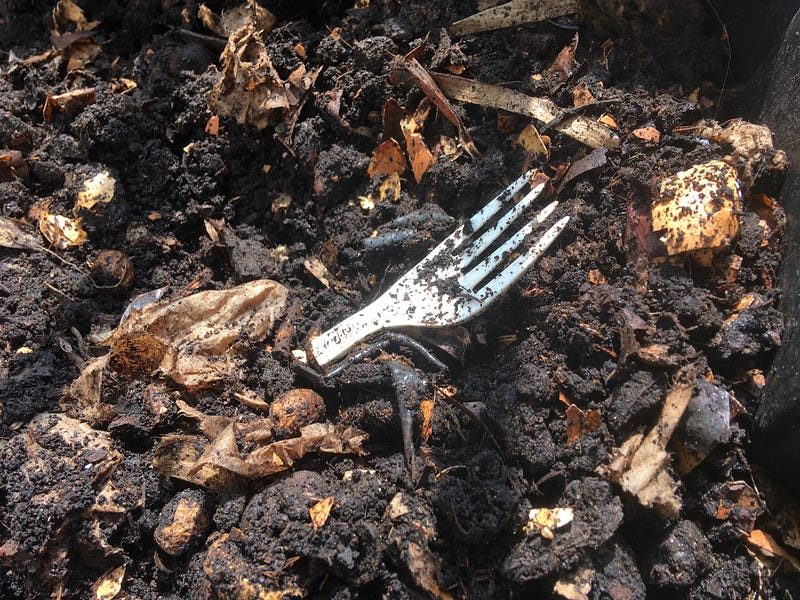
As an experiment, in the early days of managing our bin, we threw in a “compostable” fork. I knew that this wasn’t the proper setting for composting this type of item, but we were curious to see if any breakdown would occur.
Nope.
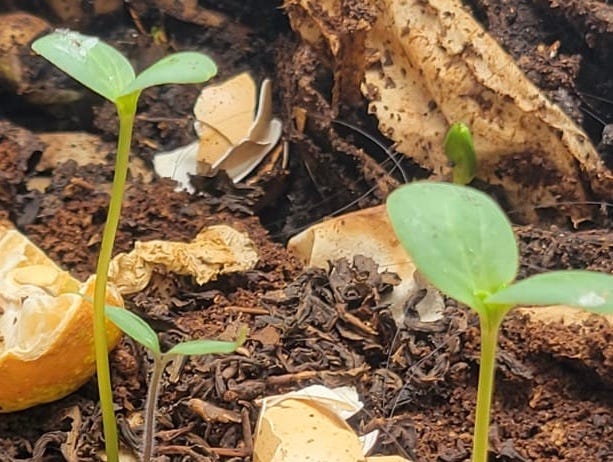
We do occasionally see some sprouts pop up, like these baby watermelon plants.
Container Composting FAQ
Composting is NOT hard. When you read composting guides, they tend to overcomplicate things with a discussion of green and brown material ratios that balance the pile’s nitrogen and carbon levels. However, if your primary goal is to reduce food waste (not to build a perfect soil product), then you don’t need to worry too much about that. Just add some toilet paper tubes once in a while if your pile is made entirely of food scraps, and you’ll be fine.
If your pile isn’t doing well, then you can do more research and adjust accordingly. However, you don’t need to be a chemist or a soil scientist to confidently get started.
Here are a few FAQ answers to get you started.
Will my compost bin attract flies?
Maybe. If it does, they’re just contributing to the process. If they’re bothersome, you can try swatting them, blowing a fan past the pile, or other simple pest control methods. You can also cover the pile for a few hours until the swarm reduces. Keep in mind, some winged insects might become abundant during certain times of the year, then quickly disappear.
Will my compost bin smell bad?
If you’re only adding the right stuff, the odor will be minimal. When you stir the pile, some odor will be released, but it’s usually not particularly strong or unpleasant.
Do I need to add worms?
You can, but you don’t have to. I don’t. If you want to run a worm bin, you’ll need to do some additional research.
Which items are on the do-not-add list?
No meat or dairy waste and no food scraps that were touching meat or dairy.
Additionally, don’t add super hard materials, such as avocado seeds, and always remember to remove the stickers from fruits and vegetables before composting the scraps.
Can I add citrus peels?
Absolutely. Just remember, the smaller the pieces, the faster they’ll break down.


