
Let Bobby Kennedy Make You a More Awesome Person
The ‘ripple of hope’ is still making waves.
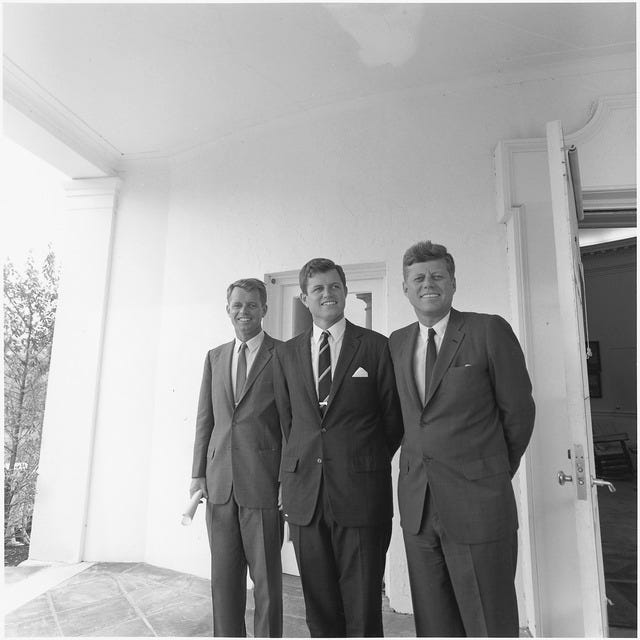
I just finished Robert Kennedy: A Raging Spirit by Chris Matthews. Known primarily as JFK’s younger brother, Bobby was also assassinated during his presidential bid in 1968. I came to know Bobby Kennedy through one of my favorite movies, Thirteen Days, a dramatic (and actually realistic) depiction of the Cuban Missile Crisis. Through the book and movie, Bobby strikes me as a highly cunning, out-the-box thinker, able to bring people together to get the tough work done, and guided by his strong moral courage with an evolving sense of compassion.
Here are 9 lessons from the life of Bobby Kennedy.
1. Do it for them, not yourself
You know, I — I hate being called the brilliant one, the ruthless one, the guy everybody’s afraid of. I hate it. I’m not so smart, you know? I’m not so ruthless. — Bobby Kennedy in the movie, Thirteen Days
Bobby Kennedy was not ruthless, despite his reputation. His secret sauce to saying no successfully is being genuine and basing the decision on the best interest of the requester. In other words, you’re saying no because it’s really the best solution. When you say no, say it with the other person’s interests in mind.
2. Some progress is better than nothing
At the democratic national convention, JFK secured the presidential nomination but now needed to select a vice-president running mate. Lyndon B. Johnson had previously promised Bobby Kennedy that he (1) would not actively campaign against JFK, (2) not support a different candidate, and (3) not do anything to actively hurt JFK’s campaign. Johnson broke all 3 promises. For this, Bobby took it personally and would not forgive Johnson. Whereas JFK calculated his chances of winning the election would be greatly increased with Johnson on the ticket as VP.
Compromise is a good thing. Go for the incremental gain.
3. Why Do We Dream of Being Great?
“Bobby Kennedy’s life retains the ability to inspire because there was a principled purity to his politics, heightened by his own evolution through life, achieving grace through suffering.” — John Avlo
Bobby rose to the top because he looks like he loved it. I’m talking real love, real joy, and even though they experience stress and struggle, they confront it with a strong sense of internal selflessness.
4. Find common ground
“What we need in the United States is not division; what we need in the United States is not hatred; what we need in the United States is not violence or lawlessness; but love and wisdom, and compassion toward one another, and a feeling of justice toward those who still suffer within our country, whether they be white or they be black.” — Statement on Assassination of Martin Luther King, Jr., Indianapolis, Indiana, April 4, 1968
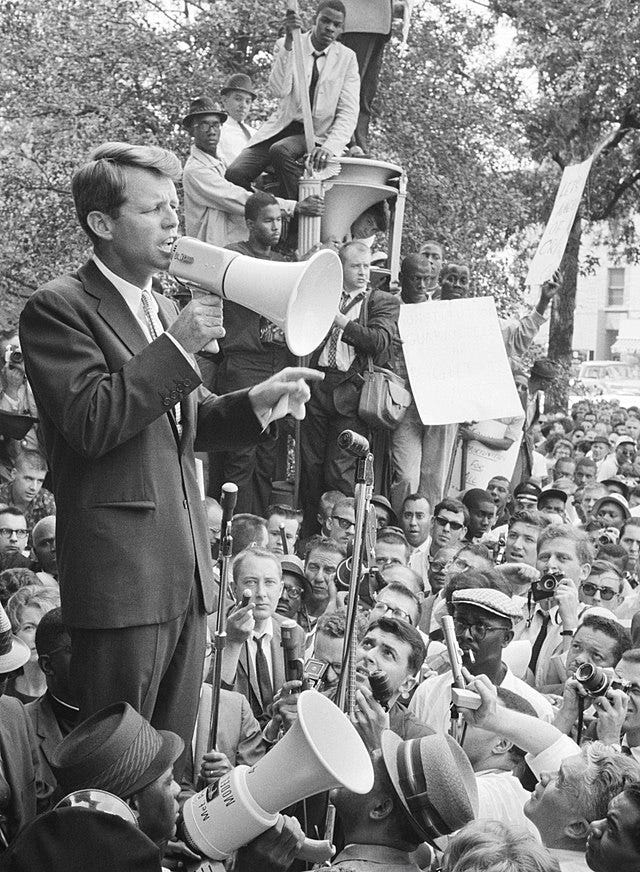
When the news of MLK’s assassination just came through, those were the words Bobby Kennedy used then that still make sense today. Love, wisdom, compassion, and justice — all of which are still relevant. Make sure you’re coming from a place of love and wisdom when engaging with others, especially if it’s going to be a hard conversation.
5. How to relate to anybody
“But we can perhaps remember — even if only for a time — that those who live with us are our brothers, that they share with us the same short movement of life, that they seek — as we do — nothing but the chance to live out their lives in purpose and happiness, winning what satisfaction and fulfillment they can.” — Remarks to the Cleveland City Club, April 5, 1968
Life is short, and at the end of the day, all we want is to have a purpose and happiness. Start relating to anybody by exploring what drives them.
6. Confront your family demons
Let’s hope appeasement doesn’t run in families. I fear weakness does. — Dean Acheson in the movie, Thirteen Days
History judges JFK and Bobby’s father, Joe Kennedy as an appeaser for helping to architect the Munich agreement, which only served to appease Hitler’s aggression and start World War II.
Watch out if your behaviors are really yours or if you’re unconsciously repeating something passed down. Push hard against behaviors you don’t want to own.
7. Live for today
In 1966, he responded to a question about his long-range political plans by saying: “Six years is so far away, tomorrow is so far away. I don’t even know if I’ll be alive in six years.” More recently: “If anyone wants to kill me it won’t be difficult.”
That’s Bobby living one day at a time. He exposed himself because he knew he didn’t want to live in fear. Ask yourself, are you putting yourself out there enough? Stay vulnerable and default to saying yes.
8. You’re never alone
In the intensive-care unit after the operation, Kennedy was never left alone with the hospital staff. Ethel rested on a cot beside him, held his unfeeling hand, whispered into his now-deaf ear. His sisters, Jean Smith and Pat Lawford, hovered near by. Ted Kennedy, his shirttail flapping, strode back and forth, inspecting medical charts and asking what they meant. Outside on Lucas Street, beneath the fifth-floor window, hundreds of Angelenos gathered for the vigil; crowds were to be with Bobby Kennedy the rest of the week. A local printer rushed out 5,000 orange and black bumper stickers: PRAY FOR BOBBY. His daughter and other girls gave them away to all takers.
I bet if you think hard enough, there are people that truly care about you. Take comfort there are people that love you, especially during the hard times.
9. Saying the opposite always makes you sound smarter
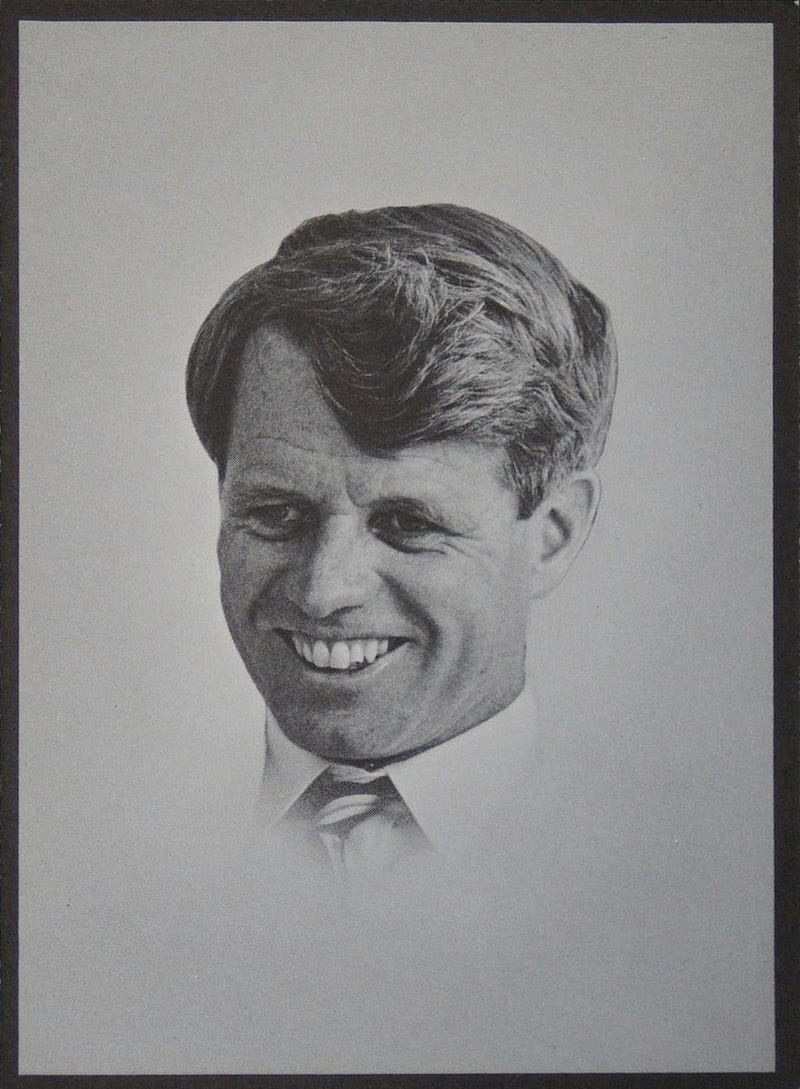
Frequently using Bobby’s own words, Ted Kennedy during the eulogy concluded with the lines adapted from George Bernard Shaw that Bobby used to end many of his own speeches:
“Some men see things as they are and say ‘Why?’ I dream things that never were and say ‘Why not?’”
References
- Nation: A LIFE ON THE WAY TO DEATH By Time Magazine, Published June 14, 1968
- The Power of Idealistic-Realism: How Great Leaders Inspire and Transform By Douglas R. Conant
- Political Realism in International Relations
- STATEMENT ON ASSASSINATION OF MARTIN LUTHER KING, JR., INDIANAPOLIS, INDIANA, APRIL 4, 1968
- John F. Kennedy: An Idealist Without Illusions By Jeff Shesol