
LEST WE FORGET
Read These Books Now Renay Intisar Jihad
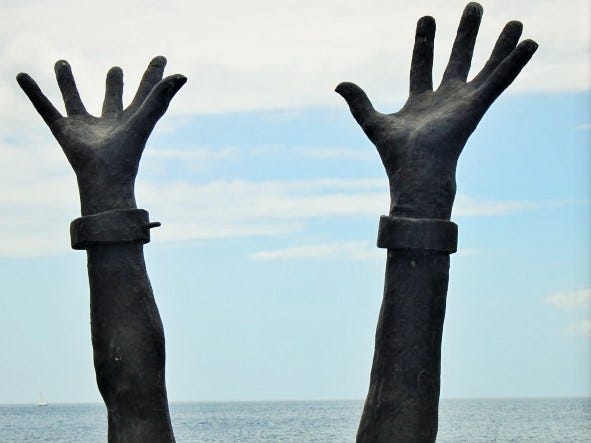
Knowledge equals power. Having the right guidance and information can make the difference between life and death, oppression and freedom, peace, and discord. The internal and external assaults plaguing our community have boiled down to a matter of survival. Addressing the topics of slavery, segregation, and institutional racism requires keen sensitivity, brutal honesty, and historical to contemporary attentiveness. The void filled by the contribution of these incredible authors is commendable. Each of the following two books addresses the obstacles to our quest to triumph in the face of adversity and overcome the longstanding institution and sickness of racism in remarkable, yet synthesized ways.
The New Jim Crow: Mass Incarceration in the Age of Colorblindness is a well-researched non-fiction book covering the system of mass incarceration affecting predominantly Black and brown males. Between the World and Me by Ta-Nehisi Coates is also non-fiction and is effectively written in the form of a letter to the author’s son.
The New Jim Crow Mass Incarceration in the Age of Colorblindness Michelle Alexander New York: New Press, 2012 “An instant classic.”- Cornel West
Photo by Rachael Henning on Unsplash
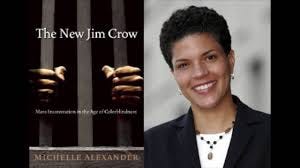
This book covers how today’s system of mass incarceration is an institutionalized replica of the Jim Crow laws from the Reconstruction Era. A big idea, how the basic human and civil rights of predominantly black and brown males are compromised for drug-related crimes is a profound truth. The author recounts how the prosecutors, along with the judicial system, deliberate an institution of legal slavery; one which is unparalleled to any other institution in today’s contemporary world. The fact is, reveals the author, the prison industrial complex is not an easy system to dismantle. Dismantling this institution will require a combination of “civil, private, and political entities” working collectively, consistently, and continually. She painstakingly paints a picture of how private and public entities are invested in this billion-dollar industry. If the system is dismantled, big dollars are lost. Remember that this system is instituted by design argues the author. She writes about how every president since Reagan, supported this degrading system of mass incarceration. For decades, the War on Drugs served as a major propaganda instrument. Documented proof reveals the validity of her claims. A quotable quote: “Once you’re labeled a felon, the old forms of discrimination — employment discrimination, housing discrimination, denial of the right to vote, denial of educational opportunity, denial of food stamps and other public benefits, and exclusion from jury service — are suddenly legal. As a criminal, you have scarcely more rights, and largely less respect, than a Black man living in Alabama at the height of Jim Crow. We have not ended racial caste in America; we have merely redesigned it.” Michelle Alexander was inspired “to write the book mainly as a result of experiences I had working as a civil rights lawyer at the ACLU that began what I now call my awakening. I began to awaken to the reality that our criminal justice system now functions much more like a system of racial or social control than a system of crime prevention and control. I wanted to share with others the facts, history [and] stories that I wish that I had known long before in the hopes that others would begin to have the same kind of awakening and commit themselves to build a movement to end mass incarceration in America.” A Conversation with Michelle Alexander — Teaching Tolerance website. She was also inspired by the civil rights milestones and activists of the 1950s and 1960s.
Between the World and Me Ta-Nehisi Coates New York: Spiegel & Grau, [2015] “This is required reading.”- Toni Morrison
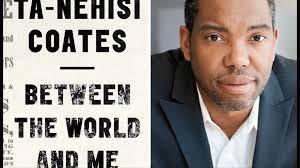
This book deals with the Black male experience in America. Written as a letter to the author’s teenaged son, the book offers an enlightened clarification of the true hardships and realities associated with a Black males’ survival in America. A big idea, and re-occurring theme, focuses on the author’s life growing up fearful of the police, streets, and gangs “crews,” to name a few examples. He talks about how the police “have been endowed with the authority to destroy your body.” Coates is clear about the profound truth he wants to share in this book. “The plunder of black life was drilled into this country in its infancy and reinforced across its history so that plunder has become an heirloom, an intelligence, a sentience, a default setting to which, likely to the end of our days, we must invariably return.” He also explains, “Race is the child of racism, not the father.” The fact is, like every loving father, the author’s intention is to raise his son to “grow into consciousness.” He shares memories about his life at Howard University (the Mecca) and his relationship with his father, a research librarian and local captain of the Black Panther Party. His grandmother taught him to read and write critically beginning at the age of four. Remember that “Plunder has matured into habit and addiction; the people who could author the mechanized death of our ghettos, the mass rape of private prisons, then engineer their own forgetting, must inevitably plunder much more.” One quotable quote lifted from this brilliantly written letter in which every word is deliberately crafted and poetically rendered is explicitly directed to his son. “Never forget that we were enslaved in this country longer than we have been free. Never forget that for 250 years Black people were born into chains — whole generations followed by more generations who knew nothing but chains. You must struggle to truly remember the past in all its nuance, error, and humanity.” Ta-Nehisi Coates was inspired by the fact that he wanted his son to know the following. “…you are a Black boy, and you must be responsible for your body in a way that other boys cannot know.” This mindset was no doubt shaped by an unfortunate event that happened to a Howard University friend and college mate. Prince Jones, son of Mabel Jones, a prominent doctor, was shot to death in September 2000 by an undercover police officer who suspected the student of being a drug dealer in George’s County, Maryland. This incident left an indelible mark on his life.