
9 Lessons Extreme Adventurers Teach You About Facing A Challenge
Success takes more than good luck
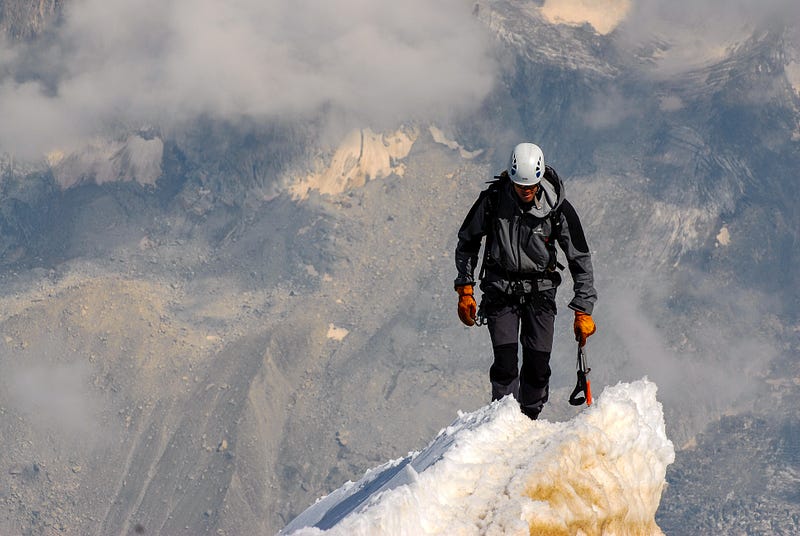
In 2018, three men made a 50 day kite-skiing journey across Antarctica. Their goal — to climb the North face of Mt Spectre.
“It’s 21st century exploration at the edge of the impossible”
That was British climber and team leader, Leo Houlding’s comment to Financial Times before they left. Leo Houlding and his team mates — New Zealander Mark Sedon, and Frenchman Jean Burgun — set out together to try to achieve something that had never been done before.
A few years earlier, two other adventurers took on a less ambitious — but still difficult — Antarctic Challenge. In 2014, Ewan Blythe (Australia) and partner, Sophie Ballagh (New Zealand), set out for an exhausting 14 day kayak trip around the Antarctic Peninsula. They wanted to stretch their skills and push themselves to the limit.
Hardly any of us are going to take on an extreme challenge like these two teams did, but we all face challenges in our daily lives.
Whether we’re wanting to write a novel, build our business, or reach a personal goal, we can learn a lot from extreme adventurers about how to successfully negotiate our own challenges. Here are some of those:
1. Plan Well
Before they even start their trips, extreme adventurers plan for months or sometimes years. They devise spreadsheets to decide what gear to take and how much food they will need. They ask other experienced adventurers for advice, and study the terrain. They test equipment, checking and double checking everything. They train. They know that if they don’t plan well enough they are not only risking failure — they are also risking their lives.
“We knew that our safety, comfort and ultimately the fulfilment of our dream required scrupulous planning and organisation.” Ewan Blythe — Antarctic Kayaker
Planning can seem like the boring part. We just want to get started already! A lot of us prefer to skip the planning stage and just wing it: go with our gut. But there is a saying — which many people attribute to Benjamin Franklin — that turns out to be true in most situations:
When you fail to plan, you plan to fail
If your challenge is to write a novel, you will have more chance of finishing it if you know your direction. Try Shaunta Grimes resources for planning it out.
If you want to lose weight, you’ll have more success if you know how you‘re going to do that. What method will you use? What support, information, or equipment do you need?
The more meticulous your planning, the more likely you are to succeed.
2. Everything is Better with Friends
There are many solo adventurers, and sometimes that in itself is the challenge. Even solo adventurers, though, have a support crew. Adventurers know the importance of having someone to share your victories and failures with along the way (not just the big one at the end).
Facing a challenge in a team is not only safer, it gives you the boost you need when things get hard and lets you share the load — physically and emotionally. But adventurers choose their teams carefully: everyone needs to be capable, trained, and have something to add.
Leo Houlding wanted three people in his Mt Sceptre team. He already had Jean Burgun, an experienced climber, but he needed a camera person to film their adventure:
"How am I ever going to find someone who can kite ski and climb, has Antarctic experience, can film and take photos, and has medical and electronic experience?”
His third team member, Mark Sedon — an experience heli-ski guide — had all of the skills Leo was looking for.
One morning, in a perfect example of team support, Jean’s feet were frozen numb. His team mate, Mark, warmed they up on his bare stomach for half and hour until Jean could feel them again. That’s why we need each other!
Whether you have a capable team helping you reach your business goals, an experienced support group encouraging you, or a friend beside you to warm your feet, everything is better when you have others to face the challenge with.
3. There is Magic in Isolation
One of Sophie Ballagh and Ewan Blyth’s reasons for embarking on their Antarctic Kayaking Challenge was to experience isolation. They wanted some time without the distractions, chaos, and noise of modern life. They recognised the value of being alone in nature — undistracted. Silent.
To focus fully on our goals and face our challenges, sometimes we need to create isolation for ourselves and our teams. We need to find a way to remove the distractions and create space to think, problem solve, and breath.
Challenges are challenging! They need our full attention. Often we don’t appreciate how much we would achieve, learn, or be able to deal with better if we could just spend a little time distraction-free.
Getting out into nature is the most powerful way to do this, obviously, as there are many health benefits to being in natural environments. But if you can’t, even creating a distraction-free environment in your home or office will do.
4. Be Ready to Adapt Your Plans
As Leo Houlding and his team approached Mt Spectre they realised they needed to rethink their climb. Bad weather was coming in and they knew if they tackled the more challenging North face, as they had planned to, they probably wouldn’t succeed. They chose instead to climb to the summit an easier way, even though it had been climbed once before.
After 21 hours of climbing to the summit and back they realised they had made the right choice. Just half an hour after they descended, a storm rolled in. If they had been up the mountain at that time, according to Mark Sedon, battling the winds would have been “an epic survival effort”.
They still reached the summit and managed to avoid disaster.
When we approach a challenge we need to be flexible with our plans. Life is full of changes, surprises and storms. It’s impossible to plan for every situation. If our plans are good, we should be able to adapt them when we need to.
5. If You Want to Do Something Great, You Can’t Avoid Hard Work
“Nothing is easy!” laughs one of the kite-skiing team as they sit on their packs, reflecting on their climb. They had taken an alternative route up to the summit: the easy route. But when you are climbing a mountain in Antarctica there really is no “easy” route —you are still climbing a frozen mountain in the harshest of conditions!
Our human tendency is to avoid hard work but when we want to succeed at something great we need to push past this natural tendency. Facing the hard work is the only way to do something great — nothing significant is easy.
6. A Sense of Humour is Essential
Adventurers know the value of keeping positive regardless of the difficult situations they face.
When one of our kite-skiing team got frost burns on his head he joked about the cream he had to treat it with.
“And it’s good that in 30 days you’ll be able to wash that cream out of your hair,” his team mate joked back. They kept things fun and made light of the difficulties they faced.
Keeping a positive outlook when you’re facing a challenge has been shown to be one of the best approaches to take. In positive psychology, positive emotions are considered one of the foundations of well-being.
Within limits, we can increase our positive emotion about the past (e.g., by cultivating gratitude and forgiveness), our positive emotion about the present (e.g., by savoring physical pleasures and mindfulness) and our positive emotion about the future (e.g., by building hope and optimism). Positive Psychology Center, Penn University.
When we approach situations with humour and maintain hope and optimism about our future success, facing any challenge is much easier.
7. Sometimes You Need Help to Get Out of the Crevasse
Being dragged backwards across the ice by his sled, Leo managed to radio his team mates:
“My pulk has fallen in a crevasse and is pulling me toward it. Help!”
Each man in the kite-ski team pulled behind them a 160–180kg pulk (sled). Leo’s had broken through the ice but, luckily, the safety knot in the rope had become caught on the edge, preventing the sled from falling any further.
Leo’s team came to the rescue. Jean secured the rope, abseiled down into the crevasse to unload his sled, and lifted it out.
"That could have been fatal. It could have been a nasty accident.” Mark Sedon.
When we face challenges in our lives, sometimes we fall into a crevasse. We make a bad business deal and get into debt. We get sick. A situation happens and it throws us off course. We get discouraged. We can be skiing along towards our goal feeling like we are doing well, and the next minute we’re in crisis.
Sometimes we need to climb out of the crevasse before we can continue and to do that we might need to ask for help — that’s okay. It’s not a failure. When you fall into a crevasse don’t give up and just slide right in. Ask for help and carry on.
8. Know When to Rest
“Every part of my body hurt some days but overnight we’d rest and by morning, I’d be mostly okay again.”
There were times in both of our teams’ journeys where they were exhausted. The weather packed in and they had a choice — rest or push through.
Both teams chose to rest.
We can be reluctant to rest. When we have a goal in mind we just want to push through and do it. Many writers talk about needing to write every day to be successful. Business owners feel like they can never take a day off — there just isn’t time for that!
But we are humans not robots, and humans need to rest. If we refuse to listen to our bodies and take a break when we need to, we can run into serious trouble.
Adventurers know that sometimes you have a higher chance of reaching the summit if you climb down the mountain, return to camp, rest properly, and try again.
Yes, you might be halfway there already. But if your body is telling you it’s done, you need to listen.
9. Know When to Let Go — It’s the Journey That Counts
At the end of their expedition, Leo Houlding and his team had not quite achieved what they set out to do: climb the North face of Mt Sceptre, but they felt like the trip was a success anyway. The let go of their original idea and redefined their success. They had done something amazing, difficult, and shared an incredible journey together. They had spent 50 days kite-skiing Antarctica and climbed Mt Sceptre, one of the most isolated peaks in the world!
Focusing on the adventure and the process you go through gives you much more satisfaction than focusing on the final goal. And if you didn’t quite achieve what you set out to, it’s much easier to let that go.
Studies show that having a “journey-mindset” can be helpful in sustaining successes long term. If you have a goal of losing weight for example, focusing on the healthy changes you made and the successes you had along the way will mean you are far more likely to sustain those changes after you reach your goal weight. One researcher in this field, Szu-chi Huang, explains:
“When you’re working through something, thinking about destination can help you sharpen focus and work harder,” Huang explains. “But after you accomplish the goal and feel successful, you need to shift mindsets and take a moment to think about what you’ve learned along the journey.”
We can learn a lot from the individuals who are courageous enough to face extreme challenges head on.
As Antarctic Kayaker, Ewan Blyth, says: the true challenge is connecting with ourselves and asking ourselves those deeper questions.
As a species we have become so preoccupied with the mire of stuff that fills our daily lives that we don’t even have time to search deeper, to ask the more profound questions of life, let alone answer them.
To even begin to grasp these notions is beyond difficult, beyond challenging — far more challenging than surviving two weeks in Antarctica in a kayak.
To fully comprehend our place in this world and our lives, we need these vast wildernesses and we need to experience them, connect with them. For in doing so we are doing so much more — we are connecting with ourselves.
Are you ready for your next challenge?