
Design & Career
Lessons That I Learned From 4 Years of Working as a Full-Time UI/UX Designer
Four Years of Design Lessons, Shared in Minutes

Have you ever been told that design is just about making things look good? Well, at least I was at the start of my career.
Time to bust that myth.
Design is design, whether it be web design, mobile design, product design, or anything else. And It is much more than just how it appears.
In this article, I want to tell you, a non-designer person, why design is so important in our lives and businesses and how you can make tons of cash by understanding some of these key insights.
Design Isn’t About ‘Looking Good’
I still face hundreds of people who think that design is about aesthetics. The only question is, Who told you that?
Design is obviously created to make your product prettier and more user-friendly. However, the main reason why people even need design is to get more profits.
And it lies on the surface.
Nobody would pay thousands of dollars for something that just makes the product prettier. Businesses are paying this money because they look forward to making more cash from it.
For large businesses, making the design more intuitive can increase conversions by a lot.
You’re paying for the results, not for the labor, right?
If I told you that you could give me $500 and I’d return you $700 guaranteed, would you risk it all? I guess, yes.
The same principle applies here: if your business that has millions in revenue will improve the conversion by another 5%, then you’ll make significantly more. You’ll also get some customer loyalty which will increase your long-term revenue even more.
So, you can easily pay $10k, $20k, or even more. The first priority for you would be quality and speed, and definitely not price.
That was actually the first and most crucial insight in my career. When I first started, I thought that my task was to just make everything prettier.
Sometimes this approach worked and clients were happy, but most of the time it didn’t. There were no differences between the previous and new designs in metrics.
Yeah, I could make it look better, but it didn’t do anything useful for the client.
And that’s what most of the Juniors face nowadays.
They started designing because it’s interesting and because they can expand their creativity, but none of them think about the usefulness for businesses.
None of them think about how to really help your client make more money. But to be really good at providing this type of service, that should be your first priority.
When you understand this simple principle, you immediately become a much better developer, designer, and whoever else.
You Can’t be Just a Designer
If you’re good at designing stuff, whether it’s a website, mobile app, product design, or anything else, then you’re definitely good at some other stuff as well. Let me explain.
When you’re designing a professional website, you always think about how users will interact with it. You always think about where to put the button, so it would be obvious for the user to click it. You always think about the customer’s psychology.
In other words, you’re stacking lots of skills on top of just ‘design’ and creating something that works perfectly in the real world.
The definition of a great design is how it’s obvious to a new user. All the buttons, the size of the text, and the colors are specifically created for you to use the interface smoothly and see only the necessary information.
You need to understand that nobody puts something in because they feel like it.
I’m telling you that just to put the idea that every design is made precisely and has some purpose in it.
If you see that Apple improved something in the new iPhone, then they obviously did tons of different research, gathered some feedback, and worked on the product for an infinite amount of hours.
Sometimes there’s a whole team of deeply focused specialists with several departments. And sometimes there’s just a senior designer who understands all of it at some level and creates a final product from scratch.
That’s basically the main difference between a junior and a senior. A junior might have some deep knowledge in the design sphere, but he just can’t understand other aspects and isn’t able to create the whole product from the beginning, he always needs someone else.
Design is a System of Logic
The number of different systems, logic, and UI kits in the design sphere is insane.
I would even argue that design can be even more complex than programming.
Yeah, sounds crazy, but let me explain.
As I mentioned previously, you can’t add some new elements because you just feel like it.
Professional design isn’t about your inspiration or about what you ‘think’ would look better. It’s a highly scalable structure of different blocks, elements, and layouts that can be broken pretty easily if you do not follow it right.
In other words, it’s called the UI kits, and I can show you some of them.
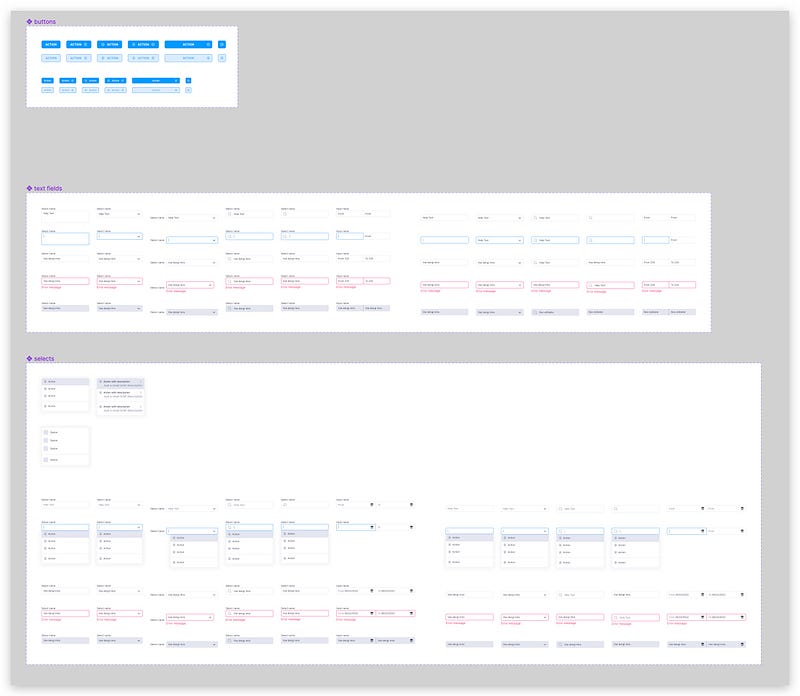
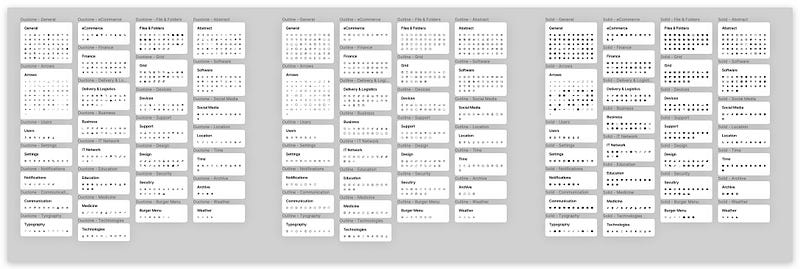
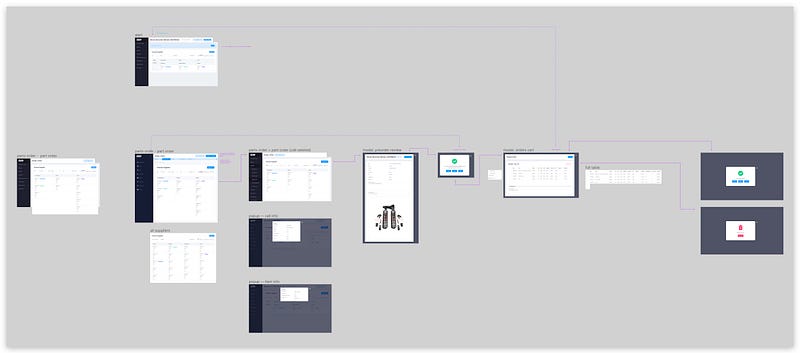
So, it’s basically just a structure of an infinite number of components that you should use whenever you want to create a new page, a new block, or anything else.
Most of the time, a UI Kit is created after understanding the main design concept and it makes the whole process of further development much easier.
You don’t need to create anything from scratch, you see a direct structure right in front of your eyes. The structure of spacings, icons, colors, fonts, inputs, etc.
You can take a look at the MacOs Sonoma UI Kit published by Apple. It’s free to use, so you can play with it however you want
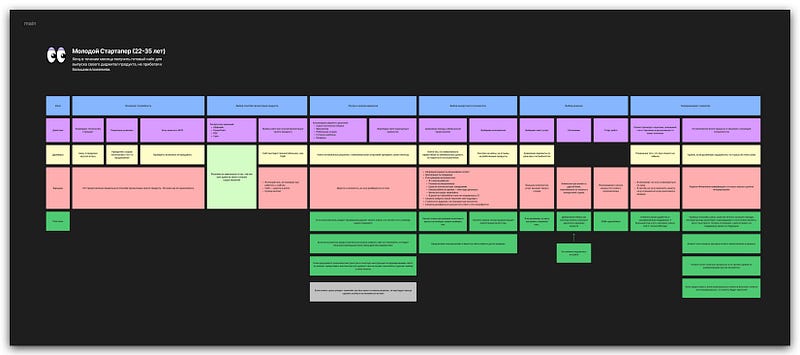
The other crucial part of every design is a CJM (Customer Journey Map).
The map shows you each step that the user will take, from the initial impulse to the key action. It helps you to sell more, make everything more efficient, and just create a better product.
Simply put, you’re building a path for your user.
Let’s say that you’re building a travel app. You start from the initial impulse of a user, it can be something like, “I’m tired of my work; I want to go to Mexico.”
You can already create a whole advertisement campaign because of it.
Then the user Googles what the cheapest flights are and sees some of your offers. He or she downloads the app, scrolls through it, sees only the necessary information, and buys the ticket.
That’s a pretty raw example; in most cases, you’ll need to dive deeper into each part. However, it still tells us what we need to say first, which pages should be in the app, how we promote our special discounts, and so on.
The CJM is crucial for businesses. You understand what a user needs and can make everything possible to remove all the hidden stones on the path that he’s walking.
And as always, here’s an example
Wrapping Up
Design is a super useful field that every entrepreneur should definitely know about. And the more you spend time practicing and understanding, the better the product will come out in the end.
It’s crucial to understand these advanced principles to build a successful startup in the most efficient way.
Even if you’re not a designer and never thought of becoming one, considering the lessons that I learned throughout my journey of becoming a senior UI/UX designer would be pretty handy.
After all, opportunities await, and it’s time to act!


