
Lessons Startups Can Learn From The Japanese Business Model
How have 33,000 Businesses survived for over a century in Japan?
Culture eats Strategy for Breakfast — Peter Drucker

I was taken aback when I recently came across an article which stated that Teikoku Data Bank, a research firm, conducted a study in 2019 and said that Japan accounts for over 33,000 Businesses which are over a century old.¹
This implies that no matter how big or small, the business entities of Japan have endured everything that a century has thrown at them. Whether it’s the Earthquakes, Tsunamis, the Pacific War, World War II and their Economic cycles of Boom and Bust, despite the adversities, these businesses have stood the test of time.
Tsuen Tea, which is located on the outskirts of Kyoto, has been functioning since 1160 AD and claims to be the world’s oldest continually operating tea house. When the owner was asked how the business has survived for 900 years, he says, that they only focused on making tea and intentionally chose not to expand too much.
The oldest hotel in Yamanashi has been open since the year 705, and the oldest confectionary selling sweets has been in business since the year 1000.
This begs the question. What do these firms do differently than the rest of the firms across the world are unable to do?
Focus on Sustainability rather than Profit Maximization
For starters, Businesses in Japan focus on Sustainability rather than Profit Maximization and Exponential Growth. When a business is established in Japan, one of their significant priorities is how they can pass on the legacy of the work to the next generation. Their goals blend with aspects of organic growth, customer service and carrying the business legacy forward. Turning profitable for these companies then becomes a byproduct of the work they do as the focal point is sustainability.
Preservation of the Business
Secondly, Japan, as an island country, always had limited interaction with the rest of the world when it came to commerce and trade. As a result of which, the people in Japan had learnt to make the most of the resources available to them locally, thus emphasizing on the preservation of their work at all costs.
Never deviating from the Core Competencies
Nintendo has been in existence since 1889, well over 100 years old and has evolved from a company making playing cards to being recognized as one of the largest at-home video game companies in the world. While they have changed their product line and the platform of using the products, their focus on the core competency hasn’t wavered at all. Even in 1889, their goal was to create a fun, and enjoyable experience for their customers and that remains the same even today.²
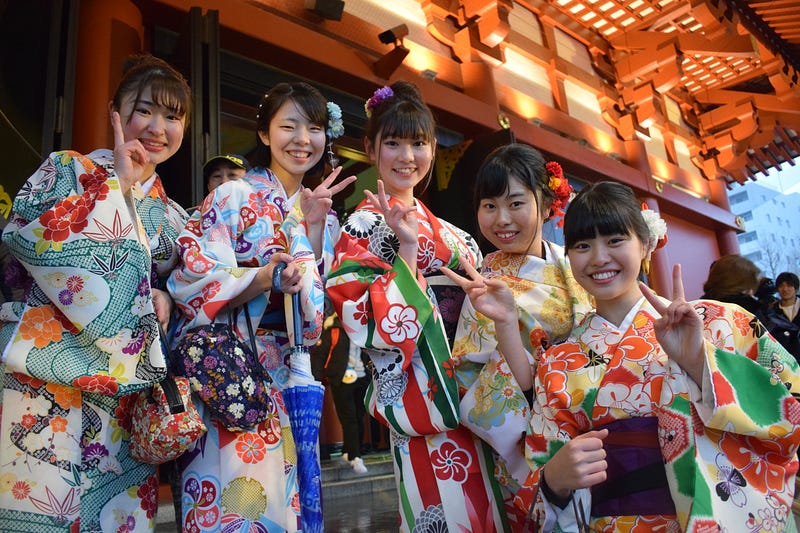
Another interesting example would be of the Kimonos, which is the traditional attire for women in Japan. This attire has seen its demand fall over the years and hence Kimono making companies have moved into the business of producing carbon fibre for material companies. Here again, the core competency remains the same, which is weaving. The process of making Kimonos and carbon fibre requires the employees to be great weavers and hence the shift seems very natural yet different.
Importance of Customer Service
The Business culture of Japan emphasizes a great deal on excellent Customer Service. This is very prominent in the Hospitality industry of the country. In the Hospitality Industry, the guests are given the same treatment a family member is provided. The service aspect is based on the notion that one must try and anticipate what the customer needs so that it makes the experience that much more valuable.
An example of this characteristic would be the Hiiragiya ryokan. This hotel is run by the family for over six generations and has welcomed guests like Charlie Chaplin and Louis Vuitton. This hotel has an 80-year handbook on how they should run the place, and thus provide an unparalleled experience for its guests.
When we compare the above values and methods of running a business to the startups today, we can see an obvious distinction in the purpose of running the business. Startups focus on:
- Generating Market Share by burning cash for years, hoping to have a foothold in the marketplace. This is not a guarantee but only their optimism towards their business. For example, We Work was on the same track, and today the company doesn’t exist and has left Softbank with a loss of over $ 4.6 Billion.³
- Providing a return for investors who give them all this money to burn while hoping to capitalize on the market. This puts a great deal of pressure for companies to make irrational decisions and work towards the purpose of keeping the investors happy rather than focusing on how to run the business.
- To turn profitable at all costs. Uber has been in business for over ten years and is still burning cash, hoping to turn profitable. The question here is, does it make sense for a company to burn over a Billion Dollars a year for a decade on a product/service which is not unique, has no competitive advantage and cannot replace the existing competition. How can this approach define profitability or the effectiveness of running a business?
While it would be unfair of me to generalize all startups in the same boat, sadly, the majority of them fit right in.
In my opinion, we need a cultural shift in the way companies are run today. The goal should not be rapid growth at all costs but sustaining the business through the ups and downs with a realistically achievable vision. The Japanese companies are a great case study for Entrepreneurs to consider.
See you next time…
References:
[1] — https://www.bbc.com/worklife/article/20200211-why-are-so-many-old-companies-in-japan


