
Lessons on Humanity from Science Fiction
Finding ourselves in fictional worlds
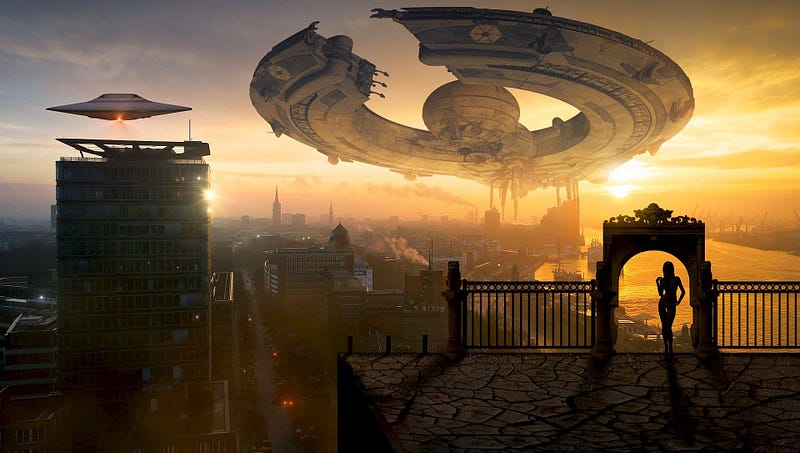
If I’ve learned anything from researching identity development, it’s that we cannot understand ourselves without looking outside ourselves. Science fiction does this on the grandest scale. It challenges us to contextualize human identity within an infinite universe. It prompts us to interrogate our values and confront the paradoxes of our nature. Here are four of the most profound lessons we can learn from these fictional worlds:
*Spoiler alert: Light spoilers ahead for Isaac Asimov’s Foundation series and Larry Niven’s Ringworld series
1. Every moment matters
Science fiction often juxtaposes our cosmic insignificance with our experience of human life as sacred. In all kinds of possible futures, on all kinds of possible worlds, these stories ask the question “do our brief lives really matter?”
Many authors have delighted us with the idea that humanity might transcend the limits that prevent us from influencing our universe. Protagonist Louis Wu of Larry Niven’s Ringworld series is a prime example. With a drastically extended lifespan and spacecraft capable of hyperdrive, 200-year-old Louis not only influences the lives of other earthlings, but also the fate of entire civilizations on another world.
When framed as the possible savior of a world 3-million times the size of earth, the significance of Louis Wu’s life seems immense. Alastair Reynolds offers an even grander example of human transcendence in his 2008 novel House of Suns. In this story, the Gentian line, comprised of one woman’s clones (called “shatterlings”), outlives countless civilizations over millions of years. Reynolds’ shatterlings also influence galactic culture and politics on a scale that is difficult to fully appreciate. In the context of an infinite universe though, even the lifespans of Louis Wu and the shatterlings are barely the blink of an eye. They, and the worlds they changed, will ultimately be forgotten.
“Everything came and went, everything was new and bright with promise once and old and worn out later, and everything left a small, diminishing stain on eternity, a mark that time would eventually erase.” ― Alastair Reynolds, House of Suns
Nonetheless, so many of us fall in love with stories like these. The quests of our favorite protagonists feel undeniably important. We yearn to see the human spirit prevail over seemingly insurmountable challenges. We hold out hope that science fiction will someday become reality. Our instinct tells us, rightly, that what we do as mere humans does matter.
The reality of our cosmic insignificance gives us much to mourn: the futures we will never see, questions about our universe that we will never have answers to, and legacies that will eventually be forgotten. Still, we are left with much to be grateful for. Our cosmic insignificance compels us to remember that our very existence is a call to action. We cannot drastically extend our lives, but there is no limit to how far we can deepen them. We have control over the nature of our legacies despite being unable to lengthen and extend their scope in an infinite universe. We have the power to impact each other and the places we call home.
This may mean nothing to the universe itself, but it means everything to us because it is everything we have. It’s why Louis Wu is too restless to stay in one place, why he is never content to stop exploring. Why he risks his life for the seemingly impossible mission of saving Ringworld and it’s inhabitants. It’s why we see ourselves in the grandest stories of science fiction. It means that human potential far exceeds our limited lifespans.
“Strange that it seems more, not less, urgent to play some part in this struggle, this brief effort of animalcules striving to win for their race some increase of lucidity before the ultimate darkness.” — Olaf Stapledon, Star Maker
2. Embrace curiosity
Curiosity is a tremendous force in human nature. It’s how we deepen our lives, despite being unable to lengthen them. It frees us from being immobilized by our existential “thrownness” (the reality that human beings come into an existence we did not ask for, under circumstances beyond our control). The narrator of Russell Hoban’s classic Riddley Walker illustrates the concept of thrownness as well as any philosopher has:
“Its all 1 girt thing bigger nor the worl and lorn and loan and oansome. Tremmering it is and feart. It puts us on like we put on our cloes. Some times we dont fit. Some times it cant fynd the arm hoals and it tears us a part.” —Russell Hoban, Riddley Walker
Despite our lack of control over the circumstances surrounding our existence, metacognition gives us freedom over how we exist in these circumstances. We can ask and answer questions about the world we are born into, and worlds beyond. The more questions we ask, the more we propel our ability to manipulate our world and author our own life stories.
Isaac Asimov’s Foundation series offers a compelling illustration of this. The stories take place in a time when intellectual curiosity has allowed humanity to expand across multiple galaxies and transform societies with staggering technologies. With the advent of psychohistory, humanity reaches an unparalleled ability to understand itself, and to influence the course of its own future. In Asimov’s Foundation era, the actions of individuals and societies can be understood in the context of the entire universe’s future. Without the human capacity to ask seemingly unanswerable questions, the discipline of psychohistory would never have existed. Humans of the Foundation era would have been powerless to impact the course of humanity’s future; to avert disaster and possible extinction.
“Why, he wondered, did so many people spend their lives not trying to find answers to questions — not even thinking of questions to begin with? Was there anything more exciting in life than seeking answers?” -Isaac Asimov, Prelude to Foundation
3. Humility is the key to achievement
The most glorious feats of humanity in science fiction are driven by humility. Consider the idealistic depiction of Star Trek’s main characters. Humans of the United Federation of Planets era have transcended earth’s violent and prejudiced past, but they have only done so by recognizing the possibility that they could fall back into such patterns if they don’t actively confront their imperfections. By acknowledging humankind’s proneness to bias and fear of the unknown, Starfleet officers unlock human potential that exceeds our shortcomings: the potential for empathy and adaptation.
“We’re human beings with the blood of a million savage years on our hands, but we can stop it! We can admit that we’re killers, but we’re not going to kill today.” — Captain James T. Kirk, Star Trek: The Original Series, A Taste of Armageddon
Science-fiction teaches us that the only way to transcend our shortcomings is to confront them. When we stop agonizing over the fact that we can never rid ourselves of limitations, we orient ourselves to the vast array of human experiences that are possible.
In countless science fiction stories, humility also helps humanity recognize that our fullest potential can only be reached through collaboration. Once again, Isaac Asimov’s Foundation series illustrates this point beautifully. Prelude to Foundation tells a story of incredible achievement in which Hari Seldon creates a new field of scientific study that empowers humanity to mitigate centuries of suffering. Although this is a tremendous personal accomplishment on Seldon’s part, it would have been impossible without interdisciplinary collaboration. Seldon himself had no motivation to explore practical applications of psychohistory until an enigmatic reporter influences his perspective of what is possible. Even when he saw the potential for practical application, Seldon recognized that he could not convert his theory into reality without the help of an expert historian who shaped his formulas. Ultimately, psychohistory is not a theory born from a brilliant mind. It is a way of understanding the universe: a gestalt which only exists because of a collection of components that no individual could have produced alone. Humans’ ability to collaborate with each other (and in Seldon’s case, with robots) allows us to achieve incredible, and occasionally impossible, feats.
4. Don’t underestimate hope
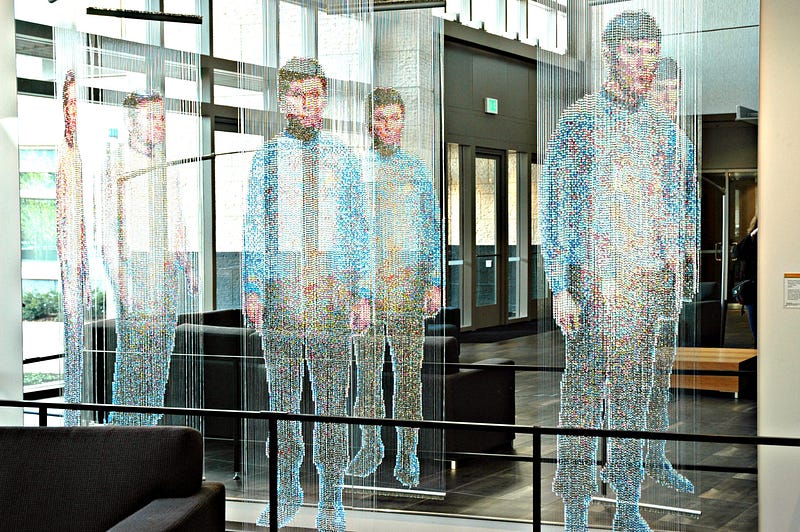
Once again, Star Trek offers an excellent example example. The crew of the USS Enterprise are all willing to risk their own lives in service of the prime directive: to learn about as many civilizations as possible without directly interfering in their development or exercising authority over them. Admittedly, they adopt a fairly loose interpretation of the non-interference principle at times, but the driving force behind the prime directive is hope. They trust that intelligent civilizations are capable of transcending the greatest evils of their nature and developing both equitable and technologically advanced societies. They have been proven right a thousand times over by civilizations of intelligent life, humanoid and other, who have evolved the ability to maintain a peaceful society.
Science-fiction also shows us that things worth hoping for don’t happen passively. Star Trek doesn’t gloss over the complexities of humanity itself or inter-species relations. Hope is not simply an orientation towards the future. It is action towards a better future. It persists even in the face of obstacles that seem insurmountable.
I’ll leave off with a quote that illustrates hope’s expansive reach in the universe. This one is from my favorite book series of all time, Remembrance of Earth’s Past:
“And now we know that this is the journey that must be made by every civilization: awakening inside a cramped cradle, toddling out of it, taking flight, flying faster and farther, and, finally, merging with the fate of the universe as one. The ultimate fate of all intelligent beings has always been to become as grand as their thoughts.” ―Liu Cixin, Death’s End


