
Lessons on Grief
Are we learning or unlearning what it takes to be human?
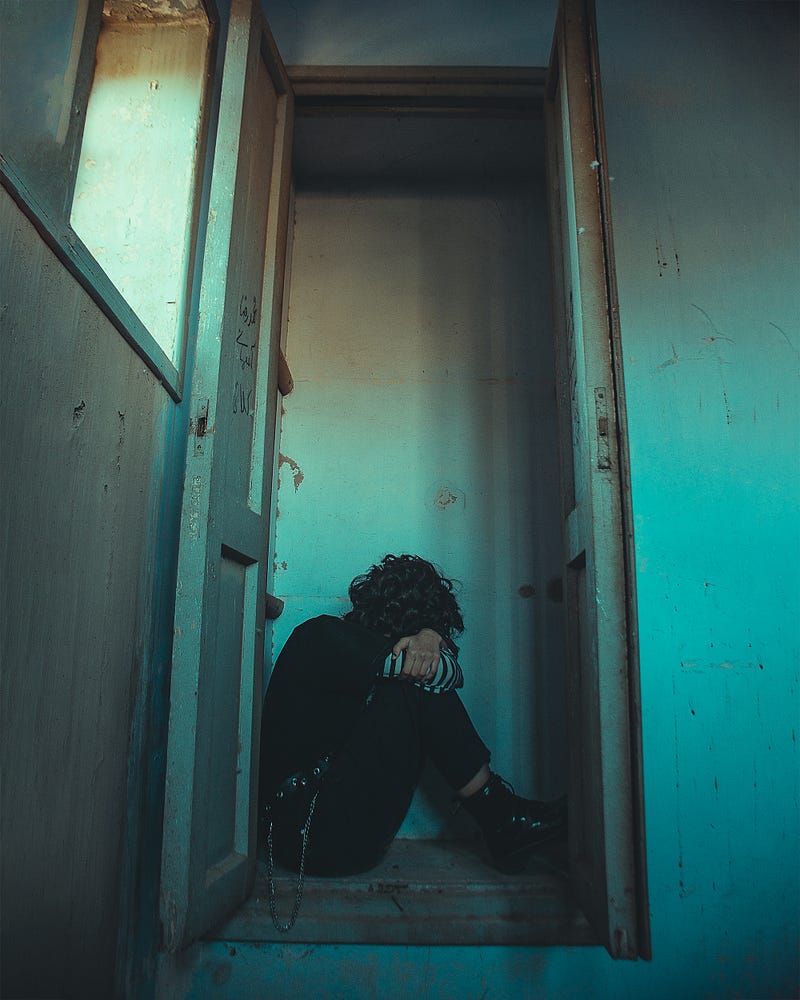
No one escapes the death of the body. Most likely you have already experienced a death. Whether it was your beloved pet or family member, death has not eluded you.
My first tragic death, as I will call it, wasn’t until the age of 45. It was my dad. I say tragic death because his passing affected me on a much deeper level than those that preceded it.
My first memory of death was when I was a little girl, around 8 years old. It was my cat, Mitzi. I wasn’t traumatized by the death as much as I was traumatized by the reason.
First off, my mother did not like our cat one bit. I am not even sure why she allowed us to have one. The cat was never allowed in the house. There was no cuddling on the couch or Mitzi stretching out over my coloring books. Unless Mitzi stopped by while I was sitting on the front steps of the house, we rarely interacted. She was free to roam the neighborhood and probably only came around for food. But I loved her.
When Mitzi died, it didn’t seem to bother my mother at all. It was obvious she couldn’t care less. She may have even been glad. My brother, however, was furious.
One day, he found dear Mitzi lying by the bushes of the adjoining yard, bleeding from the mouth. It was a sure sign of poisoning; at least that is what I was told. My brother was convinced our neighbor killed our cat.
My brother was always battling with our neighbors. Maybe they were the type that yelled if the ball came into their yard, or maybe my mischievous brother did something I was unaware of to aggravate them. It certainly wouldn’t surprise me.
As he led me to observe the stiff carcass, he was spewing out ideas of revenge. I didn’t sense sadness, but the insanity of a young boy whose plan was to continue the raging war.
As children, we learn many of our emotional responses from our families. What I saw were insensitivity and anger. No one shed a tear. Did this set me up for how to handle a loss?
Death in my Teens
When I was in High School, my aunt died. It was my mom’s sister. She was in her early 50s and lived in the city. We lived on the Island, Long Island that is. My parents went to the service. I stayed home and babysat my nephews, so my older brother and his wife could attend.
That was it. That was all I recall. No tears, no drama, just another school night.
Death in Adulthood
The next death I experienced was not until I was in my 20s. It was my grandmother. At the time, she was living in Florida and I was still in NY. It was sad for sure, but she was 95. I accepted the fact that death is inevitable, and she had a good long life.
The funeral wasn’t overly disturbing. Yes, the loss of life is tough, but instead of tears, there were a lot of laughs. Everyone was telling stories of my wildly wicked grandmother.
It was over 20 years later that the next death in my life occurred. It was my dad. This one rocked my world. It was very sudden and in my opinion; it was murder. During an unnecessary biopsy, the doctor punctured my father’s lung. Pneumonia set in and he was soon in a coma. Within 2 weeks, he was gone.
The day before the procedure, he was fine- tough in spirit and tough in strength. However, after that day, I watched him decline at a rapid rate.
I remember looking across the dining room table a week before. It was Easter evening. He told me he was having headaches and was going to the hospital for testing. I begged him not to. Every cell in my body told me he wasn’t coming home. But how do you convince someone that you have intuitive abilities and he would not make it if he proceeded with his plans? Besides, I had no other alternatives to offer. I was in a state of disbelief. I couldn’t think straight.
The night he fell into a coma, I knew in my heart it was only a matter of days before he was gone. I sobbed in the hospital parking lot, alone, knowing I would never hear him sing again. I called one of my other brothers to tell him and perhaps get some comfort.
“He’s not going to make it”, I said between breaths.
The response was aloof.
Life as a Senior Served Him Well.
I am the youngest of 5 and the only one who lived near my parents. I have 3 children, therefore we spent a lot of time at grandma and grandpa’s house. Before moving to Florida, I wasn’t exceptionally close to my dad, but once I had kids, things changed. He became a different man. I saw how much he loved his grandchildren. His face would light up as they entered his home. The kitchen became an ice cream parlor, the bed a trampoline. The back porch was now a ball field and the living room carpet became a dance floor.
This was not the father I had. The man I grew up with left for work at 7:30 AM, returned at 5:3O PM and shut down in front of the T.V. and his ashtray for the remainder of the evening.
I am sure my father loved me as a child, but after retirement, I guess he had more time to show it. He could finally relax his mind and PLAY.
In N.Y. he was a huge worrywart and pretty much a downer, but in Florida he was ALIVE.
The Funeral
My siblings all came to town for the funeral. It is all a blur, but I remember riding in the back of the limousine and my sister bitching because she didn’t like the smell of the essential oils I was wearing: lavender and frankincense. Little did she know I used those same essential oils to anoint my father’s head and feet in the hospital as he prepared to leave this earthly field.
That is the only memory I have from those 3 quick days. My family returned to their lives, their jobs, and their responsibilities.
I felt so alone after my siblings left, like days after a snowstorm when the white plains melt and the dead grass becomes visible. I was left with a landscape of decay.
I understood they had to get back home, but I couldn’t understand how, as a society, we undervalue the mourning process. We don’t see the importance of sharing grief. We attend the obligatory ritual and, within days, head back to the daily ritual we are enslaved by.
We go back to our lives as if the pain doesn’t exist? There simply isn’t enough time.
Are we distracted from our feeling?
Is this a learned behavior?
In my past, I witnessed anger and a lack of empathy for death. But we see it every day on the news and media. The blonde bombshell with cleavage and a smile tells us 6 dead in a Chicago shooting and we barely flinch. Look at our movies and entertainment industry. Kill a guy in a video game and no worries, he’ll be back up and running towards the forbidden jewel soon enough.
Are we desensitized? Is there a lack of compassion as we collectively experience a cataclysm?
The Pandemic
In the past 2 years, we have all experienced death and loss. If it was not the death of a body, it was a death of a dream.
Campuses were shut down, businesses closed, and family and friends were told to stay away from each other. I don’t have to tell you what happened. You were there. You were trapped in your own little world, mourning alone. Even if you lived with others, in your mind and in your heart, you were shattered.
I haven’t written in close to 4 months. I could no longer pretend my grief didn’t exist. I needed to stop, and sit in the pain I was feeling for the world.
Like looking over my dead cat Mitzi, I had to face my disgust. I had to ask why?
How could humanity be so cruel? The human spirit was assassinated and people pretended it was a good thing.
But the ugly truth was, it wasn’t a good thing. People were lonely. Depression and suicide were on the rise. Domestic abuse skyrocketed.
How did all these people who never cared about the guy next door with cancer or the cashier who suffered a stroke, all of a sudden, now care about a stranger’s health? They paid no attention to the child whose only meal was his school lunch or the woman who screamed as her husband smashed her head against the wall. Just stay away from them, stay in your home, stay in your lane, follow the arrows on the floor, and whatever you do, DON’T make eye contact.
When the CDC announced 1 in 49 children are on the autism spectrum, was it all over the news? Did those children and families matter? No, the only ones that mattered were the ones the media told you to care about.
We still see this today. As families lose their homes, the T.V. tells us to care about Ukrainians. Of course, we should care about the Ukrainian citizens, we should care about all humans, but when the media points out and tells you to look over there, you just have to wonder if it is a slight of hands. What is it they don’t want us to look at?
Love and Fear
So why do we comply with nonsensical suggestions? Simple- we want to be loved. We want to be accepted by society and deemed virtuous. The need to belong to a tribe is essential. No matter how devious the clan may be, being an outcast would be treacherous.
I am not judging anyone. Our own mortality and the death of our loved one’s scare us. Fear is a hideous place to dwell and will make us do crazy things.
In the past 2 years, we were told to hide behind closed doors, plexiglass and masks while we stared at computer screens, TVs, and smartphones gnawing on the fear. We were told those who did not comply were monsters, and we had permission to despise them.
None of this was out of love. It was fueled by fear. It was division. And not only did it separate us from our brothers and sisters, it separated us from our souls. It manifested into insanity.
Fear, loss, and grief will drive us mad. It can numb us or create intense anger. It may even drive a young boy to shoot the neighbor’s dog with his BB gun in revenge for the death of his cat, as my brother later did.
Our children are watching, and they are learning!
Reacting to Death
When my father died, I realized there would not be any more frothy root beer floats. All I had left were the open wounds of a bad marriage and a large bin of empty Budweiser cans to face.
Not only did I have to mourn the death of my dad, but the death of a dream.
As a young girl, I often played basketball in our backyard alone. I would fantasize about a family where mom, dad, and all the kids played together. I swore that when my husband came home from work, I would have dinner in the oven and we would all be shooting hoops waiting for the timer to ding! Instead, I was married to my father- a man who after a hard day at work, appeared as if he wanted nothing to do with us!
Did I unconsciously attract this or is it commonly (un)learned behavior?
My dad’s father passed away when he was 5, so he didn’t really have a father to guide and support him. My husband’s dad, from what I understand, wasn’t around much for his children but found plenty of time for other women.
Without role models, can a child learn how to be emotionally supportive? Can a parent be there for his kids when their parent wasn’t? The answer is yes, but someone has to teach them.
For a week, while my dad was in the hospital, my husband was partying up a storm. It was his 50th birthday and his family was in town to celebrate, not for a day or two, but a whole week. I came home every night from the intensive care unit to people in my house making toasts and jokes. The night my father died was no different.
The next day, my husband and I had a fight. Apparently, he was upset because I didn’t get him a birthday cake. One may think, for God’s sake, she was at the hospital every night while you were boozing it up. Ggive her a break, but the truth was, I did get him a cake- Two, in fact.
Because alcohol and ice cream cake don’t mix, his whole family turned down a slice, so one was still in the freezer. The kids and I ate the other one. The one I put 5- 0 candles on and brought to the fire pit they were all sitting around to sing Happy birthday. But he was too drunk to remember and bitched about my negligence.
I got the slightly burned candles out of the cabinet and slammed them down on the counter.” Here are the candles we lit for you. Apparently, you forgot”
He walked away, sat down on the living room couch, and cried. It was only the 2nd time I ever saw this man cry and of course, both times were for himself. He never shed a tear for anyone or anything else. But now the waterworks of self-pity were streaming.
I was MAD!
I exploded with, “My dad has been in the hospital for 2 weeks. You never visited him, you never called, and now he is gone. Am I supposed to feel sorry for you?”
His response shocked me. “You should have told me to? “
“What?” I yelled. “I should have told you to care? “
I then declared I wanted a divorce and walked out the door.
I had no more tears to cry. My grief had turned into anger and I wanted him OUT! I didn’t have the strength or desire to teach him how to care.
Are We Afraid of Love?
We learn at a young age that love can hurt. Whether it is divorce, death, a distant parent, or a broken toy, we cherish, one day everything we love will be gone.
As much as we all crave love, do we avoid it in hopes of bypassing the pain?
First, there was joy when my husband left, but then the was paralysis set in. There were days I didn’t want to get out of bed.
The words of my youngest son still linger in the back of my mind, “You push everyone you love away”
He was right. I wanted nothing to do with anyone at that point. At this stage of the game, love sucked!
Love and Loss
It is said it is better to have loved and lost than to never love at all. I am now seeing this to be true.
Love is a blessing, and no matter how crazy it gets us, no matter how much you fear it, without it, we are empty bodies that one day no one will remember.
We need to honor and feel the pain. There are no time limits or rules as to how you should do this. When death or loss occurs, do not listen to those who say “just move on, forget the past.” You need to grieve in your own way and in your own time.
To feel it is to heal it.
At times, I still mourn broken relationships and the dream of a healthy family. However, I no longer allow it to put me in a freeze-frame. Instead, I allow myself to feel it and move through me with acceptance and grace. I have healing techniques and tools to assist me in the clearing including learning how to cry again.
Sadness and anger are not the only emotions we feel with a loss. It can also create guilt and shame. There may even be resentment attached to it. Loss can trigger old buried memories we are unaware of. Feeling those emotions, instead of suppressing them and then breathing through them, allows us to release them, sometimes within minutes, or after a good night’s sleep. It also trains the subconscious by telling it, “this too shall pass”, building tenacity and courage.
When we are afraid to face our emotions, most likely addiction will occur. We will do anything to not think or feel. It could be drinking, smoking, overeating, or zoning out in front of a screen. I don’t condemn any of these for brief periods. They certainly aren’t good choices, but each individual has free will to decide what works for them. If a night of gorging does the trick, then do it. Just don’t let it consume you to the point where it is habitual.
Forgiveness and Gratitude
Pain, anger, grief, shame, guilt, on and on and on. Our bodies are full of emotions we pass around like a family photo album. Each child gets a ripped page from the volumes of scarred hearts. Each generation gets a snapshot embedded in their cells.
How do we begin to burn the portfolio of generational trauma? How can we embrace love not only with our family but with our neighbors, the media, our leaders, and all the people we disagree with?
We forgive them.
It is one of the hardest things to do, so don’t beat yourself up if you find this difficult. As I stated before, feel the burn, even the anger. Grieve your loss and let it MOVE through you. If you suppress and hold on to your pain as a badge of honor, you will most likely pass that pain along to somebody else.
To forgive is to be forgiven, and it will set you FREE!
Take all the time you need. You will know when you are ready.
Find Gratitude. Whether it is the death of a relationship, death of a vision, death of a nation, or death of a soul, we can actually find ways to appreciate it. Because death means there was once LIFE and pain means there was once Love. And if it can happen once, it can happen again.
It is in death that we are born again.
And for this, I am grateful!
Some tips for moving the energy
1. Cry
2. Journal- writing often brings things up from the subconscious to be released.
3. Do an outdoor activity- walk, garden, bike ride. Connecting to nature is healing
4. Do something creative with your hands- play an instrument, do pottery, paint, color.
5. Let someone use their hands on you. Get a massage, Reflexology session, or a facial. See a chiropractor!
6. Book an energy healing session. I happen to be an Integrated Energy Therapist and they can be done long-distance- how about that!
7. Grief is held in the lungs. Use natural products to clear them.
a. Eucalyptus essential oils to move the energy (Do not use Vicks. It contains petroleum)
b. Primal Herbs Lung Detox
c. Rejuvica’s Bright Lungs Advanced Support.
Thea Williams Scalco, B.Msc, C.H.- lover of all things magical!
Website: Heartlinked.org
Abundance Mastery- 2 weeks of Free access. Get ‘er done! Why wait?
Love to support writers? Buy one a coffee. You can start with me by clicking here.
This article includes affiliate links, but so what- now you know!