Lessons Learnt From 1984 Book for Today’s Politics
How 1984 by George Orwell written in 1949 accurately portrays a lot of things happening in the politics of the day. How the book can teach important lessons for us.
One of the world’s best books that a political enthusiast should read is 1984. It is not just about politics, about society in general, and that makes it distinct from others. Also, this book was written in 1949 by George Orwell; perhaps he could foresee and predict many events and situations that could occur.
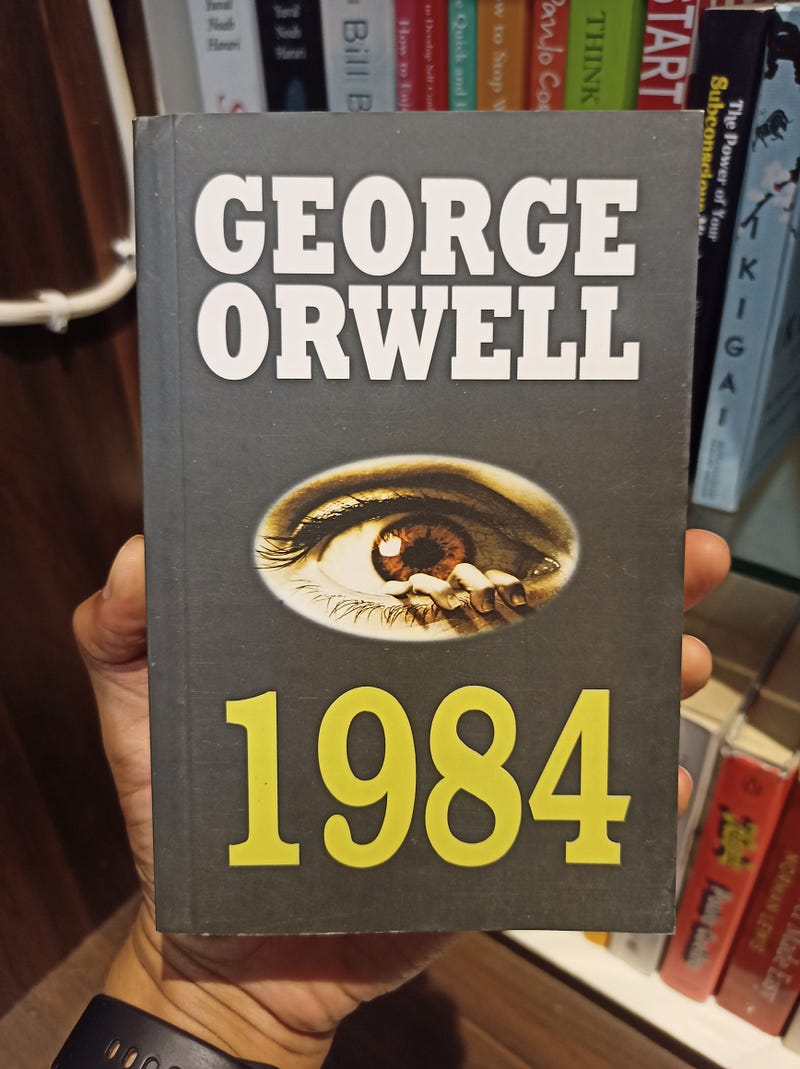
George Orwell rose as a political writer with his first book, Animal Farm of 1945 and then came 1984 in 1949. This decade was one of the most eventful and destructive for Europe. All these happenings did affect both these books.
I will go deeper into the books or any chapter in particular or even the book review. I am just going to tell you some important lessons that the book teaches you and the mistakes as a society we must not make.
The takeaways from the book are as follows-
1. Rewriting history- Throughout the book, we can see the efforts of the ruling regime to erase and rewrite history. This can be seen even in real life today when people of different backgrounds reject facts and historical contexts which are uncomfortable to them and those which are not in their narrative to be removed and replaced. There was a Ministry of Truth, which was in charge of doing the same.
2. Brainwashing- or Ingsoc as mentioned is a system that was founded for oppressing people. This oppression does not only happen through the design but also the constant brainwashing of people. Today we can see countries like North Korea, which force people to think in a certain way.
3. Divide and rule- An age-old technique used by Imperial powers to divide societies, make people fight based on religion, ethnicity, history, geographic barriers, nationality etc. This is indeed a political weapon that is killing us today even when Human society is threatened by Climate Change, pandemics, asteroids, etc.
4. Spying on people/Surveillance- Telescreen was put up in public not only to spread information but also as a surveillance technique on people. People are closely monitored, and those who were a threat were selectively targeted. Today with the issues like Pegasus, we can see how the governments spy on citizens and also how journalists are harmed for doing their duty.
5. Authoritarianism- Lack of freedom/Freedom is slavery- the 1940s saw the tyranny of authoritarian rulers, Hitler and Stalin. Later on, we can see the emergence of the USSR, several dictators across the globe flexing their muscles. Similarly, 1947 talks about a strong authority under Big Brother trying to control people and their lives. Today many democracies are turning into authoritarian regimes. They are curbing people’s lives for undue power.
6. No freedom of press and govt controlled media- The book talks about the newspaper, The Times which is a state-sponsored propaganda machine that is aimed to brainwash people. Censorship is there in many countries. Often in democracies, too, the media tries to play the tune of ruling parties, leaders or even the corporate.
7. Killing and missing people- Take violators to torture cells and force them to change their ways or face the wrath of torture or even death. During the colonial period, there were jails meant for torture. Even in countries like North Korea, we can witness how people are detained for trying to rebel.
8. New language called Newspeak was created, not because they had a love for the language but to use it as a tool to spread lies or make people lose their connection with something else.
9. Party is supreme- Worshiping the party above anything else has been a phenomenon in many countries. Even humanity, human rights, national interests have been sidelined, and following whatever the party says has become supreme. In China, we can see the CCP party having overarching control. The party is more important there. The leaders of the party are even more important than anything else.
10. Doublespeak- As the name suggests, this includes a set of principles that are contrary to the narrative. In general, we can say in common man’s language as hypocrisy. When the government says its work
11. Narrative building- Whatever we are told by someone else can either be true or false. In most circumstances, they can also be half-truths. Elements that have twisted truths or use the facts to suit your own version of the truth. In the twentieth century, we can see that we are victims of false narratives, fake news, propaganda and a lot more. These are not only used to dupe people to think in a certain way but also to win elections.
12. Call for war- In the book 1984, we can see Oceania was in constant war with East Asia and Africa. Although we don’t have any conflicts today, seven decades back, that was not the case. The world saw two big, massively destructive wars. Thus it was normal for the leaders to call for war to accumulate power and public support.
13. Falsification of facts and science- Today, it's normal for fake news, misinformation, half-truths, anti-science, lies etc. The book actually predicted how facts could easily be manipulated and presented so that you will start to fight even the basic things which you should have faith in.
14. Torture and forced labour- Those who disagree with mainstream ideas or even with what government says become a target for state-sponsored or even party sponsored torture. You can be taken to a torture cell or a camp where they can ill-treat you, force you to indoctrinate their ideas, or even inflict physical harm. The year when this book was written was 1948, so just three years after the stories of the Nazi genocide of Jews came to light. So, it's clear that the incidents took importance in a book because of this.
15. Starting their own newspaper- The political parties of the day have their own social media. Before that, it used to be their own newspapers and television channels. This was to spread their own ideas and keep the connection. In the book, we can see the party directly having its own newspaper that provides propaganda that suits it.
16. Worshiping their leaders/party- Name any leader in the world right now; we can see his fan base, often hero-worshipping him, trying to justify all the actions. This is not a new phenomenon, starting Stalin to Hitler to Churchill, 1940s saw a lot of strongmen leaders. Again in this decade, see even more strongmen leaders with well-organised party machinery. Trump, Putin, Modi, Xi, Erdogan, B Johnson, etc., have built their fanbase backed by solid party machinery. CCP of China, BJP of India, GOP of USA are top parties with well-defined hierarchy and structure.
17. Thoughtcrimes is an unusual case where even thinking different from usual thought is considered a crime.
WAR IS PEACE. FREEDOM IS SLAVERY. IGNORANCE IS STRENGTH.
These are the few words that summarise the takeaways from the book.
Lessons learnt
1984 novel very well explains how a ruling regime and the politics of a country should not be. The novel written in 1948 is still relevant even today. It is the brilliance of the author that he could foresee a few events that happen today, a few years back.
Government is for serving the public and the country. It is neither above the country nor above the masses. They must be held accountable for their mistakes. They cannot overarch the people and stay immune. Democracies are elected by the people; they shouldn’t endanger the lives of their own people.
Criticism of the government is not a criticism of the country. There are countries that still have strong sedition laws. That is contrary to the democratic provisions. There should be enough freedom and liberty for the press and media to operate so that citizens can be served.
Separating the party and the government is very much essential. In most countries, even today, the party is above the government and the country. Criticising a party or its ideas cannot be equated to treason or sedition. Party or its leaders should not be worshipped like Gods. Don’t fall into the propaganda of parties calling strongman populists leaders as saviours.
Falsification of facts and history should not be permitted by anyone. Spying and snooping on leaders, journalists, and ordinary citizens shouldn’t be there, especially in this data age. Nowadays, building narratives, spreading hate and propaganda has become way easy. Whatever we encounter today must be fact-checked and verified. Try to use credible sources for information than anything that randomly comes up.
The country will grow only if its people grow. For that to happen, there should be an environment that supports economic development. Economic development does not occur in a conflict zone or a divisive society. For all this, there must be an understanding between people and their leaders.
Why is politics important?
Politics has the potential to solve the problems we face today, especially those which are difficult to tackle at the individual level. Politics, irrespective of whether you like it or not, affects everyone. Reasonable political discourse is needed for a reformed society. Countries that outperform social and economic development were so only because they have had reformed politics.
I am ending using a famous quote from the book-
“Who controls the past controls the future. Who controls the present controls the past”.
Check out the latest edition of 1984. Buy both Animal Farm and 1984.
I have started a Telegram Channel which will contain the record of all my articles. Follow my personal blog for behind-the-scenes and informative content. Do join my medium mailing list. If you enjoy my content and find it informative, do support me at Buy Me a Coffee.
Join medium paid membership by clicking here.
This post contains affiliate links that pay me if you choose to buy the product presented here.


