
Lessons India should learn from Pakistan
Narendra Modi receives a grand welcome at the White House. India (or Bharat?) is a G-20 country and is being prepped by the US to counter China in the east. Many Indians around the world are happy as India is not only becoming an economic and IT superpower but has managed to send Chandrayaan-3 to space and has hosted a G-20 Summit in New Delhi. Not to mention India’s stock is on the rise.
Not all Indians are happy with Narendra Modi and the BJP. The racist policies BJP is adopting in India, the way many Indians are becoming bigots and intolerant day by day, treating other Indians who disagree with Narendra Modi and the BJP and minorities particularly the Muslims, Sikhs and Dalits, stripping Kashmir from its protective status and massive human rights violations are appalling.
Not all countries are full of bloom of India’s success. The recent allegation made by Canadian Prime Minister Justin Trudeau about the assassination of a Sikh leader Hardeep Singh Nijjar in Canada who was part of the Sikh Separatist Movement has sent shockwaves to not just India but to the world. India strongly condemned Canada’s allegations, has exiled their High Commissioner and has terminated visa services in Canada.
So where does Pakistan come into this?
Former Prime Minister Imran Khan is imprisoned. His party’s workers are imprisoned, being tortured and killed. Female supporters of Imran Khan’s Pakistan Tehreek e Insaf (PTI) are going through the worst. It’s like the genocide of East Pakistan repeating itself where the Pakistan Army committed mass atrocities and rape towards the Bengalis in East Pakistan (now Bangladesh). According to rumors, Pakistan’s Inter-Services Intelligence (ISI) has sent their goons in foreign countries to assassinate those who speak against the Pakistan Army’s fascist regime.
The Pakistan Army has always been the dominant institution in Pakistan. It not only directly controlled the country through four military dictators but allowed civilian political parties to do their work for them or having their own political parties, Zia ul Haq with Pakistan Muslim League-Nawaz and Pervez Musharraf with Pakistan Muslim League-Quaid e Azam. Without their approval, no civilian party in Pakistan, including Imran Khan’s Tehreek e Insaf can come to power.
So what lessons India need to learn from Pakistan?
The US is mainly supporting India to counter China.
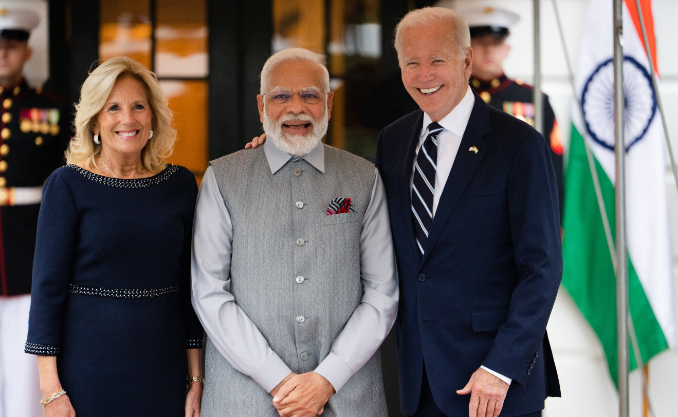
The Chinese influence in Asia is the main reason the US is being cozy to India. True, India has developed a massive IT infrastructure that also assist US companies. However, China’s massive rise and influence is forcing the US to look for a heavyweight contender and India is the best option.
During the Cold War, Pakistan was US’s major ally. It was strategically located to counter Soviet influence. The US military would had access in Pakistan for their anti-Soviet activities. In 1960, the Soviet Union shot down a US spy plane that took off from Peshawar. When the Soviets invaded Afghanistan in 1979, Pakistan was given №1 priority to get rid of the Russians in the country. When 9/11 happened, Pakistan was one of the main partners in the War or Terror.
This strategic alliance has been shaky given Pakistan used US-given weapons to attack India and not the Soviets, the US leaving Pakistan to deal with the influx of weapons, drugs and violence after the Soviet withdrawal and terrorism after the War on Terror. Things will be interesting to see if India really does manage to counter China or lives up to America’s expectations.
Extremism is dangerous
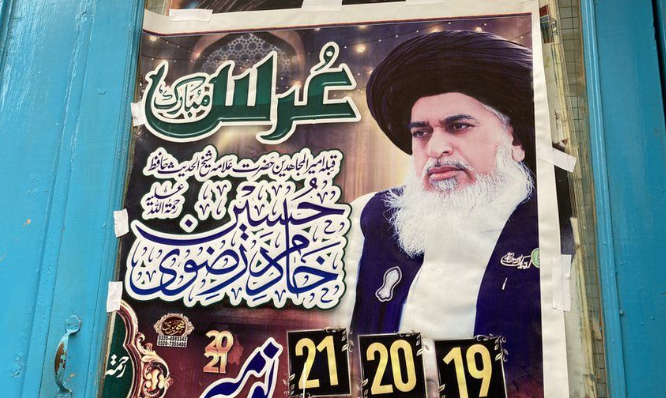
Any form of extremism is dangerous. Religious extremism is something Pakistan is struggling to get out of. After Pakistan’s creation, religious parties had been fiercely advocating for Shariat Law to be enforced in the country under their interpretation. Prime Minister Zulfiqar Ali Bhutto, in order to please the religious parties, declared the Ahmadi sect non Muslim, had alcohol banned and Friday to be a public holiday. Zia ul Haq took two steps further to introduce ‘Islamization’ policies like amputation of right hand by theft and extra marks to folks who memorized the Qur’an by heart.
The religious clerics and religious parties have an upper hand in how Islam should be enforced in Pakistan. This have affected women in particular who had to cover their heads in Zia’s time. They revolted by burning their head scarfs which prompted the state to take action against them through violence. Many religious clerics in Pakistan view women beneath them, that they should only stay at home and raise children. Every year when the Aurat March is organized in Pakistan, religious parties are the first to condemn and even attack it.
Religion and patriarchy have merged together.
The BJP is promoting pro-Hindu policies and advocating for Muslims and other minorities to not have rights in Bharat. Incidents of violence against Muslims are increasing day by day. What can you expect from a man and his party who allowed the Gujarat Riots in 2002 to happen?
One-Party Rule will flourish and democracy will die
Quaid e Azam Muhammad Ali Jinnah feared and warned against a ‘one-party rule’ being enforced in India. Jawaharlal Nehru wanted his Indian National Congress to have the only say in post-independence India. The Cabinet Mission Plan of 1946 proposed a solution where India would be a federation of Hindu-majority areas, Muslim-majority areas, others and a federal government that would control defense and foreign policy.
Jinnah was ready to give up his Pakistan Demand over this. Nehru said his largest party would not had to follow after British Raj ended. The Cabinet Mission Plan came down tumbling although some elements of it were kept till Partition of 1947. Jinnah was clearly distressed given India would succumb to one-party Congress rule and Hindu Raj, forcing him to launch Direct Action Day which indirectly led to the Great Calcutta Killings.
You can see one party dominating in India. Narendra Modi’s Bharatiya Janata Party is set to become the only party in India. It plans to dismantle democracy slowly by stripping rights from minorities and making the Hindu-majority their staunchest allies. Next, the institutions that uphold democracy will get undermined.
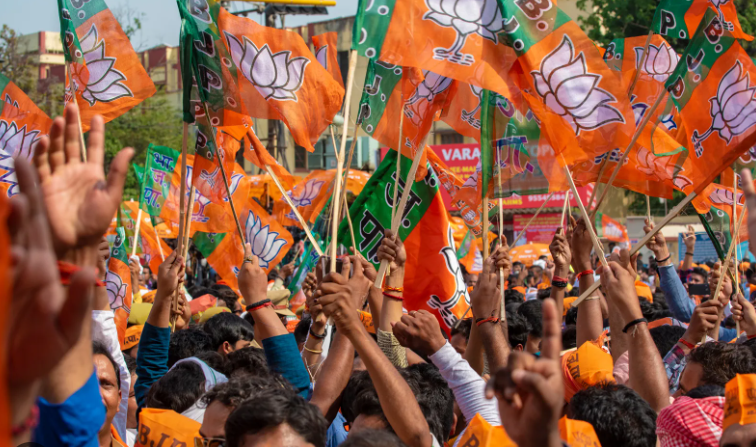
This happened in Pakistan where the Pakistan Army became the most dominant institution. Ayub Khan’s Martial Law in 1958 cemented the might of ‘Pakistan’s men in uniforms.’ Even when the Army was not in direct control, they were the puppet masters behind the scene. India’s Army may not have the upper hand but the BJP has the only hand.
Verdict
India should learn the lessons Pakistan is railing from. Pakistanis are trying to rebel but the Army has control over state institutions and the media. Electricity bills and petrol prices are heavily inflated its affecting every Pakistani.
“The pressure cooker is about to explode.”
India needs to take a good look at itself where it’s headed. If not, things will get ugly. There is no point in going to space if you cannot control things on the ground. I know, weird thing to say but you cannot fight in space. If you are fighting on the ground and will carry that to space, things will get uglier.
Other Sources
India After Gandhi written by Ramachandra Guha.
Jinnah of Pakistan written by Stanley Wolpert.
Jinnah: A Life written by Yasser Latif Hamdani.
Pakistan: From the Rhetoric of Democracy to the Rise of Militancy written by Ravi Kalia.
Let me know in the comments what you guys think.
Like what you’re reading, you can support me at https://www.buymeacoffee.com/bilalali1000.