
Lessons I learned from saying “no” to a coding challenge

Scarcity mindset is real. This was scary.
I’ve started a job search. It’s going well so far! I have interviews lined up with a couple companies.
Recently, one company sent me a 2.5 hour coding assessment.
After some consideration, I turned them down and withdrew my application. But it was difficult. I worried that there might not be more opportunities. Or, maybe turning down the assignment would just prove I’m not good enough.
Here are my reasons why I turned it down anyway.
I’m not an object in a funnel
Most companies think about recruitment as a funnel.
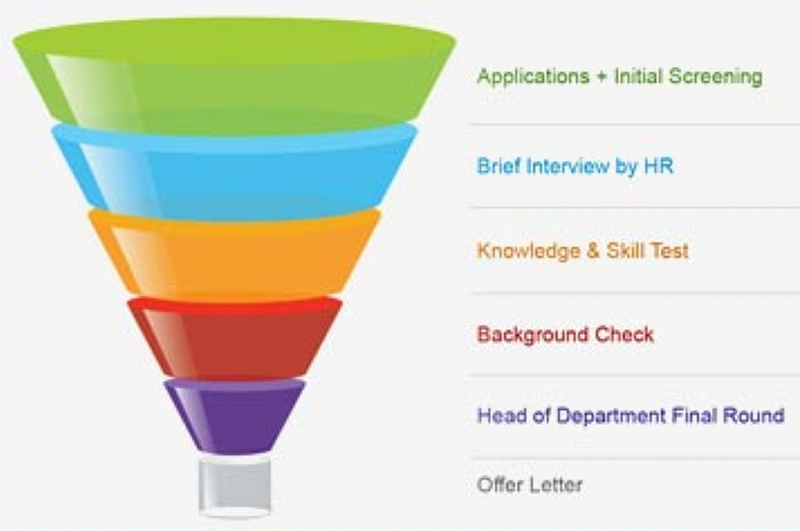
The goal is to narrow a list of applicants into a candidate who receives an offer. I understand that.
But it doesn’t mean I like being treated like I’m just part of a funnel.
I’m a real person!
When this company received my resume from my recruiter, the first thing they did was send a 2.5 hour coding assessment. Nobody from the company reached out to me. I had not spoken to anyone from the company. Just a semi-automated email asking me to take a test.
Here’s the thing: I’m a senior engineer with years of experience who is interviewing at multiple companies. You need to sell me on your company. I want to be convinced that it’s a good fit. Then, we can talk about technical screening.
I had to ask to have a direct conversation with the CTO.
When we talked, I gave him the benefit of the doubt about not reaching out to me first. That might’ve been misplaced. He gave me some story about how “most” candidates get the tech screen right away, but I was somehow special.
I don’t think so. I think I called his bluff.
He wanted to put me in a funnel, and I refused.
Moreover, that’s a bad sign! If “most” candidates get the tech screen without talking to anyone, then your hiring practices are backward. You’re treating people like objects. With a 2.5 hour assignment, you’re also not being respectful of their time.
More opportunity elsewhere
I’ve been fortunate to work with a great recruiter and have success networking my way into a few interviews already.
What I saw in the other interviews convinced me that this isn’t my only opportunity. I don’t need to complete the 2.5 hour coding assessment in order to get a job. There are other opportunities with a better hiring process and more inclusive culture.
Still, turning down a job opportunity is terrifying.
You get a sinking feeling in the pit of your stomach. Questions come up:
- “Am I running from a challenge?”
- “What’s the harm in just trying the assessment?”
- “What’s so important that I don’t have 2.5 hours to spare on a potential job opportunity?”
These questions are totally normal and natural. Your ego doesn’t want to feel like it’s giving up. But declining to do something is actually a position of strength.
Ultimately, you have to be willing to say “no” to bad opportunities in order to make room for an enthusiastic “yes” when the right opportunity comes along.
The benefits of saying “no”
After you get over the fear of losing an opportunity, the benefits of declining start to sink in:
- You get that time back. For me, I spent the 2.5 hours in a park with my girlfriend instead of staring at a computer screen sweating over whatever the assignment was.
- Anxiety lessens. The 2.5 hour timed coding assignment was definitely hanging over my head. Saying no allowed me to get back my mental clarity for all the other interviews I’m doing.
- Gain more perspective. Once you’re no longer in the situation, you can step back and appraise the opportunity better. Chances are you’ll find other little things you didn’t like about the company/role that you were willing to ignore when you were interviewing. Now that you’re no longer interviewing, it’s easier to see those issues and what you avoided.
- Demonstrate your commitment to values/principles. It feels good to stick to your principles. Before this interview, I had written about how technical interviews are insulting. I had to go back, read my own words, and take my own advice. I also demonstrated to my recruiter that company culture and hiring practices matter to me.
More resources
I’ve written previously that technical interviews are insulting, developers should know their worth, and job interviews can be simple to line up.
I have a free 7-day email course on building a value-based developer career.
Join Medium for $5 - Access all of Medium + support me & others