
Lessons I Learned From My Mentor As a New Photographer
Steering Clear of Photography’s Common Pitfalls
Starting our journey in photography can be very daunting thanks to the one major issue. We are faced with a range of challenging options that we are often inadequately prepared to face. For example:
- What genre of photography should I pursue?
- Which type of camera is best for my needs?
- Should I get zooms or primes, and how many of them?
- Which camera brand gives the best return on investment?
- What is a reasonable budget to spend on equipment?
- How should I post-process my photos?
Given the multitude of options in photography, whether related to equipment or the technical aspects of taking and processing photos, we could find ourselves wasting a lot of time and resources.
Time and money are precious commodities, I believe it is wise to save them as much as possible. So, to avoid the pitfalls that awaited me as a beginner photographer, I decided to find a mentor who would reveal the charms of this wonderful hobby to me, but also caution me about potential pitfalls we all commonly fall prey to.
After a year and a half of experience working with a mentor, I have never regretted paying for his support and supervision. On the contrary, my love for photography has multiplied several times since I found myself under his expert guidance.
Here, I will share lessons I learned from my mentor as a new photographer. These five tips represented a shortcut that saved me time and money and helped me move faster forward along the journey of personal photographic development.
1. One Body and One Prime Lens is All That You Need
This advice was initially challenging for me to accept because I wanted to own a camera with many different lenses, including at least one zoom lens for its versatile possibilities. Such lens would allow me to conveniently change the focal length and magnification, based on whether I want to shoot portraits, sunsets, or landscapes.
The prime lens, however, seemed limiting to me. I believed it couldn’t provide the flexibility I sought; what if I wanted to capture portraits, sunsets and landscapes simultaneously? Or what if I encounter a scene that is too large or too small for my prime lens’s field of view?
However, thanks to my mentor’s guidance, I came to realise that having too many choices might not be the best for my photographic development.
“We will develop fastest if we have just one body and one lens.” — My mentor
According to him, it’s crucial to get a camera we can always carry with us, one small enough to fit inside a pocket, equipped with only a single lens and a fixed focal length.
The reasoning behind favouring a single prime lens is that its limitations forces us to think more deliberately about composition and framing. Furthermore, if we want to zoom in and out, we do it with our legs, not lens. This can foster creative thinking and encourage experimentation.
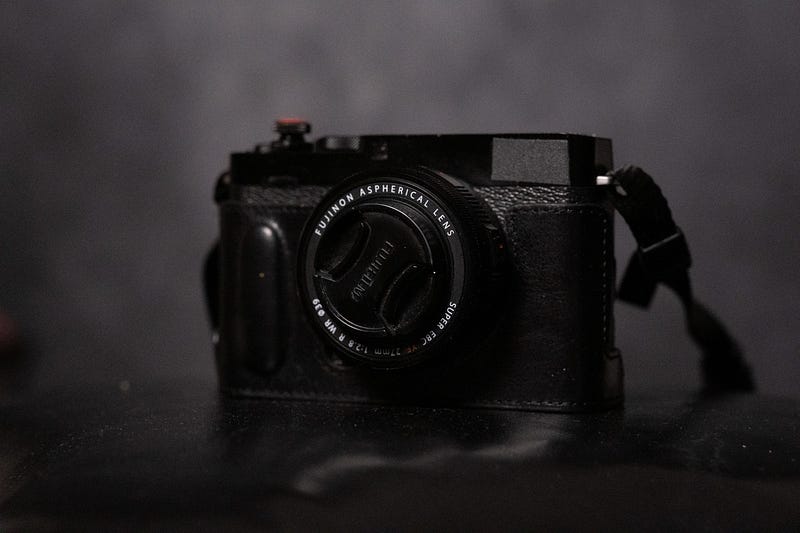
Finally, I listened to my mentor’s advice and opted for the Fujifilm Xe4, paired with the 27mm prime lens. Its small dimensions and lightweight nature allowed me to effortlessly carry it in my jacket pocket or around my neck without feeling its weight. It has a low profile, especially with black gaff tape covering the white markings.
After a year of working with such device, I’ve noticed how my eyes are becoming trained to a fixed focal length. Now, I can quickly recognize whether a scene fits into the prime’s field of view. I’ve grown accustomed to working with what I have. What I don’t have, I don’t think about, and it makes my life much easier.
2. Buy Books Instead of Equipment

This was another piece of advice I wouldn’t have implemented on my own. Luckily, I had a mentor who emphasised that just as the quality of the food we eat is crucial for our health, so the quality of the photographs we look at is important for our development as photographers.
In essence, studying the work of top photographers is very important for our progress in photography. Acting on this advice, I invested in a series of books featuring photos from the world’s best photographers. I set a goal to dedicate at least 15 minutes daily to studying these photos.
Remarkably, shortly after adopting this habit, I began presenting much better work to my mentor than ever before. At least, those were his words. This shift in focus from lenses to books has led me to stop worrying about which lens to buy next. Instead, I find myself contemplating which book to purchase for my ongoing development.
3. Think About Series Instead of Individual Photos
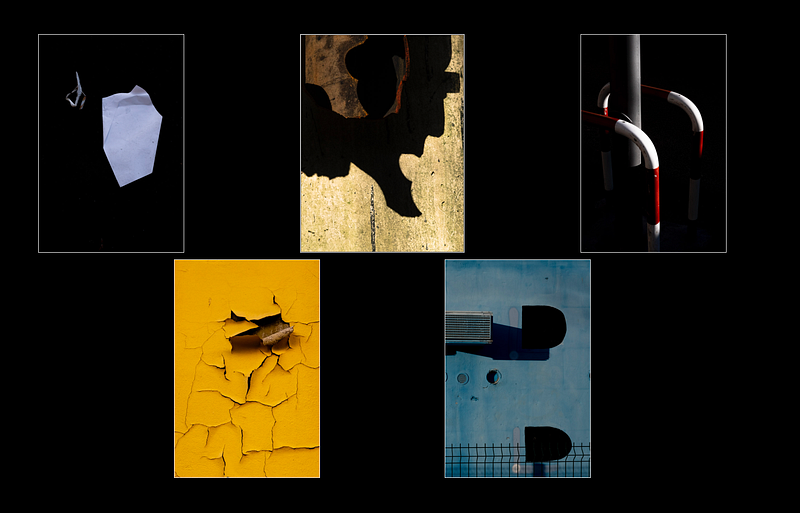
I always preferred individual photos over series. I didn’t like focusing on series as I felt they limited me from capturing all the diverse scenes and moments I found appealing, like beautiful flowers, sunsets, or interesting facial expressions.
I didn’t care if my photos were related or shared a common theme; I only cared about the quality of my photos individually. Now, I realise it was a mistake. The key is in favouring series over individual photos.
“It’s better to have a compelling series composed of lower-quality photos than to have good individual photos that don’t relate to each other.” — My mentor
4. The Majority of the Equipment is More Than Good Enough For Our Needs
“Trust me, new and better equipment is the last thing you need.” — My mentor
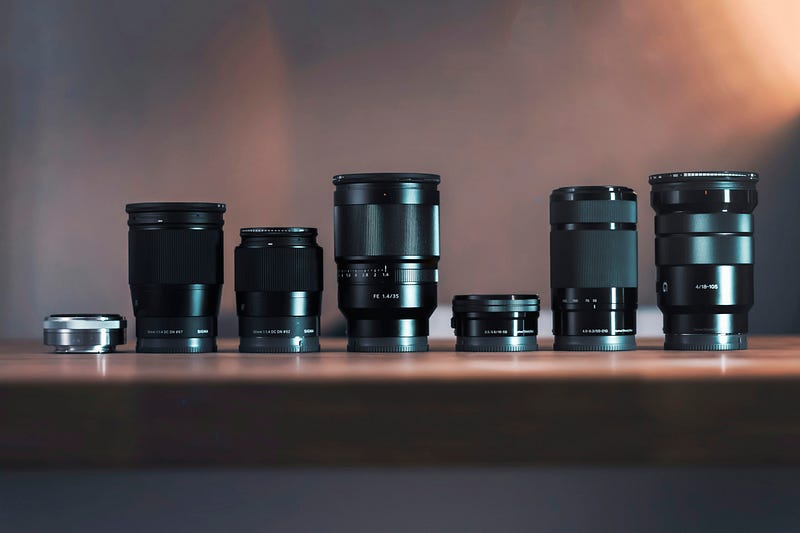
The photography industry often encourages us to constantly invest in newer and supposedly better models, creating the illusion that these improvements are crucial for success. As a result, we might be wondering how we could have lived without features like image stabilisation or razor-sharp lenses.
However, believing that we constantly need to buy new and better equipment is a deception. Many renowned photographers captured their iconic images with gear that is considered inferior by today’s standards. For instance, my Fujifilm Xe4 and the majority of other cameras available today surpass the Leica used by Henri Cartier-Bresson over half a century ago.
The truth is, most modern lenses are sharp enough, and photos aren’t examined at 400x magnification, except for pixel peeping. Surgical sharpness won’t save poor composition. My mentor mentioned that he could accomplish 99% of his studio work with pre-owned gear purchased at a discount.
5. Talent Accounts For 1% of Success in Photography. Hard Work Makes up the Rest.
I find it hard to accept this claim because I wanted the talent to be more important. However, my mentor emphasises that success in photography is predominantly the result of relentless hard work, not just talent. It means that despite having a good eye and talent for photography, we have to put in more effort than solely relying on God-given skills, or new equipment.
Therefore, my mentor’s advice urges me not to become complacent and stop learning. To accelerate my journey towards mastering photography, I’ve chosen to heed this counsel and I decided to dedicate ample amount of time to study books and theories about photography. The progress and joy I’ve discovered along this path reassure me that I am heading in the right direction.
Conclusion:
These are the most important lessons my mentor gave me about photography. I spent a significant amount of money to learn them from his teachings, and I think it was a wise investment. But now, you can use them as well.
I’ll continue to follow my mentor’s advice because I genuinely believe it’s the right path. The more effort I invest in photography, the more joy it brings me, and that, in turn, fuels my desire to put in even more effort. It creates a positive cycle — a beautiful thing.
This way, I know what I need to do, and I can sleep peacefully without obsessing over whether I should purchase one lens over the other. And the most important thing, I immensely enjoy photography!
Finally, I wish for you to find joy along your journey. If you are considering following my path, I would encourage you to find a mentor for yourself. There is much more beyond what I have mentioned here, and nothing beats the quality of progress in a one-on-one setting.
I’d love to hear about your experiences with these tips, or if you have anything else important to add that you think is crucial for our journey to mastering photography.
Thank you for reading my story.