
Lessons from YNAB’s More Money Challenge
How I saved $1,000 and gained even more

January and February are financially slow months for our family’s Window Cleaning business, so a few years back, we implemented “Thriftuary.” We attempt to spend less during these lean months. Yes, we cut back on our spending, but I always hated it! I felt deprived, unmotivated, and forced. So when the More Money Challenge (MMC) from You Need a Budget (YNAB) hit my inbox last January, I signed up, hoping it would alter my dismal money-saving attitude. Here is how the challenge works, my results, and lessons learned.
What is The More Money Challenge?
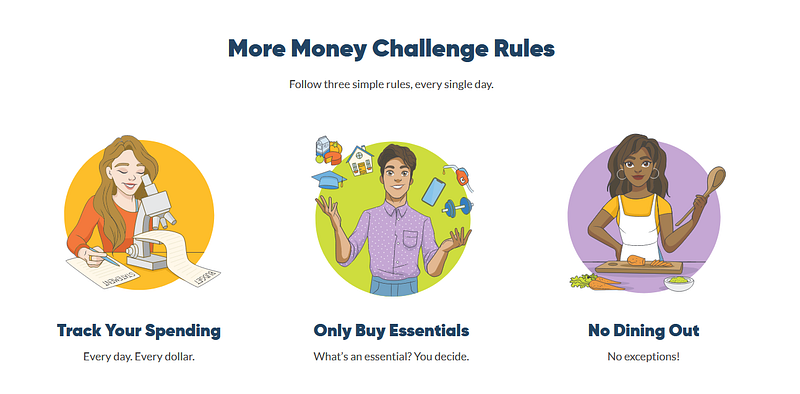
YNAB’s More Money Challenge has three rules of the challenge: track your spending, buy only essentials, and no dining out. After signing up, you receive more details about the rules, a guide, and supportive emails for your 30-day challenge. You can also join a free Facebook community for extra support, encouragement, and ideas.
1) Track Your Spending
For the challenge, tracking your spending can be writing it down on the tracker YNAB provides, using their app or another tool, or creating your a spreadsheet. The goal is to get a grip on your fixed and discretionary expenses.
I’ve been using the YNAB app for almost a year, so the tracking piece has become somewhat of a habit. Although, I admittedly seem to fall off the bandwagon whenever our spending gets out of control. Hello, summer camp, vacations, over-budget home renovations, and holiday spending!
Hence the need for this challenge! In addition to the app, I posted a spending tracker on the fridge to visually see all our monthly spending. It also kept Pete, my husband, and I accountable to each other and consistently communicated about our spending.
2) Only Buy Essentials
The MMC says that you can define what essentials are for you. It was the most talked-about rule in the MMC Facebook community. “Do $200 snow boats count if I need them to get exercise in the winter?” asked one participant.
Only essentials was a hard one for me! Curbing my spending has always felt like deprivation. It’s like when you go on a diet, and all you can think about is a double-chocolate brownie. Pete and I didn’t make any strict rules for ourselves. We just committed to discussing any purchase first to determine if it was indeed essential. I’ll talk more about how this went for me below!
3) No Dining Out!
“No exceptions,” says YNAB! Yikes! I didn’t think we ate out that much, but when I looked at our 2021 expenses, we spent an average of $270 a month on take-out and dining out. It appears we’re just under average (for a non-pandemic year).
This rule didn’t scare me, though. Especially as Omicron hit, eating out wasn’t super appealing. No take-out would be a bit harder, but with some planning, not too torturous. Plus, I thought it was a brilliant rule! It is such an easy spending category to go over budget in. Yet, for most of us, one has a tremendous impact when saving toward a goal. I was in!
The Lessons I Learned
1) Challenges Work
The number one thing I learned is that challenges work, at least for me. And, at least this time, for this goal. Remember how I felt during Thriftuary in past years? Deprived, unmotivated, and forced. Ick! In 2022, I felt challenged, super-motivated, and enthusiastic! Hooray!
Signing up for the challenge was making an external commitment. I even posted that I was doing it on my Facebook page and other groups, something this introvert doesn’t often do. But, it gave me enough accountability to stay determined and people interested in my results. Plus, having the rules laid out, kept me on track. Like when more motivated people than me sign up to run a half-marathon or 30-day whole foods diet, the end goal keeps them motivated to make the hard daily choices of running, eating well, or in this case, being mindful of their spending.
The Facebook community was helpful as well. Partly, my competitive side kicked in! When people posted about caving in, it motivated me to do better. What can I say? It worked! It was also the camaraderie of working alongside others with the same goal, sharing tips and struggles. When I had an enlightened moment during the challenge, and my already thrifty husband didn’t share my enthusiasm, I had a place to share it. All this made the challenge more fun, improving my attitude and motivation.

2) Practice Gratitude
I’m sure you’ve read how practicing gratitude leads to a happier life. Yet, temptations are around every corner. We drive by stores, coffee shops, restaurants, etc., daily while advertising messages flood our social media pages, emails, and favorite shows. We constantly receive messages that we’ll feel better after a little splurge. I often look around my home, only seeing what needs fixing or updating. Or compare my material belongings and activities with the ones on my feeds.
All these needy feelings made practicing gratitude an essential ingredient for this challenge. Every day, I wrote what I was grateful for in my journal and sometimes spoke the words out loud for extra reinforcement. I even listened to some gratefulness meditations. These daily doses of gratitude went a long way in blocking temptations and wanting thoughts.
Practicing gratitude along with curbing our spending led us to be creative. One January Saturday, with some glasses of wine, we spent the afternoon moving around our artwork and furniture. The corner shelving unit that seemed perfect in our dining area but just collected junk moved to my office and now holds all my plant friends. That one change brings me joy every time I see those plants off the floor and right in my eyesight. Our home feels fresh and new! I felt grateful for what we had and didn’t spend a penny.

3) Understanding the Cravings
During the challenge, I happened upon a meditation about cravings. The exercise was to pay attention to cravings, think about when they come, how it feels in your body, and what it feels like to choose to indulge or abstain.
Our three-day Martin Luther King Jr. weekend had just turned into a five-day one, with the school shutting down for staffing shortages due to COVID cases. My first instinct was to spend money on activities with my teenage boys, like the movies or going to an arcade. But, I slowed down to think about what I truly wanted, what I was craving, and why. Initially, I thought it was a quick fix to this new expanse of time at home, so they didn’t spend the whole time holed up in their rooms. But, when I dug in deeper, what I wanted beyond that was simply time together. Instead of pulling out the wallet, I drew them out of their rooms for a game night and freshly baked cookies using ingredients in the house.
Many people in the group discussed how they planned time with friends and their kids of all ages around eating out. Some decided those times were a priority and worth breaking the no eating out rule, but maybe they picked a less expensive place. Others replaced eating together with a walk or cooking a nice meal in, realizing the time together was the priority.
4) Slow Down and Think Through Each Purchase
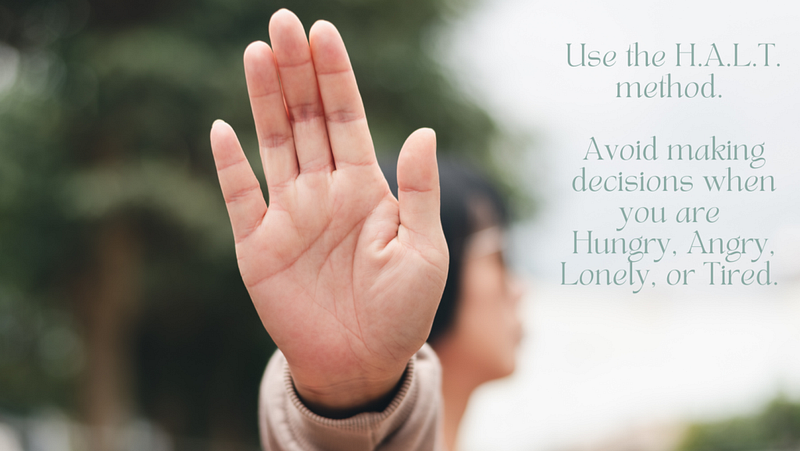
It is hard to be intentional every time you pull out that wallet! Especially when with a click of a button, you can get that thing you “need” delivered to your door in two days. Slowing down can make a huge difference. There were many threads on the community page about how to do this. Here are some of my favorite ideas:
- Institute a 24-hour wait before making any purchase.
- Put items on an Amazon wish list, then wait a few weeks or months.
- Only purchase items when there is money for it in the budget.
- Consult with your partner first (in life or an accountability one).
For us as a couple, it is about having The Conversation. Where does this purchase fit into our budget, values, and long-term goals? We had a hefty pet bill for our pup’s annual check-up and to take care of her allergies which meant we couldn’t entirely pay off our holiday credit card debt. But, together we decided to prioritize her health and felt good about it.
5) Lessons from the Pantry
One of the practical suggestions MMC makes in their emails is to do a pantry inventory. The idea is to take stock of the food in your house. Then you can plan meals based on what you have in-house and save on your grocery shopping during the challenge. Wow, we are a food-consumed society! Isn’t it crazy how much of our money goes toward feeding ourselves?
After our pantry inventory, we made a $100 weekly shopping trip instead of our average of $200 or more for our family of four, including two teenage boys. I didn’t love all that week’s meals, especially the franks and beans. But, it was gratifying to clear our freezer of almost empty boxes and pantry of almost expired items by having “crazy appetizer night.” We know that meal planning, sticking to our grocery list, making items from scratch, and buying store-brand items or ones on sale help us keep our grocery spending down and will continue those habits.
6) Our Take on Take Out
I was surprised by our previous year’s take-out spending, thinking we were doing a pretty good job in this area. We eat frozen pizzas on Friday nights, make our coffees each morning, and spend many of our date nights at home, making ourselves a nice steak or grilling up some fresh fish instead of eating out.
When I looked through our eating-out expenses, there were a few meals that were delicious, romantic, or spent with friends or family that I wouldn’t want to give up. However, most stemmed from laziness, convenience, or thinking we deserved a treat. All those Jersey Mike’s subs are indistinguishable from each other. So, we’ll continue to work on this area.
When we do go out, we’ll strive to make an intentional decision with purpose. During the challenge bought pizza at a local restaurant, which led to hundreds of dollars of new business when the owner selected our company for his monthly window cleaning. That was the best-tasting pizza ever! A meal at our favorite, romantic restaurants was on the horizon. It was months away from doing the challenge during our summer vacation. But, I leaned into holding off temptations by remembering how amazing it would be to splurge on that meal because we skipped a few fast-food stops each month. P.S. It was!

7) Back on the Horse
I’m super into habits. Reading about them. Figuring out how to lose the bad ones and implement new ones. Slowly, I’ve made small changes that add up to significant shifts. These successes are ALL due to getting back on the horse. If I decided I couldn’t be more organized, eat better, or exercise more consistently because I slipped up, I’d be stuck where I was.
Only a few days into the challenge, I donated to a fund for our first childcare provider who lost her home in the devastating Marshall fire in Colorado that swept through the suburbs of Boulder. I did it spontaneously out of a desire to “do something” to help during this tragedy that ripped through so close to where we used to live. Giving back is one of our top values, and we might have ended up making this donation at the end of the day anyway. But, where I slipped up was skipping the process by not talking it through with my husband so we could make the decision together.
Instead of beating yourself up when you slip, take the time to think about how you felt or what you did when you made the purchase. You’ll start to identify your spending triggers so you can understand, stop or reduce them. Mindlessly buy things you see on Instagram while scrolling at 10 pm? Try scrolling at other times. Do you find yourself spending when you are sad, lonely, stressed, or even celebrating an accomplishment? Work to find different ways to feel better as well as commemorate your wins. Then, get back on the horse! Like any new habit, it will take time and practice to become a part of who you are and how you operate in your financial world.
8) Your Why- Making Boring Goals Meaningful
Our kids were taught in Kindergarten the difference between needs and wants as an introduction to money and finances. That’s cool! I get the difference and it’s a good start. However, our needs can quickly expand as our income grows and be a bit subjective. A bigger house means a bigger mortgage, more expensive bills, and more things to fill it. We need to eat but do we need to shop at Whole Foods?
The wants category is even trickier. There can be many, many things on this list. So, how do you prioritize? I’m still working on this area, but I think it is about being clear on your top values. For us, travel and vacations as a family are a top priority. Not being stressed about money and dreading each time an unexpected expense comes along is also important. We hope to send our boys to college without student debt and retire as early as possible. Emergency savings, college funds, and a retirement portfolio are boring and so far in the future. Even saving for an upcoming vacation can be hard to keep front of mind when I don’t want to cook that night or stumble upon a cute dress.
For me, it is about returning to feeling grateful for what I have and understanding what my cravings really mean. I kept a wish list of items on Amazon that I returned to after the challenge to see which ones I still wanted. Did they fit into my top values and priorities, can they wait, or did I decide I didn’t need them at all? I removed most of them and have no regrets about the few items I did purchase!
So, the Results
In the first month, we saved $1000 and paid off a good chunk of our credit card bill. By the time business picked up again in March, we could easily pay off our entire bill and start with a fresh slate.
Overall, groceries are one of the biggest spending categories in our budget, which we have control over. It felt great to know we could reign in that spending with some planning, using what we have, and smart shopping. In the end, we spent $555 a month while we had been averaging $875. Hmmm, $320 in savings a month times 12 months equals $3,840! That sounds like a perfect amount for a family vacation!
After that one spur-of-the-moment donation, each other purchase this month went through a decision-making process. Will we keep doing that forever? I can feel myself resisting that idea already! This probably means, we should continue until we feel 100% confident that we’re sticking to our budget and prioritizing our spending for what is most important to us.
I’d like to say that this summer when business picked up that we kept our spending in check. But, sadly, no. We let our pent-up travel bug get the best of us and took some amazing trips, so it is back to Thriftuary and the MMC. We’ll continue to rein in the meaningless spending to reach the financial goals aligned with our values, and not feel too bad about the travel that fills our souls.
If saving money and sticking to your budget is something you are working on and haven’t had success with in the past, maybe a challenge like this one, could work for you too! Intrigued and want to join me in the challenge? Here’s the link!
A Bit More About YNAB
I tried a few other budgeting methods, including my own spreadsheets and other apps, with no success. In my opinion, You Need a Budget, (YNAB) is the best option out there. It is designed to track and plan for all of your expenses. By assigning each incoming dollar a job, it helps you gain control over where your money is going so you actually stick to your budget. It also has a built-in “envelope” system to save for larger expenses and long-term goals without needing physical cash envelopes or dozens of separate bank accounts.
What I love best are their videos and emails with financial tips offered in upbeat, often humorous, easy-to-implement ways. Hannah is my favorite. Along with Tina Fey, I may secretly want to be her… or maybe just be besties.
If you are curious about YNAB, there is a free trial to check it out. And, if you use this referral link to sign up, you can get an additional free month. Full transparency, this is an affiliate link and I’ll get a free month too! Maybe I’ll use that money I save to get that Bonsai kit that IS still on my wish list!


